‘Green’ hydrogen project in Newfoundland to get $128-million federal loan

Advertisement

Advertise with us

OTTAWA - The federal government has agreed to lend millions of dollars to a second green hydrogen project in Atlantic Canada.

Read this article for free:


or

Already have an account? Log in here »

To continue reading, please subscribe:

Subscribe and receive a limited-edition Free Press branded hat or tote.

Digital Subscription

One year of digital access for only $205*

  • Enjoy unlimited reading on winnipegfreepress.com
  • Read the E-Edition, our digital replica newspaper
  • Access News Break, our award-winning app
  • Play interactive puzzles

*First annual payment billed as $205.00 + GST for one year. This annual subscription will automatically renew at $233.00 + GST every 52 weeks (10% off the regular annual price of $259.35). Offer available to new and qualified returning subscribers only. Cancel any time.

To continue reading, please subscribe:

Add Free Press access to your Brandon Sun subscription for only an additional

$1 for the first 4 weeks*

  • Enjoy unlimited reading on winnipegfreepress.com
  • Read the E-Edition, our digital replica newspaper
  • Access News Break, our award-winning app
  • Play interactive puzzles
Start now

*Your next Brandon Sun subscription payment will increase by $1.00 and you will be charged $17.95 plus GST for four weeks. After four weeks, your payment will increase to $24.95 plus GST every four weeks.

Hey there, time traveller!
This article was published 28/02/2024 (931 days ago), so information in it may no longer be current.

OTTAWA – The federal government has agreed to lend millions of dollars to a second green hydrogen project in Atlantic Canada.

The federal Liberals and World Energy GH2 say they have reached an agreement for a $128-million credit facility, a business loan similar to a line of credit.

The loan comes about two months after a similar agreement to provide $166 million to Everwind Fuels in Nova Scotia.
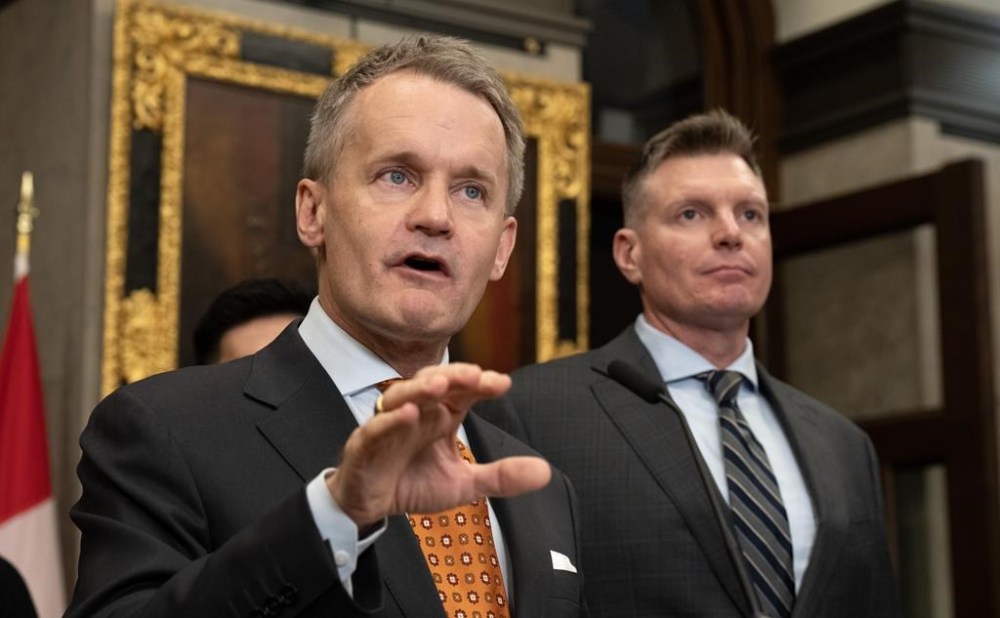
World Energy GH2 CEO Sean Leet, right, looks on as Labour and Seniors Minister Seamus O’Regan speaks during an announcement in the Foyer of the House of Commons, Wednesday, February 28, 2024 in Ottawa. Export Development Canada and World Energy GH2 say they have reached an agreement for a $128 million credit facility which is a business loan similar to a line of credit.THE CANADIAN PRESS/Adrian Wyld

Both projects are trying to stake a claim as Canada’s most advanced green hydrogen plant, though neither has an in-service date on the table yet.

Canada signed an agreement with Germany in August 2022 to work toward producing and shipping clean hydrogen to Europe.

But Canada does not currently have any green hydrogen plants up and running.

The funds are to be distributed via Export Development Canada.

World Energy GH2’s Project Nujio’qonik is to include two to three wind farms in and around Stephenville, Nfld., to initially produce about 250,000 tonnes of hydrogen a year.

Germany’s hydrogen strategy includes a plan to try and replace its coal-fired power plants with hydrogen over the next 15 to 20 years, and it needs to get most of that hydrogen from imports.

The Canada-Germany agreement set a bold target to start shipping hydrogen as early as 2025, but World Energy CEO Sean Leet said Wednesday his company is very unlikely to meet that schedule.

He said they are still working through various permitting and licensing processes in Newfoundland and can’t yet say when the infrastructure will be built.

He called the new loan for his company a “signature moment for green hydrogen in Canada.”

Labour Minister Seamus O’Regan, who represents a Newfoundland riding in the House of Commons, said there is a race to become a global hydrogen supplier and there is no time to waste.

“We need to get this project off the ground and signal to the world we’re in the green hydrogen game,” he said.

Green hydrogen is generally considered to be the most climate-friendly, as it is produced using electrolysis to extract hydrogen from water using renewable electricity. In most cases in Atlantic Canada, the proposed projects involve building new wind farms.

Hydrogen can also be produced from natural gas, but that process produces greenhouse gases.

If those gases are allowed to escape into the atmosphere, it is known as grey hydrogen. If they are trapped using carbon capture systems, it’s called blue hydrogen.

Germany generally only wants green hydrogen.

This report by The Canadian Press was first published Feb. 28, 2024.

Note to readers: This is a corrected story. An earlier version said Export Development Canada had reached the agreement with World Energy GH2.
Report Error Submit a Tip

More Stories

Winnipeg venues saying no to AI-made advertisements

Sheldon Birnie 8 minute read Preview

Winnipeg venues saying no to AI-made advertisements

Sheldon Birnie 8 minute read Updated: Yesterday at 10:22 AM CDT

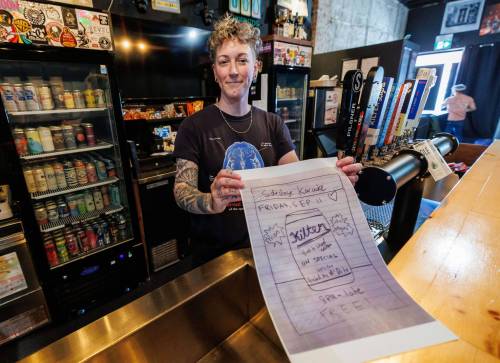
Although the days when telephone poles and notice boards across the city were thick with gig posters, either slopped up with wheat paste or wrapped tight with packing tape, are behind us, the art of making an appealing visual ad for live music events is still a vital part of the local creative scene.

However, a widespread backlash against a new kind of slop — the use of generative AI images — has been building, especially among creatives when it comes to promoting live music.

“Live music is and always has been a DIY type of scene, especially locally,” says Evan Simpson, who has been working as a graphic designer for nearly a decade.

“For years people have been making their own flyers, or if they have the budget, hiring a designer or artist to come up with some artwork for their flyers. It’s a whole ecosystem, a scene supporting itself. If you take away the visual side of it, the spark, individuality and uniqueness of each gig poster is lost. What a sad world it would be if all art were made by AI.”

Read
Updated: Yesterday at 10:22 AM CDT

MMF walks away from bid to buy Fort Garry Hotel

Carol Sanders 3 minute read Preview

MMF walks away from bid to buy Fort Garry Hotel

Carol Sanders 3 minute read Yesterday at 3:03 PM CDT

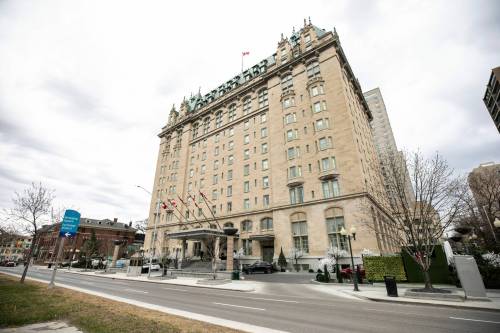
The Manitoba Métis Federation won’t buy the historic Fort Garry Hotel, President David Chartrand said Monday.

Read
Yesterday at 3:03 PM CDT

MPI looks into motorcycle safety

Morgan Modjeski 4 minute read Preview

MPI looks into motorcycle safety

Morgan Modjeski 4 minute read 7:30 PM CDT

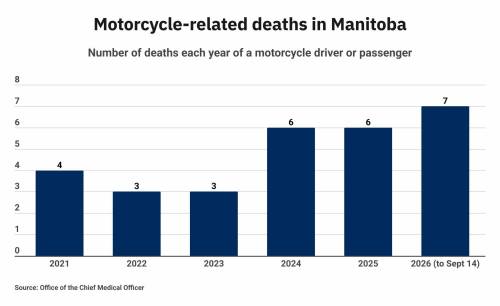
Manitoba Public Insurance is probing how to make regional roads safer for motorcyclists.

The public insurer is seeking feedback about restrictions on powerful bikes for new riders, mandatory training for older motorcyclists and limiting registrations to drivers who have a motorcycle licence (Class 6).

The Coalition of Manitoba Motorcycle Groups, which is set to gather at its regular meeting in Winnipeg Wednesday, will weigh in.

President Mary Johnson said some of the questions — such as those that relate to restricting new riders to bikes with engines under 500 cubic centimetres — are non-starters.

Read
7:30 PM CDT

Seven years sought for serial harasser

Dean Pritchard 5 minute read Preview

Seven years sought for serial harasser

Dean Pritchard 5 minute read 2:01 AM CDT

Alexander Beaton finished serving a two-year jail sentence for criminally harassing six women and didn’t last two days in the community before he was back at it, sending unwanted obscene messages and videos to a dozen women.

Now prosecutors are seeking a seven-year prison sentence for the 30-year-old Winnipeg man, whose latest string of victims includes a police officer who investigated his earlier crimes.

“He essentially continued (offending) unabated,” Crown attorney Brett Rach told provincial court Judge Malcolm McDonald at a sentencing hearing Friday. “It caused more than a nuisance to these victims — it caused them to fear for their safety.”

Beaton pleaded guilty to 14 charges of criminal harassment, sending indecent communications and breaching court orders for a campaign of harassment waged between 2015 and 2025.

Read
2:01 AM CDT

Manitoba mineral production set to triple, premier says

Carol Sanders 5 minute read Preview

Manitoba mineral production set to triple, premier says

Carol Sanders 5 minute read Updated: 5:19 PM CDT

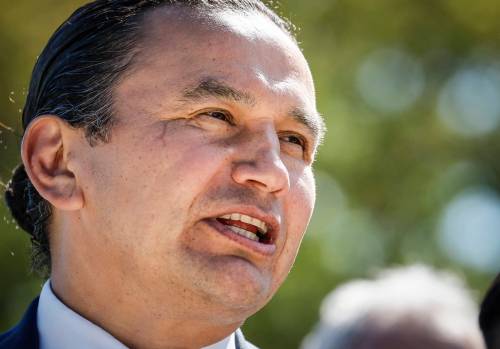
Premier Wab Kinew said Tuesday Manitoba plans to triple mineral production in the next five years “to unlock a new era of wealth creation and growth.”

“We’re going to make sure that opportunity is spread throughout the province,” he told a news conference at the Canada investment summit in Toronto.

The province is working with industry and Indigenous governments to send a message to investors that “we’re going to do mining right in Manitoba,” the premier said.

For too long, Manitoba has lagged behind neighbouring provinces, Kinew said.

Read
Updated: 5:19 PM CDT

Federal Court awards OCN $27M, 62 years after construction of hydro dam

Nicole Buffie 5 minute read Preview

Federal Court awards OCN $27M, 62 years after construction of hydro dam

Nicole Buffie 5 minute read 6:34 PM CDT

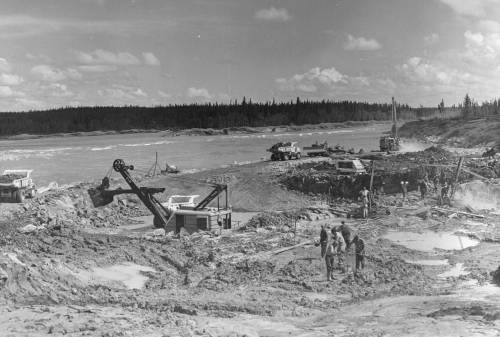
The Federal Court has ordered Ottawa pay Opaskwayak Cree Nation $27 million over damages suffered due to the construction of the Grand Rapids hydro dam in the 1960s.

In a decision dated Sept. 3, Federal Court Justice Sébastien Grammond says the federal government had a fiduciary duty to protect the community from the impacts of the dam.

“When the Crown exercises a discretionary power over an Indigenous interest, it has a fiduciary duty and it must exercise the discretion in the best interests of the Indigenous group,” the ruling said. “Canada breached its fiduciary duty to OCN because it approved the (project) without ensuring that the impacts of the Grand Rapids dam on OCN’s traditional way of life were mitigated or compensated.”

The First Nation took the federal government to court in February over impacts on the community after the dam, located about 145 kilometres southeast of Opaskwayak Cree Nation, was installed on the Saskatchewan River in 1964. The case was heard over 14 days in a judge-alone trial in Winnipeg.

Read
6:34 PM CDT