Architect was a key contributor to our skyline

Advertisement
Read this article for free:
or
Already have an account? Log in here »
To continue reading, please subscribe:

Digital Subscription
One year of digital access for only $205*
- Enjoy unlimited reading on winnipegfreepress.com
- Read the E-Edition, our digital replica newspaper
- Access News Break, our award-winning app
- Play interactive puzzles
*First annual payment billed as $205.00 + GST for one year. This annual subscription will automatically renew at $233.00 + GST every 52 weeks (10% off the regular annual price of $259.35). Offer available to new and qualified returning subscribers only. Cancel any time.
To continue reading, please subscribe:
Add Free Press access to your Brandon Sun subscription for only an additional
$1 for the first 4 weeks*
- Enjoy unlimited reading on winnipegfreepress.com
- Read the E-Edition, our digital replica newspaper
- Access News Break, our award-winning app
- Play interactive puzzles
*Your next Brandon Sun subscription payment will increase by $1.00 and you will be charged $17.95 plus GST for four weeks. After four weeks, your payment will increase to $24.95 plus GST every four weeks.
Read unlimited articles for free today:
or
Already have an account? Log in here »
Hey there, time traveller!
This article was published 04/03/2024 (929 days ago), so information in it may no longer be current.
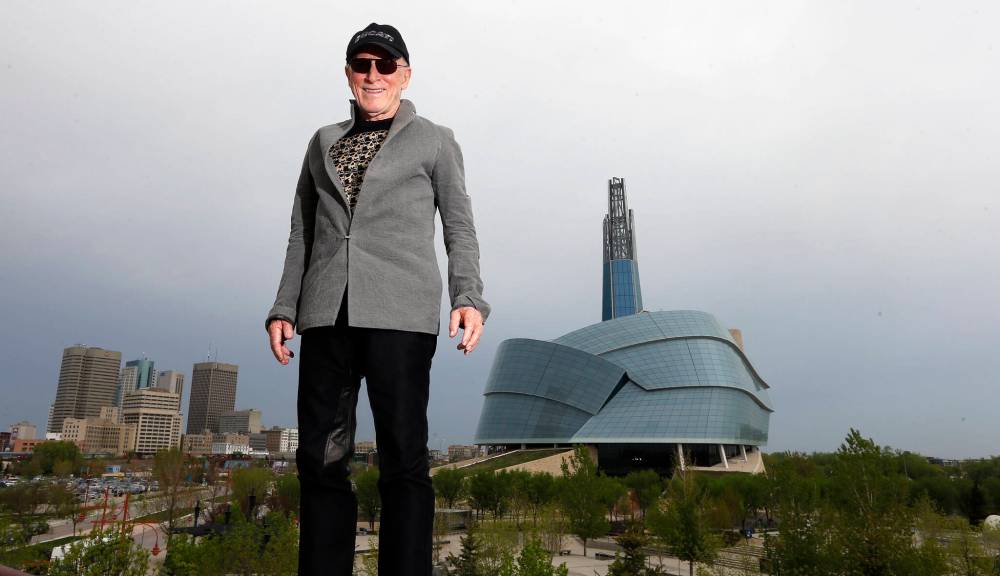
Antoine Predock, the design architect of the Canadian Museum for Human Rights and a major contributor to the modern Winnipeg skyline, has died. He was 87.
The American architect’s winning design for the CMHR — which he described as “carved into the earth and dissolving into the sky” — was selected in a juried architectural competition, one of Canada’s largest, launched by Friends of the CMHR in 2003. The museum opened to the public in 2014.
“My life in architecture has been an extraordinary adventure, culminating in the privilege of being selected to design the Canadian Museum for Human Rights. I’m often asked what my favourite, my most important building is. I’m going on the record right now. This is it,” Predock said in a 2014 CMHR media release. That year, he received an Honorary Fellowship from the Royal Architectural Institute of Canada.

Born in Missouri in 1936 and based in Albuquerque, N.M., Predock was the principal of Antoine Predock Architect PC, which he founded in 1967.
He was known for his bold, geometric, minimalist designs that took cues from geology and nature.
Predock first rose to prominence for designing the planned community of La Luz del Oeste, N.M., built between 1967 and 1974. Other notable projects include the Turtle Creek House in Texas, the Tang Teaching Museum and Art Gallery at Skidmore College in Saratoga Springs, N.Y., and Petco Park, home of the San Diego Padres, as well as many buildings in his adopted home state, including the University of New Mexico School of Architecture, the Albuquerque Museum and the Spencer Theater in Alto, N.M.
Among Predock’s honours were the American Institute of Architects’ Gold Medal, the Smithsonian Cooper‐Hewitt Lifetime Achievement Award and the prestigious Rome Prize.

Predock was an avid motorcyclist. He told Architect Magazine in 2015 that the CMHR’s now-iconic white alabaster ramps linking the museum’s galleries echo the switchbacks on canyon roads he liked to ride on. He described the ascending path through the CMHR as a “back and forth duality of light and of dark. It’s a big-picture duality, dark where you begin, light where you ascend.”
He last visited the museum in 2018 for the unveiling of the new $10 bill bearing his design.
“We were deeply saddened to learn of the death of Antoine Predock, and so grateful for his remarkable vision in designing the Canadian Museum for Human Rights,” Isha Khan, CEO of the CMHR, said in a statement.
“His concept of a building that speaks to the ongoing story of human rights and a journey from darkness to light inspires our work every day, and we know it will continue to inspire those who come into the museum for generations to come.”
jen.zoratti@winnipegfreepress.com
Jen Zoratti is a columnist and feature writer working in the Arts & Life department, as well as the author of the weekly newsletter NEXT. A National Newspaper Award finalist for arts and entertainment writing, Jen is a graduate of the Creative Communications program at RRC Polytech and was a music writer before joining the Free Press in 2013. Read more about Jen.
Every piece of reporting Jen produces is reviewed by an editing team before it is posted online or published in print – part of the Free Press‘s tradition, since 1872, of producing reliable independent journalism. Read more about Free Press’s history and mandate, and learn how our newsroom operates.
Our newsroom depends on a growing audience of readers to power our journalism. If you are not a paid reader, please consider becoming a subscriber.
Our newsroom depends on its audience of readers to power our journalism. Thank you for your support.
Jen Zoratti is a columnist and feature writer working in the Arts & Life department, as well as the author of the weekly newsletter NEXT. A National Newspaper Award finalist for arts and entertainment writing, Jen is a graduate of the Creative Communications program at RRC Polytech and was a music writer before joining the Free Press in 2013. Read more about Jen.
Every piece of reporting Jen produces is reviewed by an editing team before it is posted online or published in print – part of the Free Press‘s tradition, since 1872, of producing reliable independent journalism. Read more about Free Press’s history and mandate, and learn how our newsroom operates.
Our newsroom depends on a growing audience of readers to power our journalism. If you are not a paid reader, please consider becoming a subscriber.
Our newsroom depends on its audience of readers to power our journalism. Thank you for your support.
Related Articles
Architect Antoine Predock speechless after CMHR opening




Advertisement Advertise With Us
Advertisement Advertise With Us