Climate-conscious travelers are jumpstarting Europe’s sleeper trains
Advertisement
Read this article for free:
or
Already have an account? Log in here »
To continue reading, please subscribe:

Digital Subscription
One year of digital access for only $205*
- Enjoy unlimited reading on winnipegfreepress.com
- Read the E-Edition, our digital replica newspaper
- Access News Break, our award-winning app
- Play interactive puzzles
*First annual payment billed as $205.00 + GST for one year. This annual subscription will automatically renew at $233.00 + GST every 52 weeks (10% off the regular annual price of $259.35). Offer available to new and qualified returning subscribers only. Cancel any time.
To continue reading, please subscribe:
Add Free Press access to your Brandon Sun subscription for only an additional
$1 for the first 4 weeks*
- Enjoy unlimited reading on winnipegfreepress.com
- Read the E-Edition, our digital replica newspaper
- Access News Break, our award-winning app
- Play interactive puzzles
*Your next Brandon Sun subscription payment will increase by $1.00 and you will be charged $17.95 plus GST for four weeks. After four weeks, your payment will increase to $24.95 plus GST every four weeks.
Read unlimited articles for free today:
or
Already have an account? Log in here »
Hey there, time traveller!
This article was published 06/03/2024 (948 days ago), so information in it may no longer be current.
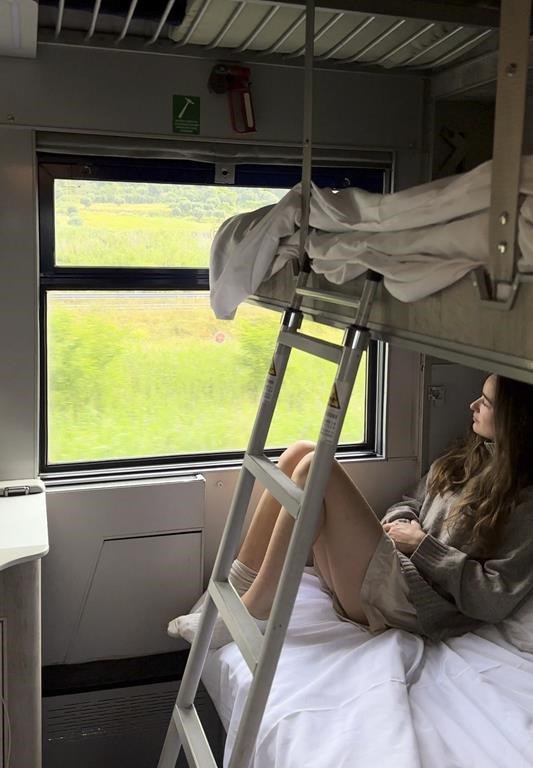
After being gently rocked awake in her sleeper cabin, Sarah Marks spent the morning of her 29th birthday watching the Alps zip past the windows of her overnight train to Zurich.
“The train comes in right next to the lake, with the mountains coming up behind it,” Marks said wistfully. “Very romantic, I have to say.”
By the time of that 2022 journey from Zagreb, Croatia, it had been four years since she had taken a flight— since around the time Swedish climate activist Greta Thunberg began to spread the term flygskam, or “flight shame.”
They join an increasing number of climate-conscious Europeans, particularly younger travelers, who are shunning carbon-spewing airplanes in favor of overnight trains. In the process, they’ve spurred something of a night-train revival while discovering what many say is a slower, richer way of traveling, one that had been on the edge of extinction.
“Being able to fall asleep in one city and wake up maybe even in another country, it’s amazing to me,” said Marks, a Londoner who grew up flying several times a year. “When I switched the plane for the train, it was a no-brainer because, also, this is a superior experience.”
REINVESTMENT, PUBLIC AND PRIVATE
Though still a niche and relatively pricey market, demand for sleeper trains is increasing. The online platform Trainline said overnight bookings in 2023 rose 147% compared to 2019, the year before the pandemic. And a climate survey by the European Investment Bank found that 62 percent of respondents supported a ban on short flights.
Governments have begun to reinvest in overnight trains as they search for ways to meet targets to reduce carbon emissions by 2030. The European Commission selected three new night routes in a pilot program aimed to support cross-border travel, including some ambitious private startups.
“Government investment is somehow going back to the good old days of when railways were providing a public service,” said Poul Kettler, one of the founders of Back on Track, a pan-European rail advocacy group. “The climate is coming with a price tag, and they’re now willing to pay.”
Sleeper trains never completely disappeared, particularly in Eastern Europe, but advocates say they suffered years of underinvestment while budget airlines sold tickets for a fraction of the cost.
National railways pivoted resources to high-speed daytime rail, and governments promoted more short-haul air travel by expanding airports and mostly exempting jet fuel from taxes. The supposed death knell for sleeper trains arrived when Germany’s Deutsche Bahn shuttered their remaining overnight routes in 2015.
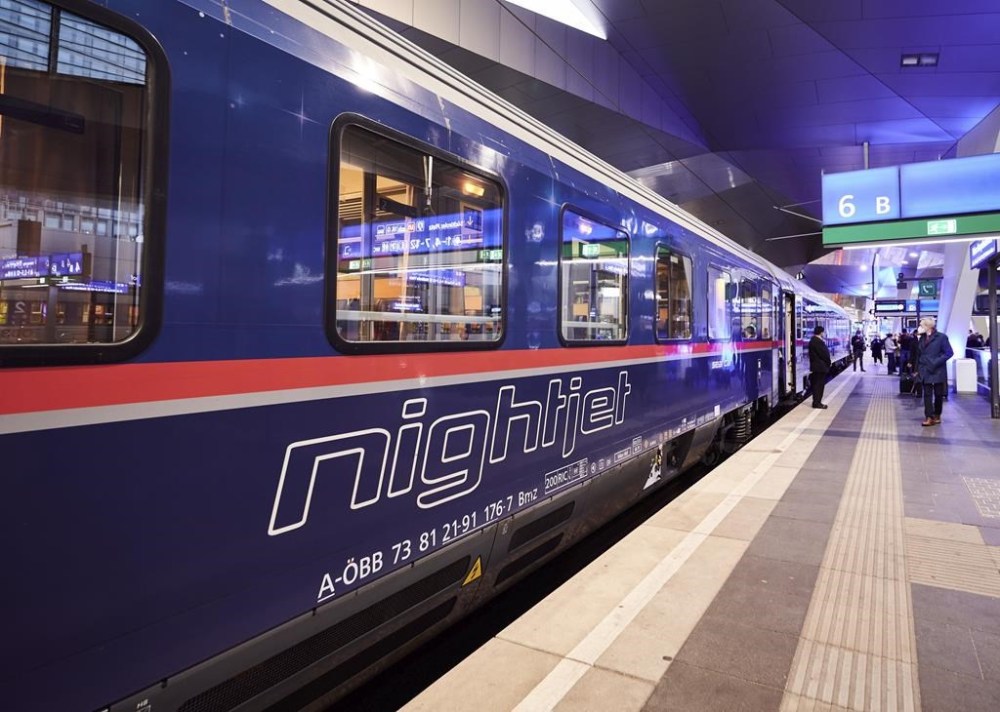
But the turnaround began almost immediately. Austria’s railway, ÖBB, gambled on night trains by buying all of Germany’s sleeper carriages. They renovated the cars, rebranded it Nightjet and applied cost-saving lessons from the airline industry. Now, Nightjet runs 22 international sleeper routes, mostly in Central Europe but extending from Vienna to Paris and Hamburg to Rome.
In December, Nightjet began rolling out 33 new seven-car trains complete with room key cards, cellphone-permeable window panes for better photos, and digital thermostats in each compartment.
A NEW KIND OF PASSENGER
Nightjet probably saved the entire night-train industry, said Thibault Constant, a former engineer at France’s state-owned railway company, SNCF, with 250,000 followers on his Simply Railway Youtube channel.
The atmosphere on sleeper trains has changed dramatically, he said.
“Ten years ago, it was only old people and weirdos taking night trains,” Constant, 27, said while riding a train through the Czech Republic. “Now I take the same lines with a bunch of teenagers and all kinds of people.”
The success of Nightjet showed other national railways that sleeper trains were worth upgrading, advocates say. In 2023, for instance, the Czech and Hungarian railways began refurbishing their sleeper cars, and national operators in Italy and Finland signed contracts for new ones.
Private companies also are stepping in to fill gaps in service. European Sleeper launched last year — partially relying on crowdfunding — with service from Brussels to Berlin via Amsterdam, and extended the line to Prague in May. The European Commission selected the company’s plans for an Amsterdam-to-Barcelona route among its pilot projects.
Still, progress is slow-going. A much-hyped French proposal in 2021 to invest $1.5 billion in overnight trains still has not begun, according to Back on Track. (France did revive four overnight lines from Paris to the south in the last two years.) And Spain’s Renfe discontinued the last of its Trenhotel lines in 2020 with no plans announced to bring them back.
ROMANCE OF THE RAILS, WITH HURDLES
Challenges include the lack of a central booking platform for train tickets; the more than 30 European operators each have their own websites. It’s also hard to make night trains profitable, considering that a day-running train car has about 70 seats, compared to the 20 to 40 berths on an average night train.
And there is the issue of price, and competition from budget airlines. For example, a 14-hour overnight train ride in late April form Paris to Berlin on Nightjet was going for 139 euros for a bunk in a 4- to 6-person couchette, whereas a flight on budget carrier Transavia was 50 euros. Private cabins on the train can cost significantly more, while reclining seats are similar to the price of a flight.
Marks noted, however, that a sleeper car saves travelers the price of a hotel night, not to mention the cost of traveling to city centers from far-flung airports. Headline flight prices rarely include fees for bags, seat assignments and other extras.
Sleeper-car buffs say the experience is worth some extra effort and cost.
Says Mark Smith, whose website Man in Seat 61 is a guide to European train travel: “What’s better than snuggling down in crisp, clean sheets with a bottle of wine while you travel, and then you’re there the next morning? It’s quite fun.”
——
EDITOR’S NOTE: Albert Stumm lives in Barcelona and writes about food, travel and wellness. Find his work at https://www.albertstumm.com