

13 years after meltdown, the head of Japan’s nuclear cleanup is probing mysteries inside reactors
Advertisement
Read this article for free:
or
Already have an account? Log in here »
To continue reading, please subscribe:

Digital Subscription
One year of digital access for only $205*
- Enjoy unlimited reading on winnipegfreepress.com
- Read the E-Edition, our digital replica newspaper
- Access News Break, our award-winning app
- Play interactive puzzles
*First annual payment billed as $205.00 + GST for one year. This annual subscription will automatically renew at $233.00 + GST every 52 weeks (10% off the regular annual price of $259.35). Offer available to new and qualified returning subscribers only. Cancel any time.
To continue reading, please subscribe:
Add Free Press access to your Brandon Sun subscription for only an additional
$1 for the first 4 weeks*
- Enjoy unlimited reading on winnipegfreepress.com
- Read the E-Edition, our digital replica newspaper
- Access News Break, our award-winning app
- Play interactive puzzles
*Your next Brandon Sun subscription payment will increase by $1.00 and you will be charged $17.95 plus GST for four weeks. After four weeks, your payment will increase to $24.95 plus GST every four weeks.
Read unlimited articles for free today:
or
Already have an account? Log in here »
Hey there, time traveller!
This article was published 07/03/2024 (902 days ago), so information in it may no longer be current.
TOKYO (AP) — As Japan prepares to mark the 13th anniversary of its worst-ever nuclear disaster, the man in charge of cleaning it up says his team is fighting to bring a sample out of the heart of the site’s radioactive debris.
A decades-long project to clean up the remains of the Fukushima Daiichi nuclear power plant is preparing to remove damaged fuel debris from the plant’s reactors, but much about what’s inside them is still a mystery.
The key to unlocking that mystery — and figuring out how to clean it up — is a sample of melted fuel from inside a reactor, said Akira Ono, head of decommissioning for Tokyo Electric Power Company Holdings, in an interview with The Associated Press.
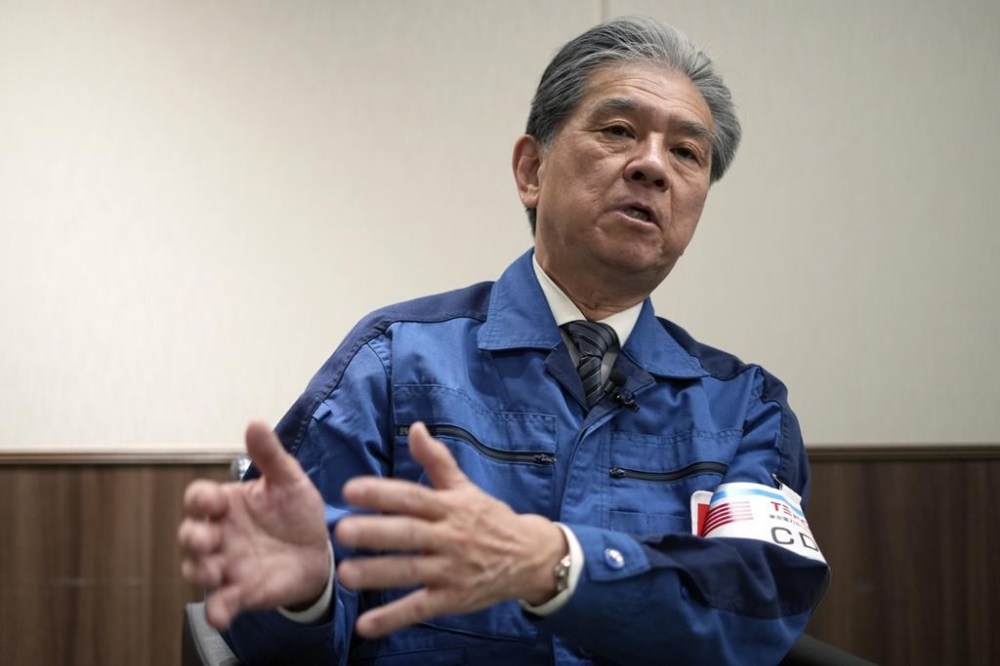
Getting that sample would be like penetrating “the main keep of the castle” in the battle of decommissioning, Ono said. “We have achieved a number of things, but we still have a lot of thinking to do to tackle the unprecedented task of removing melted fuel.”
A magnitude 9.0 earthquake and tsunami on March 11, 2011, damaged the Fukushima Daiichi plant’s cooling systems, causing three of its reactors to meltdown, releasing radiation and driving thousands of residents from their homes. Some areas near the plant are still unlivable.
About 880 tons of highly radioactive melted nuclear fuel remains inside the three damaged reactors, but no one knows what condition the melted fuel is in or exactly where in the reactors it fell. That data is crucial to make a plan to remove it safely, said Ono.
Since a 2019 robot probe first looked inside the No. 2 reactor — the least damaged — TEPCO has been trying to extract a small amount of melted debris from it using a robotic arm. That effort has been delayed for more than two years as the team works out how to get the robot past the wreckage. The team’s next attempt will come in October, using a previously tested device that resembles a fishing rod to get a preliminary sample out, while waiting technical improvements to the robotic arm, Ono said.
Last month, the plant made its first drone flight into the worst-hit reactor, No. 1 reactor, to investigate the melted debris, but had to cancel a second day of exploration after a secondary robot that helped with data transmission failed.
“We are new to these things and sometimes encounter unanticipated mishaps on the ground. But they are all valuable lessons learned for our next steps,” Ono said.
Critics say the 30- to 40-year cleanup target set by the government and TEPCO is overly optimistic.
The lack of data, technology and plans on what to do with the fatally radioactive melted fuel and other nuclear waste at the end makes it difficult to have a clear view of how the plant complex and its surroundings may end up when the cleanup ends.
Ono has said the utility’s role is to do its best to tackle the challenges one at a time and safely.
Last August, the plant began discharging treated water into the sea, which Ono said was a major step forward. If the next attempt to recover a sample from the No. 2 reactor succeeds, it will be “a huge step” and “a major change of stage,” he said.
Fukushima Daiichi is currently releasing a fourth 7,800-ton batch of water. So far, daily seawater sampling results have met safety standards, but the controversial plan has faced protests from local fishers and neighboring countries, especially China, which has banned Japanese seafood imports.
TEPCO finished removing all spent fuel rods from a cooling pool at No. 4 reactor in 2014 and from the No. 3 reactor pool in 2021. It plans to complete removal of the rods from the No. 1 and No. 2 pools by 2031.