E-waste from trashed electric devices is piling up and recycling isn’t keeping pace, UN says

Advertisement

Advertise with us

NAIROBI, Kenya (AP) — U.N. agencies have warned that waste from electronics is piling up worldwide while recycling rates remain low and are likely to fall even further.

Read this article for free:


or

Already have an account? Log in here »

To continue reading, please subscribe:

Subscribe and receive a limited-edition Free Press branded hat or tote.

Digital Subscription

One year of digital access for only $205*

  • Enjoy unlimited reading on winnipegfreepress.com
  • Read the E-Edition, our digital replica newspaper
  • Access News Break, our award-winning app
  • Play interactive puzzles

*First annual payment billed as $205.00 + GST for one year. This annual subscription will automatically renew at $233.00 + GST every 52 weeks (10% off the regular annual price of $259.35). Offer available to new and qualified returning subscribers only. Cancel any time.

To continue reading, please subscribe:

Add Free Press access to your Brandon Sun subscription for only an additional

$1 for the first 4 weeks*

  • Enjoy unlimited reading on winnipegfreepress.com
  • Read the E-Edition, our digital replica newspaper
  • Access News Break, our award-winning app
  • Play interactive puzzles
Start now

*Your next Brandon Sun subscription payment will increase by $1.00 and you will be charged $17.95 plus GST for four weeks. After four weeks, your payment will increase to $24.95 plus GST every four weeks.

Hey there, time traveller!
This article was published 20/03/2024 (895 days ago), so information in it may no longer be current.

NAIROBI, Kenya (AP) — U.N. agencies have warned that waste from electronics is piling up worldwide while recycling rates remain low and are likely to fall even further.

The agencies were referring to “e-waste,” which is defined as discarded devices with a plug or battery, including cellphones, electronic toys, TVs, microwave ovens, e-cigarettes, laptop computers and solar panels. It does not include waste from electronic vehicles, which fall into a separate category.

In a report released Wednesday, the U.N.’s International Telecommunications Union and research arm UNITAR said some 62 million tons of “e-waste” was generated in 2022, enough to fill tractor-trailers that could be lined up bumper to bumper around the globe. It’s on track to reach 82 million tons by 2030.
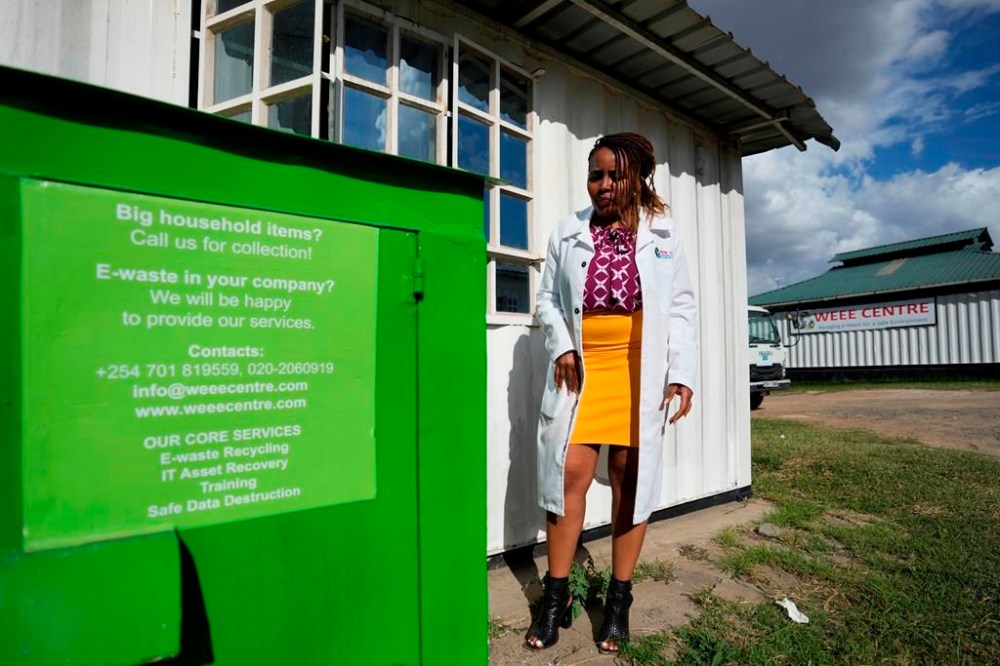
Catherine Masolia, Chief operation officer at WEEE center recycling plant, a collection point where people can deposit old electric equipment in Nairobi, Kenya Wednesday, March. 20, 2024. U.N. agencies have warned that electrical and electronic waste is piling up worldwide while recycling rates continue to remain low and are likely to fall even further. (AP Photo/Brian Inganga)

Metals — including copper, gold and iron — made up half of the 62 million tons, worth a total of some $91 billion, the report said. Plastics accounted for 17 million tons and the remaining 14 million tons include substances like composite materials and glass.

The U.N. says 22% of the e-waste mass was properly collected and recycled in 2022. It is expected to fall to 20% by the end of the decade because of “staggering growth” of such waste due to higher consumption, limited repair options, shorter product life cycles, growing “electronification” of society, and inadequate e-waste management infrastructure, the agencies said.

They said some of the discarded electronic devices contained hazardous elements like mercury, as well as rare Earth metals coveted by tech industry manufacturers. Currently, only 1% of the demand for the 17 minerals that make up the rare metals is met through recycling.

About half of all e-waste is generated in Asia, where few countries have laws on e-waste or collection targets, according to the report. Recycling and collection rates top 40% in Europe, where per-capita waste generation is highest: nearly 18 kilograms (39 pounds).

In Africa, which generates the least of any of the five big global regions, recycling and collection rates hover at about 1%, it said.

“The latest research shows that the global challenge posed by e-waste is only going to grow,” said Cosmas Luckyson Zavazava, head of the ITU telecommunication development bureau. “With less than half of the world implementing and enforcing approaches to manage the problem, this raises the alarm for sound regulations to boost collection and recycling.”

For some, e-waste represents a way to earn cash by rummaging through trash in the developing world to find coveted commodities, despite the health risks.

At the Dandora dumpsite where garbage collected from the Kenyan capital of Nairobi ends up — even though a court declared it full over a generation ago — scavengers try to earn a living by picking through rubbish for e-waste that can be sold to businesses as recycled material.
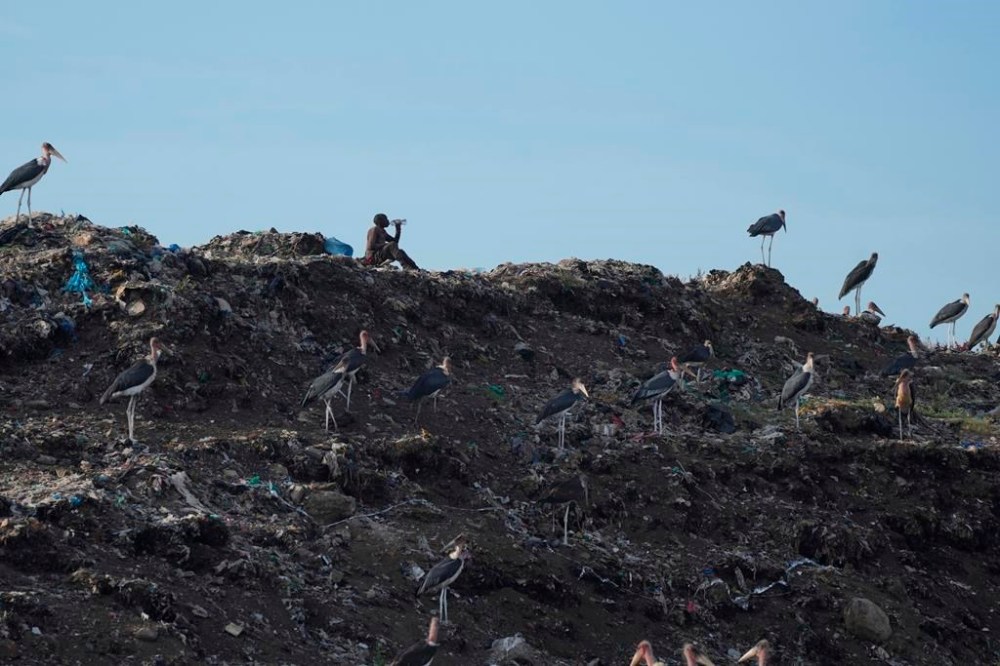
A man who scavenges recyclable materials for a living, centre, drinks water past Marabou storks feeding on a mountain of garage at Dandora, the largest garbage dump in the capital Nairobi, Kenya Wednesday, March 20, 2024. U.N. agencies have warned that electrical and electronic waste is piling up worldwide while recycling rates continue to remain low and are likely to fall even further. (AP Photo/Brian Inganga)

Steve Okoth hopes the flow continues so he can eke out an income, but he knows the risks.

“When the e-waste comes here, it contains some powder which affects my health,” he said, adding that when electronic devices heat up, they release gases and he “can’t come to work because of chest problems.”

However, Okoth said they don’t have any other options: “We are now used to the smoke because if you don’t go to work you will not eat.”

Recycling plants, like Nairobi’s WEEE center, have collection points across Kenya, where people can safely get rid of old electric equipment.

“We take inventory of the items,” said Catherine Wasolia, WEEE’s chief operating officer, to check for data on submitted devices and wipe them clean. Then they test each to assess if “it can be reused or repurposed.”

E-waste expert George Masila worries about the impact of electronic waste on soil.

“When you have all this e-waste — either in the dumpsites or mercilessly deposited anywhere else — it could have major effects on the soil,” Masila said. “Every year it rains and water flows and attracts all these elements that are deposited into the environment. You have water getting contaminated.”

He said greater recycling and re-use of such materials, “are some of the things we should be considering.”
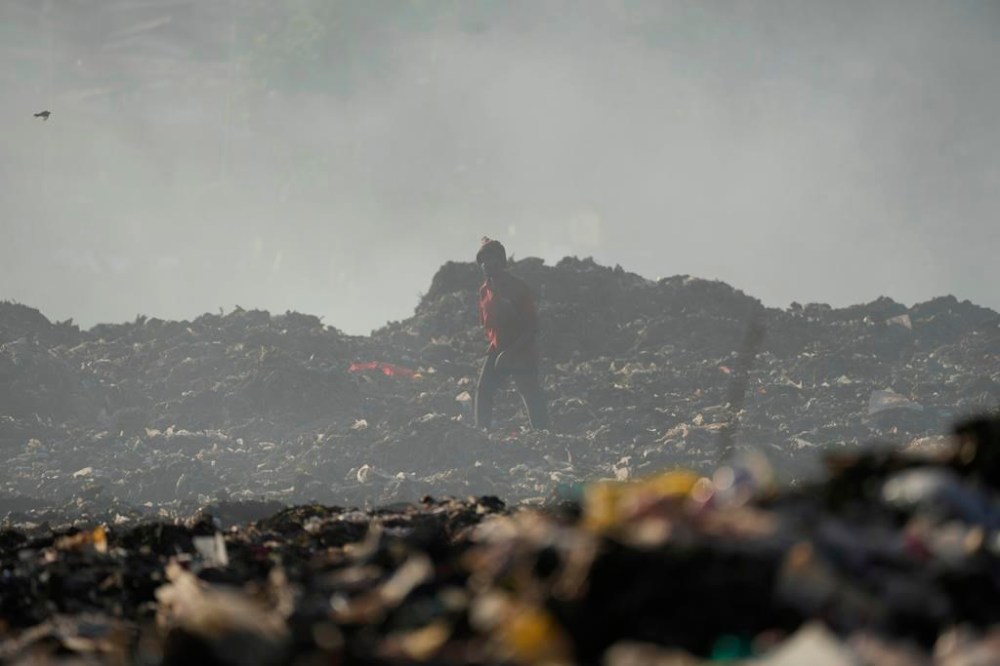
A man who scavenges recyclable materials for a living, walks past a mountain of garage amidst smoke from burning trash at Dandora, the largest garbage dump in the capital Nairobi, Kenya Wednesday, March 20, 2024. U.N. agencies have warned that electrical and electronic waste is piling up worldwide while recycling rates continue to remain low and are likely to fall even further. (AP Photo/Brian Inganga)

Report authors acknowledged that many people in the developing world pay their bills through harvesting such e-waste, and called for them to be trained and equipped to make such work safer.

“We must try to support these people trying to find their niche,” said Ruediger Kuehr, senior manager of the sustainable cycles program at UNITAR.

__

Keaten reported from Geneva.
Report Error Submit a Tip

More Stories

Rare and tough to notice, sarcomas may lurk in the body

Jen Zoratti 12 minute read Preview

Rare and tough to notice, sarcomas may lurk in the body

Jen Zoratti 12 minute read Yesterday at 6:00 AM CDT

Last summer, Michelle Finley was going about a normal day.

She had just dropped her car off at a garage and was walking back to her office building downtown when, suddenly, she was stopped in her tracks by a searing cramp on the bottom of her right foot.

“It was so painful it took my breath away,” says Finley, now 52. “I stopped and held on to the side of a building for a second — like, it was bringing tears to my eyes.”

Finley thought she had a really bad case of plantar fasciitis. Nine months later she would lose her foot to sarcoma.

Read
Yesterday at 6:00 AM CDT

Affordable student housing is an education issue

Jamie Wilson 5 minute read 2:00 AM CDT

When we talk about barriers to education, what usually comes to mind are tuition, cost of books or access to technology.

Former abuser of alcohol, drugs who graduated from recovery program now helping others

Scott Billeck 6 minute read Preview

Former abuser of alcohol, drugs who graduated from recovery program now helping others

Scott Billeck 6 minute read Updated: Yesterday at 9:05 AM CDT

The second time Ray Ducharme overdosed, he was in a Winnipeg hotel room, waiting for a spot in Adult and Teen Challenge Central Canada’s live-in recovery program.

It was Oct. 30, 2024 — not long after his first overdose had landed him in a Red Deer, Alta., hospital for eight days. Ducharme had gone west, trying to outrun the baggage he carried in Winnipeg, before eventually returning home at the behest of an ATCCC employee who assured him there would be a bed available in seven to 10 days.

Then came the second OD.

Three days later, in early November, Ducharme woke up in a Winnipeg hospital with his family around him. Doctors weren’t sure he’d survive.

Read
Updated: Yesterday at 9:05 AM CDT

Village Green Bakery keeps focus on classic quality, kindness, fun in Victoria Beach

Aaron Epp 6 minute read Preview

Village Green Bakery keeps focus on classic quality, kindness, fun in Victoria Beach

Aaron Epp 6 minute read Yesterday at 6:00 AM CDT

VICTORIA BEACH — They’re not carved into stone tablets — they’re reminders and not commandments, after all — but behind one of the display cases at Village Green Bakery is a laminated sheet of letter-size paper with a list of statements outlining how owner Jen Leslie wants staffers to approach their work.

Fittingly, there’s a baker’s dozen of them.

One is aimed specifically at a stoic teen who’s worked at the bakery since it opened in summer 2022 — “Smile, Brody,” it says — while the other 12 are meant for all 17 employees at the seasonal business, which is open annually from May long weekend until Thanksgiving.

“Smile and enjoy the ride,” is the first reminder, followed by, “The summer is short, so make it a good one,” “always take the high road” and “you are awesome.”

Read
Yesterday at 6:00 AM CDT

Letters, Aug. 31

7 minute read Preview

Letters, Aug. 31

7 minute read Updated: Yesterday at 7:48 AM CDT

Connor Hellebuyck, as we know, backstopped the U.S.A. to Olympic gold. Shortly after winning, he was invited to the Oval Office and accepted the Presidential Medal of Freedom from his country, a medal that has been awarded to numerous famous athletes — Babe Ruth, Billie Jean King, Jackie Robinson, Muhammad Ali, Michael Jordan, to name a few.

Read
Updated: Yesterday at 7:48 AM CDT

Times of transition can be tough to traverse

Maureen Scurfield 4 minute read Yesterday at 2:01 AM CDT

DEAR MISS LONELYHEARTS: My wife has really enjoyed staying home with the kids all summer, as she is a teacher and has the two months off. Last night she was tearful at bedtime because she has to go back to the classroom and “this perfect summer together is all over.”

I told her I could afford to look after us financially if she ever wanted to quit teaching and stay home, and she blew up and said, “I love to teach and our kids won’t at be home. They’ll all be at school.” Then the tears really came. Sometimes I just can’t win. What’s up with her? Please advise.

— Willing to Help, Winnipeg

Dear Willing: The same thing that’s happened to your wife, you often see with kids at this time of year — over-excitement. It’s hard on everybody when there’s too much new stuff going on and the daily schedule is totally changing from summertime.