

Bulgaria’s prime minister-designate withdraws after talks between political coalitions fail
Advertisement
Read this article for free:
or
Already have an account? Log in here »
To continue reading, please subscribe:

Digital Subscription
One year of digital access for only $205*
- Enjoy unlimited reading on winnipegfreepress.com
- Read the E-Edition, our digital replica newspaper
- Access News Break, our award-winning app
- Play interactive puzzles
*First annual payment billed as $205.00 + GST for one year. This annual subscription will automatically renew at $233.00 + GST every 52 weeks (10% off the regular annual price of $259.35). Offer available to new and qualified returning subscribers only. Cancel any time.
To continue reading, please subscribe:
Add Free Press access to your Brandon Sun subscription for only an additional
$1 for the first 4 weeks*
- Enjoy unlimited reading on winnipegfreepress.com
- Read the E-Edition, our digital replica newspaper
- Access News Break, our award-winning app
- Play interactive puzzles
*Your next Brandon Sun subscription payment will increase by $1.00 and you will be charged $17.95 plus GST for four weeks. After four weeks, your payment will increase to $24.95 plus GST every four weeks.
Read unlimited articles for free today:
or
Already have an account? Log in here »
Hey there, time traveller!
This article was published 25/03/2024 (905 days ago), so information in it may no longer be current.
SOFIA, Bulgaria (AP) — Bulgaria’s prime minister-designate withdrew her nomination on Monday after negotiations between two political coalitions failed, which could send the European Union’s poorest member country into a new crisis.
Maria Gabriel, a former EU commissioner, had been proposed by the largest group in parliament, the center-right GERB-UDF coalition, to form a new government. But hours ahead of her withdrawal, she and her negotiating team told reporters that it was “all over” and Bulgaria was heading to early elections.
The withdrawal follows two weeks of negotiations between GERB-UDF and the reformist coalition led by We Continue the Change over what was supposed to be an agreed-upon rotation.
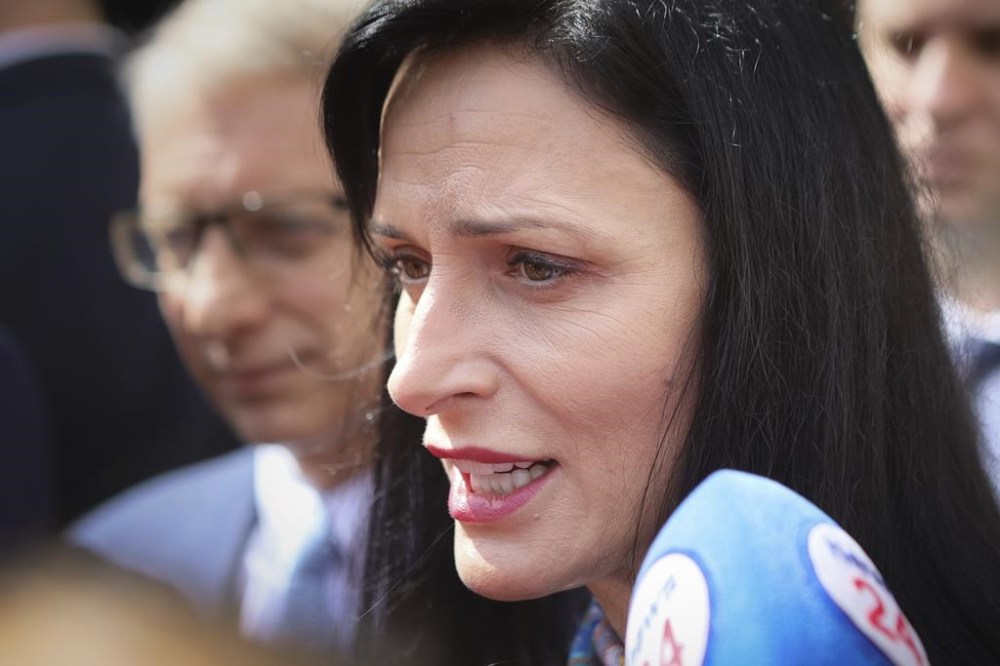
After April’s election, the political rivals struck a deal that each would hold the top job of prime minister for nine months at a time.
Under the deal, outgoing Prime Minister Nikolay Denkov of the reformist coalition stepped down on March 6 and was expected to be replaced by Gabriel, who previously served as deputy head of government and foreign minister.
The two coalitions failed in their attempt to achieve a smooth transition of power and instead accused each other of blowing up the negotiations. The talks turned into partisan wrangling over issues linked to judicial reform, leadership of the security services and the lineup of Gabriel’s Cabinet.
In a televised address late Sunday, Denkov appealed to GERB-UDF to “instead of throwing the country into chaos” keep their word, sign the agreement and vote for a government.