Urgent care
Regina physician chronicles the medical system’s built-in racism towards Indigenous people
Advertisement
Read this article for free:
or
Already have an account? Log in here »
To continue reading, please subscribe:

Digital Subscription
One year of digital access for only $205*
- Enjoy unlimited reading on winnipegfreepress.com
- Read the E-Edition, our digital replica newspaper
- Access News Break, our award-winning app
- Play interactive puzzles
*First annual payment billed as $205.00 + GST for one year. This annual subscription will automatically renew at $233.00 + GST every 52 weeks (10% off the regular annual price of $259.35). Offer available to new and qualified returning subscribers only. Cancel any time.
To continue reading, please subscribe:
Add Free Press access to your Brandon Sun subscription for only an additional
$1 for the first 4 weeks*
- Enjoy unlimited reading on winnipegfreepress.com
- Read the E-Edition, our digital replica newspaper
- Access News Break, our award-winning app
- Play interactive puzzles
*Your next Brandon Sun subscription payment will increase by $1.00 and you will be charged $17.95 plus GST for four weeks. After four weeks, your payment will increase to $24.95 plus GST every four weeks.
Read unlimited articles for free today:
or
Already have an account? Log in here »
Hey there, time traveller!
This article was published 29/03/2024 (862 days ago), so information in it may no longer be current.
When she was growing up in Regina, medical doctor Jarol Boan could not remember seeing any Indigenous people.
Upon her return to her hometown after 20 years practising internal medicine in the U.S., as well as being a faculty member in an American university medical program, she saw a very different city. Her new position as a doctor of internal medicine at the Regina General Hospital brought her into immediate contact with Indigenous people in the emergency room and with it came an unsettling recognition of her own casual racism.
Boan, who is also an associate professor of medicine at the University of Saskatchewan, set out on her own journey of enlightenment and reconciliation. In 2016, she joined a Wellness Wheel team to visit health clinics on four reserves in Saskatchewan’s central region, most of which had limited access to hospital or emergency care. The visitations had already been established by a medical colleague for some reserve communities in the northern part of the province and it had proved helpful to those communities.
Boan, who is also an associate professor of medicine at the University of Regina, set out on her own journey of enlightenment and reconciliation.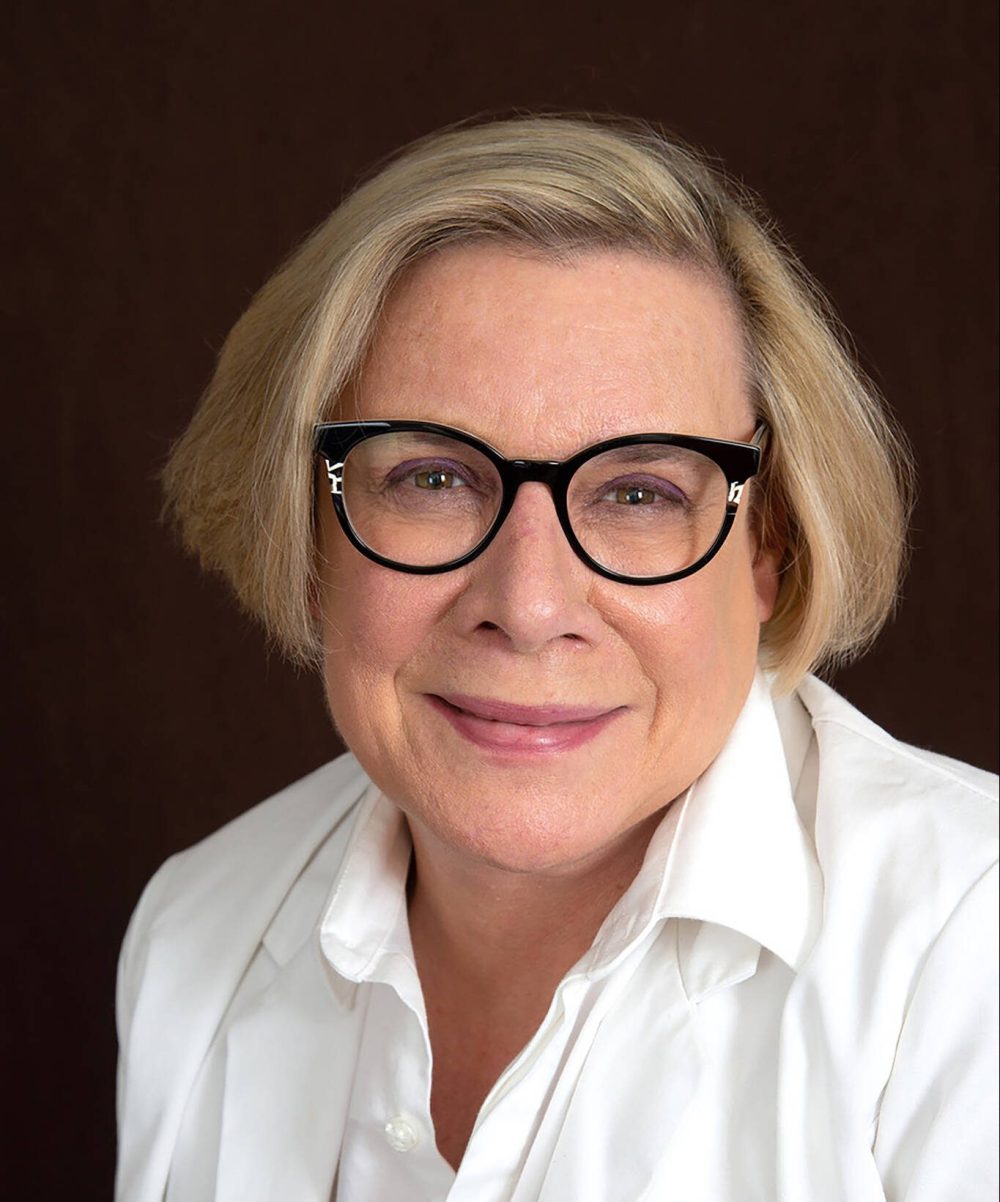
Boan, the author of The Medicine Chest: A Physician’s Journey Towards Reconciliation, quickly learned the built-in racism within the medical system — whether it was assumptions about “granny dumping,” where an ailing elderly woman is abandoned by her kin in the ER, or “Native girl syndrome,” where nurses exchange silent looks or are uneasy around an Indigenous woman who is behaving in a way disapproved by mainstream society. Or the exasperated ER worker assuming a patient is “another drunken Indian.”
The story of the author’s journey is a blend of self-reflection and sharing the revealing stories told by her Indigenous patients (using pseudonyms to protect their privacy). But it also incorporates her hard look at how the health care of Canada’s Indigenous people — taken into state care in 1876 under the Indian Act, which still remains in force — has revealed some alarming numbers.
Indigenous people are hospitalized 2.6 times more often than non-Indigenous people; Indigenous people make up to 80 per cent of HIV cases and 64 per cent of people with hepatitis C in Saskatchewan; and they are 300 times more at risk of getting tuberculosis than non-Indigenous people.
Boan’s desire to contribute to reconciliation and be sensitive to the traumatic effect of state care — especially the impact of Indian Residential Schools — is useful reflection of the efforts by many well-intentioned Canadians who are confused and uncertain what they can do. In the author’s case, as she developed a relationship with Indigenous medical caregivers and patients, she recognized that she had started out as a “full-fledged member of the order of ignorant, self-righteous white do-gooders” the First Nations people called the monias.
But she learned.
One lesson that changed Boan’s thinking was the importance of moving trauma-based medical care from an academic formulation to active practice in addressing the multiple traumas Indigenous people had endured. Another lesson was that of “two-eyed seeing” — the ability to find a middle ground by seeing with one eye the strengths of Indigenous ways of knowing and with the other the strengths of Western ways of knowing and seeing both at the same time. For Canadians looking for a path to reconciliation, two-eyed seeing can help locate a common ground between settler and Indigenous that respects both ways of knowing.
Boan has come to understand this concept in medical pluralism, which can incorporate different views and beliefs about medicine and healing, but her journey continues. In concluding her story, she quotes Murray Sinclair, former chief justice, senator and chair of the Truth and Reconciliation Commission of Canada, that there are no shortcuts on the road to reconciliation, and that “we are forced to go the distance.”
Although the “medicine chest” is featured in the title, the treaty “medicine chest” provision to provide medical care appeared only in Treaty 6, and it serves only as a jumping-off point for the history of health care (or lack thereof) for Indigenous people. Boan does make the common error of blending Indigenous people into a single category. Canada’s First Nations people, sometimes referred to bureaucratically as Status Indians, are governed by the Indian Act. The Inuit were taken under federal government authority in the 1920s and the Métis were not officially recognized as Aboriginal (Indigenous) until 1982.
Boan’s writing style is conversational and informative and she delivers an engaging description of one settler’s journey towards reconciliation.
Sheilla Jones is a Winnipeg author pursuing a doctoral degree at the University of Manitoba with a focus on peacebuilding and Indigenous issues.
History
Updated on Wednesday, April 17, 2024 4:16 PM CDT: Changes University of Rgina to University of Saskatchewan