Nothing to fear
Judith Butler’s latest a dense, important treatise on the ways we think about gender

Advertisement
Read this article for free:
or
Already have an account? Log in here »
To continue reading, please subscribe:

Digital Subscription
One year of digital access for only $205*
- Enjoy unlimited reading on winnipegfreepress.com
- Read the E-Edition, our digital replica newspaper
- Access News Break, our award-winning app
- Play interactive puzzles
*First annual payment billed as $205.00 + GST for one year. This annual subscription will automatically renew at $233.00 + GST every 52 weeks (10% off the regular annual price of $259.35). Offer available to new and qualified returning subscribers only. Cancel any time.
To continue reading, please subscribe:
Add Free Press access to your Brandon Sun subscription for only an additional
$1 for the first 4 weeks*
- Enjoy unlimited reading on winnipegfreepress.com
- Read the E-Edition, our digital replica newspaper
- Access News Break, our award-winning app
- Play interactive puzzles
*Your next Brandon Sun subscription payment will increase by $1.00 and you will be charged $17.95 plus GST for four weeks. After four weeks, your payment will increase to $24.95 plus GST every four weeks.
Read unlimited articles for free today:
or
Already have an account? Log in here »
Hey there, time traveller!
This article was published 29/03/2024 (884 days ago), so information in it may no longer be current.
Who’s afraid of gender?
The Vatican is. People who support that nebulous dog-whistle “parental rights” certainly are, as are the people who panic about who pees where. Certain feminists who think inclusive language such as “pregnant person” erases “women” — probably. People who believe gender is a threat and a harm: to the nuclear family, to children, to the institution of heterosexual marriage — definitely.
Who’s Afraid of Gender? is the grabby title of the urgent new book by American philosopher Judith Butler, a professor emeritus at the University of California, Berkeley and likely best known for their groundbreaking 1990 book Gender Trouble. (Butler is non-binary and uses they/them pronouns.) It’s also the question at the heart of their latest.
John Woods / Free Press files
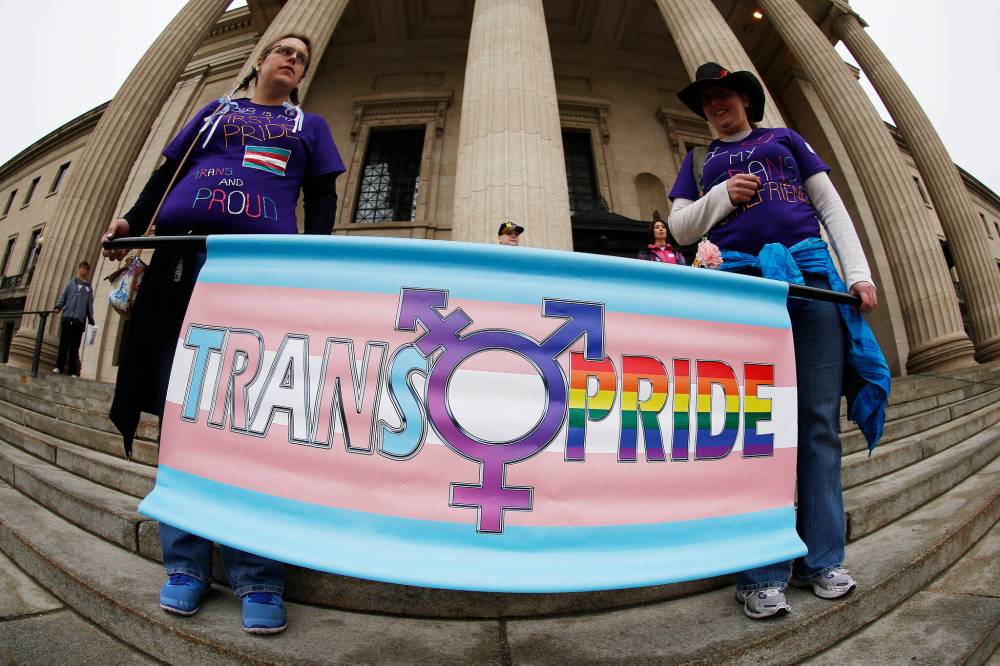
In the 2023 election campaign, the PC Party of Manitoba promised expanded ‘parental rights’. The NDP won a majority government and affirmed its support for transgender and gender-diverse youth.
First, though, it might be helpful to define gender, which Butler doesn’t do — not really. Instead, they look at how much weight that one word carries, how much discussion, debate and disagreement it provokes.
“Some suspect ‘gender’ is a way of discussing women’s inequality or is synonymous with ‘women,’” Butler writes in the introduction. “Others think it is a covert way of referring to ‘homosexuality.’ And some presume that ‘gender’ is another way of talking about ‘sex’ with either biology or legal assignment at birth, and ‘gender’ with sociocultural forms of becoming. At the same time, feminists and other scholars in gender studies disagree among themselves which definitions and distinctions are right.”
If you are a citizen of pretty much any society, you know gender has, in recent years, morphed into something else, something dangerous, something to be feared. Butler explores how gender has become a “phantasm” — an illusion or apparition — among the “anti-gender ideology movement,” which “treats gender as a monolith, frightening in its power and reach.”
The contradictions rife within the anti-gender beliefs and viewpoints held and espoused by religious leaders, politicians and public figures aren’t dismissed in the book. Rather, Butler engages with them head on, expertly and masterfully unpacking and teasing them apart. “If the head spins, it is supposed to.”
The trouble is, in doing so, sometimes Butler also can make the head spin.
This is Butler’s first book for a “trade audience,” i.e. a non-academic audience. While the language glances at being accessible, Who’s Afraid of Gender? still sends one scrambling to the dictionary. It’s a dense, rigorous read filled with ideas Butler has clearly spent a considerable amount of time tangling with, but some are tied into such impenetrable Gordian knots of thinking that one is required to read a paragraph thrice in order to pick them out. For a book that is under 300 pages after you remove its robust notes section, it still manages to feel like a door-stopping tome.
Supplied photo
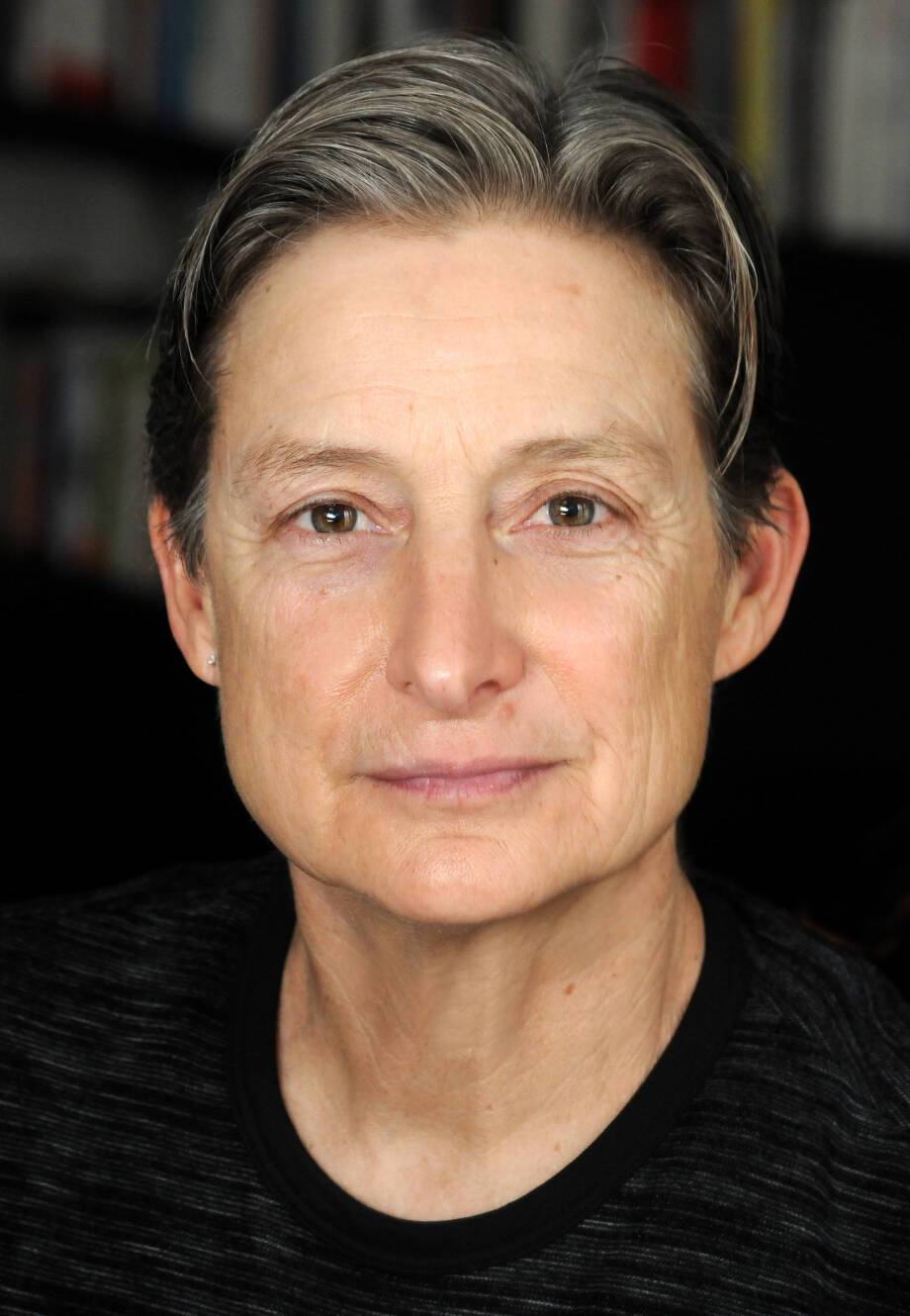
Judith Butler engages with anti-gender beliefs and viewpoints held and espoused by religious leaders, politicians and public figures head on, expertly and masterfully unpacking and tearing them apart.
But feeling challenged is the point. Butler’s invitation, should we choose to accept it, is to really think, deeply and perhaps differently, about gender. To turn over and examine all the ways we’ve previously thought about gender, what influences our thinking about gender and how others are thinking about gender. Butler, I believe, doesn’t want us to think harder so much as they want us to think better. To stop and consider what’s actually being said when a politician equates educating children about gender with “abuse,” or when people on social media accuse trans folks of “grooming.”
Or, for that matter, who is really being harmed when gender is treated as a phantasm.

On this, Butler is clear and resolute.
“When no mention of gender or sexual orientation is allowed in primary schools, the aim is not just to stop the acceptance of the diversity of gender and sexuality, but to make those thoughts unsayable, unreadable, unthinkable,” Butler writes.
And when queer or trans children are denied education and care because some people have decided their existence is too threatening, “their sexuality and their gender becomes the unspeakable. Heteronormativity becomes mandatory, backed by law or doctrine, forming the horizon of the thinkable, the limits of the imaginable — and the livable,” Butler writes, asking “where, by the way, is ‘pro-life’ in this scene?”
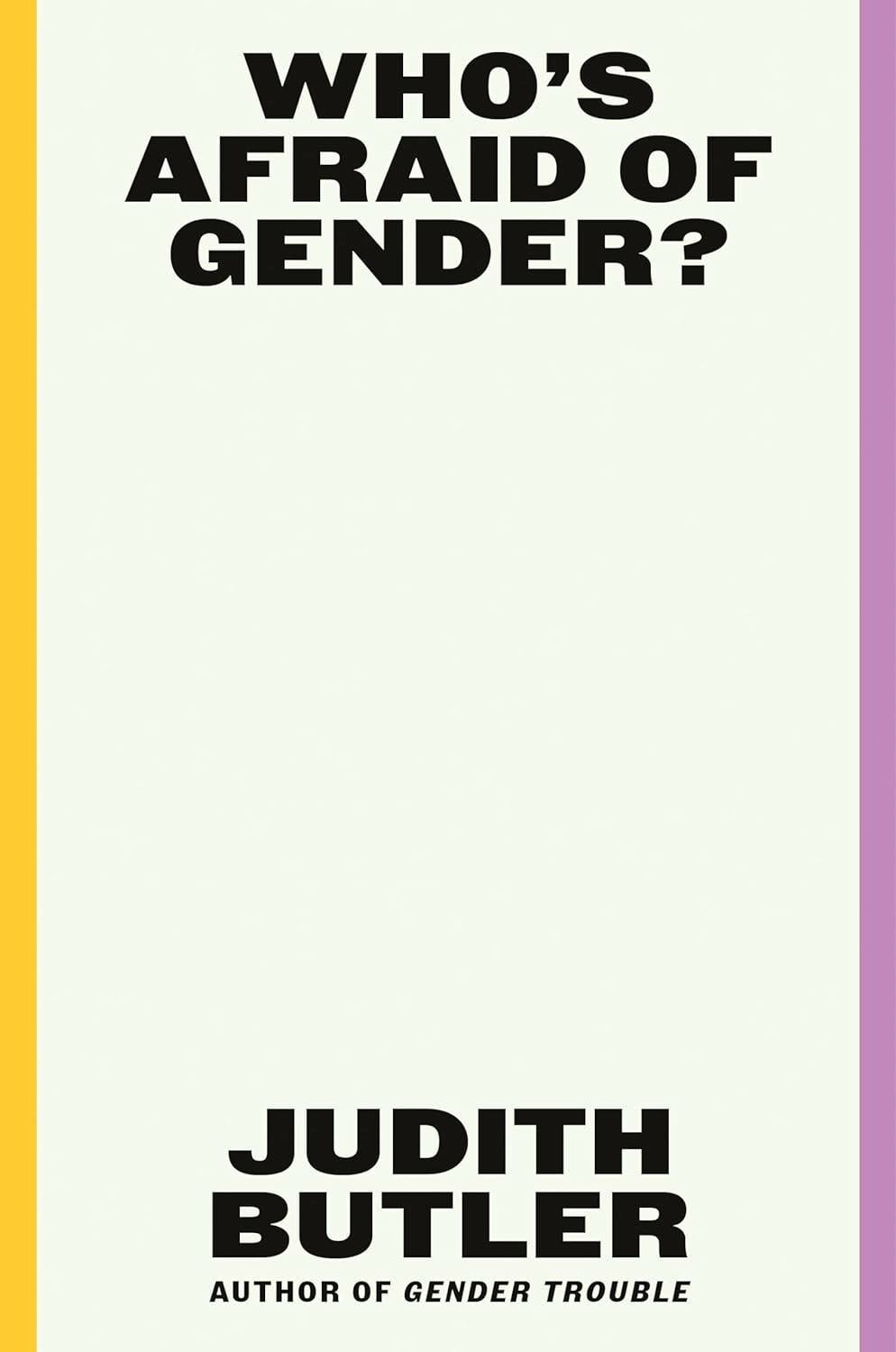
Who’s Afraid of Gender?
While certainly a timely, important book, Who’s Afraid of Gender? risks preaching to the choir, as it were. The people who would likely benefit most from reading this book — the people that are most afraid — are the same people who would likely never pick it up. Because to them, the only thing scarier than gender is ideas about gender.
Jen Zoratti is a Free Press columnist and arts writer.
Jen Zoratti is a columnist and feature writer working in the Arts & Life department, as well as the author of the weekly newsletter NEXT. A National Newspaper Award finalist for arts and entertainment writing, Jen is a graduate of the Creative Communications program at RRC Polytech and was a music writer before joining the Free Press in 2013. Read more about Jen.
Every piece of reporting Jen produces is reviewed by an editing team before it is posted online or published in print – part of the Free Press‘s tradition, since 1872, of producing reliable independent journalism. Read more about Free Press’s history and mandate, and learn how our newsroom operates.
Our newsroom depends on a growing audience of readers to power our journalism. If you are not a paid reader, please consider becoming a subscriber.
Our newsroom depends on its audience of readers to power our journalism. Thank you for your support.
Jen Zoratti is a columnist and feature writer working in the Arts & Life department, as well as the author of the weekly newsletter NEXT. A National Newspaper Award finalist for arts and entertainment writing, Jen is a graduate of the Creative Communications program at RRC Polytech and was a music writer before joining the Free Press in 2013. Read more about Jen.
Every piece of reporting Jen produces is reviewed by an editing team before it is posted online or published in print – part of the Free Press‘s tradition, since 1872, of producing reliable independent journalism. Read more about Free Press’s history and mandate, and learn how our newsroom operates.
Our newsroom depends on a growing audience of readers to power our journalism. If you are not a paid reader, please consider becoming a subscriber.
Our newsroom depends on its audience of readers to power our journalism. Thank you for your support.
Advertisement Advertise With Us
Advertisement Advertise With Us
History
Updated on Friday, March 29, 2024 9:08 AM CDT: Corrects pronoun