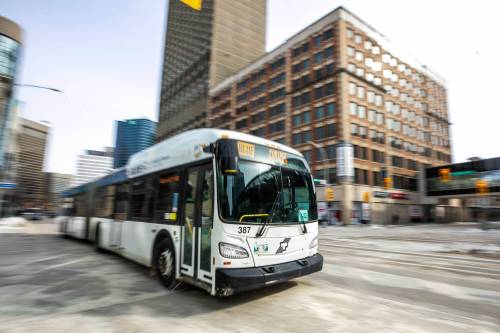
Could trade war have a silver lining? Trump’s tariff tantrum, geopolitical turmoil could be blessings in disguise for Prairie raw and critical minerals, and for Manitoba’s diversified economy
Read this article for free:
or
Already have an account? Log in here »
To continue reading, please subscribe:

Digital Subscription
One year of digital access for only $205*
- Enjoy unlimited reading on winnipegfreepress.com
- Read the E-Edition, our digital replica newspaper
- Access News Break, our award-winning app
- Play interactive puzzles
*First annual payment billed as $205.00 + GST for one year. This annual subscription will automatically renew at $233.00 + GST every 52 weeks (10% off the regular annual price of $259.35). Offer available to new and qualified returning subscribers only. Cancel any time.
To continue reading, please subscribe:
Add Free Press access to your Brandon Sun subscription for only an additional
$1 for the first 4 weeks*
- Enjoy unlimited reading on winnipegfreepress.com
- Read the E-Edition, our digital replica newspaper
- Access News Break, our award-winning app
- Play interactive puzzles
*Your next Brandon Sun subscription payment will increase by $1.00 and you will be charged $17.95 plus GST for four weeks. After four weeks, your payment will increase to $24.95 plus GST every four weeks.
Read unlimited articles for free today:
or
Already have an account? Log in here »
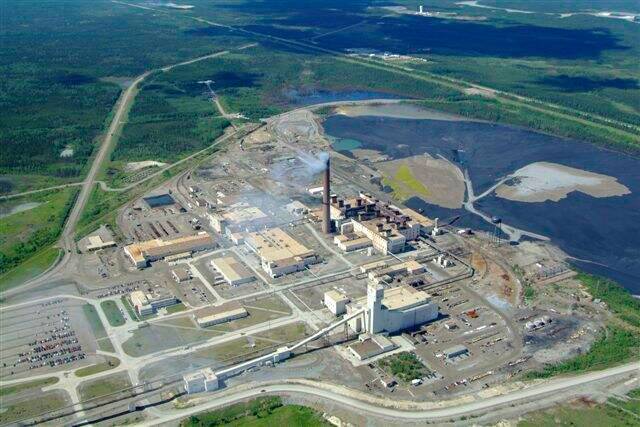
It’s early July and Warren Luky’s second last day before he retires as president of United Steelworkers Local 6166. After a career at the bargaining table and in and around mineshafts, Luky speaks candidly as he fires up a barbecue at his Thompson home.
Luky, who represents 472 miners at Vale’s Thompson mining operation along with other northern labourers, is quite aware of the buzzwords currently attached to his trade and the region.
Phrases like “Arctic sovereignty,” “trade diversification,” “Indigenous-led” and “critical minerals” have caught on with politicians of all stripes over the past couple years as federal and provincial governments tout the need for greater Canadian sovereignty, with the push for major infrastructure projects declared a matter of national interest.

In light of the bitter collapse in trade negotiations between Canada and the U.S. on Aug. 21 — a historic blow to cross-border relations — these phrases are bound to become more contagious.
But this is Thompson, a city of 13,000 situated on the edge of the world’s fifth-largest nickel deposit that has endured through decades of uncertainty that’s come with such factors as China’s hard grip on global critical-mineral supply.
A takeover of the Thompson Mine Complex by Vale Base Metals from Inco in the early 2000s led to downsizing the city’s Vale workforce by nearly 40 per cent. Hundreds more jobs were later slashed with the closing of Vale’s Birchtree mine, along with its smelting and refining operations.
More recently, however, the economic winds are shifting more favourably.
Earlier this year, Vale inked a deal with three partners — including the federal government — to invest up to $280 million in the mine complex, which includes two underground mines and an adjacent mill. The consortium plans to hire more workers and double mining output in five years.
In Thompson’s hockey rinks, Legion hall and lunchrooms, Luky says it’s not unusual for heady economic topics to come up. And right now, those conversations are sprinkled with a cautious sense of optimism.
“The average miner is only so woke,” Luky says. “(But) never underestimate miners for their intelligence… (they’re) very savvy about the world markets, they’re very savvy about what’s going on in trade, how minerals impact everybody.”
Raw commodities can be volatile, with demand and prices swinging with global forces far beyond local control. Today’s geopolitical turmoil is intensifying demand for certain resources, and as a result, casting a spotlight on Prairie oil, uranium, wheat, canola, potash, nickel and other “critical minerals.”
In Canada, that refers to 34 metals and minerals, including nickel — called “critical” because the federal government considers them essential to the country’s security.
Earlier this year, Ottawa announced the $2-billion Canada Critical Minerals Accelerator fund to push the production of minerals that both the country and its allies need, as Prime Minister Mark Carney positions Canada as an alternative to Chinese supply.
For now, minerals remain among the commodities exempt from U.S. President Donald Trump’s new 50 per cent tariffs, which came into effect Saturday. But Canada is increasingly looking beyond the U.S. to sell its lithium, nickel and other minerals.
Critical minerals are key to manufacturing solar panels, EV batteries and other technology associated with green-energy transition. They also underpin modern defence arsenals, such as precision-guided missiles, submarines and electronic warfare systems.
And it’s not just Manitoba’s mines being championed as crucial to Canada’s mineral strategy. It’s also the Port of Churchill on Hudson Bay — hundreds of kilometres further north from the Thompson mining belt through dense Canadian Shield, peat bog and permafrost.
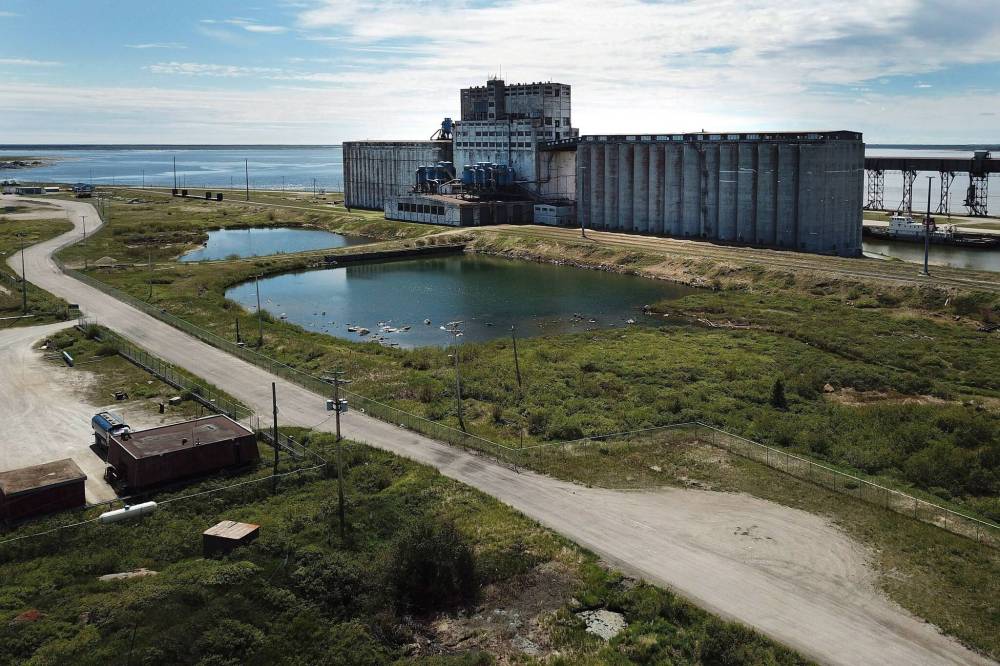
For the first time in six years, Prairie grain is shipping via the port in late August or early September, followed this fall by the first overseas shipment from Manitoba’s sole potash mine. Nickel and zinc concentrates are also slated to leave Churchill for Europe this year.
A major expansion of the port, owned by Arctic Gateway Group, is touted as a candidate for one of Canada’s Major Projects, with Ottawa and the province already committing $262 million to rail-line and port upgrades and a feasibility study.
For all the Churchill buzz, Luky calls infrequent shipments from the port merely “symbolic.” But he also says many people in Manitoba’s northern mining communities are carefully eyeing Churchill’s developments and broader implications.
“Can we make (Churchill) profitable this year, next year? F—- no. But down the road, it’s coming,” he says. “(Miners are) talking about the clown show with Trump … You got to give Trump credit where credit is due. He put geopolitics onto the f—-ing map … It woke up the country.”
After the Canada-U.S. trade negotiations failed, Carney vowed to match U.S. tariffs “dollar for dollar” and said: “They asked too much and they offered too little … you’re at war when you’re attacked, and we got attacked.”
Sharp words. But Canada’s defensive nationalism, of which its critical-mineral strategy and diversification efforts are key aspects, is ongoing. Its stated priorities include doubling Canada’s non-U.S. exports, greater domestic processing and refinement capacity, expanding domestic artificial intelligence power and more than doubling national defence spending.
Backed by a mandate to double national electrification, Ottawa is also pursuing a series of mega-projects surrounding energy, ports and pipelines.
It turns out, last year’s “elbows up” messaging in response to Trump’s bullying and trade salvos has more to do with factories, mining, oil and the military than hockey, CanCon and supporting your local brewery.
While the neighbouring Prairie provinces have seemed more fixated on provincial sovereignty, Manitoba Premier Wab Kinew has called for a “Team Canada approach” and vocally backs Carney for walking away from the negotiating table.

Kinew’s government promotes critical-mineral development — with the premier telling the prime minister “Manitoba is the Costco of critical minerals” — and emphasizes Churchill’s port and rail line as vitally important to national priorities.
Nonetheless, since Carney took office in the spring of 2025, many efforts in Canada and Manitoba to stimulate strategic industries haven’t shifted the country’s trade dependence away from the U.S. For instance, after being refined in Ontario, Thompson’s nickel largely flows south of the border, where the U.S. government is attempting to choke off Chinese supply.
A similar pattern goes for aerospace production, which has received notable provincial stimulus in the past couple of years. Manitoba has one of the country’s largest aerospace sectors, but it remains deeply integrated into supply chains associated with American defence.
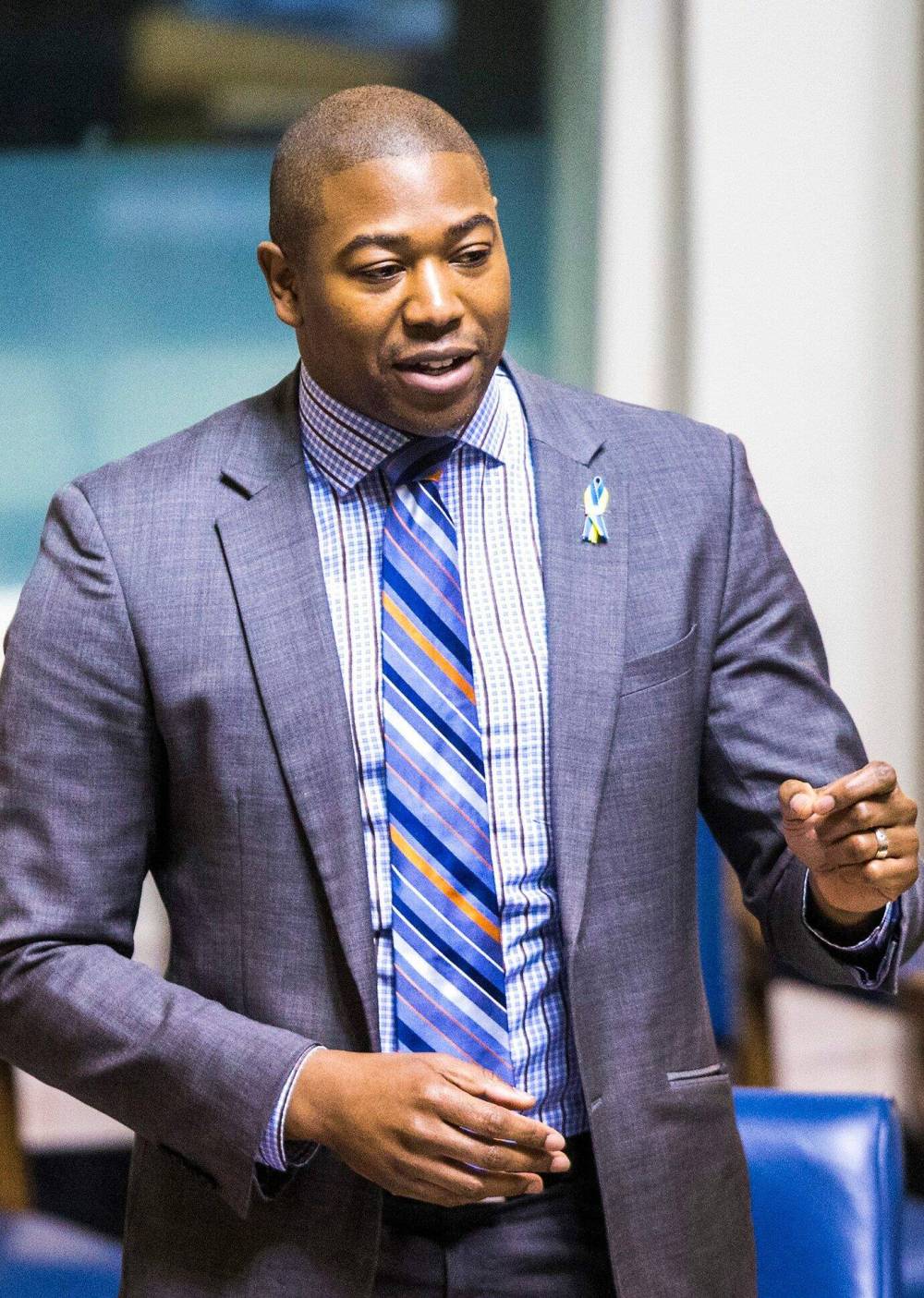
“We know that (Manitoba’s) economy and our exports will rely heavily on our largest trading partner and our closest geographical market,” Manitoba Business Minister Jamie Moses said in late spring shortly before announcing a new Manitoba trade office in India.
“It’s not one versus the other. It’s ‘how do we do both?’”
However much the logic still holds, these comments were made before Trump’s latest tariffs — which the Winnipeg Chamber of Commerce estimates would impact 5.2 per cent of the province’s exports — and renewed efforts, in the last hours of last week’s trade negotiations, to limit the countries with whom Canada can sign trade deals.
Today, the balancing act between U.S. and non-U.S. trade feels especially fraught.
“They’re attacking our entire country, and we can’t stand for it,” said Moses said at a news conference this week, where he stressed the importance of the Port of Churchill expansion to “diversify away from the United States of America.”
Fletcher Baragar casts doubt on just how much of the wave of Canada’s new economic nationalism Manitoba can catch — and shift from U.S. dependency.
“We’re looking for ways to diversify further away from (the U.S.). Under those circumstances, Manitoba is not well-positioned,” says the University of Manitoba economics professor.

Manitoba’s exports to non-U.S. markets have increased since 2019. But the province’s landlocked status, apart from its narrow shipping season via Churchill, constrains that capacity.
But diversification is not just about new trading partners, he stresses. It’s about specialization, entering new sectors or moving into “higher-value” areas — like aerospace, finance and tech, or processing and refinement of raw commodities — to stabilize the economy and improve Canada’s leverage within existing trade relationships.
Despite its modest GDP, Manitoba may look like a model province in this respect; a microcosm of the eclectic economy Ottawa is trying to foster nationally.
Manitoba has resource-heavy industries characteristic of the West, like mining and farming, but it also has something of a central-Canada flavour, with notable financial, insurance and manufacturing sectors.
And, of course, the province is a major hydroelectric player. It’s going to take a lot of power to “build, baby, build,” to invoke Carney’s pledge, and Manitoba has relatively cheap and clean energy to offer.
“The critical-minerals (push) is really interesting… It’s a mixed-bag, but certainly, some industries fit fairly well (with nation-building), clearly Hydro,” Baragar says, displaying a guarded admiration for the NDP government’s moves toward Hydro expansion.
This includes Indigenous-led wind generation, with several First Nations and the Manitoba Métis Federation competing for a share of Hydro’s planned 600-megawatt allocation; new backup combustion turbine capacity at Brandon’s generating station; and long-term plans for building out northern transmission to service Indigenous communities — and support northern economic growth, around power-intensive areas like mining.
But critics argue the province’s growth ambitions for Hydro, which holds $25 billion in debt, depend on overly optimistic assumptions in uncertain areas. Wildfire and drought can quickly impose enormous costs, and major Hydro initiatives can serve as lightning rods of controversy for environmental and other reasons.
Manitoba Hydro president and CEO Allan Danroth (whose departure from the Crown corporation was announced Friday) recently revealed he and staff members have faced “eight credible threats” while defending the Brandon turbine plan, a $3-billion initiative that will rely entirely on fossil fuel.
Nation-building-styled ambitions for Manitoba — whether tech centres supporting “data sovereignty,” critical minerals, wind farms or northern infrastructure upgrades — tend to hinge on greater electricity abundance.
They also depend on the trust of the communities where these projects take shape. This balancing act has been pronounced in debates over data centres — from the hyper-scale Île-des-Chênes AI centre cancelled by Kinew in June over environmental concerns to a smaller facility under construction in the RM of Rosser, which faces a petition with over 2,000 signatures.
This same tension is palpable surrounding some mining developments, such as the Sio Silica proposal to extract high-purity silica sand in southeastern Manitoba.
Although the project was promoted by Carney at the G7 Leaders’ Summit in June, the Alberta company has already been denied an environmental licence here once — and faces sustained pushback from area residents.
Other projects seem more rooted in local community and consent, though it may be years before they come to fruition.
One of them is Minago — also in the Thompson nickel belt and owned by Norway House Cree Nation — which touts rare platinum metal potentials, alongside its magnesium and nickel deposits.
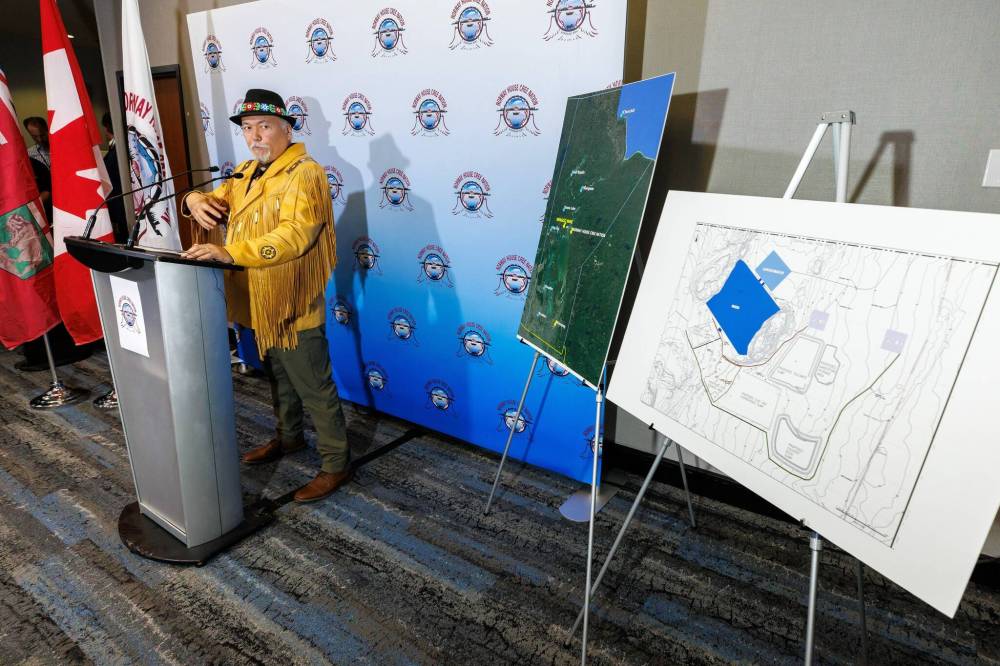
Its proponents describe it as containing a “a treasure chest of all sorts of critical minerals” and Canada’s “first, 100 per cent First Nation owned critical-mineral asset.”
Mostafa Fayek, professor in the University of Manitoba’s department of earth sciences, says the project is “geologically interesting” but voices caution about Minago’s financial feasibility at a large industrial scale.
There are other challenges too: Norway House carries more than $130 million in debt and is engaged in a legal battle with HLL, its former financial consultant.
Jim Rondeau, director of Norway House’s major projects, has said Minago needs an investment of at least $1 billion — and more electricity in the area — before it can begin realizing annual multi-billion dollar output potential.
“If governments don’t support shovel-ready, fully Indigenous-owned critical-mineral projects, it signals a major failure,” Jason Rasevych, president of the Anishnawbe Business Professional Association, told the Free Press in June.
“When you look at Indigenous sovereignty, it is no longer a roadblock to the Canadian industry, it is a fast-track mechanism to get projects built.”
Although the new Hydro push positions First Nations as owners and beneficiaries, a history of mistrust remains, rooted in First Nations’ experiences of flooding, contamination and displacement in the wake of hydroelectricity projects in the North.
“The track record at building trust is weak,” Baragar says. “Part of changing this is about acknowledging the mistakes that have been made… But (Hydro) should be actively thinking, ‘Where do we want to be five years from now, 10 years from now, 15 years from now?’ And then provide some support for that.”
Complex dynamics between Indigenous self-determination and national sovereignty agendas also play out at the Port of Churchill.
Beyond the hundreds of millions already spent on upgrades, supporters envision more build-outs to help transform Churchill into a thriving gateway for minerals and Prairie commodities — potentially even Alberta oil and gas — to overseas markets.
In September, Manitoba will pitch greater Churchill expansion to leading international investors at the inaugural Canada Investment Summit in Toronto but skeptics point to the steep hurdles facing the loftiest visions for “Port of Churchill Plus” — from a short, ice-constrained shipping season to daunting costs, environmental concerns, questions about First Nations consent and other limitations.
“(Such as) improving the transportation corridor — the problem is it’s not (currently) a year-round port,” Baragar says.
A new feasibility study suggests year-round shipping from the port may ultimately be possible, though it would depend on purchasing expensive ice-hardened vessels.
The port and its railway also have substantial Indigenous ownership via the Arctic Gateway Group, with plans of further facilitating development through the creation of a new Manitoba Crown-Indigenous Corporation. It also has public support of the Manitoba Keewatinowi Okimakana, the political advocacy organization representing 26 northern First Nations.
But a possible liquid natural gas pipeline from Alberta to Churchill, which Kinew promotes, could trigger the Crown’s duty to consult First Nations.
Similar questions of Indigenous consent surround a newly proposed pipeline from Alberta to Ontario, where Manitoba finds itself in the middle of a national debate. Critics contend that east-west corridors, though potentially shifting Alberta from its deep dependency on U.S. markets, would saddle Manitoba with the greatest risks.
While Ontario, Saskatchewan and Alberta’s premiers are fully on board, Kinew has said he is “willing to entertain the idea” but wants “Indigenous governments onside” and “workers taken care of.”
When it comes to the dynamics between Western Canada and Ottawa’s “nation-building” drive, Baragar, citing the National Policy of 1879, stresses the tensions are hardly new.
The policy was designed to diversify Canada’s economy through industrialization and reducing reliance on the U.S. while strengthening east-west trade. In practice, its fruits were shared unevenly: tariffs buffered Ontario and Quebec manufacturers, while Manitoba’s farmers endured higher costs for manufactured goods and transporting grain eastward via the new railway.
Uttered by some Prairie conservatives like a swear word today, the National Policy is invoked as proof state-led efforts at diversification often ultimately hurt Western producers. Talk to some of Manitoba’s farmers, and you’ll hear similar points about the burdens of nation-building on them.
Third-generation Starbuck farmer Chuck Fossay points to the adverse effects of Canadian tariffs.
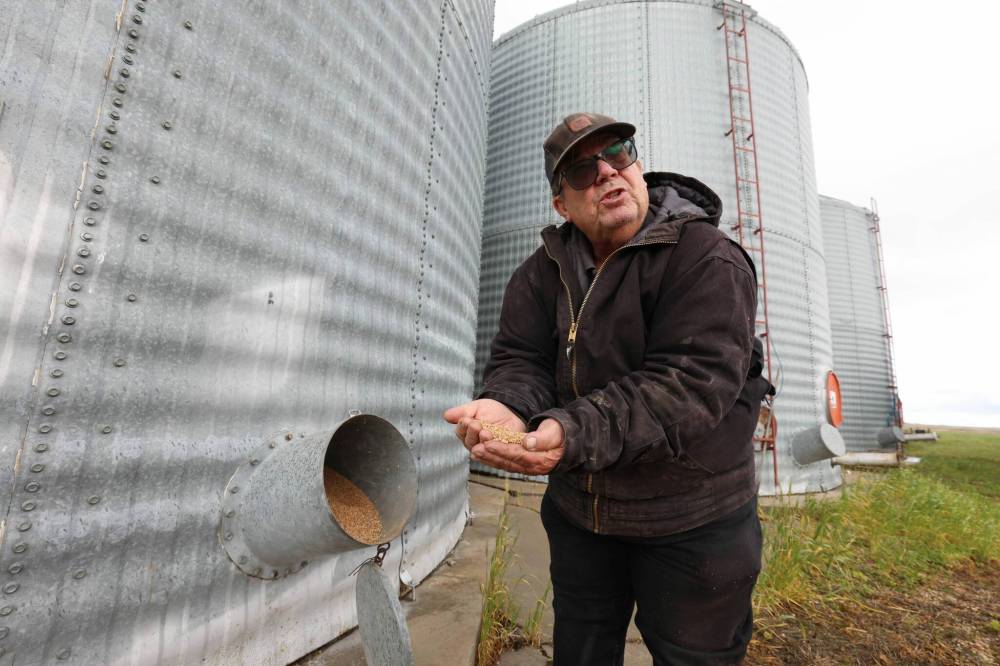
Manitoba farmers have largely escaped U.S. tariffs on agricultural exports in recent years, while Canada’s retaliatory tariffs on steel have driven up the cost of tractors, combines and other equipment.
“The biggest tariffs that (have) bothered farmers are steel,” he says, while also voicing skepticism about some facets of “diversification.”
“I can remember back in the late ’90s, early 2000s, diversification was a buzzword,” says Fossay. “The government was always telling you, whenever farmers had financial troubles, ‘Well, diversify. Don’t just grow wheat and barley — diversify, maybe have some livestock, maybe have some oil seeds.’”
With thousands of acres of canola, wheat, soybean and oat crops, Fossay’s operation may seem reasonably diversified. But he feels for younger farmers exploring new areas of operation.
“Can a young person, or anybody who’s just getting into the business, be able to withstand (the) instability, not being able to get paid, or maybe having to wait eight months or a year or more to get paid?”
Canada’s current diversification push is also about moving up the value chain — including processing and refining more of what is produced at home instead of simply shipping raw commodities south.
Manitoba’s agricultural sector, a pillar of the economy, has significant processing capacities for produce like canola, peas and potatoes. Head west from Winnipeg and you’ll see some of the centres of Manitoba’s value-added corridor: Roquette and McCain in Portage la Prairie, Canada Packers in Brandon, HyLife in Neepawa.
Nevertheless, about half of agri-food exports still exit the province unprocessed. And about half its agri-food exports go to the U.S.
It’s not surprising Fossay doubts the Port of Churchill will significantly reorient Prairie grain toward Europe.
“I’m 72 years old, and I’ve been hearing about the potential of Churchill for over 65 years, and it hasn’t really happened,” he says.
Fossay recalls the days when the now defunct Canadian Wheat Board, a government-created monopoly for the marketing and sale of wheat and barley, shipped hundreds of thousands of tonnes of grain each year via the port. But he suggests market forces don’t really favour this export route today.

Colin Hornby, general manager of Keystone Agricultural Producers, sounds a more optimistic note.
“There’s still concerns… (but) we just need to keep the momentum moving. And if this is a project of national interest, that’s great,” he says, adding that AGG is actively in discussion with KAP about greater possible use of the port by farmers.
Hornby and Fossay stress the risks to farmers of over-reliance on U.S. markets, a point that lands painfully right now. Manitoba’s major ag exports like bulk grains and oil seeds are exempt from the new 50 per cent tariffs. But the province’s dairy producers and beekeepers could see American demand for milk and honey, which are among the commodities targeted by tariffs, plummet.
“BeeMaid is in Winnipeg. They’re one of the largest honey packers and producers in Canada. So, definitely a huge concern for us,” Fossay says.
Both Fossay and Hornby also view Ottawa’s willingness to reduce Canada’s tariffs on Chinese EVs, in exchange for Beijing lowering tariffs on Canadian canola, as a step in the right direction.
“That was an instance where I think the West — and western Canadian farmers — felt like, finally, they were put ahead of the interests of Ontario,” Hornby says.
Nearly three years into his mandate, Kinew remains Canada’s most popular premier.
Quick-witted, bullish and combative with critics, he also has an unusual ability to make Manitobans feel that distinct interests — labour, business, environmental, Indigenous — can be harmonized on a path to making Manitoba a “have province.”
It’s too early to grade Kinew’s overarching economic agenda, with timelines for the most ambitious provincial projects extending years into the future.
In the meantime, Manitoba stands out as an intriguing test case for Canada’s broader nation-building thrust.
“To some extent one can indeed read Manitoba’s economic diversity as a microcosm of the diversity Ottawa is promoting,” says Baragar, the U of M economist. “Good working relations with Ottawa become essential as an economic strategy, as increasingly does good working relations with First Nations.”
Even with gradual diversification of trade partnerships — and the panic caused by Trump’s latest tariffs — there’s no avoiding the fact Manitoba remains deeply economically integrated with the U.S. At the same time, Manitoba’s diversified industrial base can help stabilize its economy in the face of global shocks and uncertainty.
Whatever the future entails, it’s time to get over seeing Manitoba as a flyover hinterland. With Manitoba’s Arctic tidewater access, hydroelectric power, underexplored mineral deposits, Norad command centre and vital role in reconciliation conversations, the province’s position in Canada’s future has rarely felt more strategically relevant.
winnipegfreepress.com/conradsweatman

Conrad Sweatman is an arts reporter and feature writer. Before joining the Free Press full-time in 2024, he worked in the U.K. and Canadian cultural sectors and freelanced for outlets including The Walrus, VICE and Prairie Fire. Read more about Conrad.
Our newsroom depends on a growing audience of readers to power our journalism. If you are not a paid reader, please consider becoming a subscriber.
Our newsroom depends on its audience of readers to power our journalism. Thank you for your support.
Related Articles
Manitoba introduces $100M in supports to combat U.S. tariffs