

Draft of Saskatchewan’s pronoun policy gave teachers discretion for at-risk students
Advertisement
Read this article for free:
or
Already have an account? Log in here »
To continue reading, please subscribe:

Digital Subscription
One year of digital access for only $205*
- Enjoy unlimited reading on winnipegfreepress.com
- Read the E-Edition, our digital replica newspaper
- Access News Break, our award-winning app
- Play interactive puzzles
*First annual payment billed as $205.00 + GST for one year. This annual subscription will automatically renew at $233.00 + GST every 52 weeks (10% off the regular annual price of $259.35). Offer available to new and qualified returning subscribers only. Cancel any time.
To continue reading, please subscribe:
Add Free Press access to your Brandon Sun subscription for only an additional
$1 for the first 4 weeks*
- Enjoy unlimited reading on winnipegfreepress.com
- Read the E-Edition, our digital replica newspaper
- Access News Break, our award-winning app
- Play interactive puzzles
*Your next Brandon Sun subscription payment will increase by $1.00 and you will be charged $17.95 plus GST for four weeks. After four weeks, your payment will increase to $24.95 plus GST every four weeks.
Read unlimited articles for free today:
or
Already have an account? Log in here »
Hey there, time traveller!
This article was published 04/04/2024 (898 days ago), so information in it may no longer be current.
SASKATOON – Emails show an early draft of Saskatchewan’s school pronoun policy would have allowed teachers to use a child’s preferred identification if there was concern the student faced danger when parents were notified.
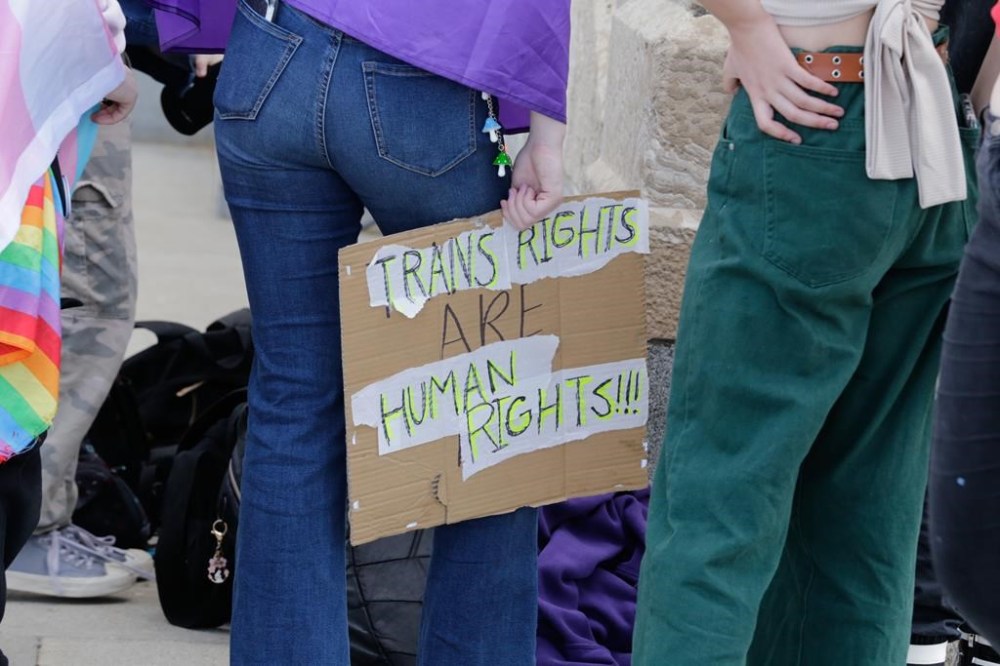
Premier Scott Moe’s government announced the policy last year. It requires teachers to have parental consent when children under 16 want to change their names or pronouns. The move received widespread criticism, with many human rights groups and the province’s advocate for children saying it violates rights to gender identity and expression.
More than 2,200 pages of documents and emails recently obtained by The Canadian Press under freedom of information laws provide insight into what provincial employees were considering as they came up with the policy.
The heavily redacted emails show that starting around Aug. 10, employees were researching a similar policy brought in months earlier in New Brunswick.
The subject line in many of the emails was “rush jurisdictional scan,” and they show employees also looked to educational policies in Canada and the United States.
Saskatchewan’s early policy draft gave room for administrators to use discretion if they believed children could be put at risk if their parents were notified.
It said when gaining parental consent is not in the best interest of a child or could result in physical, mental or emotional harm, “the director of education or designate may choose to accept the consent of student under the age of 16, if they believe that the student is sufficiently mature to understand and explain their rationale for the decision, as well as the impact and implications of their decision.”
That option was removed less than two weeks later, when the education minister at the time,Dustin Duncan, announced the official policy. That version said an appropriate school professional would work with anat-riskstudent to develop a plan to speak with the parents.
Emails show information was provided to teachers and schools at the time of the official policy announcement. In situations with an unsafe student, “school personnel will have to continue using the child’s birth name and pronoun in class” until they get permission from parents.
The government did not say why the draft policy was changed.
In an emailed statement, the province said the policy, which was later passed into legislation, was the result of the “government listening to parents about wanting to be more included in their children’s education.”
Emails previously obtained under freedom of information laws show the government received 18 official complaints last June and July before it implemented the policy in August. Court has heard it was developed in nine days.
“It’s clear that the government policy and decision making on this issue wasn’t thoughtful or based on any evidence,” said Cee Strauss, a senior staff lawyer with the Women’s Legal Education and Action Fund.
The group has intervener status in a current legal challenge of the legislation.
The government used the notwithstanding clause in the Charter of Rights and Freedoms to pass the law last year. Government lawyers have argued that the law does not violate the Charter.
Earlier this year, Justice Michael Megaw ruled that UR Pride, an LGBTQ group in Regina, is allowed to continue its challenge of the law. Saskatchewan’s justice minister has said the province will fight the ruling.
Strauss, who uses they and them pronouns, said the initial version of the policy would still have been damaging for transgender and non-binary students.
“It would have still created the situation of forced outing for trans kids to their parents at the discretion of the education director,” Strauss said.
These types of policies are causing irreparable harm to children, Strauss said, as using the wrong pronouns and names repeatedly is profoundly distressing.
There is an anti-transgender wave happening across the country, Strauss said.
Alberta also released its plan for pronoun legislation earlier this year. It would require parental consent for students 15 and under to change their names or pronouns at school. Students 16 and 17 would not need consent, but their parents must be notified.
Alberta also said it plans to restrict gender affirmation treatments for teens, instruction on gender and sexuality in school, and the ways in which transgender women can participate in sports.
A letter signed by more than 400 Canadian artists released last weekend denounced the moves by Saskatchewan, Alberta and New Brunswick. Stars who signed the letter include actor Elliot Page and music legends Neil Young and Anne Murray.
This report by The Canadian Press was first published April 4, 2024.