

Down to the wire. California US House election could end in improbable tie vote for second place
Advertisement
Read this article for free:
or
Already have an account? Log in here »
To continue reading, please subscribe:

Digital Subscription
One year of digital access for only $205*
- Enjoy unlimited reading on winnipegfreepress.com
- Read the E-Edition, our digital replica newspaper
- Access News Break, our award-winning app
- Play interactive puzzles
*First annual payment billed as $205.00 + GST for one year. This annual subscription will automatically renew at $233.00 + GST every 52 weeks (10% off the regular annual price of $259.35). Offer available to new and qualified returning subscribers only. Cancel any time.
To continue reading, please subscribe:
Add Free Press access to your Brandon Sun subscription for only an additional
$1 for the first 4 weeks*
- Enjoy unlimited reading on winnipegfreepress.com
- Read the E-Edition, our digital replica newspaper
- Access News Break, our award-winning app
- Play interactive puzzles
*Your next Brandon Sun subscription payment will increase by $1.00 and you will be charged $17.95 plus GST for four weeks. After four weeks, your payment will increase to $24.95 plus GST every four weeks.
Read unlimited articles for free today:
or
Already have an account? Log in here »
Hey there, time traveller!
This article was published 04/04/2024 (863 days ago), so information in it may no longer be current.
SAN JOSE, Calif. (AP) — A U.S. House race in California appears headed for a mathematically improbable result – after more than 180,000 votes were cast, a tie for second place.
If the numbers hold, that means that the state’s “top two” election system would have to make room for a third candidate on the November ballot, an apparent first for a House race in the state.
“This is a fantastically unlikely outcome,” said Paul Mitchell of Political Data Inc., a research firm that closely tracks voting trends.
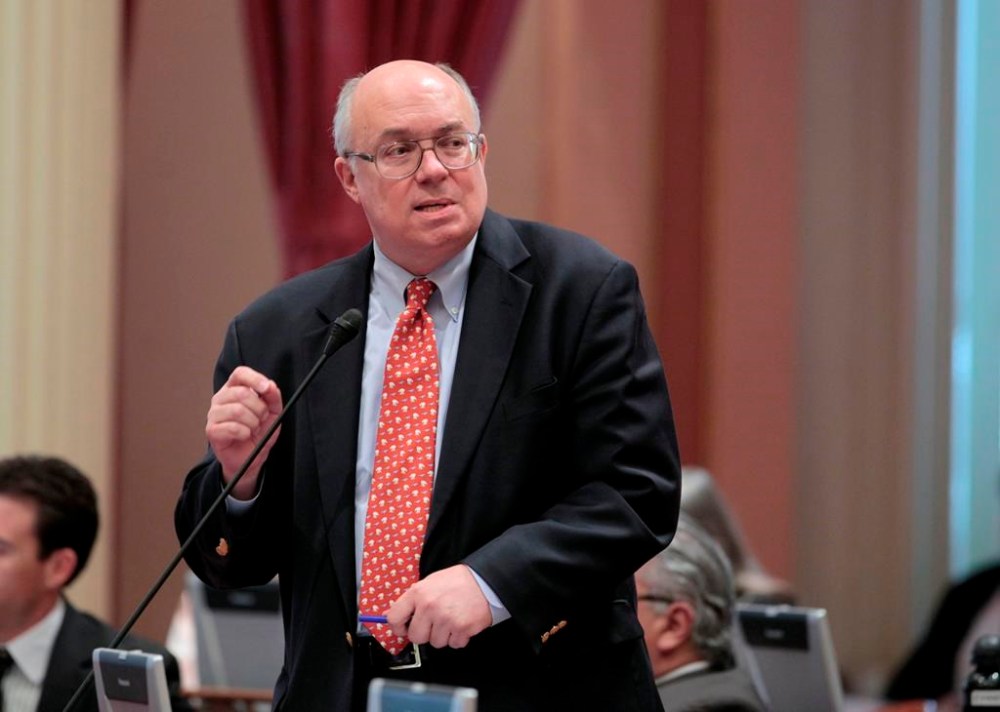
Eleven candidates were on the ballot in the heavily Democratic 16th District in the March 5 primary, south of San Francisco, a seat being vacated by retiring Democratic Rep. Anna Eshoo. Under California rules, all candidates appear on the same primary ballot, but only the two with the most votes advance to the general election, regardless of political party.
The top spot was claimed by former San Jose mayor Sam Liccardo, a Democrat, according to unofficial results that indicated all votes had been tallied. Two other Democrats were deadlocked for the second spot, with 30,249 votes each — state Assembly member Evan Low and Santa Clara County Supervisor Joe Simitian.
Secretary of State Shirley Weber, who oversees elections, has until April 12 to certify the results.
With three Democrats potentially headed for November, the contest will not play into control of the narrowly divided House, which will be decided in swing districts being contested by Democrats and Republicans around the country.
The tallies for Low and Simitian seesawed in recent days before settling into a tie on Wednesday — “It’s a special ‘Tie’ day!” Low tweeted at the time, sporting a brightly colored necktie in a photo.
The race also is a reminder of the state’s agonizingly slow vote counting — in this case, the outcome remains in doubt weeks after election day. The cost of a recount must be paid by whoever requests it, and with a cost likely to rise over $300,000 for a second count, it seems unlikely from any of the campaigns.
A three-way contest in November, with a different electorate coming to the polls, would reshuffle the dynamics of the race — “a total reset,” Mitchell noted.
“It’s really, really, really unlikely this would happen,” he said.
____
Blood reported from Los Angeles.