Housing issues hammered home Most Manitobans concerned about affordability as governments promise more shovels in ground with relaxed zoning rules
Read this article for free:
or
Already have an account? Log in here »
To continue reading, please subscribe:

Digital Subscription
One year of digital access for only $205*
- Enjoy unlimited reading on winnipegfreepress.com
- Read the E-Edition, our digital replica newspaper
- Access News Break, our award-winning app
- Play interactive puzzles
*First annual payment billed as $205.00 + GST for one year. This annual subscription will automatically renew at $233.00 + GST every 52 weeks (10% off the regular annual price of $259.35). Offer available to new and qualified returning subscribers only. Cancel any time.
To continue reading, please subscribe:
Add Free Press access to your Brandon Sun subscription for only an additional
$1 for the first 4 weeks*
- Enjoy unlimited reading on winnipegfreepress.com
- Read the E-Edition, our digital replica newspaper
- Access News Break, our award-winning app
- Play interactive puzzles
*Your next Brandon Sun subscription payment will increase by $1.00 and you will be charged $17.95 plus GST for four weeks. After four weeks, your payment will increase to $24.95 plus GST every four weeks.
Read unlimited articles for free today:
or
Already have an account? Log in here »
Hey there, time traveller!
This article was published 05/04/2024 (877 days ago), so information in it may no longer be current.
If not for Habitat for Humanity, Aslan Sejdi would never have been able to leave the Winnipeg rental unit that left his family sickened by mould.
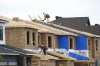
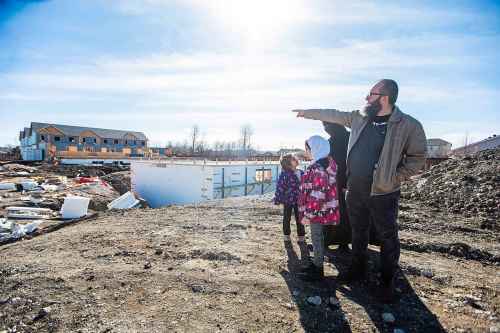
Sejdi, 48, his wife and four daughters, who range in age from five to 17, are among the dozens of families who will be moving into one of the 11 fiveplex, two-storey units being constructed by Habitat on a three-acre lot on Pandora Avenue West in Transcona. It’s the largest project in Habitat Manitoba’s history.
“We were all so happy when they told us,” Sejdi said this week. “It’s very hard to find a place here. To get a mortgage is not easy. My wife doesn’t work. It was so bad that I said we are going to have to move to another city if we don’t get this.”
Mikaela MacKenzie / Free Press Aslan (left), Halima (nine), Zainab (five), and Eljifa Sejdi in front of the under-construction Habitat for Humanity housing development that they will be moving into in Transcona. 
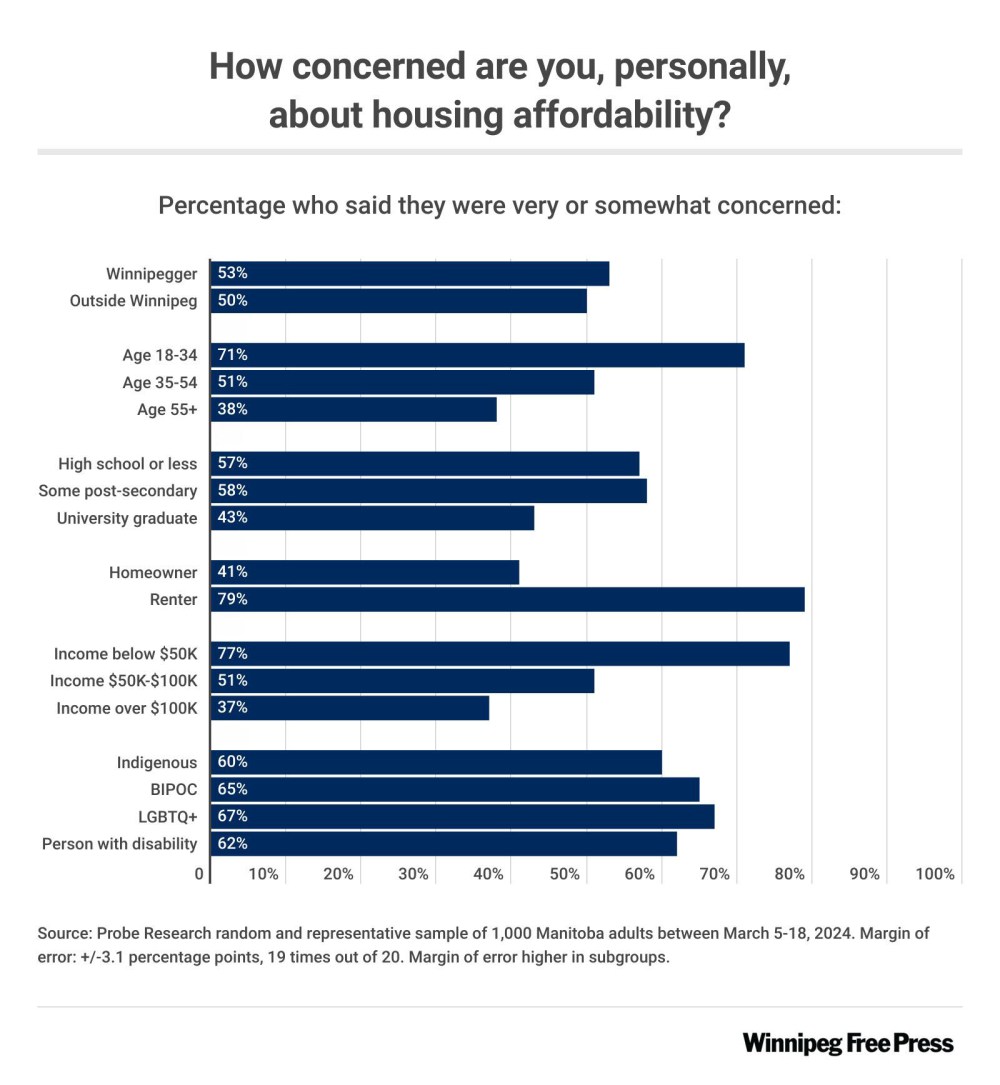
Sejdi and his family are not alone, as a new Free Press-Probe Research housing poll shows.
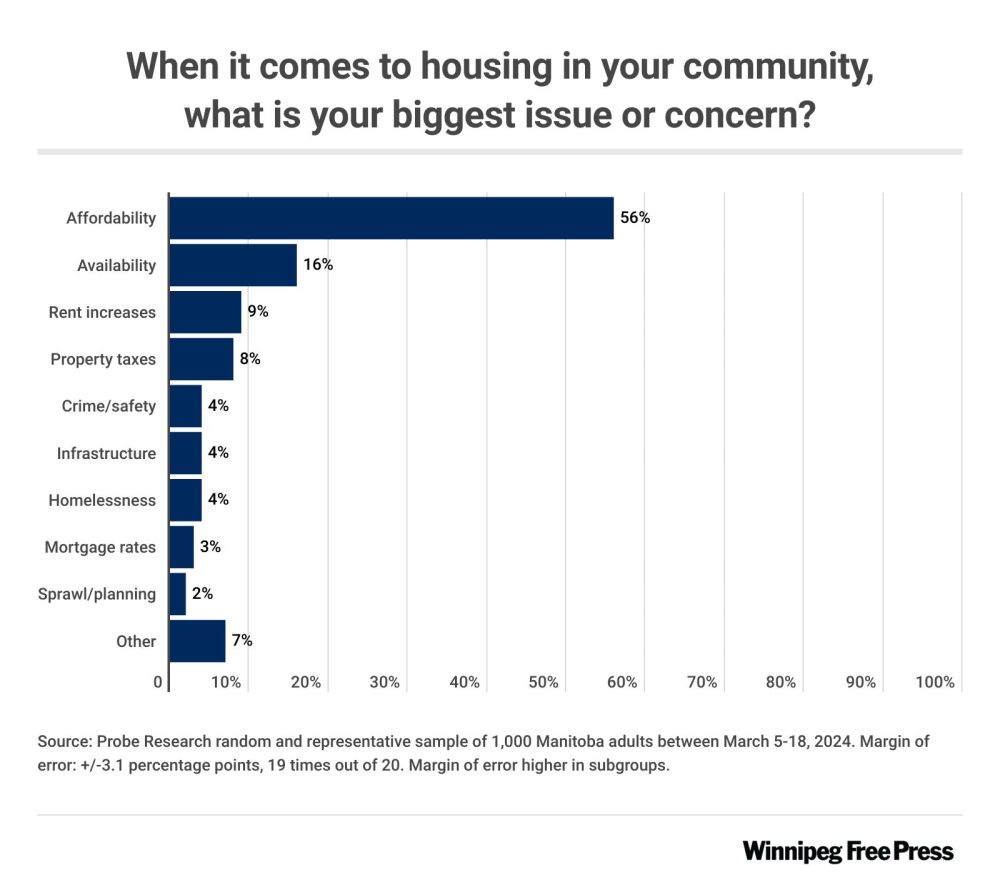
More than half of Manitobans (56 per cent) say affordability is their primary concern, significantly ahead of insufficient housing/lack of availability (16 per cent), high rent and rent increases (nine per cent), and property taxes (eight per cent).
Other issues, such as homelessness (four per cent), higher mortgage rates (three per cent), urban sprawl (two per cent) and abandoned buildings (one per cent), were of less concern.
Broken down further, almost nine of 10 Manitobans (87 per cent provincewide, 92 per cent in Winnipeg) said they are either very or somewhat concerned about affordability. Women, younger adults and those with household incomes of less than $50,000 were most concerned.
“The poll is pretty clear people are concerned about housing and affordability,” said Curtis Brown, principal at Probe Research. “Young people are feeling it in a much more direct way. Their expectations of what they can afford is different than their parents.”
The poll also found Winnipeggers support construction of multi-family units, such as the ones being constructed this year and next in the Habitat project, in residential areas.
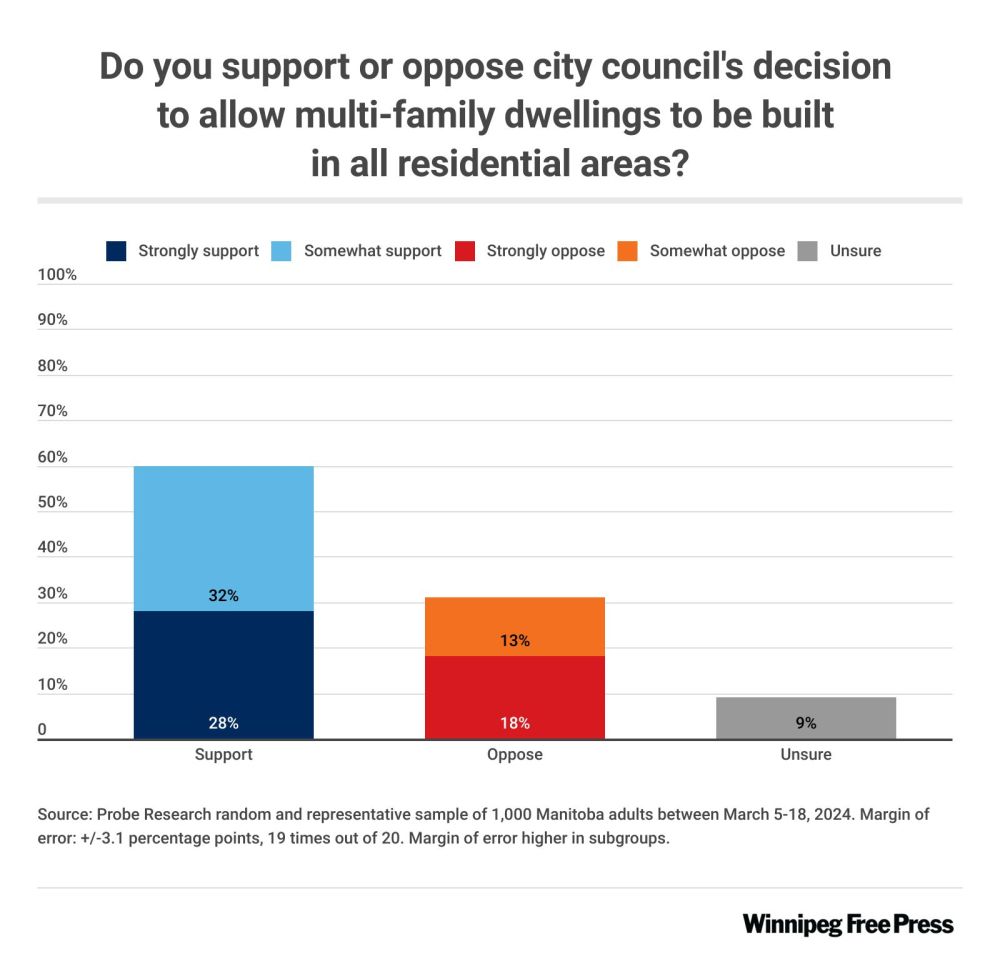
Six in 10 Winnipeggers said they are in favour of the city’s decision late last year to loosen zoning laws that allow multi-housing units to be built on what was typically a single residential lot.
The poll found majority support in all areas of the city — especially with residents in the inner city and between the ages of 18 and 34 — but less so in suburban neighbourhoods. There, residents were concerned the multi-housing units wouldn’t fit in the existing character of the area or would lead to an increase in on-street parking.
“I thought there would be more opposition in the suburbs,” Brown said. “But even here, the majority is in favour of it, just not super strong. What they are concerned about … and what will it do to my day to day life, for city planners and developers, it is important to look at these arguments.”
“The poll is pretty clear people are concerned about housing and affordability.”–Curtis Brown
Habitat for Humanity Manitoba CEO Jamie Hall said the five-unit structures offer the best use of the land.
“There will be 275 people there and 175 of them will be children,” Hall said. “Up until now, fourplexes have been the biggest we’ve built.
“We don’t build luxury. We build high quality … and we’re not only helping the family who get it, but we are also adding to the housing stock in Winnipeg.”
The polling comes at a time when the country is the midst of a housing crisis.
Recently, all three levels of government have announced or implemented programs aimed at making more affordable housing available as well as boosting overall housing stock.
On Tuesday, the Kinew government’s first budget included $116 million to build at least 350 social and affordable housing units, fix more than 3,000 others, and remove the provincial sales tax on building the new units.
Prime Minister Justin Trudeau was in Winnipeg Thursday to announce a $1.5-billion fund to help non-profit organizations create more affordable rental units across the country. This came on the heels of the federal government announcing earlier this week a $6-billion infrastructure fund to support home building and a $400-million top-up to the housing accelerator fund.
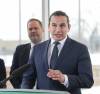
John Woods / The Canadian Press Prime Minister Justin Trudeau talks to media during an affordable housing press conference at a public housing development in Winnipeg, Thursday.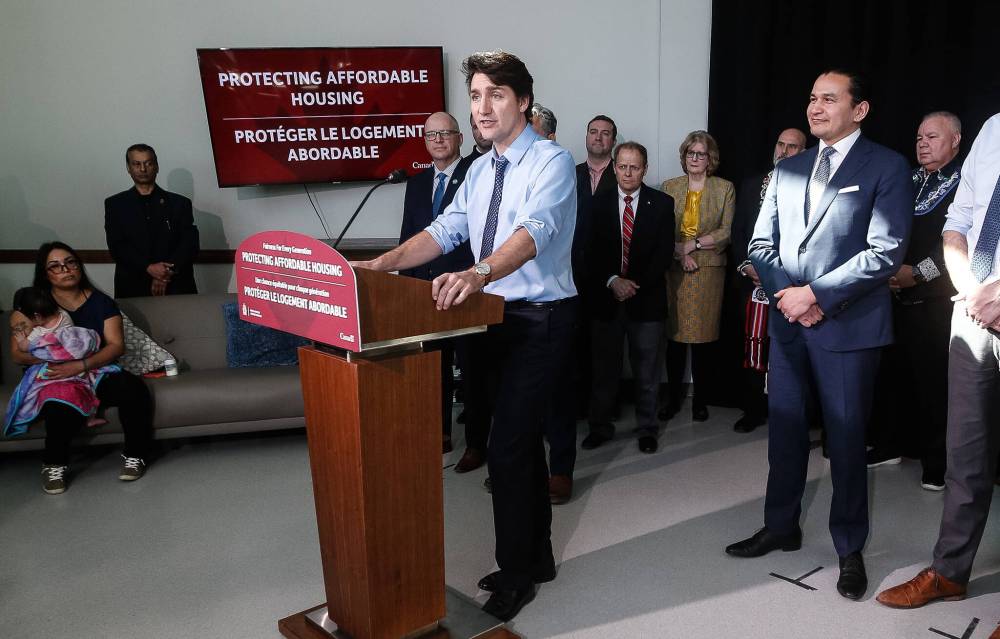
That fund helped convince city council to loosen zoning rules and speed up new residential construction in return for $122 million from Ottawa.
The changes will not only allow construction of fourplexes on single lots, but also four-storey buildings within 800 metres of transit corridors and mid-rise housing around shopping malls and commercial corridors. It will see the city build 3,155 housing units over the next three years, with about 900 categorized as affordable.
Additionally, Mayor Scott Gillingham, in his state of the city address in February, called on city departments to work with business leaders and community groups in the hopes of having 8,000 new housing units approved by November.
Mikaela MacKenzie / Free Press files Winnipeg Mayor Scott Gillingham: “Winnipeg is growing and that all puts pressure on our housing market.”
“We know housing affordability and availability are major concerns in Winnipeg,” Gillingham said in an interview. “Winnipeg is growing and that all puts pressure on our housing market.
“These zoning changes and policy changes will help get more housing units built faster.”
Currently, slightly more than 50 per cent of new housing builds, or infill, are taking place in existing residential areas.
Coun. Brian Mayes (St. Vital), who voted against the zoning changes, said he remains concerned public hearings will be bypassed for many new projects as part of the agreement with the federal government.
“Everyone thinks it is great until it is the property beside them,” said Mayes, whose ward has seen infill controversies flare up. “I have voted for a lot of infill projects, but while some planners say it is great, they don’t get the phone calls. But I do. I get hundreds of calls.”
Shauna Mackinnon, of the Right to Housing Coalition, supports more density in Winnipeg, but she wonders what type of new housing will be built.
“How affordable is the housing going to be?” Mackinnon said. “Is it reasonable for low income folk? We have to make sure some of the housing is geared to income, but that’s not something we see a lot of.”
Currently, a bachelor apartment can go for $1,100 per month, which is more than a person on minimum wage can afford, Mackinnon said.
“It’s good people are talking about affordability, but there needs to be deeper discussion of what it is and what we need,” she said. “Public policy needs to be forward thinking and not responding to what developers want to do.”
On the development side, Manitoba Home Builders’ Association president Lanny McInnes said they are looking forward to the zoning change, but stressed multi-family units will be constructed where they make sense.
Mike Deal / Free Press files Winnipeg City Councillor Brian Mayes: “Everyone thinks it is great until it is the property beside them.”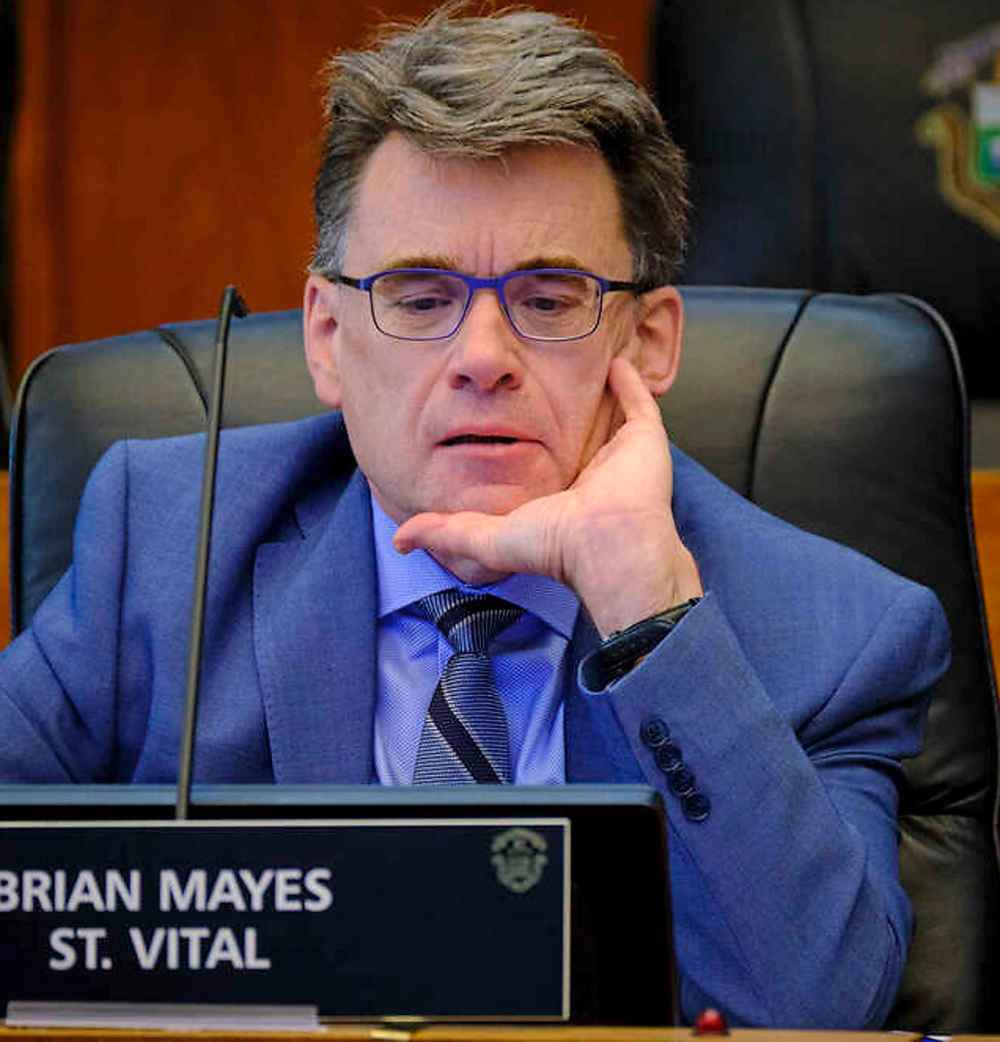
He and Gillingham are confident more housing units will help lessen the affordability strain.
Daphne Shepherd, president of the Winnipeg Regional Real Estate Board, said there are still affordable housing options in Winnipeg — even for young people looking for that first home.
“Winnipeg is still one of the more affordable cities in Canada for single income buyers,” Shepherd said, noting that while the national average for a home is around $685,000, Winnipeg is about $400,000.
However, she said prospective home buyers have to be flexible. They may need to consider a condo (Winnipeg’s average price is $270,000) or different neighbourhoods.
“If you’re looking at moving into a single detached home, you may have to look in other areas in the north and northwest including the North End, West Kildonan, Garden City, Maples, Headingley, St. James or Silver Heights … it’s all about managing expectations of the buyers.”
Kate Kehler, executive director of the Social Planning Council of Winnipeg, is cautiously optimistic the government measures will result in more affordable housing.
“If they are built with public money, there still needs to be strong incentives — or a bigger stick — if they don’t follow through to building affordable housing,” she said.
Kehler said leaders have to realize the concerns surrounding housing affordability can’t simply be solved in a few years.
“This is the first generation where it is a given they will not do better than their parents and grandparents,” she said. “When it comes to fourplexes, we need to understand a single house with acreage around it is not sustainable.
“A young person could see a fourplex, either as a co-op or to buy a fourth of the building, is better than paying rent for the rest of their lives. The takeaway is that things can change — to move away from a single dwelling with acreage around it is ideal — or even achievable.”
Carmen Nedohin, president of the Winnipeg chapter of the Canadian Association of Retired Persons, said a growing number of seniors are seeking affordable options.
Two of the city’s newest 55-plus buildings were constructed in Sage Creek and filled up almost immediately, Nodohin said.
“There’s a need for housing for seniors generally and there’s a large need for affordability,” she said. “Seniors have a fixed income — many can’t get a part-time job.”

Meanwhile, Sejdi can’t wait to move into his new Habitat home.
He grew up in Kosovo, where he was conscripted into the Serbian army during the Balkan crisis. He moved to Bosnia and Herzegovina, where he was conscripted again, before making the decision to flee.
He arrived in Canada in 2002 and married Eljifa in 2005, the same year the first of their four daughters was born.
“There are two bathrooms,” he said of the features in his new house. “I’m in a place now with only one bathroom and five girls — it’s very bad.
“And they say I could even put another bathroom in the basement someday, just for me.”
kevin.rollason@freepress.mb.ca

Kevin Rollason
Reporter
Kevin Rollason was a general assignment reporter at the Free Press.
Our newsroom depends on a growing audience of readers to power our journalism. If you are not a paid reader, please consider becoming a subscriber.
Our newsroom depends on its audience of readers to power our journalism. Thank you for your support.
Related Articles
Trudeau announces $600 million in loans, funding to jump-start homebuilding, rentals