

The US Army will hold combat training in the Philippines to hone skills as maritime tensions rise
Advertisement
Read this article for free:
or
Already have an account? Log in here »
To continue reading, please subscribe:

Digital Subscription
One year of digital access for only $205*
- Enjoy unlimited reading on winnipegfreepress.com
- Read the E-Edition, our digital replica newspaper
- Access News Break, our award-winning app
- Play interactive puzzles
*First annual payment billed as $205.00 + GST for one year. This annual subscription will automatically renew at $233.00 + GST every 52 weeks (10% off the regular annual price of $259.35). Offer available to new and qualified returning subscribers only. Cancel any time.
To continue reading, please subscribe:
Add Free Press access to your Brandon Sun subscription for only an additional
$1 for the first 4 weeks*
- Enjoy unlimited reading on winnipegfreepress.com
- Read the E-Edition, our digital replica newspaper
- Access News Break, our award-winning app
- Play interactive puzzles
*Your next Brandon Sun subscription payment will increase by $1.00 and you will be charged $17.95 plus GST for four weeks. After four weeks, your payment will increase to $24.95 plus GST every four weeks.
Read unlimited articles for free today:
or
Already have an account? Log in here »
Hey there, time traveller!
This article was published 08/04/2024 (898 days ago), so information in it may no longer be current.
MANILA, Philippines (AP) — The U.S. Army is introducing a joint battlefield training in the Philippines to improve combat readiness including by ensuring adequate supply of ammunition and other needs in difficult conditions in tropical jungles and on scattered islands, a U.S. general said.
The Biden administration has been strengthening an arc of military alliances in the Indo-Pacific to better counter China, including in any future confrontation over Taiwan. The U.S. moves dovetail with Philippine efforts to shore up its territorial defenses amid disputes with China in the South China Sea and ability to respond to frequent natural disasters.
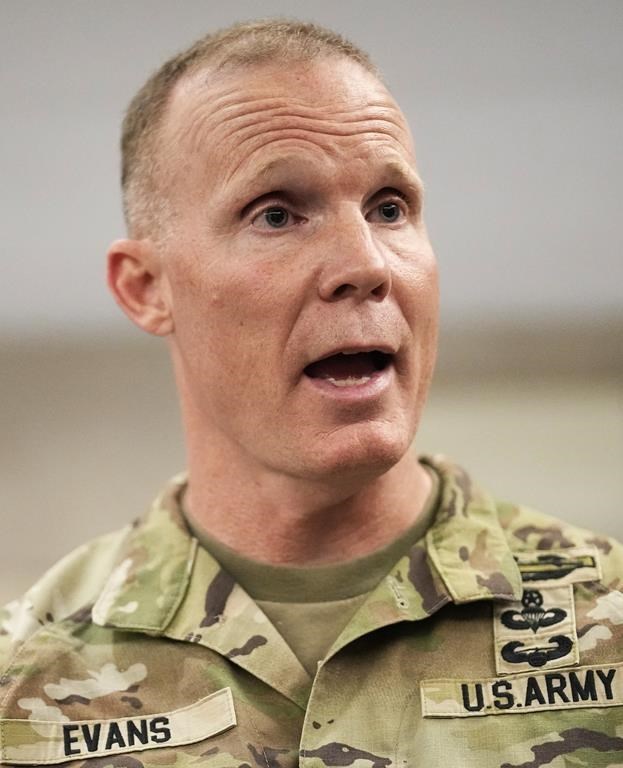
About 2,000 U.S. and Philippine army forces will join the dayslong combat drills backed by helicopters and artillery fire against armed adversaries in a jungle setting in the northern Philippines in June, Maj. Gen. Marcus Evans, commanding general of the U.S. Army’s 25th Infantry Division, said Sunday.
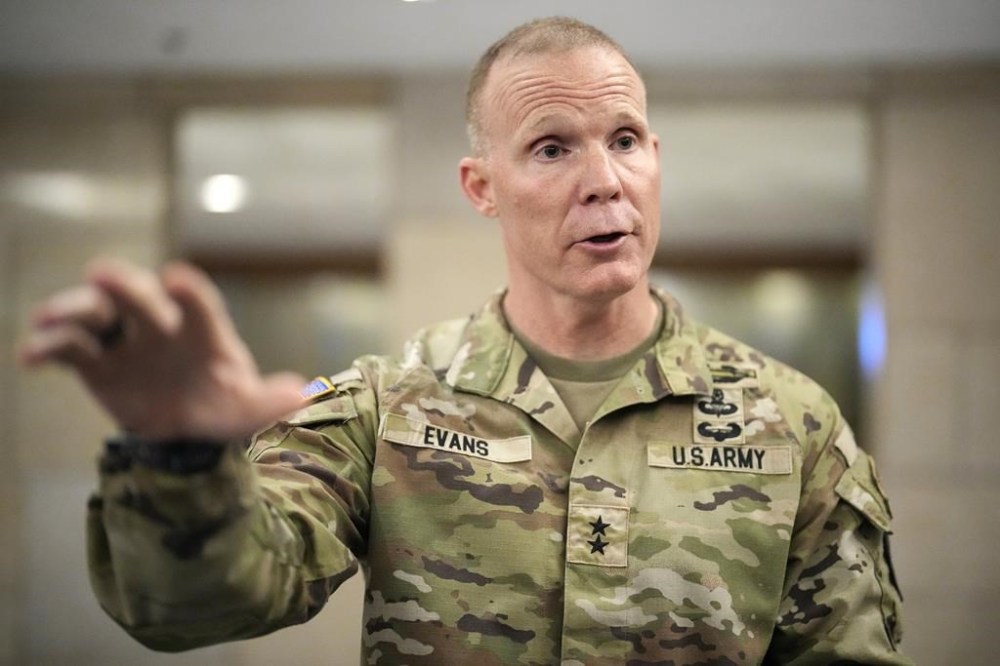
The combat training will be held in the Philippines for the first time at Manila’s request. It’s not clear whether the longtime treaty allies would decide to turn the maneuvers into an annual exercise, Evans said.
The drills from June 1 to 10 come at the conclusion of two larger back-to-back exercises between the allied forces — the Salaknib army-to-army exercises, which opened Monday, and the Balikatan, which will start later in April and involve about 16,000 U.S. and Philippine forces. Several countries including Japan will send observers.
“We have to be prepared to respond to humanitarian crisis, natural disaster crisis, and that is what this training affords us the opportunity to do,” Evans told The Associated Press in a telephone interview. “While we feel confident in our overall readiness and training path, it’s something that we can never be complacent in.”
The combat-readiness drill in June “provides an excellent venue for us to get better in terms of our warfighting readiness, to enhance our partnership and then strengthen both our army profession by working together in a very challenging environment,” Evans said.
The training was designed to be monitored live to show, for example, how much ammunition, batteries for two-way radios and food would be carried by U.S. and Philippine forces and how they planned for resupplies in a remote battlefield.
“It really is a way for soldiers, leaders and units to be able to see themselves during a simulated combat environment scenario,” Evans said.
Such past combat training in Hawaii has led to better information-sharing by smaller and more agile combat units and improved combat endurance, he said. It bolstered “the ability to sustain ourselves in a jungle and archipelago environment because there are not ground lines of communications, so we have to rely heavily on air or maritime assets to be able to move supplies.”
China has vehemently opposed increased deployments of American forces in Asia, including the Philippines, saying such military presence was endangering regional harmony and stability.
Last year, Philippine President Ferdinand Marcos Jr. defended his decision to allow U.S. military presence in more Philippine military camps under a 2014 defense pact, saying it was vital to his country’s territorial defense.
China had warned the increased U.S. military presence would “drag the Philippines into the abyss of geopolitical strife.”