Essence of flora and fauna Artisanal soap inspired by and infused with Manitoba countryside
Read this article for free:
or
Already have an account? Log in here »
To continue reading, please subscribe:

Digital Subscription
One year of digital access for only $205*
- Enjoy unlimited reading on winnipegfreepress.com
- Read the E-Edition, our digital replica newspaper
- Access News Break, our award-winning app
- Play interactive puzzles
*First annual payment billed as $205.00 + GST for one year. This annual subscription will automatically renew at $233.00 + GST every 52 weeks (10% off the regular annual price of $259.35). Offer available to new and qualified returning subscribers only. Cancel any time.
To continue reading, please subscribe:
Add Free Press access to your Brandon Sun subscription for only an additional
$1 for the first 4 weeks*
- Enjoy unlimited reading on winnipegfreepress.com
- Read the E-Edition, our digital replica newspaper
- Access News Break, our award-winning app
- Play interactive puzzles
*Your next Brandon Sun subscription payment will increase by $1.00 and you will be charged $17.95 plus GST for four weeks. After four weeks, your payment will increase to $24.95 plus GST every four weeks.
Read unlimited articles for free today:
or
Already have an account? Log in here »
Hey there, time traveller!
This article was published 20/04/2024 (907 days ago), so information in it may no longer be current.
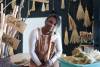
Leiah Bauer has something of a mythical sorceress about her as she goes about her day measuring oils, extracting flower pigments and milking goats on her farm in the forests of southeastern Manitoba.
The Creators
The Creators is a series that examines the “aha” moment behind ideas, images and inspiration, and the people behind them.
On her homestead near Richer where she raises her brood of caprines — Nigerian Dwarf, Alpine, Saanen and Toggenburger breeds — Bauer makes blocks of artisanal soap inspired by the nature surrounding her property.
In a steamy shower, Bauer’s Apothecandy soaps release their heady natural scents — juniper, litsia and birch; elder, pine and eucalyptus. Coloured with natural dyes, each batch is crafted with the seasons in mind and some have elaborate scenes carved into them.
“The soap I make is goat’s milk soap that is cold-processed. I use different oils and butters that are very good for your skin. I create scenes based on the seasons: I have a full-moon soap I make during the full moon. I have one that looks like wood grain and one that looks like snowfall. They change throughout the year,” Bauer says.
MIKAELA MACKENZIE / FREE PRESS Leiah Bauer runs a goat farm and makes her unique Apothecandy brand goat-milk soaps on her property near Richer.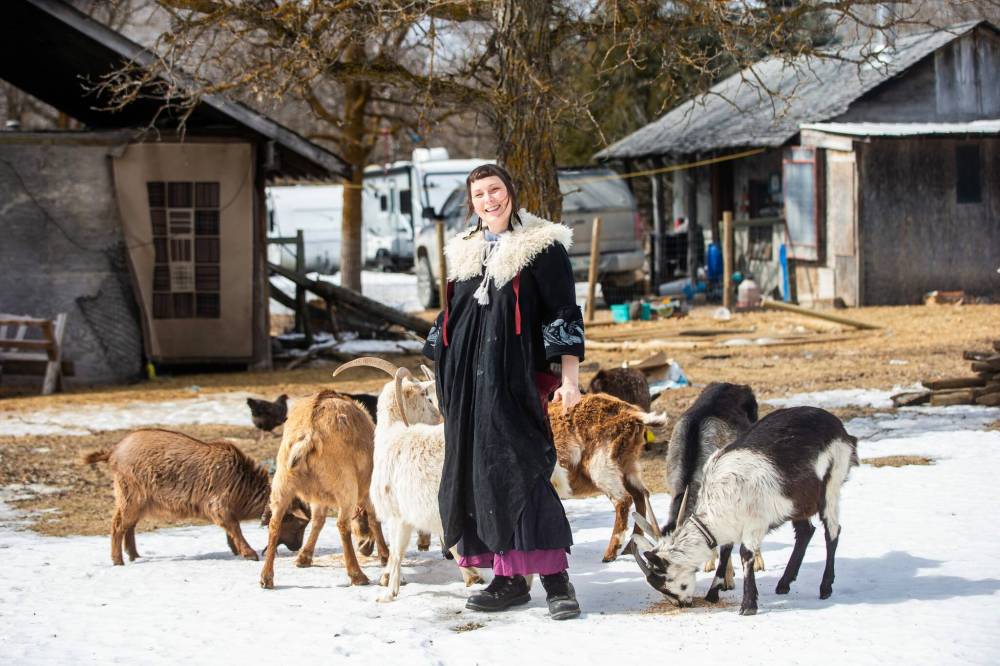
Her goal is to capture the esthetics, smells and memories of things associated with nature.
“Scent is connected to memory very strongly and I try to capture those moments and smells for people to have this little handful of nature every day. This daily ritual: we all clean our bodies, we all wash our hands… to be able to combine that with something beautiful, something that evokes emotion, makes you feel a certain way or remember something… that is my goal, to bring joy in many ways to different people,” she says.
The herbalist and self-described “goat whisperer” milks daily, rotating her dairy goats to ensure she’s not taking too much at once. Milking stops in the winter; pregnant goats do not get milked at all.
“It is very much a partnership between myself and the goats,” she explains.
The raw fresh milk is immediately frozen, then taken out when Bauer is ready to start making soap. First she weighs out the oils and butters she needs before heating them up to combine. She then cools them to about 400 F.
At this point she starts adding lye to her frozen milk in stages until the milk is melted and the lye is mixed in.
MIKAELA MACKENZIE / FREE PRESS A tray of Bauer’s floral soaps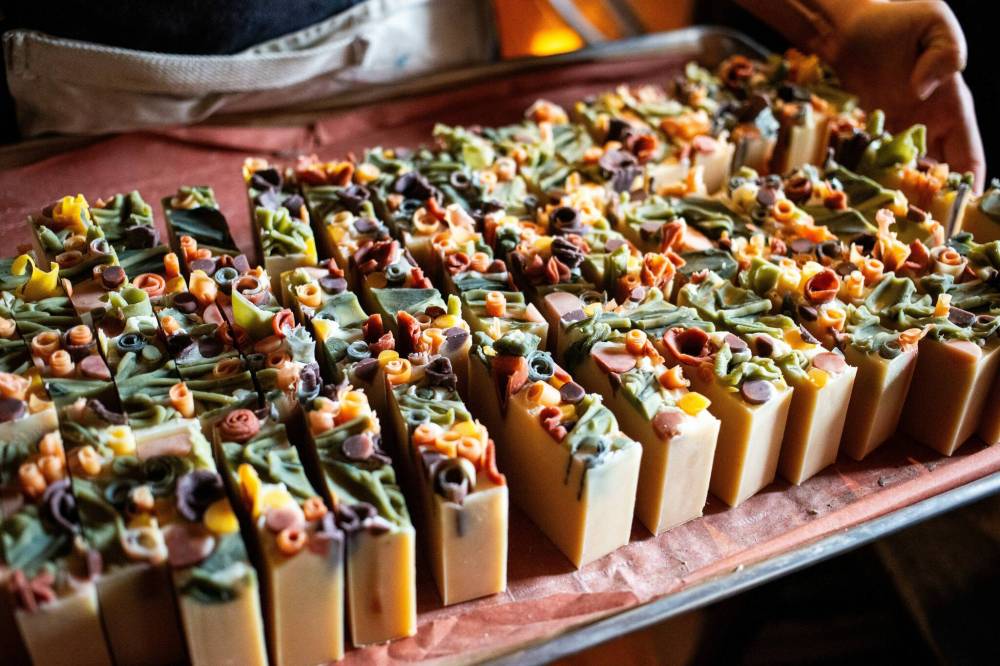
When the temperatures of both the oil-butter and the milk-lye mixtures are the same, Bauer strains the latter into the former before carefully blending until the mixture takes on the thickness of heavy cream.
When she is satisfied with the thickness, she portions it into batches, before mixing botanicals for colour and essential oils.
She has to work quickly to create her designs; due to thermal reactions the liquid will continue to thicken when everything is combined.
MIKAELA MACKENZIE / FREE PRESS Bauer’s herbal infusions and dyes made with plants from her garden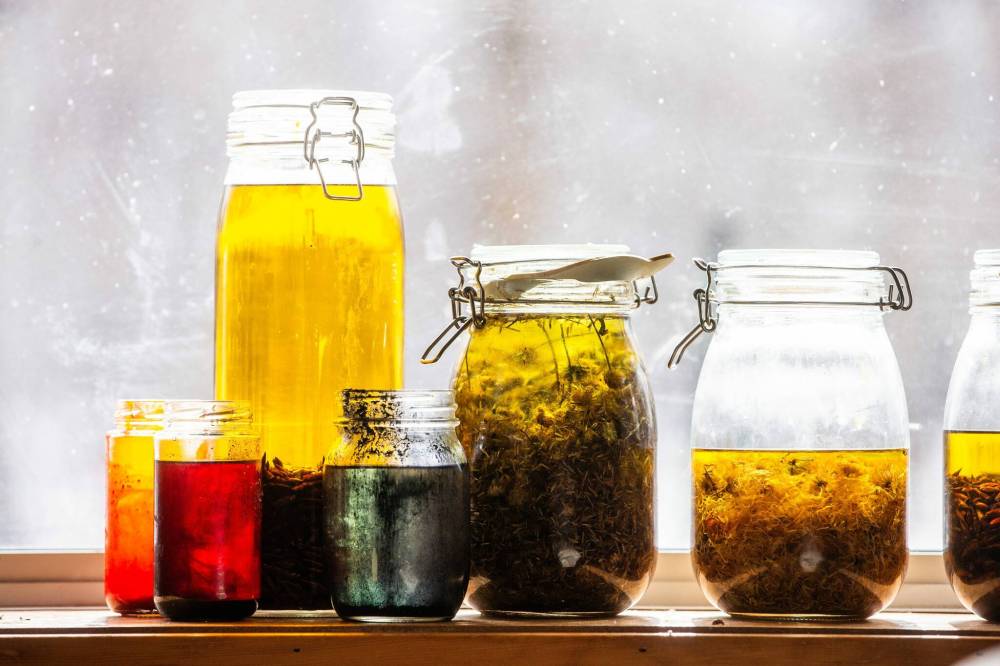
The mixture is then poured into moulds to set. The blocks are cured from four to six weeks before the soaps are ready for use.
“It’s a combination of science and magic and art and nature — all of those things,” Bauer says. “There is a lot of trial and error that goes into figuring out how to make these useful and beautiful things.”
Soaps are coloured with dyes extracted from flower pigments and boosted with ethically sourced and eco-certified essential oils, which she buys from a Canadian supplier.
“I try to grow as many botanicals as I can,” she says. “Like calendula, chamomile, indigo and madder root, for example. I also sustainably harvest some botanicals from the forest like balsam poplar buds, yarrow, nettle, white willow bark and birch sap.”
MIKAELA MACKENZIE / FREE PRESS A few of Bauer’s unique goat milk soaps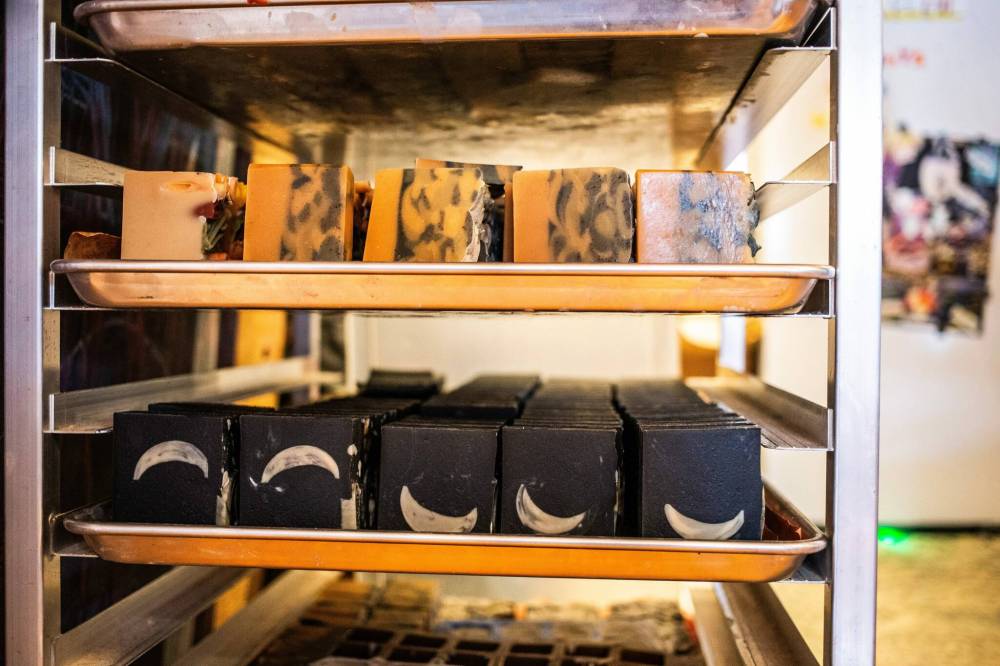
The resulting bars seem too precious to use but Bauer is not one to keep things for ‘best.’
“Something I hear a lot is ‘it’s too pretty to use, it should sit on my shelf and look nice,’ but this is very good soap. I have made it to be used. We should use beautiful things, we should light the good candles, use the good soap, wear the pretty dress. Instead of letting them all sit in the closet. I believe in using beautiful things,” she says.
av.kitching@freepress.mb.ca

AV Kitching is an arts and life writer at the Free Press. She has been a journalist for more than two decades and has worked across three continents writing about people, travel, food, and fashion. Read more about AV.
Every piece of reporting AV produces is reviewed by an editing team before it is posted online or published in print — part of the Free Press‘s tradition, since 1872, of producing reliable independent journalism. Read more about Free Press’s history and mandate, and learn how our newsroom operates.
Our newsroom depends on a growing audience of readers to power our journalism. If you are not a paid reader, please consider becoming a subscriber.
Our newsroom depends on its audience of readers to power our journalism. Thank you for your support.
Related Articles
Folk artist works to keep craft of traditional broom making alive