African farmers look to the past and the future to address climate change

Advertisement

Advertise with us

HARARE, Zimbabwe (AP) — From ancient fertilizer methods in Zimbabwe to new greenhouse technology in Somalia, farmers across the heavily agriculture-reliant African continent are looking to the past and future to respond to climate change.

Read this article for free:


or

Already have an account? Log in here »

To continue reading, please subscribe:

Subscribe and receive a limited-edition Free Press branded hat or tote.

Digital Subscription

One year of digital access for only $205*

  • Enjoy unlimited reading on winnipegfreepress.com
  • Read the E-Edition, our digital replica newspaper
  • Access News Break, our award-winning app
  • Play interactive puzzles

*First annual payment billed as $205.00 + GST for one year. This annual subscription will automatically renew at $233.00 + GST every 52 weeks (10% off the regular annual price of $259.35). Offer available to new and qualified returning subscribers only. Cancel any time.

To continue reading, please subscribe:

Add Free Press access to your Brandon Sun subscription for only an additional

$1 for the first 4 weeks*

  • Enjoy unlimited reading on winnipegfreepress.com
  • Read the E-Edition, our digital replica newspaper
  • Access News Break, our award-winning app
  • Play interactive puzzles
Start now

*Your next Brandon Sun subscription payment will increase by $1.00 and you will be charged $17.95 plus GST for four weeks. After four weeks, your payment will increase to $24.95 plus GST every four weeks.

Hey there, time traveller!
This article was published 28/04/2024 (881 days ago), so information in it may no longer be current.

HARARE, Zimbabwe (AP) — From ancient fertilizer methods in Zimbabwe to new greenhouse technology in Somalia, farmers across the heavily agriculture-reliant African continent are looking to the past and future to respond to climate change.

Africa, with the world’s youngest population, faces the worst effects of a warming planet while contributing the least to the problem. Farmers are scrambling to make sure the booming population is fed.

With over 60% of the world’s uncultivated land, Africa should be able to feed itself, some experts say. And yet three in four people across the continent cannot afford a healthy diet, according to a report last year by the African Union and United Nations agencies. Reasons include conflict and lack of investment.
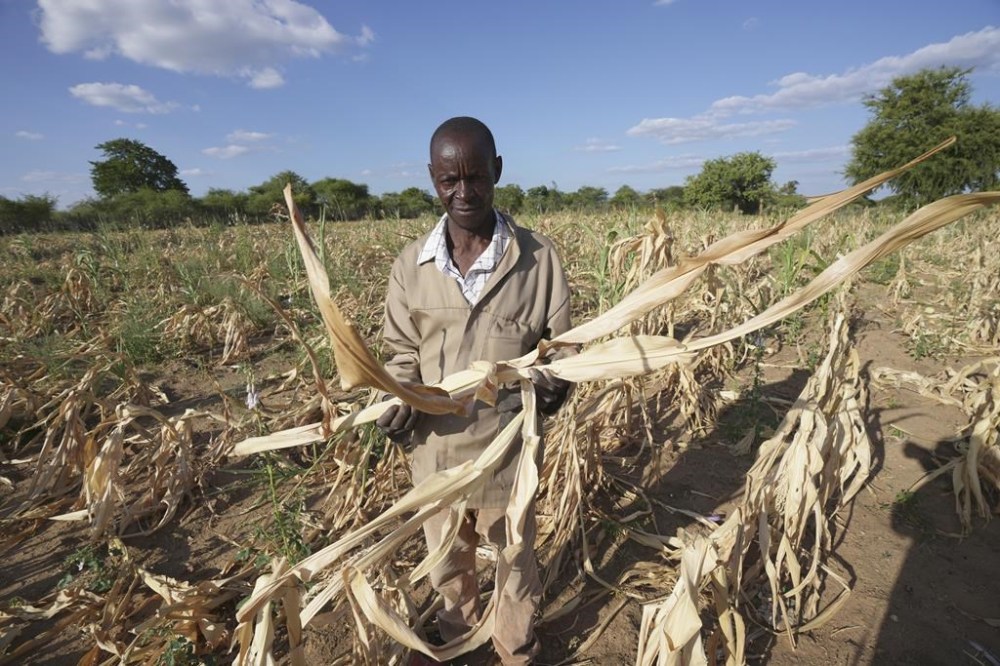
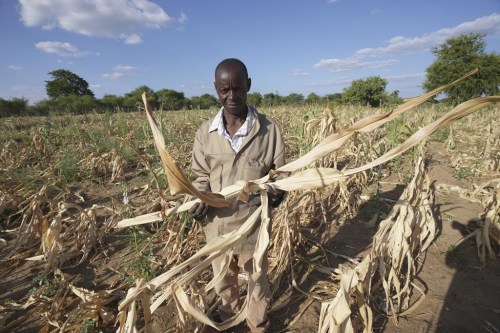
James Tshuma, a small scale farmer, holds a dried up maize crop in his field in Mangwe district, Zimbabwe, Friday, March 22, 2024. Tshuma has lost hope of harvesting anything from his fields. But a patch of green vegetables is thriving in a small garden the 65-year-old is keeping alive with homemade organic manure and fertilizer. (AP Photo/Tsvangirayi Mukwazhi)

In Zimbabwe, where the El Nino phenomenon has worsened a drought, small-scale farmer James Tshuma has lost hope of harvesting anything from his fields. It’s a familiar story in much of the country, where the government has declared a $2 billion state of emergency and millions of people face hunger.

But a patch of green vegetables is thriving in a small garden the 65-year-old Tshuma is keeping alive with homemade organic manure and fertilizer. Previously discarded items have again become priceless.

“This is how our fathers and forefathers used to feed the earth and themselves before the introduction of chemicals and inorganic fertilizers,” Tshuma said.

He applies livestock droppings, grass, plant residue, remains of small animals, tree leaves and bark, food scraps and other biodegradable items like paper. Even the bones of animals that are dying in increasing numbers due to the drought are burned before being crushed into ash for their calcium.

Climate change is compounding much of sub-Saharan Africa’s longstanding problem of poor soil fertility, said Wonder Ngezimana, an associate professor of crop science at Zimbabwe’s Marondera University of Agricultural Sciences and Technology.

“The combination is forcing people to re-look at how things were done in the past like nutrient recycling, but also blending these with modern methods,” said Ngezimana, whose institution is researching the combination of traditional practices with new technologies.

Apart from being rich in nitrogen, organic fertilizers help increase the soil’s carbon and ability to retain moisture, Ngezimana said. “Even if a farmer puts synthetic fertilizer into the soil, they are likely to suffer the consequences of poor moisture as long as there is a drought,” he said.

Other moves to traditional practices are under way. Drought-resistant millets, sorghum and legumes, staples until the early 20th century when they were overtaken by exotic white corn, have been taking up more land space in recent years.

Leaves of drought-resistant plants that were once a regular dish before being cast off as weeds are returning to dinner tables. They even appear on elite supermarket shelves and are served at classy restaurants, as are millet and sorghum.

This could create markets for the crops even beyond drought years, Ngezimana said.

James Tshuma, a small scale farmer, shows some of his vegetables he planted in a small garden at his home, in Mangwe district in Zimbabwe, on Friday, March 22, 2024. Tshuma has lost hope of harvesting anything from his fields. But a patch of green vegetables is thriving in a small garden the 65-year-old is keeping alive with homemade organic manure and fertilizer. (AP Photo/Tsvangirayi Mukwazhi)

A GREENHOUSE REVOLUTION IN SOMALIA

In conflict-prone Somalia in East Africa, greenhouses are changing the way some people live, with shoppers filling up carts with locally produced vegetables and traditionally nomadic pastoralists under pressure to settle down and grow crops.

“They are organic, fresh and healthy,” shopper Sucdi Hassan said in the capital, Mogadishu. “Knowing that they come from our local farms makes us feel secure.”

Her new shopping experience is a sign of relative calm after three decades of conflict and the climate shocks of drought and flooding.

Urban customers are now assured of year-round supplies, with more than 250 greenhouses dotted across Mogadishu and its outskirts producing fruit and vegetables. It is a huge leap.

“In the past, even basic vegetables like cucumbers and tomatoes were imported, causing logistical problems and added expenses,” said Somalia’s minister of youth and sports, Mohamed Barre.

The greenhouses also create employment in a country where about 75% of the population is people under 30 years old, many of them jobless.

About 15 kilometers (9 miles) from the capital, Mohamed Mahdi, an agriculture graduate, inspected produce in a greenhouse where he works.

“Given the high unemployment rate, we are grateful for the chance to work in our chosen field of expertise,” the 25-year-old said.

Meanwhile, some pastoralist herders are being forced to change their traditional ways after watching livestock die by the thousands.
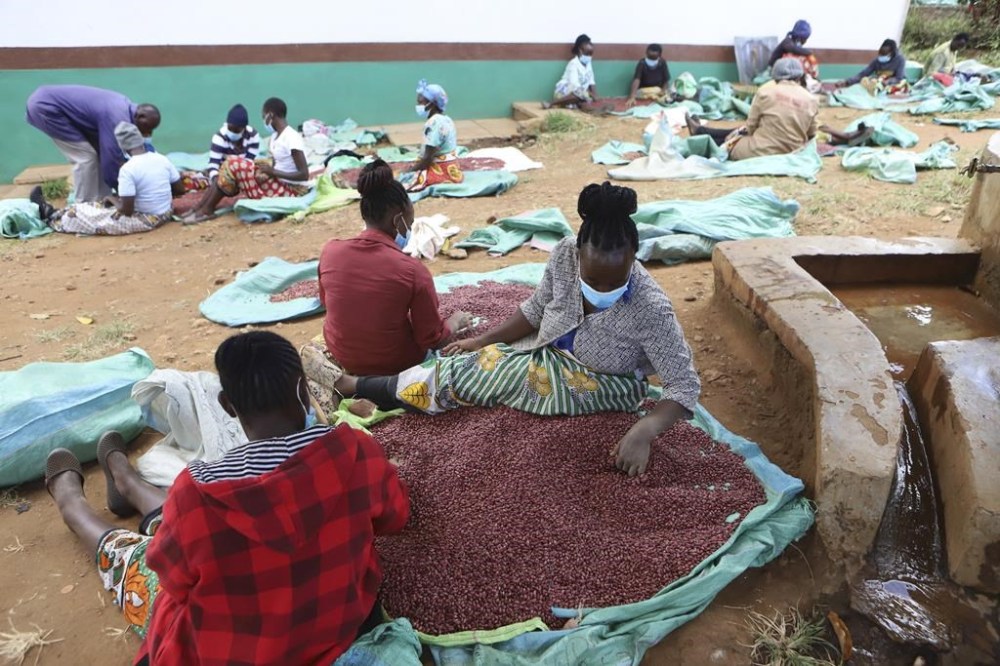
Farmers sort out climate-smart beans in Machakos, Kenya, Monday, March 18, 2024. From ancient fertilizer methods in Zimbabwe to new greenhouse technology in Somalia, farmers across the heavily agriculture-reliant African continent are looking both to the past and future to respond to climate change. (AP Photo/Andrew Kasuku)

“Transitioning to greenhouse farming provides pastoralists with a more resilient and sustainable livelihood option,” said Mohamed Okash, director of the Institute of Climate and Environment at SIMAD University in Mogadishu.

He called for larger investments in smart farming to combat food insecurity.

A MORE RESILIENT BEAN IN KENYA

In Kenya, a new climate-smart bean variety is bringing hope to farmers in a region that had recorded reduced rainfall in six consecutive rainy seasons.

The variety, called “Nyota” or “star” in Swahili, is the result of a collaboration between scientists from the Kenya Agricultural and Livestock Research Organization, the Alliance of Bioversity International and research organization International Center for Tropical Agriculture.

The new bean variety is tailored for Kenya’s diverse climatic conditions. One focus is to make sure drought doesn’t kill them off before they have time to flourish.

The bean variety flowers and matures so quickly that it is ready for harvesting by the time rains disappear, said David Karanja, a bean breeder and national coordinator for grains and legumes at KALRO.

Hopes are that these varieties could bolster national bean production. The annual production of 600,000 metric tons falls short of meeting annual demand of 755,000 metric tons, Karanja said.

Farmer Benson Gitonga said his yield and profits are increasing because of the new bean variety. He harvests between nine and 12 bags from an acre of land, up from the previous five to seven bags.

One side benefit of the variety is a breath of fresh air.
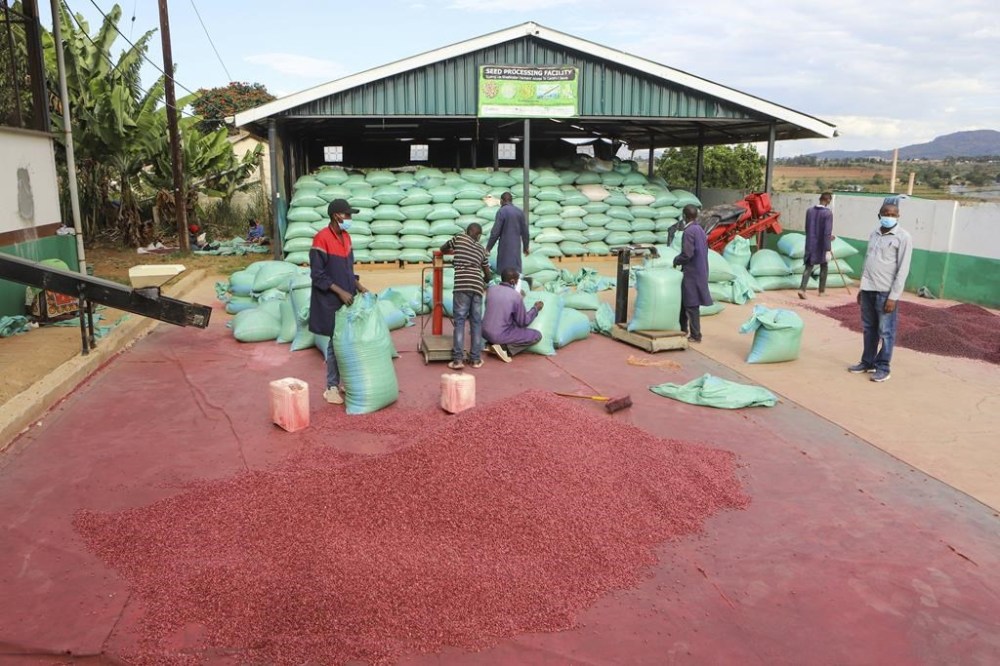
Farmers process climate-smart beans in Machakos, Kenya, Monday, March 18, 2024. From ancient fertilizer methods in Zimbabwe to new greenhouse technology in Somalia, farmers across the heavily agriculture-reliant African continent are looking both to the past and future to respond to climate change. (AP Photo/Andrew Kasuku)

“Customers particularly appreciate its qualities, as it boasts low flatulence levels, making it an appealing choice,” Gitonga said.

___

Tiro reported from Nairobi, Kenya and Faruk reported from Mogadishu, Somalia.

___

The Associated Press receives financial support for global health and development coverage in Africa from the Bill & Melinda Gates Foundation Trust. The AP is solely responsible for all content. Find AP’s standards for working with philanthropies, a list of supporters and funded coverage areas at AP.org.

___

AP Africa news: https://apnews.com/hub/africa
Report Error Submit a Tip

More Stories

African farmers look to the past and the future to address climate change

Farai Mutsaka, Omar Faruk And Desmond Tiro, The Associated Press 7 minute read Preview

African farmers look to the past and the future to address climate change

Farai Mutsaka, Omar Faruk And Desmond Tiro, The Associated Press 7 minute read Sunday, Apr. 28, 2024

HARARE, Zimbabwe (AP) — From ancient fertilizer methods in Zimbabwe to new greenhouse technology in Somalia, farmers across the heavily agriculture-reliant African continent are looking to the past and future to respond to climate change.

Africa, with the world's youngest population, faces the worst effects of a warming planet while contributing the least to the problem. Farmers are scrambling to make sure the booming population is fed.

With over 60% of the world’s uncultivated land, Africa should be able to feed itself, some experts say. And yet three in four people across the continent cannot afford a healthy diet, according to a report last year by the African Union and United Nations agencies. Reasons include conflict and lack of investment.

In Zimbabwe, where the El Nino phenomenon has worsened a drought, small-scale farmer James Tshuma has lost hope of harvesting anything from his fields. It's a familiar story in much of the country, where the government has declared a $2 billion state of emergency and millions of people face hunger.

Read
Sunday, Apr. 28, 2024

Klein wants city-run, maintained ‘bridge’ space for homeless people

Malak Abas 5 minute read Preview

Klein wants city-run, maintained ‘bridge’ space for homeless people

Malak Abas 5 minute read Thursday, Sep. 24, 2026

Mayoral candidate wants city to set up a 24-hour community space pilot project for homeless Winnipeggers

Read
Thursday, Sep. 24, 2026

Portage Avenue stabbing victim staggered into nearby store for help

Morgan Modjeski and Malak Abas 4 minute read Preview

Portage Avenue stabbing victim staggered into nearby store for help

Morgan Modjeski and Malak Abas 4 minute read Updated: Yesterday at 5:09 PM CDT

A 46-year-old man stabbed on Portage Avenue Wednesday afternoon is in hospital after staggering, bloodied, into a nearby dollar store.

Police said the man was confronted by several people on the 300 block of Portage shortly before 6 p.m. and was stabbed with an unknown weapon. He was helped by people inside the store until police and paramedics arrived.

The man was rushed to hospital in unstable condition but was later upgraded to stable, the Winnipeg Police Service said.

WPS Const. Claude Chancy said Friday that police were still attempting to speak with the victim, and it was not yet clear if the attack was random. No arrests have been made.

Read
Updated: Yesterday at 5:09 PM CDT

Gordon Bell students relish — ‘of all things’ — new pickleball courts

Maggie Macintosh 5 minute read Preview

Gordon Bell students relish — ‘of all things’ — new pickleball courts

Maggie Macintosh 5 minute read 6:00 AM CDT

Manitoba’s newest public school sports facility is bringing the pickleball craze to an inner-city campus.

Gordon Bell High School unveiled four custom-made courts for the popular paddle sport this fall as part of a multi-faceted makeover.

Grade 12 student Matea Thiessen Unger called the courts “the cherry on top,” of a multi-year construction project that consumed much of her high school career.

“It was happening for so long — it felt like it was never going to end,” the 16-year-old said.

Read
6:00 AM CDT

Two U.S. presidents, and America’s decline

Editorial 4 minute read Preview

Two U.S. presidents, and America’s decline

Editorial 4 minute read Yesterday at 2:00 AM CDT

“Let us have faith that right makes might, and in that faith, let us, to the end, dare to do our duty as we understand it.” — Abraham Lincoln in his Cooper Union address, given in New York City in 1860.

Read
Yesterday at 2:00 AM CDT

No more Jets 1.0 or 2.0: League announces all eras of Winnipeg’s club to be merged

Ken Wiebe 6 minute read Preview

No more Jets 1.0 or 2.0: League announces all eras of Winnipeg’s club to be merged

Ken Wiebe 6 minute read Thursday, Sep. 24, 2026

Mark Scheifele’s goal was always to chase down his mentor and former Barrie Colts head coach Dale Hawerchuk, no matter what the official record book said.

So when the NHL and the Winnipeg Jets announced on Thursday morning that they were consolidating the franchise history to include the 1.0 and 2.0 eras (including the Atlanta Thrashers chapter of the club), Scheifele was among those to give the move two thumbs up.

“Yeah, it clarifies it for you guys more, not as much (for) me,” said Scheifele. “It’s really cool to bring in the old Jets records, and especially Dale. Chasing him down was always on my mind. So, it’s cool to do it actually in the record books.”

Scheifele remains the franchise leader in games played (961) and he’s likely to eclipse Hawerchuk in goals (Scheifele has 372 to Hawerchuk’s 379) and points (Scheifele has 907 to Hawerchuk’s 929) this season. He now has Thomas Steen’s 553 assists in his sights after amassing 535 heading into 2026-27.

Read
Thursday, Sep. 24, 2026