African farmers look to the past and the future to address climate change

Advertisement

Advertise with us

HARARE, Zimbabwe (AP) — From ancient fertilizer methods in Zimbabwe to new greenhouse technology in Somalia, farmers across the heavily agriculture-reliant African continent are looking to the past and future to respond to climate change.

Read this article for free:


or

Already have an account? Log in here »

To continue reading, please subscribe:

Subscribe and receive a limited-edition Free Press branded hat or tote.

Digital Subscription

One year of digital access for only $205*

  • Enjoy unlimited reading on winnipegfreepress.com
  • Read the E-Edition, our digital replica newspaper
  • Access News Break, our award-winning app
  • Play interactive puzzles

*First annual payment billed as $205.00 + GST for one year. This annual subscription will automatically renew at $233.00 + GST every 52 weeks (10% off the regular annual price of $259.35). Offer available to new and qualified returning subscribers only. Cancel any time.

To continue reading, please subscribe:

Add Free Press access to your Brandon Sun subscription for only an additional

$1 for the first 4 weeks*

  • Enjoy unlimited reading on winnipegfreepress.com
  • Read the E-Edition, our digital replica newspaper
  • Access News Break, our award-winning app
  • Play interactive puzzles
Start now

*Your next Brandon Sun subscription payment will increase by $1.00 and you will be charged $17.95 plus GST for four weeks. After four weeks, your payment will increase to $24.95 plus GST every four weeks.

Hey there, time traveller!
This article was published 28/04/2024 (885 days ago), so information in it may no longer be current.

HARARE, Zimbabwe (AP) — From ancient fertilizer methods in Zimbabwe to new greenhouse technology in Somalia, farmers across the heavily agriculture-reliant African continent are looking to the past and future to respond to climate change.

Africa, with the world’s youngest population, faces the worst effects of a warming planet while contributing the least to the problem. Farmers are scrambling to make sure the booming population is fed.

With over 60% of the world’s uncultivated land, Africa should be able to feed itself, some experts say. And yet three in four people across the continent cannot afford a healthy diet, according to a report last year by the African Union and United Nations agencies. Reasons include conflict and lack of investment.
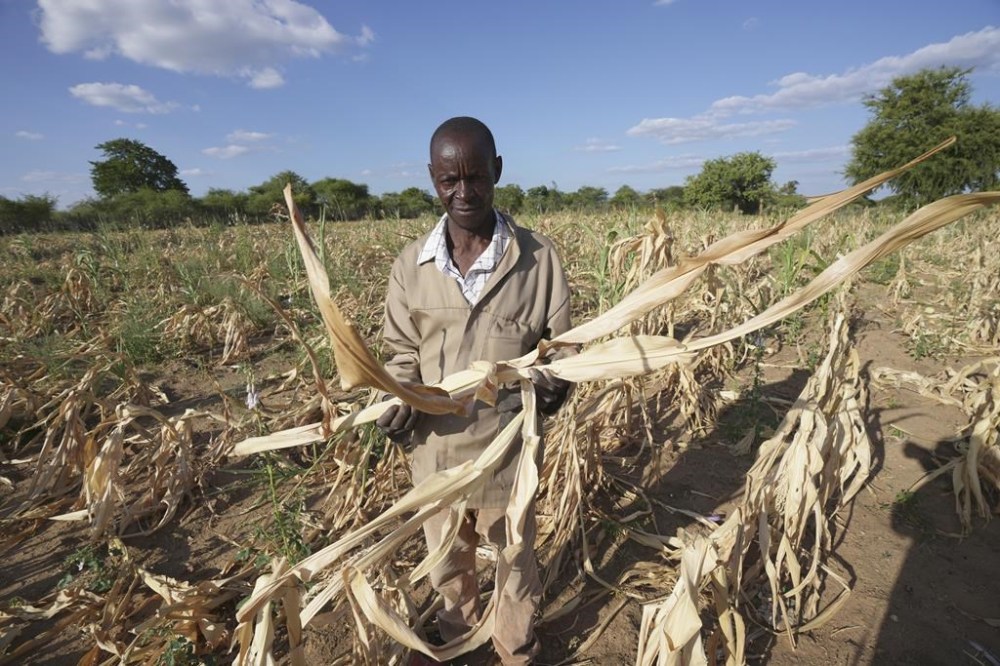
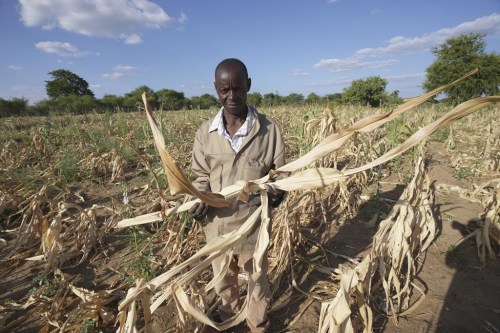
James Tshuma, a small scale farmer, holds a dried up maize crop in his field in Mangwe district, Zimbabwe, Friday, March 22, 2024. Tshuma has lost hope of harvesting anything from his fields. But a patch of green vegetables is thriving in a small garden the 65-year-old is keeping alive with homemade organic manure and fertilizer. (AP Photo/Tsvangirayi Mukwazhi)

In Zimbabwe, where the El Nino phenomenon has worsened a drought, small-scale farmer James Tshuma has lost hope of harvesting anything from his fields. It’s a familiar story in much of the country, where the government has declared a $2 billion state of emergency and millions of people face hunger.

But a patch of green vegetables is thriving in a small garden the 65-year-old Tshuma is keeping alive with homemade organic manure and fertilizer. Previously discarded items have again become priceless.

“This is how our fathers and forefathers used to feed the earth and themselves before the introduction of chemicals and inorganic fertilizers,” Tshuma said.

He applies livestock droppings, grass, plant residue, remains of small animals, tree leaves and bark, food scraps and other biodegradable items like paper. Even the bones of animals that are dying in increasing numbers due to the drought are burned before being crushed into ash for their calcium.

Climate change is compounding much of sub-Saharan Africa’s longstanding problem of poor soil fertility, said Wonder Ngezimana, an associate professor of crop science at Zimbabwe’s Marondera University of Agricultural Sciences and Technology.

“The combination is forcing people to re-look at how things were done in the past like nutrient recycling, but also blending these with modern methods,” said Ngezimana, whose institution is researching the combination of traditional practices with new technologies.

Apart from being rich in nitrogen, organic fertilizers help increase the soil’s carbon and ability to retain moisture, Ngezimana said. “Even if a farmer puts synthetic fertilizer into the soil, they are likely to suffer the consequences of poor moisture as long as there is a drought,” he said.

Other moves to traditional practices are under way. Drought-resistant millets, sorghum and legumes, staples until the early 20th century when they were overtaken by exotic white corn, have been taking up more land space in recent years.

Leaves of drought-resistant plants that were once a regular dish before being cast off as weeds are returning to dinner tables. They even appear on elite supermarket shelves and are served at classy restaurants, as are millet and sorghum.

This could create markets for the crops even beyond drought years, Ngezimana said.

James Tshuma, a small scale farmer, shows some of his vegetables he planted in a small garden at his home, in Mangwe district in Zimbabwe, on Friday, March 22, 2024. Tshuma has lost hope of harvesting anything from his fields. But a patch of green vegetables is thriving in a small garden the 65-year-old is keeping alive with homemade organic manure and fertilizer. (AP Photo/Tsvangirayi Mukwazhi)

A GREENHOUSE REVOLUTION IN SOMALIA

In conflict-prone Somalia in East Africa, greenhouses are changing the way some people live, with shoppers filling up carts with locally produced vegetables and traditionally nomadic pastoralists under pressure to settle down and grow crops.

“They are organic, fresh and healthy,” shopper Sucdi Hassan said in the capital, Mogadishu. “Knowing that they come from our local farms makes us feel secure.”

Her new shopping experience is a sign of relative calm after three decades of conflict and the climate shocks of drought and flooding.

Urban customers are now assured of year-round supplies, with more than 250 greenhouses dotted across Mogadishu and its outskirts producing fruit and vegetables. It is a huge leap.

“In the past, even basic vegetables like cucumbers and tomatoes were imported, causing logistical problems and added expenses,” said Somalia’s minister of youth and sports, Mohamed Barre.

The greenhouses also create employment in a country where about 75% of the population is people under 30 years old, many of them jobless.

About 15 kilometers (9 miles) from the capital, Mohamed Mahdi, an agriculture graduate, inspected produce in a greenhouse where he works.

“Given the high unemployment rate, we are grateful for the chance to work in our chosen field of expertise,” the 25-year-old said.

Meanwhile, some pastoralist herders are being forced to change their traditional ways after watching livestock die by the thousands.
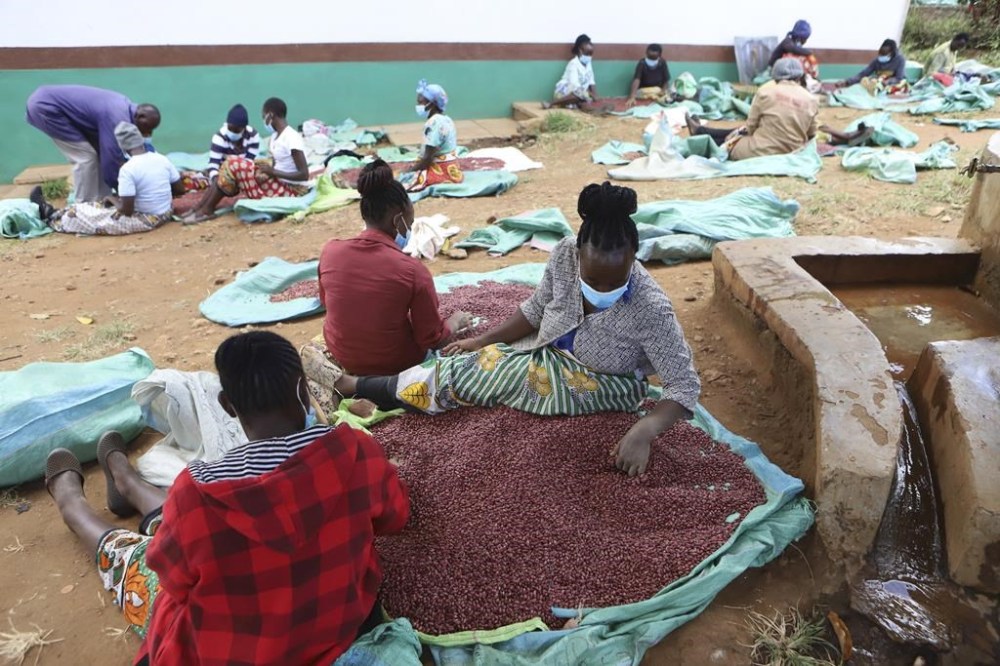
Farmers sort out climate-smart beans in Machakos, Kenya, Monday, March 18, 2024. From ancient fertilizer methods in Zimbabwe to new greenhouse technology in Somalia, farmers across the heavily agriculture-reliant African continent are looking both to the past and future to respond to climate change. (AP Photo/Andrew Kasuku)

“Transitioning to greenhouse farming provides pastoralists with a more resilient and sustainable livelihood option,” said Mohamed Okash, director of the Institute of Climate and Environment at SIMAD University in Mogadishu.

He called for larger investments in smart farming to combat food insecurity.

A MORE RESILIENT BEAN IN KENYA

In Kenya, a new climate-smart bean variety is bringing hope to farmers in a region that had recorded reduced rainfall in six consecutive rainy seasons.

The variety, called “Nyota” or “star” in Swahili, is the result of a collaboration between scientists from the Kenya Agricultural and Livestock Research Organization, the Alliance of Bioversity International and research organization International Center for Tropical Agriculture.

The new bean variety is tailored for Kenya’s diverse climatic conditions. One focus is to make sure drought doesn’t kill them off before they have time to flourish.

The bean variety flowers and matures so quickly that it is ready for harvesting by the time rains disappear, said David Karanja, a bean breeder and national coordinator for grains and legumes at KALRO.

Hopes are that these varieties could bolster national bean production. The annual production of 600,000 metric tons falls short of meeting annual demand of 755,000 metric tons, Karanja said.

Farmer Benson Gitonga said his yield and profits are increasing because of the new bean variety. He harvests between nine and 12 bags from an acre of land, up from the previous five to seven bags.

One side benefit of the variety is a breath of fresh air.
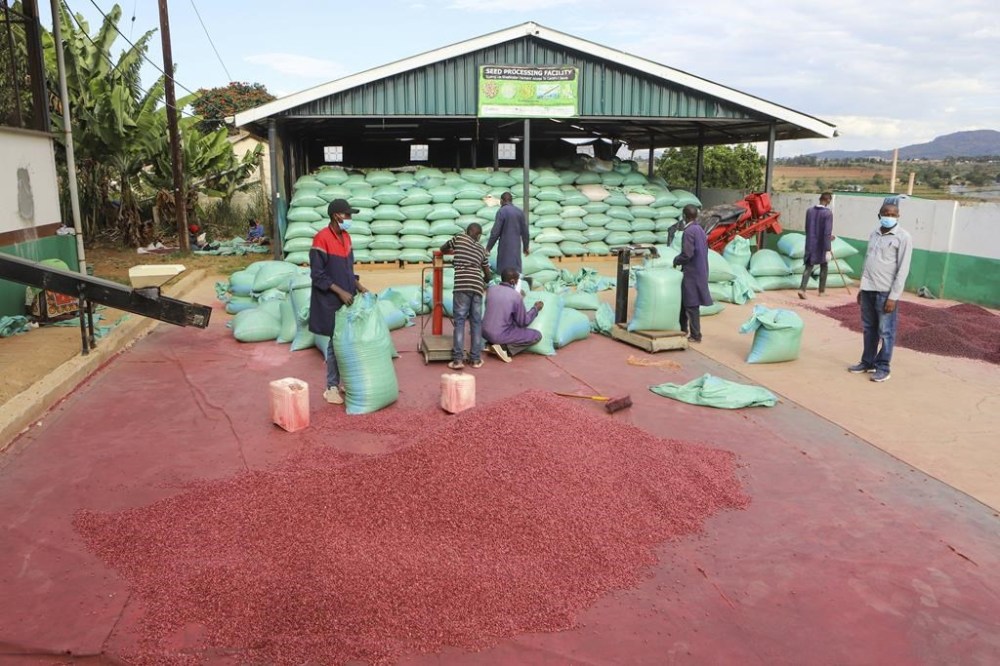
Farmers process climate-smart beans in Machakos, Kenya, Monday, March 18, 2024. From ancient fertilizer methods in Zimbabwe to new greenhouse technology in Somalia, farmers across the heavily agriculture-reliant African continent are looking both to the past and future to respond to climate change. (AP Photo/Andrew Kasuku)

“Customers particularly appreciate its qualities, as it boasts low flatulence levels, making it an appealing choice,” Gitonga said.

___

Tiro reported from Nairobi, Kenya and Faruk reported from Mogadishu, Somalia.

___

The Associated Press receives financial support for global health and development coverage in Africa from the Bill & Melinda Gates Foundation Trust. The AP is solely responsible for all content. Find AP’s standards for working with philanthropies, a list of supporters and funded coverage areas at AP.org.

___

AP Africa news: https://apnews.com/hub/africa

Report Error Submit a Tip

More Stories

In a smart-device world, some families keep phone jacked into the wall

Sheldon Birnie 8 minute read Preview

In a smart-device world, some families keep phone jacked into the wall

Sheldon Birnie 8 minute read Yesterday at 4:20 PM CDT

When the phone rings in Kristin Shiach and Jordan Sobkowicz’s Riverview home, their three daughters race to see who can be the first to answer.

“It depends who is closest,” says 13-year-old Emily. “If I’m sitting in my room, I can get to it quickest.”

“That’s because it’s always in your room,” Anna, 10, replies. “You never put it back!”

“Usually, when the phone rings,” explains Sobkowicz, “someone yells really loudly —”

Read
Yesterday at 4:20 PM CDT

African farmers look to the past and the future to address climate change

Farai Mutsaka, Omar Faruk And Desmond Tiro, The Associated Press 7 minute read Preview

African farmers look to the past and the future to address climate change

Farai Mutsaka, Omar Faruk And Desmond Tiro, The Associated Press 7 minute read Sunday, Apr. 28, 2024

HARARE, Zimbabwe (AP) — From ancient fertilizer methods in Zimbabwe to new greenhouse technology in Somalia, farmers across the heavily agriculture-reliant African continent are looking to the past and future to respond to climate change.

Africa, with the world's youngest population, faces the worst effects of a warming planet while contributing the least to the problem. Farmers are scrambling to make sure the booming population is fed.

With over 60% of the world’s uncultivated land, Africa should be able to feed itself, some experts say. And yet three in four people across the continent cannot afford a healthy diet, according to a report last year by the African Union and United Nations agencies. Reasons include conflict and lack of investment.

In Zimbabwe, where the El Nino phenomenon has worsened a drought, small-scale farmer James Tshuma has lost hope of harvesting anything from his fields. It's a familiar story in much of the country, where the government has declared a $2 billion state of emergency and millions of people face hunger.

Read
Sunday, Apr. 28, 2024

Canada resorting to its tried and true playbook

Niigaan Sinclair 5 minute read Preview

Canada resorting to its tried and true playbook

Niigaan Sinclair 5 minute read Monday, Sep. 28, 2026

In 1846, Britain faced an emergency influenced by the Irish famine, so leaders repealed the country’s “Corn Laws” and restrictions on imported food and grain, transitioning to a system of free trade.

This created a crisis in the then Province of Canada, which had relied on British “preferential” status to prop up its agricultural and resource industries.

As a result, Canada looked south for new markets and eventually negotiated a free trade agreement with the United States.

This required land to be acquired and converted for industrial use quickly, so Canada quickly dispatched Commissioner William Robinson to negotiate with Indigenous communities along Lake Huron and Lake Superior for land.

Read
Monday, Sep. 28, 2026

Woman took ‘meaningful’ responsibility after disposing of body: lawyer

Dean Pritchard 5 minute read Preview

Woman took ‘meaningful’ responsibility after disposing of body: lawyer

Dean Pritchard 5 minute read 6:00 AM CDT

A woman who was threatened with death if she didn’t help dispose the body of a Mexican man murdered in the basement of a North End home should serve no more jail time, a judge has been told.

Devlin Langlois, 25, has pleaded guilty to accessory after the fact to murder in the March 2025 killing of 28-year-old Diego Moscoza.

“By pleading guilty, Ms. Langlois has already taken meaningful accountability for her actions,” defence lawyer Joshua Rogala told King’s Bench Justice Candace Grammond at a sentencing hearing Monday.

He urged the judge to sentence Langlois to the equivalent of 14 months already served, plus two years supervised probation.

Read
6:00 AM CDT

Port of Churchill signs agreement with Dutch port

Aaron Epp 2 minute read Preview

Port of Churchill signs agreement with Dutch port

Aaron Epp 2 minute read Yesterday at 4:40 PM CDT

Arctic Gateway Group, operator of the Port of Churchill, has signed an agreement with the Port of Rotterdam in the Netherlands to attract business and strengthen supply chains linking Western Canada and Europe.

The agreement enables the two ports to work together to develop new trade in critical minerals and energy products, connect Canadian producers with European buyers, and identify opportunities to improve the supply chain from Western Canadian resource projects through Churchill and into European markets.

The Port of Rotterdam is Europe’s largest port and home to more than 3,000 businesses across its industrial complex, serving as a major gateway for critical raw materials and energy.

Meanwhile, the Port of Churchill has been identified as a transformative national strategy for Canada and is emerging as a northern trade corridor connecting Western Canada’s resources to global markets.

Read
Yesterday at 4:40 PM CDT

Kinew adds cabinet portfolio to focus on first responders

Carol Sanders and Nicole Buffie 5 minute read Preview

Kinew adds cabinet portfolio to focus on first responders

Carol Sanders and Nicole Buffie 5 minute read Monday, Sep. 28, 2026

Premier Wab Kinew shuffled his cabinet Monday and created a new ministerial position that will oversee first responders in the province.

Kinew appointed David Pankratz, the MLA for Waverley, as minister responsible for first responder initiatives.

Tuxedo MLA Carla Compton was appointed minister responsible for accessibility, taking over the role from Families Minister Nahanni Fontaine.

The new ministers were sworn in at a ceremony at the legislature Monday afternoon.

Read
Monday, Sep. 28, 2026