Bedside burnout
Saluting our nurses who shouldered the health-care workload through the COVID crisis
Advertisement
Read this article for free:
or
Already have an account? Log in here »
To continue reading, please subscribe:

Digital Subscription
One year of digital access for only $205*
- Enjoy unlimited reading on winnipegfreepress.com
- Read the E-Edition, our digital replica newspaper
- Access News Break, our award-winning app
- Play interactive puzzles
*First annual payment billed as $205.00 + GST for one year. This annual subscription will automatically renew at $233.00 + GST every 52 weeks (10% off the regular annual price of $259.35). Offer available to new and qualified returning subscribers only. Cancel any time.
To continue reading, please subscribe:
Add Free Press access to your Brandon Sun subscription for only an additional
$1 for the first 4 weeks*
- Enjoy unlimited reading on winnipegfreepress.com
- Read the E-Edition, our digital replica newspaper
- Access News Break, our award-winning app
- Play interactive puzzles
*Your next Brandon Sun subscription payment will increase by $1.00 and you will be charged $17.95 plus GST for four weeks. After four weeks, your payment will increase to $24.95 plus GST every four weeks.
Read unlimited articles for free today:
or
Already have an account? Log in here »
Hey there, time traveller!
This article was published 04/05/2024 (859 days ago), so information in it may no longer be current.
The following excerpt from Take Your Baby and Run: How Nurses Blew the Whistle on Canada’s Biggest Cardiac Disaster (Great Plains Press, 2023) is being published to mark National Nurses Week (May 6-12).
It is 2023 and COVID-19 has been with us for more than three years with no signs of letting up. We see variant after variant, one on the heels of the other. Vaccines save lives, of course, but people are still getting sick. There’s an old saying that there is no such thing as a cure for the common cold. It has been a problem forever, and we produce a vaccine to fight it every year. And every year, we take a chance that we are going to get it right and aim it at the right virus or variant.
COVID-19 overtaxed a health-care system that was already at the breaking point. Where I live, health-care cuts designed to cut costs were chipping away at an already fragile system. Mandatory overtime, resulting in nurses working 16- to 20-hour shifts, is common now. Nurses work without breaks. They are called in on their days off, vacation time is cancelled. Nurses, doctors and other health-care professionals are at the breaking point. Burnout is becoming common, nurses are leaving, not because they want to but because they have to. They can’t carry this load forever. Doctors and nurses make regular pleas to the government for help, all of which seem to fall on deaf ears.

Supplied
Retired registered nurse and author Carol Youngson
Recently, I saw a woman interviewed about her career change. She had been a critical-care nurse for years but couldn’t take it any longer and became a long-distance trucker. She drives her semi all over Canada and the United States and is much happier. She hates the fact that she had to leave the profession she loves, but her mental and physical health were deteriorating to the breaking point.
Hospitals are spending millions on agency nurses to cover shifts. These nurses are paid more and have total control over when they work. Many nurses from the hospital system are leaving their jobs for agency jobs where they can pick and choose their hours. Some nurses work both systems: on staff at a hospital part-time and an agency as well. They can continue to get some of their benefits from the hospital and still get to control their work-life balance by working for an agency too. I can’t blame them. This is costing the health-care systems in every province millions.
This is what those of us who are either working in the system or have in the past wonder: Why are the people making the decisions accountants or “bean counters,” who are for the most part linear thinkers. They are always focused on the bottom line. They think about today or this month or this year, but they don’t seem to realize that there are long-term ramifications resulting from the cuts they make. They miss the big picture. They aren’t listening to the front-line workers, the people who actually know what is going on. The doctors and nurses who walk into an emergency room or ICU full of critically ill people are the ones who should be consulted about what is going to bring about meaningful change.
Nurses had to fight for proper PPE (personal protection equipment) at the onset of the pandemic. There were stories of staff reusing masks and wearing garbage bags for protection. Nurses got sick. One study from the Canadian Institute of Health in early 2021 showed 65,920 health-care workers were infected with COVID-19, almost 10 per cent of the infections in Canada. But those that could kept showing up for work, out of care and concern for the sickest people who were hospitalized. Despite all this data, and efforts by their unions, health-care workers were still put into unacceptable positions of risk to themselves, their families and their communities.
Politicians talk about these “health-care heroes” and how much we appreciate them. However, when it comes down to it, no substantive assistance, such as more staff, better hours, better PPE or better pay seem forthcoming. Nurses who have left the profession for a period of time for various reasons such as illness, injury or childcare issues, and who wanted to come back to help out during the pandemic had to be reinstated by our regulatory body, the College of Registered Nurses of Manitoba. The cost of renewing their nursing licence was prohibitive to many. Re-certification courses are necessary and expensive. Many gave up or worked for a much lower wage at the vaccination and testing sites. Foreign-trained nurses have a difficult time registering through the College in our province. While most are well trained, there are professional standards that must be met. The public needs to be protected. Recruitment is important. Retention is the key. Find a way to keep the nurses we have.
In 2023, a delegation including our health minister and nursing managers travelled to the Philippines to recruit nurses for our province. News reports indicated they were successful. Several years ago, places in the Bachelor of Nurses Program at the University of Manitoba were cut from 250 to 150. This year it was announced that 30 spaces were to be reinstated. This appears to be a visible effort to mitigate the damage inflicted by the previous cuts.
At the end of the day, there continues to be a desperate need for more staff. Budget cuts over the past few years have eroded the health-care system and the quality of patient care everywhere. Many nurses believe that if decision-makers had heeded nurses’ warnings prior to the pandemic, it is possible that many more lives could have been saved.
As a nurse who has worked in critical care, I know how difficult it can be to work in an ICU on a “normal” day. I can only imagine the hell these people must have gone through every single day.

I have to wonder why people who have, for the most part, never set foot in an ICU feel they should be making decisions which directly impact the patients and their caregivers. It seems that many decisions are based on political or financial reasons, not medical or scientific information. Because health care is a provincial matter, each province controls their purse strings. The federal government allocates money to each province for health care and the provinces always ask for more. It has been said nurses along with other health-care professionals have kept the system from collapsing under the weight of the influx of critically ill COVID patients. At the beginning of each COVID wave, health-care workers, usually ICU or ER doctors, warned of the impending implosion of the system. Somehow they found the strength to be there for their critically ill patients.
Nurses are front-line workers. They are at the bedside and sometimes they have not left that bedside, not even for a bathroom or meal break. They bathe and turn their patients, give complicated treatments and titrate medications that keep them alive. Many of these meds are delivered by infusion pumps at the bedside. There may be 10 or 20 of them running at the same time.
Nurses work with the respiratory therapist to keep their patient’s oxygen levels steady and life-sustaining. They work with physiotherapists, social workers and other members of the team. When those health-care workers are unavailable, the nurses fill in for them and perform their duties as well as their own.
All these health-care workers are very important, but they come and go from the bedside. Nurses are the constant presence. They are there throughout their shift. If they do get a break, another nurse steps in to relieve them. Ideally, the patient-nurse ratio is one-to-one in the ICU. In that scenario, each patient has their own nurse. The sickest ones often need more than one nurse because their needs are so complex. Those ratios became nearly impossible to maintain because of the numbers of critically ill patients being admitted.
Nurses are the communicators, speaking with doctors and other health-care workers, alerting them to critical changes in their patient’s condition based on their observations. These observations are done on a minute-by-minute, second-by-second basis and the treatment the patient receives changes as the patient either recovers or deteriorates.
Nurses are teachers, educating patients, family and the general public on health-related issues. They are often the professional that people turn to for advice in such matters.
Families trust the nurse because they know that, for the most part, it is the nurse who knows what is really going on and it is the nurse who will communicate this to them in an honest and compassionate way. They are there, at the bedside, all day and all night. As the numbers climbed and the hospitals filled up with desperately ill people, it was the nurses who were at the forefront. The COVID patients kept coming in. More and more, and sicker and sicker as the weeks went by.

Are there beds for all these people? Yes, physically there are actual beds sitting there empty, because there is no nurse. When a hospital says there are no more beds available, what they are really saying is that there are no more nurses available. Put a patient in that bed and there would be no one to care for them.
RUTH BONNEVILLE / FREE PRESS files
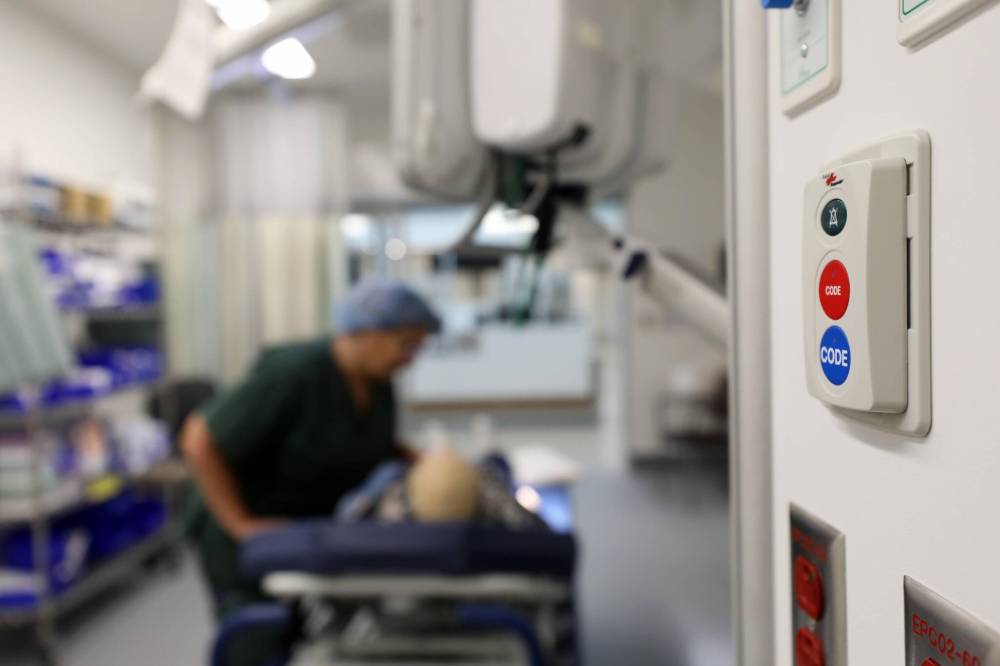
According to retired nurse and author Carol Youngson, the COVID-19 pandemic and its unprecedented health-care challenges underscored just how important nurses really are.
Finally, nurses are the glue that holds all the other professions involved with the care of a patient together. Doctors count on the bedside nurse to let them know what is going on. Often they make the doctor look good. Nearly every nurse I know has a story about how they saved a doctor’s ass at some point in their career. Maybe by questioning a medication choice or dosage, or a treatment that might not be appropriate at the time. Often these physicians are exhausted too, and errors are made. Some of the best doctors I have worked with were former nurses or started off getting a nursing degree but switched to medicine at some point before graduating.
COVID has shown us all how important nursing really is. Nurses are evolving to meet the pressure: we work with it, we work through it, we meet the needs of these patients to the best of our ability, and if the time comes when we can do no more, we are there, quietly holding their hand as they leave this world. I think the saddest thing about the pandemic is the fact so many people had to die alone, without their loved ones nearby. As a nurse, I know this would be heartbreaking to witness. If it was my family member, I know I would carry that extra piece of grief forever.
Nurses are knowledge, expertise, dedication, compassion all rolled up into one (often exhausted) body. Nursing isn’t about fluffing pillows and wiping fevered brows, it is literally about making the difference between life and death.
Carol Youngson is a retired registered nurse who has spent over two decades working in operating rooms and served as investigator for the Manitoba Department of Justice for the Office of the Chief Medical Examiner.
Related Articles
Premier delivers ‘message of gratitude’ to nurses in wake of tentative contract
Advertisement Advertise With Us
Advertisement Advertise With Us