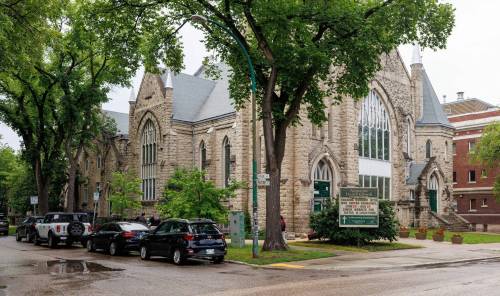
Manitoba to launch Canada’s first Red Dress alert system
Read this article for free:
or
Already have an account? Log in here »
To continue reading, please subscribe:

Digital Subscription
One year of digital access for only $205*
- Enjoy unlimited reading on winnipegfreepress.com
- Read the E-Edition, our digital replica newspaper
- Access News Break, our award-winning app
- Play interactive puzzles
*First annual payment billed as $205.00 + GST for one year. This annual subscription will automatically renew at $233.00 + GST every 52 weeks (10% off the regular annual price of $259.35). Offer available to new and qualified returning subscribers only. Cancel any time.
To continue reading, please subscribe:
Add Free Press access to your Brandon Sun subscription for only an additional
$1 for the first 4 weeks*
- Enjoy unlimited reading on winnipegfreepress.com
- Read the E-Edition, our digital replica newspaper
- Access News Break, our award-winning app
- Play interactive puzzles
*Your next Brandon Sun subscription payment will increase by $1.00 and you will be charged $17.95 plus GST for four weeks. After four weeks, your payment will increase to $24.95 plus GST every four weeks.
Read unlimited articles for free today:
or
Already have an account? Log in here »
Hey there, time traveller!
This article was published 03/05/2024 (809 days ago), so information in it may no longer be current.
Manitoba will be home to Canada’s first Red Dress Alert system, which will notify the public when an Indigenous woman, girl, two-spirit or gender-diverse person is reported missing.
The province was selected as the primary location for the pilot project — a partnership led by the federal and Manitoba governments, and Indigenous grassroots organizations — because, in part, it is the epicentre of the national MMIWG2S+ crisis.
“This is a historic moment, and a major step towards ending the crisis of missing and murdered Indigenous women, girls and gender-diverse people,” said NDP MP Leah Gazan (Winnipeg Centre), who pressed the federal government to create an alert system and led a study that heard from survivors, families and grassroots leaders.
“While we celebrate this historic moment, it is critical we remember that our work is not done until a Red Dress Alert is no longer needed.
“Safety from violence is a fundamental human right. It’s also critical we do everything we can to end the ongoing genocide against Indigenous women and girls, 2SLGBTQIA+ people.”
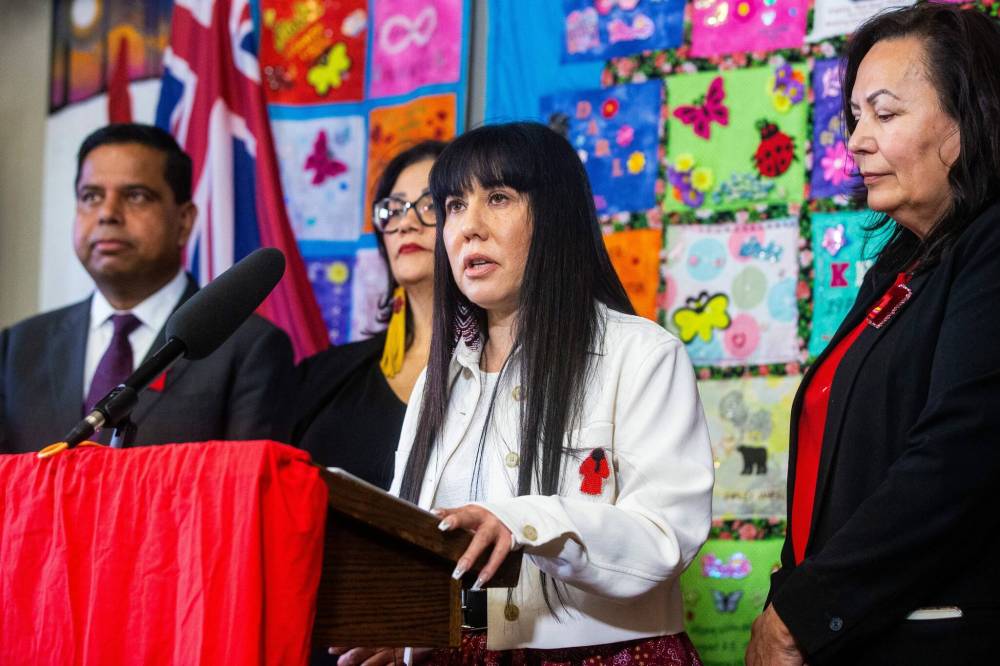
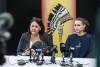
“Safety from violence is a fundamental human right," MP Leah Gazan said Friday.
It remains unclear when the system will be up and running to help locate those reported missing. The criteria for alerts are to be developed, officials said at a news conference in Winnipeg Friday, ahead of Red Dress Day on Sunday.
Manitoba’s minister for women and gender equity, Nahanni Fontaine, said it will be a community-based project developed, in part, by advocates who work on the front lines of the crisis.
While Manitoba is “ground zero,” it is also leading efforts to end the crisis, she said.
“Establishing a Red Dress Alert signals to Indigenous women, girls and two-spirited that their lives matter — that we are putting in the effort and the resources and the co-ordination that, should they go missing, your life matters and here’s our response to that,” said Fontaine, chair of the province’s MMIWG2S+ and gender-based violence committee of cabinet.
“Establishing a Red Dress Alert signals to Indigenous women, girls and two-spirited that their lives matter ,” said Nahanni Fontaine, chair of the province’s MMIWG2S+ and gender-based violence committee of cabinet.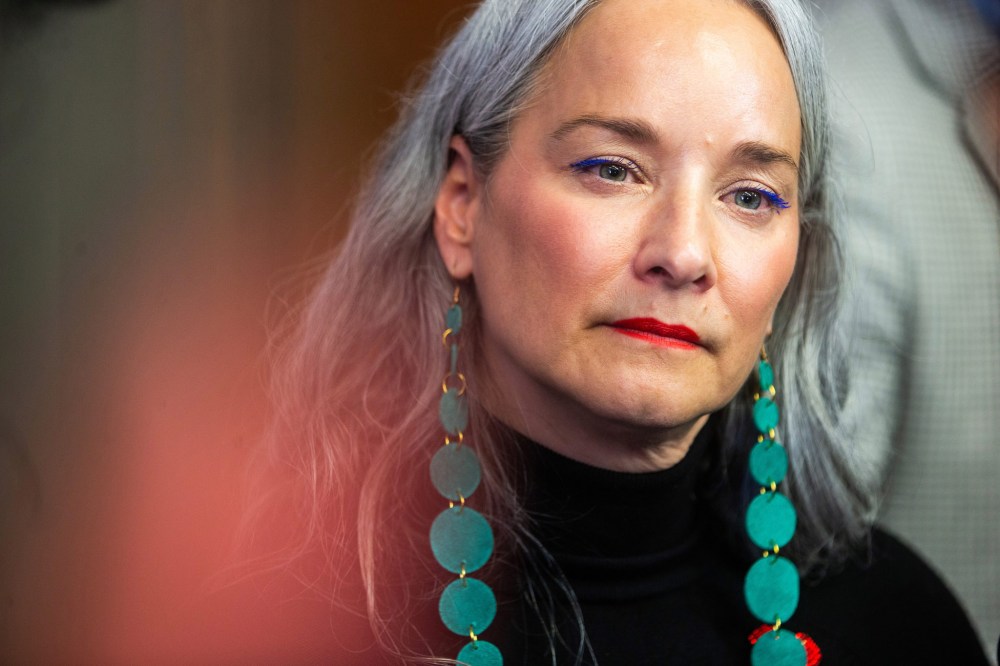
Ottawa has budgeted $1.3 million over three years to develop a regional system — an amount met with some criticism. Crown-Indigenous Relations Minister Gary Anandasangaree said it’s a “starting point.”
The goal is to develop a national system.
“A public alerting system is not the solution to the crisis of violence. We have to do more,” said Anandasangaree. “Even if it saves one life, it would have been worth it.”
Fontaine said the province will also provide money for the Manitoba system.
Similar state-wide systems exist in California and Washington.
Anandasangaree said fundamental questions, such as the role of police or what if a missing person is safe and doesn’t want to be found, have to be answered while developing a system that is trusted and appropriate for Manitoba.
More than a dozen pre-engagement sessions were held last winter. They were co-led by Gazan, two other Winnipeg women — Hilda Anderson-Pyrz, chair of the National Family and Survivors Circle, and Sandra Delaronde, co-chair of the Manitoba MMIWG2S+ Coalition — and Ontario MP Pam Damoff.
“(The system) says to society that we matter, that our voices are being heard,” said Anderson-Pyrz.
It must include wraparound supports that are readily available, she noted.
“It has to come from the experts who are on the front lines, and families and survivors and two-spirit and gender-diverse people who have the lived experience to guide this work,” said Anderson-Pyrz.
During the winter sessions, participants cited a need for accountability to ensure alerts are followed up on by police, she added.
There were calls to ensure remote communities have proper infrastructure to connect to the system and receive alerts.
“We need those alerts to go out and to go out immediately, and to be effective as well,” said Anderson-Pyrz.
“We need those alerts to go out and to go out immediately, and to be effective as well.”–Anderson-Pyrz
At the news conference in Fontaine’s office, speakers acknowledged the decades of activism and advocacy, and the families and communities affected by the crisis.
They stood in front of a large quilt that had the names of some of the Indigenous women and girls who’d gone missing or been slain.
Indigenous women and girls are six times more likely to be victims of homicide than non-Indigenous women and girls, according to a recent Statistics Canada study.
In 2019, a national inquiry into MMIWG found Indigenous women and girls are 12 times more likely to be slain or to go missing.
The inquiry produced 231 calls for justice. Few have been completed.
Last year, MPs unanimously adopted Gazan’s motion to recognize MMIWG2S+ as a Canada-wide emergency.
Related Articles
Indifference, broken promises to Indigenous Peoples in focus on eve of accused serial killer's trial









Anandasangaree acknowledged more work is necessary to provide supports for mental health, substance abuse, housing and empowering Indigenous cultural and language “revitalization.”
He said Ottawa has a national pathway to respond to the calls. Manitoba’s government has budgeted $20 million this year for a provincial MMIWG2S+ strategy.
The announcement of an alert system was held across the street from the Law Courts Building, where a jury will begin hearing evidence Wednesday in the trial of a Winnipeg man accused of killing four Indigenous women.
Jeremy Skibicki has pleaded not guilty to four counts of first-degree murder in the deaths of Rebecca Contois, Morgan Harris, Marcedes Myran and an unidentified woman who was given the name Buffalo Woman (Mashkode Bizhiki’ikwe) by First Nations community members.
chris.kitching@freepress.mb.ca

Chris Kitching is a general assignment reporter at the Free Press. He began his newspaper career in 2001, with stops in Winnipeg, Toronto and London, England, along the way. After returning to Winnipeg, he joined the Free Press in 2021, and now covers a little bit of everything for the newspaper. Read more about Chris.
Every piece of reporting Chris produces is reviewed by an editing team before it is posted online or published in print — part of the Free Press‘s tradition, since 1872, of producing reliable independent journalism. Read more about Free Press’s history and mandate, and learn how our newsroom operates.
Our newsroom depends on a growing audience of readers to power our journalism. If you are not a paid reader, please consider becoming a subscriber.
Our newsroom depends on its audience of readers to power our journalism. Thank you for your support.