

B.C. mom whose son died from wildfire smoke trying to make this year safer
Advertisement
Read this article for free:
or
Already have an account? Log in here »
To continue reading, please subscribe:
Monthly Digital Subscription
$0 for the first 4 weeks*
- Enjoy unlimited reading on winnipegfreepress.com
- Read the E-Edition, our digital replica newspaper
- Access News Break, our award-winning app
- Play interactive puzzles
*No charge for 4 weeks then price increases to the regular rate of $19.00 plus GST every four weeks. Offer available to new and qualified returning subscribers only. Cancel any time.
Monthly Digital Subscription
$4.75/week*
- Enjoy unlimited reading on winnipegfreepress.com
- Read the E-Edition, our digital replica newspaper
- Access News Break, our award-winning app
- Play interactive puzzles
*Billed as $19 plus GST every four weeks. Cancel any time.
To continue reading, please subscribe:
Add Free Press access to your Brandon Sun subscription for only an additional
$1 for the first 4 weeks*
*Your next subscription payment will increase by $1.00 and you will be charged $16.99 plus GST for four weeks. After four weeks, your payment will increase to $23.99 plus GST every four weeks.
Read unlimited articles for free today:
or
Already have an account? Log in here »
Hey there, time traveller!
This article was published 14/05/2024 (579 days ago), so information in it may no longer be current.
As wildfires rage in British Columbia, the family of a nine-year-old who died last summer is trying to protect people from poor air quality due to smoke this year.
Carter Vigh died of asthma exacerbated by wildfire smoke in 100 Mile House, B.C., last July 11.
Seeing the wildfire season in full swing again is “scary,” his mother Amber Vigh said in an interview Tuesday, noting she is feeling “probably a little bit of PTSD.”
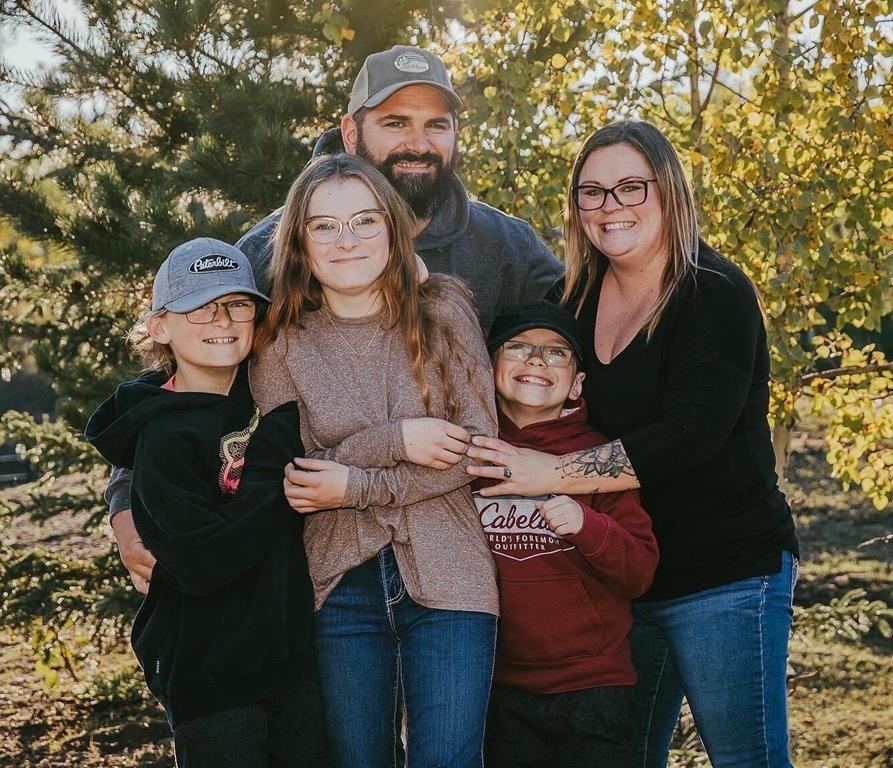
But Vigh is hoping that Carter’s Project, a partnership between the family and the BC Lung Foundation, will help make a difference.
They are set to give out more than 100 air quality monitors on Tuesday evening in 100 Mile House and will teach people how to make air purifiers using box fans and HEPA furnace filters.
On Monday, the Vigh family’s local provincial representative introduced a private member’s bill — called Carter’s Law — in the B.C. legislature.
Amber Vigh, along with her husband James, son Daxton and daughter Cadence, were in Victoria to watch BC United MLA Lorne Doerkson introduce the proposed Wildfire Amendment Act, which promises better air quality management and protection of vulnerable people during wildfire seasons.
“To see the tears in everyone’s eyes that were sitting in the house and to hear the applause, it was honestly incredible,” Vigh said.
“It’s obviously something that I wish didn’t have to happen,” she said.
“But I’m so incredibly proud that all of these things are happening in Carter’s name.”
Christopher Lam, president and CEO of the BC Lung Foundation, said the bill would fill an important gap in the province’s current wildfire preparedness plan.
“The Wildfire Act really does deal immediately with what are the actions that need to be taken when a wildfire hits a certain community within a certain distance,” Lam said.
“What it doesn’t take into account is the smoke portion and the air quality portion … This amendment is trying to address exactly (that).”
Although the air quality in 100 Mile House seems to be OK right now, Vigh said that could change with the wind any time.
“It’s definitely a fear when you have all of these people in our community that have compromised immune systems and compromised lungs,” she said.
On Wednesday, the Carter’s Project team will teach students at 100 Mile House Elementary School about asthma and air quality and make air purifiers with them.
The school will then have 20 air purifiers to use this year — enough for every classroom and the library, Vigh said.
Having the equipment to monitor air quality locally as well as air purifiers to create a safer indoor space, is critical, she said.
The day Carter died, his family didn’t know how poor the air quality was because the nearest air quality monitoring station was in Williams Lake, nearly 100 km away.
“It definitely brings a peace of mind that we…will have the ability to see what’s happening in real time in our area,” Vigh said.
Her goal is to make sure every community in British Columbia has both air quality monitors and air purifiers. Money for the devices is being raised through the BC Lung Foundation.
Lam said Carter’s Project has raised almost $100,000 so far, which is enough to bring air quality monitors and materials for homemade air purifiers to two more B.C. communities in the near future.
Scientists working with the foundation have been looking at which communities have the greatest need, Lam said.
The next communities will likely be one on Vancouver Island and Dawson Creek on the northern mainland, he said.
Air quality monitors and filtration are needed not only during wildfire season, but also in the winter if people are using wood-burning stoves, Lam said.
Having an air quality monitor — and knowing how to interpret the readings — helps people make decisions about outdoor activities and lets them know how safe they are indoors, he said.
“If you know your air quality happens to be bad in your home, there’s certain steps that you can take,” Lam said.
“You can build one of those box filters. You can make sure that your windows are closed up. You can make sure you have the right type of ventilation in your home.”
This report by The Canadian Press was first published May 14, 2024.
Canadian Press health coverage receives support through a partnership with the Canadian Medical Association. CP is solely responsible for this content.
Related Articles
Fort Nelson evacuees wait it out as incoming weather holds key to B.C. firefight
Advertisement Advertise With Us
Advertisement Advertise With Us