Wreck of Ernest Shackleton’s last ship, Quest, found in the depths off Labrador

Advertisement

Advertise with us

ST. JOHN'S, N.L. - The wreck of the last ship belonging to Sir Ernest Shackleton, the famed Irish explorer of Antarctica, has been found off the coast of Labrador by an international team led by the Royal Canadian Geographical Society.

Read this article for free:


or

Already have an account? Log in here »

To continue reading, please subscribe:

Subscribe and receive a limited-edition Free Press branded hat or tote.

Digital Subscription

One year of digital access for only $205*

  • Enjoy unlimited reading on winnipegfreepress.com
  • Read the E-Edition, our digital replica newspaper
  • Access News Break, our award-winning app
  • Play interactive puzzles

*First annual payment billed as $205.00 + GST for one year. This annual subscription will automatically renew at $233.00 + GST every 52 weeks (10% off the regular annual price of $259.35). Offer available to new and qualified returning subscribers only. Cancel any time.

To continue reading, please subscribe:

Add Free Press access to your Brandon Sun subscription for only an additional

$1 for the first 4 weeks*

  • Enjoy unlimited reading on winnipegfreepress.com
  • Read the E-Edition, our digital replica newspaper
  • Access News Break, our award-winning app
  • Play interactive puzzles
Start now

*Your next Brandon Sun subscription payment will increase by $1.00 and you will be charged $17.95 plus GST for four weeks. After four weeks, your payment will increase to $24.95 plus GST every four weeks.

Hey there, time traveller!
This article was published 12/06/2024 (849 days ago), so information in it may no longer be current.

ST. JOHN’S, N.L. – The wreck of the last ship belonging to Sir Ernest Shackleton, the famed Irish explorer of Antarctica, has been found off the coast of Labrador by an international team led by the Royal Canadian Geographical Society.

Shackleton died on the ship in 1922, during his fourth expedition to the frozen, southernmost continent, after his initial plans to explore the Canadian Arctic were thwarted, said John Geiger, leader of the expedition to find the missing ship called Quest.

His death on the Quest marked the end of what historians consider the “heroic age” of Antarctic exploration. For Geiger, the Quest represents a tangible link between Canada and the revered explorer. In fact, it was news of an American rival’s plan that pushed him to try to find the ship first.

“I heard that some Americans were interested in finding Quest, and I just had this picture in my mind of a few billionaires on yachts, up in the Labrador Sea,” he told a crowd at the Memorial University’s Marine Institute in St. John’s, N.L., on Wednesday.
The Canadian Press
The Canadian Press

“We’ve done it the right way. It’s not about anyone’s ego, it’s about telling great stories and celebrating some of the finest human attributes.”

Shackleton is perhaps best known for his 1914 exploration trip to the Antarctic region aboard the Endurance, which got trapped in the ice and was eventually crushed. He and his crew survived on ice floes and then made their way to Elephant Island, off the east coast of Antarctica. Shackleton and a few of his crew then set out in a whale boat to find help, and over the course of the next four months, he made several trips back to rescue his entire team.

The mission to find the Quest in the Labrador Sea met its own challenges, though they were admittedly less dramatic, and Geiger said he and his team turned to Shackleton’s writing on leadership and perseverance to work through their frustration as they dealt with equipment failures and fears they would come up empty-handed.

The 23-person crew lost the first few days trying to fix the problems, and there was a small window in which conditions were expected to be good.

When they finally got the sonar vehicle in the water Sunday, the search moved slowly.

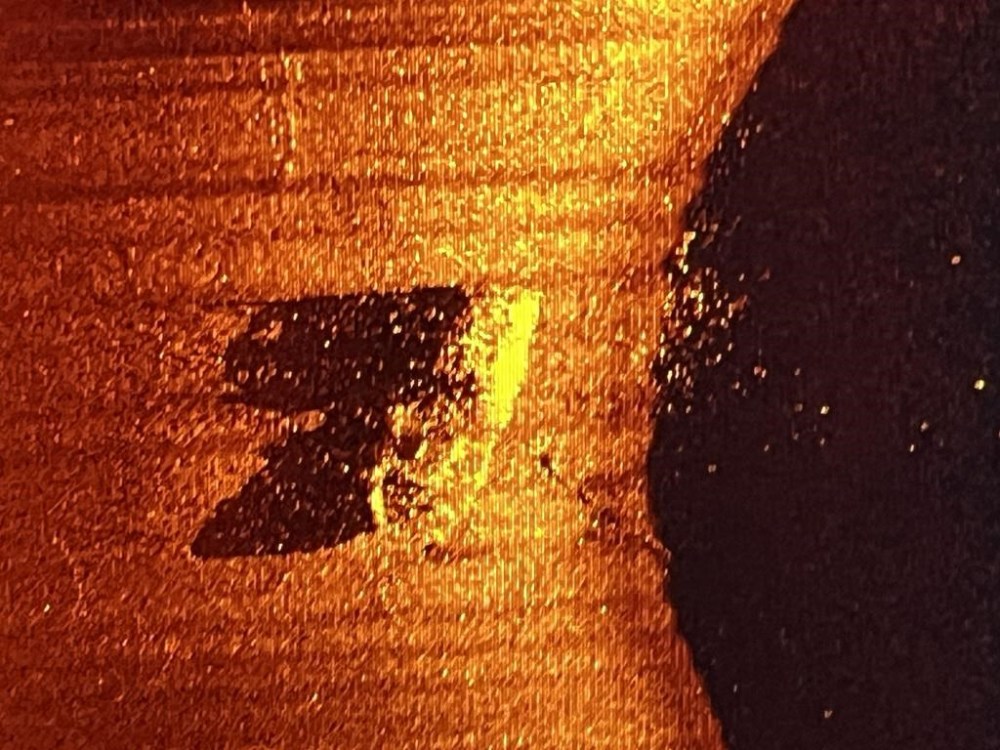
“Sixteen hours went by, there’s nothing, just a very smooth ocean floor,” Geiger said in an interview Tuesday. “Our technician was looking away from the screen, I just happened to be looking at it, and suddenly, unmistakably, a ship appears in the sonar data.”

“Suddenly, it goes from this sense of, ‘Oh God, I’m not sure this is going to work,’ to this sense of exhilaration.”

Renowned shipwreck hunter David Mearns was the expedition’s search director, and it was his responsibility to interpret the sonar images and declare whether the long-sought vessel had truly been found. As a result, he said he had to be far more skeptical of those first signs of a shipwreck on the screen.

“They were all shaking hands and high-fiving, and I refused to shake anybody’s hand until we had the last pass over,” Mearns said. “And then I said, ‘Okay, yeah, that’s the Quest.'”

Mearns has found 29 major shipwrecks in his career, but finding the Quest was particularly special because Alexandra Shackleton, the explorer’s granddaughter, is a close friend and desperately wanted the ship to be found.

“To be part of that, to be able to deliver that, is a huge privilege in my life,” he added during in a telephone interview Tuesday evening, shortly after he and the crew docked in St. John’s, N.L.

The jubilant voices of about 12 of his fellow explorers could be heard in the background, sometimes overtaking his voice.

“They’re all very, very happy,” Mearns said. “I think that feeling is going to spread in certain parts around the world.”

The Norwegian-built Quest was a schooner-rigged steamship, and Shackleton bought it specifically to travel to Canada’s High Arctic, Geiger said. But the federal government at the time axed those plans, and Shackleton decided to set sail once again for the Antarctic.

He died of a heart attack on board the ship when it was just off South Georgia, east of the Falkland Islands in the South Atlantic. He was 47.

After the explorer’s death, the Quest was used for Arctic research and then returned to its original intended use as a sealing vessel. It sank in 1962 after it was damaged by ice in the Labrador Sea while on a whaling trip.

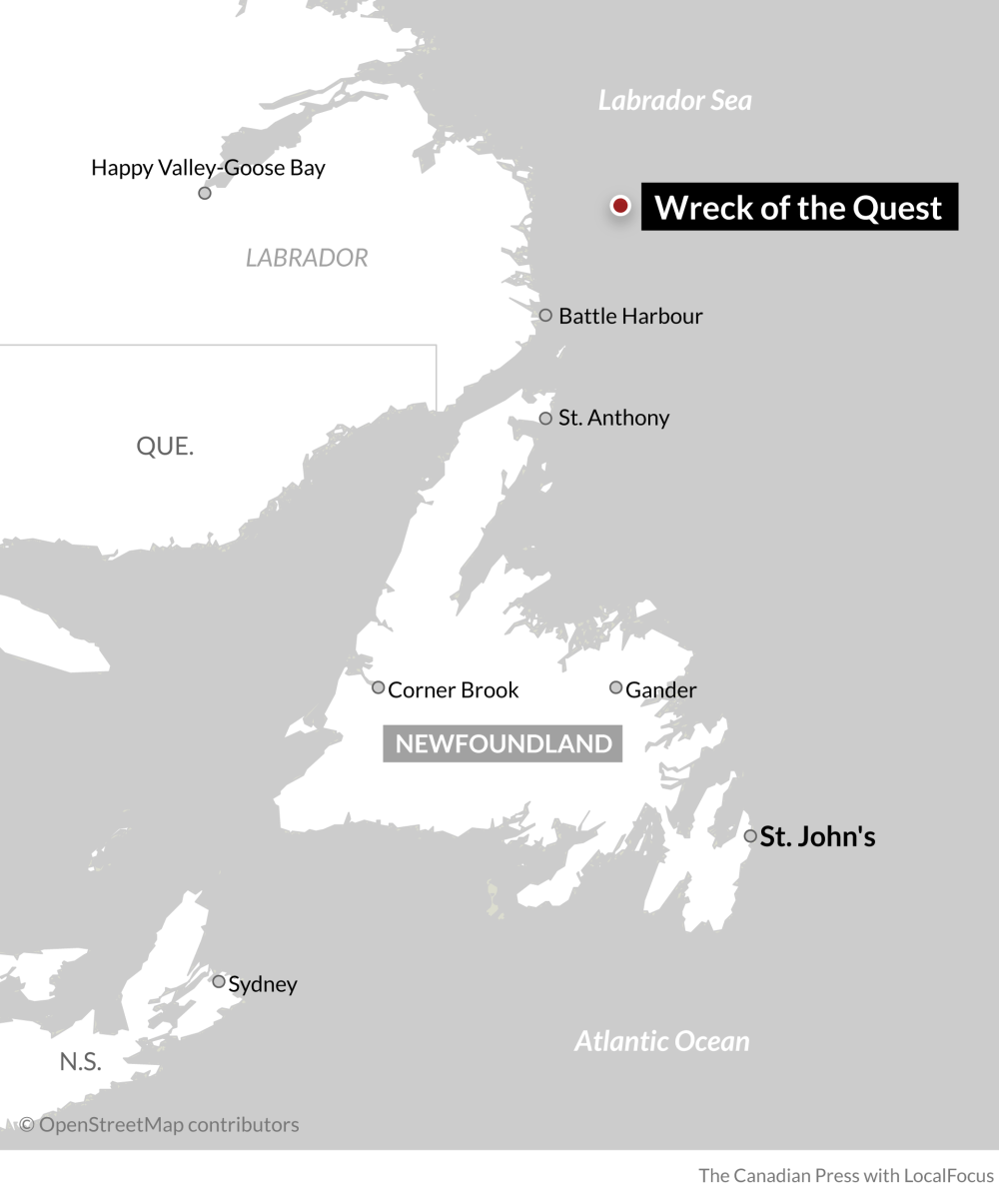
The wreck now sits on the sea floor at a depth of 390 metres, about 80 kilometres off the coast of southern Labrador. It appears to be in “incredible condition,” though it was damaged when it slammed into the seabed, Geiger said. Its towering mast lies broken beside it, likely cracked off as the vessel was sucked into the depths.

It won’t be brought to the surface — that would be far too expensive, Geiger said — but it will be thoroughly documented and studied. A crew will likely head out some time before the end of this summer to begin taking footage of the vessel with a remotely operated vehicle.

“Like everyone else, I want more, we all want to see more,” he said. “We all want to see the name on the ship, we want to get into the ship, we want to see what’s left of it.”

This report by The Canadian Press was first published June 12, 2024.
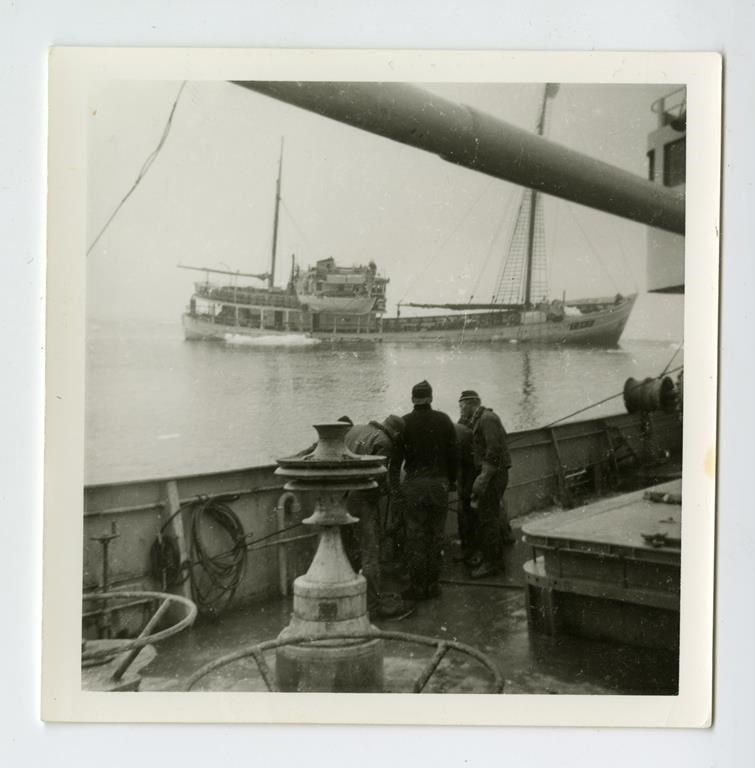
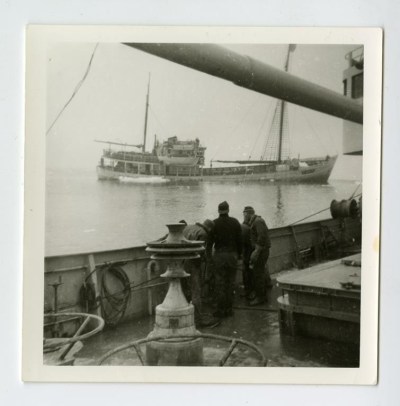
The Quest is shown sinking off Labrador on May 5, 1962, in this handout photo. A crew led by the Royal Canadian Geographical Society has found the long-sought wreck of the Quest, the final expedition ship that belonged to famed Irish explorer Sir Ernest Shackleton. John Geiger, leader of the Shackleton Quest Expedition, says sonar scans located the wreck on Sunday, sitting on its keel on the sea floor about 80 kilometres off the coast of Labrador, 390 metres from the surface. THE CANADIAN PRESS/HO-Tore Topp,
A side-scan sonar image taken Sunday, June 9, 2024, shows the wreck of Quest lying upright and intact on the seabed off the coast of Labrador in this handout photo. THE CANADIAN PRESS/HO - Royal Canadian Geographical Society
Report Error Submit a Tip

More Stories

Nurses disciplined for botched IV infusion

Nicole Buffie 3 minute read Preview

Nurses disciplined for botched IV infusion

Nicole Buffie 3 minute read Updated: Yesterday at 4:36 PM CDT

Two nurses working at the Grace Hospital have been reprimanded and fined $2,500 each for an IV infusion gone bad and an attempted coverup.

The incident happened on November 23, 2023 when a nurse asked a colleague to set up an IV infusion on him in an unused operating room.

During the attempted IV start, the nurse lost consciousness. The nurse who attempted the IV drip and another who was in the room called for help and several staff responded.

The nurse regained consciousness and vomited, but recovered and continued to work his shift, a March 18 decision by the College of Registered Nurses of Manitoba says.

Read
Updated: Yesterday at 4:36 PM CDT

Winnipeg more than its worst headlines

Marwa Suraj 4 minute read 2:00 AM CDT

Winnipeg takes a reputational beating sometimes and some of the criticism is deserved.

Concerns about public safety are real. Homelessness remains painfully visible. Too many people are struggling with addiction, poverty, mental illness and inadequate housing in plain sight.

Those concerns deserve to be taken seriously. But a city can be making measurable progress, struggling badly in other areas and still be reduced unfairly to its worst headlines. Winnipeg deserves neither denial nor caricature.

Take public safety.

Bit of creepy consultation could go a long way

Maureen Scurfield 5 minute read 2:01 AM CDT

DEAR MISS LONELYHEARTS: Halloween has always been my favourite time of year. I do my house up with lots of spooky lighting and characters on the lawn with eerie sounds booming out.

But last year I got seriously hassled by some people in the neighbourhood who thought it was too creepy. How do I get them on board this year? I don’t want to fight with them again.

— Want to Be Good Neighbour, River Heights

Dear Good Neighbour: Go to your close neighbours and explain what you want to do with your yard for Halloween this year, and also provide them with a firm time by which the celebrating will wrap up and things can quiet down.

Kinew, two NDP caucus members file lawsuit defence, deny defaming former party MLA Wasyliw to expel him

Erik Pindera 4 minute read Preview

Kinew, two NDP caucus members file lawsuit defence, deny defaming former party MLA Wasyliw to expel him

Erik Pindera 4 minute read Wednesday, Oct. 7, 2026

The premier and two New Democrat caucus members have denied they conspired to defame another politician as an excuse to oust him from the party.

Mark Wasyliw, now an independent Member of the Legislative Assembly representing Fort Garry, was booted from the NDP in September 2024, which the party claimed was due to Wasyliw’s former law partner representing convicted sex offender and disgraced fashion mogul Peter Nygard.

The independent MLA, who’s a defence lawyer, claims statements his former colleagues made in September 2024 linking him to Nygard or accusing him of lying, harmed him and his reputation.

Wasyliw filed his lawsuit in December last year, naming Premier Wab Kinew, Natural Resources Minister Ian Bushie and Seine River MLA Billie Cross as defendants. The claim was later amended to remove Bushie as a defendant and add Environment Minister Mike Moyes, who was at the time chair of the NDP caucus, in his place.

Read
Wednesday, Oct. 7, 2026

Wreck of Ernest Shackleton’s last ship, Quest, found in the depths off Labrador

Sarah Smellie, The Canadian Press 6 minute read Preview

Wreck of Ernest Shackleton’s last ship, Quest, found in the depths off Labrador

Sarah Smellie, The Canadian Press 6 minute read Wednesday, Jul. 8, 2026

ST. JOHN'S, N.L. - The wreck of the last ship belonging to Sir Ernest Shackleton, the famed Irish explorer of Antarctica, has been found off the coast of Labrador by an international team led by the Royal Canadian Geographical Society.

Shackleton died on the ship in 1922, during his fourth expedition to the frozen, southernmost continent, after his initial plans to explore the Canadian Arctic were thwarted, said John Geiger, leader of the expedition to find the missing ship called Quest.

His death on the Quest marked the end of what historians consider the "heroic age" of Antarctic exploration. For Geiger, the Quest represents a tangible link between Canada and the revered explorer. In fact, it was news of an American rival's plan that pushed him to try to find the ship first.

"I heard that some Americans were interested in finding Quest, and I just had this picture in my mind of a few billionaires on yachts, up in the Labrador Sea," he told a crowd at the Memorial University's Marine Institute in St. John's, N.L., on Wednesday.

Read
Wednesday, Jul. 8, 2026

Police on scene at Fairmont hotel construction site

1 minute read Updated: 12:19 AM CDT

At least three police cars were present at the under-construction Fairmont Winnipeg Thursday evening.

The nature of the response was unclear, but officers were guiding traffic outside of the construction zone at 2 Lombard Place while the response was underway. At 6:50 p.m., traffic was flowing normally.

Security on site provided no information on the response, but an individual working behind site fencing told the Free Press there’d be no comment from anyone on site as to why police were on scene at this time.

An SUV with a Government of Manitoba logo on its side was also present alongside personnel from Manitoba Workplace Safety and Health. However, it’s unknown if it’s connected to the police response.