

The University of Cambridge returns 39 traditional artifacts to Uganda in a major act of restitution
Advertisement
Read this article for free:
or
Already have an account? Log in here »
To continue reading, please subscribe:

Digital Subscription
One year of digital access for only $205*
- Enjoy unlimited reading on winnipegfreepress.com
- Read the E-Edition, our digital replica newspaper
- Access News Break, our award-winning app
- Play interactive puzzles
*First annual payment billed as $205.00 + GST for one year. This annual subscription will automatically renew at $233.00 + GST every 52 weeks (10% off the regular annual price of $259.35). Offer available to new and qualified returning subscribers only. Cancel any time.
To continue reading, please subscribe:
Add Free Press access to your Brandon Sun subscription for only an additional
$1 for the first 4 weeks*
- Enjoy unlimited reading on winnipegfreepress.com
- Read the E-Edition, our digital replica newspaper
- Access News Break, our award-winning app
- Play interactive puzzles
*Your next Brandon Sun subscription payment will increase by $1.00 and you will be charged $17.95 plus GST for four weeks. After four weeks, your payment will increase to $24.95 plus GST every four weeks.
Read unlimited articles for free today:
or
Already have an account? Log in here »
Hey there, time traveller!
This article was published 12/06/2024 (849 days ago), so information in it may no longer be current.
KAMPALA, Uganda (AP) — The University of Cambridge has repatriated more than three dozen traditional artifacts to Uganda in a major act of restitution welcomed by the local officials who sought them.
Some of the objects were shown exclusively to AP journalists on Wednesday. The British university returned the 39 items, which range from tribal regalia to delicate pottery, to the East African country on Saturday.
The items remain the property of the collection of the Museum of Archaeology and Anthropology at Cambridge, which is loaning them to Uganda for an initial period of three years, said Mark Elliott, the museum’s senior curator in anthropology.
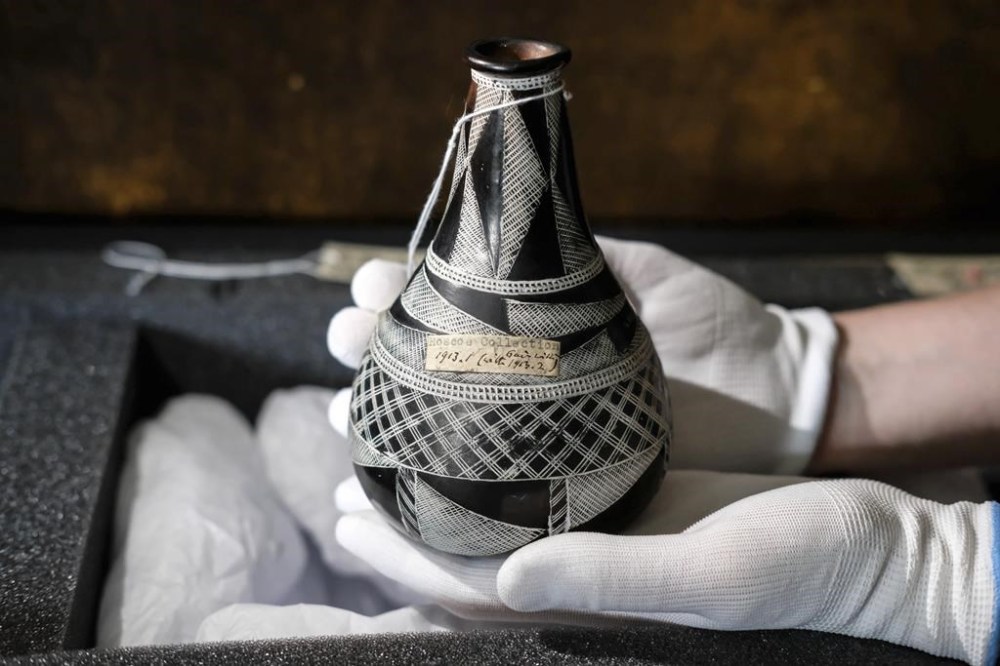
Elliott described it as “very much a museum-to-museum collaboration” that stems from years of talks about the possibility of returning objects deemed “exceptionally powerful and exceptionally sensitive to communities whose belongings they were.”
The objects, selected by Ugandan curators, represent a small fraction of about 1,500 ethnographic objects from Uganda that Cambridge has owned for a century. Cambridge acquired most as donations from private collections, and many were given by an Anglican missionary active in Uganda in the 1890s and early 20th century.
Uganda was declared a British protectorate in 1894. Independence came in 1962.
“It’s about putting these objects back in the hands of the Ugandan people,” Elliott said. “These objects have been away from home for so long.”
The next step is to “research their contemporary significance and to help make decisions about their future,” he said.
The Uganda Museum in the capital, Kampala, is expected to put on a temporary exhibition of the objects next year.
Uganda’s agreement with Cambridge is renewable, allowing for the possibility of a permanent loan and perhaps local ownership, said Jackline Nyiracyiza, Ugandan government commissioner in charge of museums and monuments.
“Sixty years that have passed for us now to get 39 objects,” she said. “We are working now with the Cambridge team to … see that we talk to other museums and be able to repatriate others maybe next year or within the near future.”
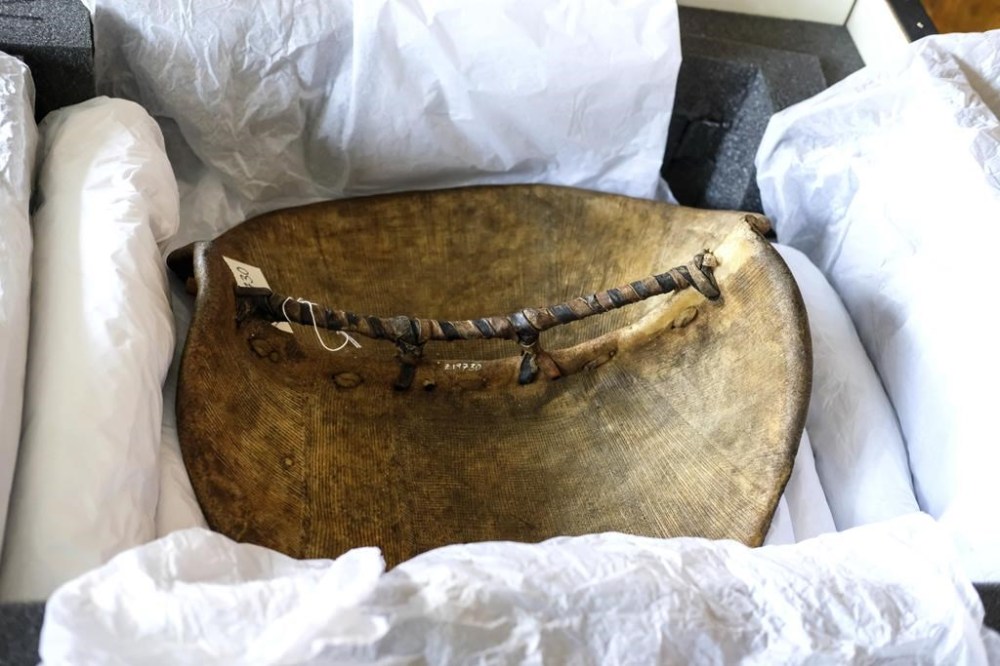
Ugandan officials, seeking such restitution, first traveled to Cambridge in 2022 as more African governments started to demand accountability over items of aesthetic or cultural value that were looted before and during the colonial era.
Elsewhere in Africa, including the West African nation of Nigeria, there have been successful restitution events in recent years.
Nelson Abiti, principal curator of the Uganda Museum, spoke of the Cambridge deal as a breakthrough that could prove exemplary for other museums with ethnographic items from Uganda.
“This is the biggest single movement of objects returned to the African continent” in recent years, Abiti asserted.
Still, restitution remains a struggle for African governments, and the African Union has put the return of looted cultural property on its agenda. The continental body aims to have a common policy on the issue.