

South Africa’s new government brings Black and white together. It’s also reviving racial tensions
Advertisement
Read this article for free:
or
Already have an account? Log in here »
To continue reading, please subscribe:

Digital Subscription
One year of digital access for only $205*
- Enjoy unlimited reading on winnipegfreepress.com
- Read the E-Edition, our digital replica newspaper
- Access News Break, our award-winning app
- Play interactive puzzles
*First annual payment billed as $205.00 + GST for one year. This annual subscription will automatically renew at $233.00 + GST every 52 weeks (10% off the regular annual price of $259.35). Offer available to new and qualified returning subscribers only. Cancel any time.
To continue reading, please subscribe:
Add Free Press access to your Brandon Sun subscription for only an additional
$1 for the first 4 weeks*
- Enjoy unlimited reading on winnipegfreepress.com
- Read the E-Edition, our digital replica newspaper
- Access News Break, our award-winning app
- Play interactive puzzles
*Your next Brandon Sun subscription payment will increase by $1.00 and you will be charged $17.95 plus GST for four weeks. After four weeks, your payment will increase to $24.95 plus GST every four weeks.
Read unlimited articles for free today:
or
Already have an account? Log in here »
Hey there, time traveller!
This article was published 21/06/2024 (821 days ago), so information in it may no longer be current.
CAPE TOWN, South Africa (AP) — In a country where racial segregation was once brutally enforced, South Africa’s new coalition government has brought a Black president and a white opposition leader together in an image of unity.
Yet the power-sharing agreement sealed a week ago between President Cyril Ramaphosa’s African National Congress party and the Democratic Alliance, one of South Africa’s few white-led parties, has unwittingly renewed some racial rifts.
Many Black South Africans have expressed discomfort with a white-led party being back in power, even in a coalition. The country is haunted by the apartheid system of white minority rule that ended 30 years ago but is still felt by millions among the Black majority who were ruthlessly oppressed by a white government and remain affected by unresolved issues of poverty and inequality.
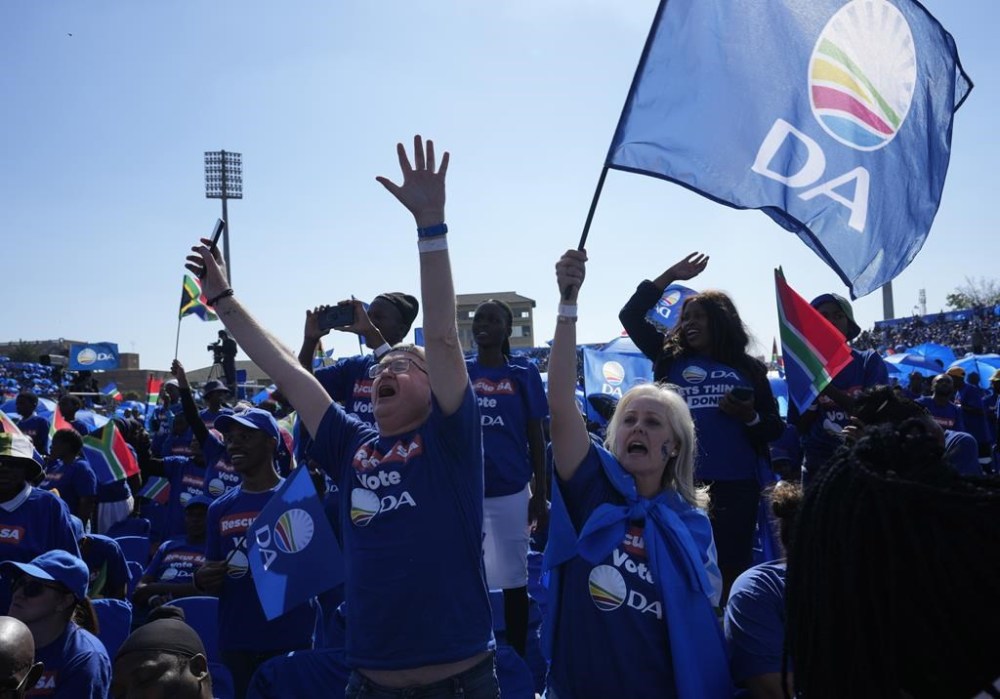
South Africa is now faced with the likelihood of seeing more white people in senior government positions than ever since apartheid ended. White people make up around 7% of the country’s population of 62 million.
The ANC liberated South Africa from apartheid in 1994 under Nelson Mandela, the country’s first Black president. Its three-decade political dominance ended in the landmark May 29 election, forcing it to form a coalition. The DA, with its roots in liberal white parties that stood against apartheid, won the second largest share of votes.
Both have promoted their coming together in a multi-party coalition as a new unity desperately needed in a country with vast socioeconomic problems.
But history lingers. The DA suspended one of its white lawmakers Thursday, days after being sworn into Parliament, over racist slurs he made in a social media video more than a decade ago. Renaldo Gouws — reportedly a student in his 20s at the time — used an especially offensive term for Black people that was infamous during apartheid and is now considered hate speech.
Gouws faces disciplinary action from his party, and the South African Human Rights Commission said it will take him to court. The DA, which previously fended off allegations of favoring whites, is again under scrutiny.
The Congress of South African Trade Unions, an important political ally of the ANC, asserted that Gouws’ outburst was symptomatic of a DA that is “soft on racists.” The DA “needs to reflect on and address this if it wants to be accepted as a partner in the government of national unity by ordinary South Africans,” it said.
DA leader John Steenhuisen denied in a television interview that his party is dedicated only to white interests, saying it wouldn’t have won the second largest share of votes in a Black majority country if it was. The DA has Black and white lawmakers and supporters, but its only Black leader left the party in 2019, questioning its commitment to Black South Africans.
Political analyst Angelo Fick said the DA does have a “sense of whiteness” in the eyes of many South Africans and has created that by being “utterly disinterested in speaking to the concerns about race from Black South Africans.”
Shortly before Gouws’ case, racially charged language came from another direction when the MK Party of former President Jacob Zuma — once an ANC leader — called Ramaphosa a “house negro” for entering into the agreement with the DA. Zuma’s party also referred to white DA chairperson Helen Zille as Ramaphosa’s “slave master.”
The MK Party and the Economic Freedom Fighters — the third and fourth biggest parties in Parliament — have refused to join what the ANC calls a government of national unity open to all. They said the fundamental reason is the DA, which they say is committed only to the well-being of South Africa’s white minority.
“We do not agree to this marriage of convenience to consolidate the white monopoly power over the economy,” EFF leader Julius Malema said.
Malema has sometimes provoked racial tensions in demanding change, once saying, “We are not calling for the slaughtering of white people, at least for now,” and that South Africa’s “white man has been too comfortable for too long.”
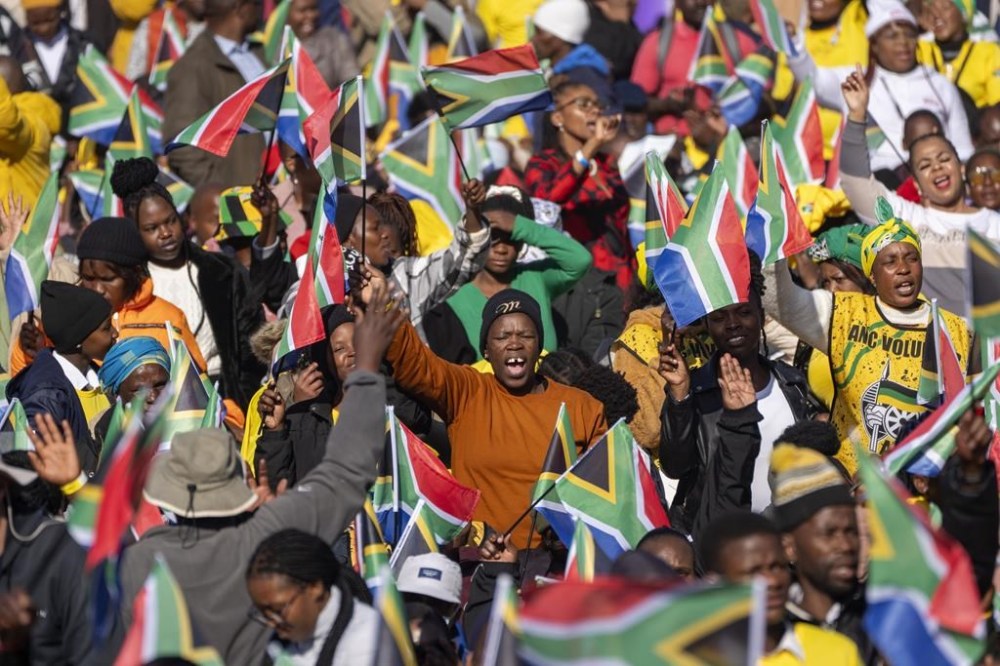
He now says his party is not against white people but against a perceived “white privilege” that leaves 64% of Black people in poverty compared with 1% of white people, according to a 2021 report by the South African Human Rights Commission.
Malema represents a new opposition to the ANC by many Black South Africans frustrated over the race-based inequality that’s evident after 30 years of freedom. White people generally live in posh neighborhoods. Millions of Black people live in impoverished townships on the outskirts.
That frustration led many voters to give up on the ANC. The concerns about teaming up with the DA could weaken the party even further.
In his inauguration speech Wednesday, Ramaphosa recognized the “toxic” divisions that remain decades after Mandela preached racial reconciliation. “Our society remains deeply unequal and highly polarized,” Ramaphosa said.
The ANC is trying to use the coalition as a kind of reboot of Mandela’s ideals.
“To us, it doesn’t matter whether the cat is black or white,” ANC Secretary-General Fikile Mbalula said of the agreement with the DA. Mandela had used the phrase to signal he was open to all races serving in South Africa’s government.
“Fundamentally,” Mbalula said, “the question is how do we move the country forward.”
___
AP Africa news: https://apnews.com/hub/africa