

US ambassador calls China’s tech support for Russia during Ukraine invasion a ‘major mistake’
Advertisement
Read this article for free:
or
Already have an account? Log in here »
To continue reading, please subscribe:

Digital Subscription
One year of digital access for only $205*
- Enjoy unlimited reading on winnipegfreepress.com
- Read the E-Edition, our digital replica newspaper
- Access News Break, our award-winning app
- Play interactive puzzles
*First annual payment billed as $205.00 + GST for one year. This annual subscription will automatically renew at $233.00 + GST every 52 weeks (10% off the regular annual price of $259.35). Offer available to new and qualified returning subscribers only. Cancel any time.
To continue reading, please subscribe:
Add Free Press access to your Brandon Sun subscription for only an additional
$1 for the first 4 weeks*
- Enjoy unlimited reading on winnipegfreepress.com
- Read the E-Edition, our digital replica newspaper
- Access News Break, our award-winning app
- Play interactive puzzles
*Your next Brandon Sun subscription payment will increase by $1.00 and you will be charged $17.95 plus GST for four weeks. After four weeks, your payment will increase to $24.95 plus GST every four weeks.
Read unlimited articles for free today:
or
Already have an account? Log in here »
Hey there, time traveller!
This article was published 26/06/2024 (798 days ago), so information in it may no longer be current.
SHANGHAI, China (AP) — China’s support for Russia’s full-scale invasion of Ukraine through the provision of technology for missiles and other weaponry is a “major mistake,” U.S. Ambassador to Beijing Nicholas Burns said Wednesday.
In a speech in the Chinese financial hub of Shanghai, Burns also said Russia’s invasion, now in its third year, had become an “existential crisis” in Europe.
“We think it’s a major mistake to allow Chinese companies, by the thousands, to be sending so many components, technology components, microprocessors (and) nitrocellulose to Russia to reinforce and strengthen the defense industrial base of the Russian Federation for this brutal war,” Burns said.
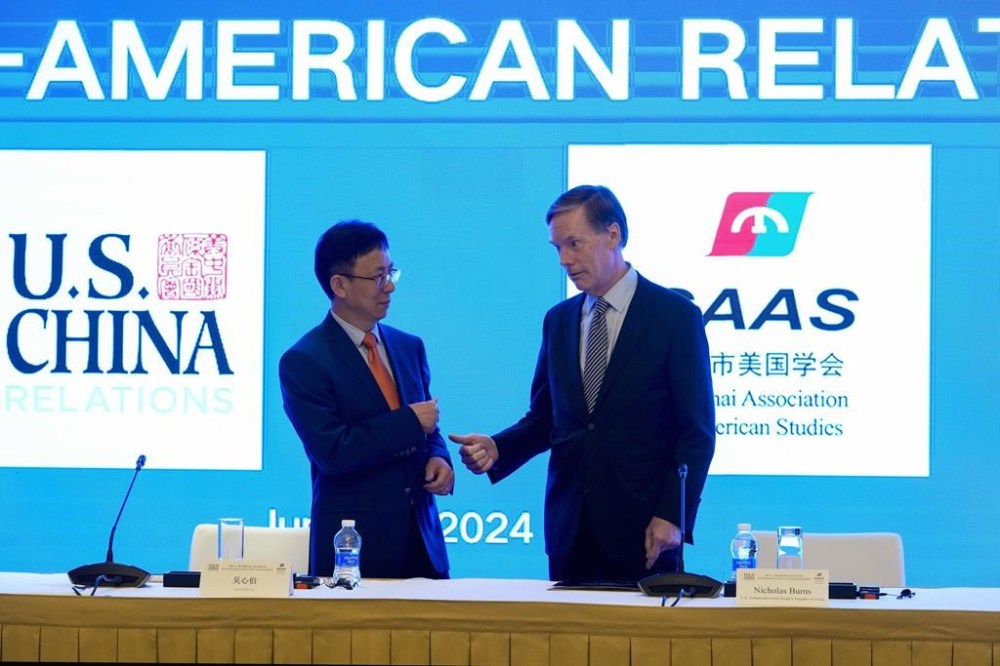
China “is not neutral, but has effectively sided with Russia in this war,” the ambassador said, adding that the decision directly contradicted China’s longstanding insistence on “sovereignty and territorial integrity.”
China insists it does not provide direct military aid to Russia but has maintained strong trade ties throughout the conflict, along with visits between Putin and Chinese leader Xi Jinping.
China is also a major purchaser of Russian oil and gas, providing a lifeline for Moscow’s war economy that is under international sanctions. Prior to Russia’s February 2022 invasion of Ukraine, China and Russia signed an agreement vowing a limitless friendship. China has refused to refer to the invasion as such and has blamed NATO for provoking Russian President Vladimir Putin.
There was no immediate Chinese reaction to Burns’ remarks, which came during a seminar on China-U.S. relations centered on the life of Henry Kissinger, a career diplomat who died last year.
In a recent interview with The Wall Street Journal, Burns also criticized Beijing for undermining people-to-people cultural and educational exchanges by interrogating and intimidating citizens who attend U.S.-organized events in China, ramping up restrictions on the embassy’s social media posts and whipping up anti-American sentiment.
His comments drew a rebuke from the Chinese foreign ministry.
“It is the U.S., not China, that has disrupted and prevented cultural and people-to-people exchanges between the two countries,” Chinese foreign ministry spokeswoman Mao Ning said Wednesday. “The U.S. has used national security as a false pretext to harass, interrogate and deport Chinese students arriving in the U.S. Such moves inflicted enormous damage on the persons concerned. They’ve created a chilling effect.”
In Washington, the State Department “absolutely” agreed with “everything the ambassador said” in the interview, spokesman Matthew Miller said.
“It’s very hard” to improve people-to-people relations “when the Chinese government harasses either American citizens who are in China or harasses Chinese citizens who participate in … or attempt to participate in American programs,” Miller said.
In the past, the State Department has said it welcomed Chinese students, and that said fewer than “one tenth of 1%” of them have been detained or denied admission.
Relations between Washington and Beijing also remain fraught over trade, territorial disputes and the self-governing island democracy of Taiwan. The U.S. maintains close political and military relations with Taiwan despite their lack of formal diplomatic ties in deference to Beijing.
China claims the island as its own territory to be annexed by force if necessary. It has threatened in recent days to hunt down “hardcore” supporters of the island’s continued independence and sentence them to death. There was no indication how it intended to act on the threat.