City looks to AI to get a jump on potholes

The City of Winnipeg will use artificial intelligence to pinpoint the locations and sizes of potholes, with the goal of speeding up that work.

Read this article for free:


or

Already have an account? Log in here »

To continue reading, please subscribe:

Subscribe and receive a limited-edition Free Press branded hat or tote.

Digital Subscription

One year of digital access for only $205*

  • Enjoy unlimited reading on winnipegfreepress.com
  • Read the E-Edition, our digital replica newspaper
  • Access News Break, our award-winning app
  • Play interactive puzzles

*First annual payment billed as $205.00 + GST for one year. This annual subscription will automatically renew at $233.00 + GST every 52 weeks (10% off the regular annual price of $259.35). Offer available to new and qualified returning subscribers only. Cancel any time.

To continue reading, please subscribe:

Add Free Press access to your Brandon Sun subscription for only an additional

$1 for the first 4 weeks*

  • Enjoy unlimited reading on winnipegfreepress.com
  • Read the E-Edition, our digital replica newspaper
  • Access News Break, our award-winning app
  • Play interactive puzzles
Start now

*Your next Brandon Sun subscription payment will increase by $1.00 and you will be charged $17.95 plus GST for four weeks. After four weeks, your payment will increase to $24.95 plus GST every four weeks.

Hey there, time traveller!
This article was published 08/07/2024 (791 days ago), so information in it may no longer be current.

The City of Winnipeg will use artificial intelligence to pinpoint the locations and sizes of potholes, with the goal of speeding up that work.

The pothole imaging pilot project is one of a few new AI efforts the city will test to try to improve services.

“The pilot project that we are planning to do takes video images from any camera that’s vehicle-mounted. We’re planning to do (this on) buses but it could also be other city vehicles. It takes that image and it runs the image through an artificial intelligence… It uses machine vision, essentially, to say, ‘is this a pothole first?’ …and then it classifies it (by size),” said Tyler Gooch, the city’s director of innovation and technology.

Gooch said the pilot is expected to start at the beginning of the 2025 pothole season, with the exact date depending on weather conditions. He said the city has started planning the details.

“The vision is that, eventually, when a pothole appears, a city vehicle passes by that pothole maybe (as soon as) the same day and now we’ve identified that that pothole exists. We’d basically get… faster information about where the potholes are and better information about where the large potholes are … It gives us that information faster without requiring a human to report it, which lets us prioritize the work and plan better,” he said.

Citizens and city crews are relied on to report cracks and craters in the road now.

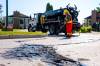
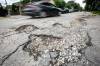
As of July 1, the city filled 179,630 potholes this year, including some repeat repairs after heavy rain washed out filler material.

Meanwhile, some residents have complained about craters they believe were left in the road for weeks or months at a time.

Gooch said earlier detection alone wouldn’t increase resources for pothole crews, which affect when repairs are completed. But the AI system could make Winnipeg one of the municipal leaders in quicker pothole identification.

“We think we’ll be one of the earliest in North America to do this. There are other cities that are exploring this (but not yet using it) as well,” he said.

A Winnipegger concerned about a deep pothole on Campbell Street welcomed the idea of using technology to keep better track of deep cracks in the road.

MIKAELA MACKENZIE / FREE PRESS
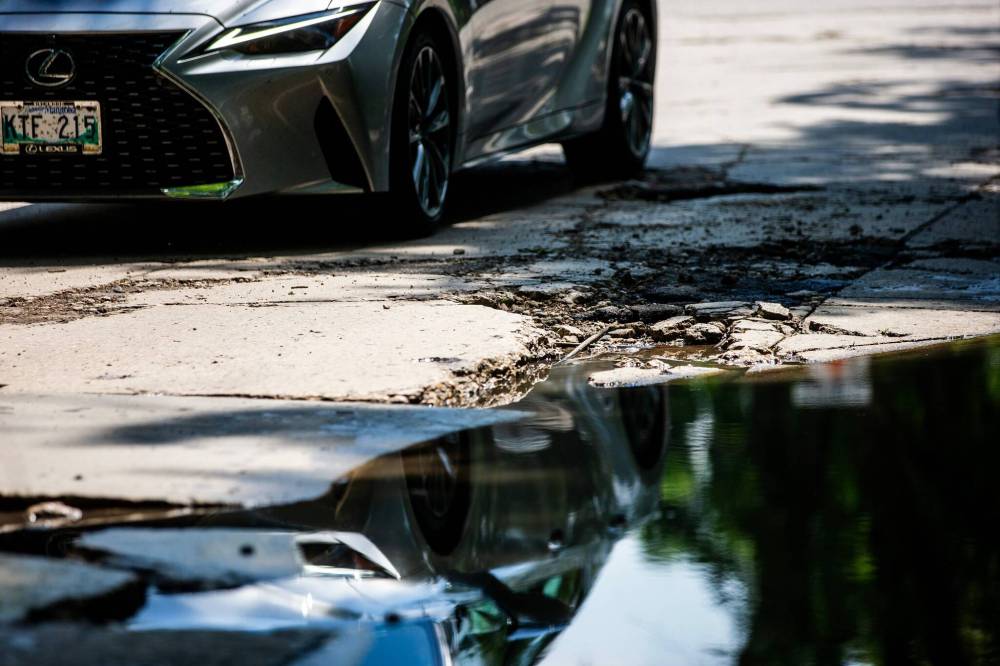
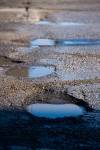
 As of July 1, the city filled 179,630 potholes this year, including some repeat repairs after heavy rain washed out filler material. A new pothole imaging project is one of the ways the city is using artificial intelligence.

MIKAELA MACKENZIE / FREE PRESS

As of July 1, the city filled 179,630 potholes this year, including some repeat repairs after heavy rain washed out filler material. A new pothole imaging project is one of the ways the city is using artificial intelligence.

“That’s a brilliant idea. What’s happening now with the potholes, it’s passive reporting. If someone calls the city or calls 311 or sends an email, (the city knows) there’s a pothole at Campbell. If nobody calls it in, (the city doesn’t) know… But if you’ve got buses (or) other city vehicles with cameras tracking potholes, then there’s an active surveillance as opposed to leaving it to the public. If you’ve got an active surveillance program, that’s how you get things done,” said John Embil.

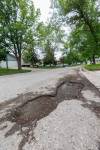
Embil said he and his wife first began asking the city to repair what he describes as a large and growing pothole on Campbell Street just north of Academy Road about two months ago. He doesn’t believe the crater has been repaired.

City of Winnipeg officials did not answer questions about how long that particular pothole has been in place, or whether any crews have tried to fix it, by deadline Monday.

Embil said he understands the city has budget constraints that can limit its road work. While he also doesn’t think potholes are the city’s most pressing issue, they still must be dealt with, he said.

MIKAELA MACKENZIE / FREE PRESS
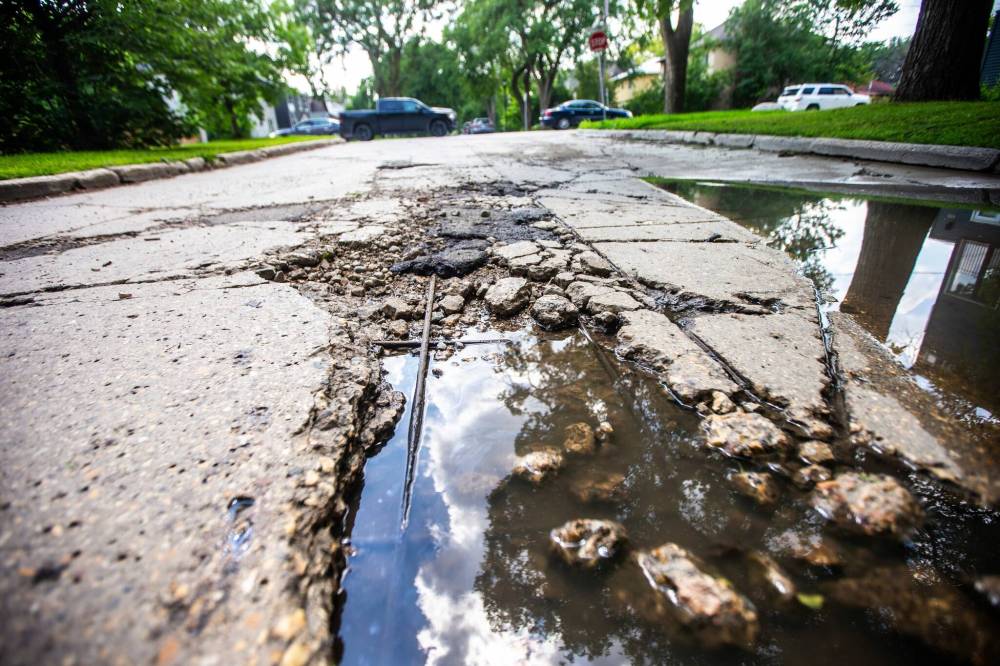
Residents notified the city about this pothole on Campbell Street between Academy Road and Wellington Crescent roughly two months ago. The hole is deep enough to expose the rebar beneath.

MIKAELA MACKENZIE / FREE PRESS

Residents notified the city about this pothole on Campbell Street between Academy Road and Wellington Crescent roughly two months ago. The hole is deep enough to expose the rebar beneath.

“You’ve got ratty edges, people drive on it … The rebar is sticking through. At some point, there will be an MPI claim,” he said.

The AI pilot project is expected to cost up to $75,000, while its results would help determine the cost to use the technology on a permanent basis.

Gooch said the cameras could also potentially spot other city infrastructure concerns such as damaged bus shelters or road signs.

joyanne.pursaga@freepress.mb.ca

X: @joyanne_pursaga

Joyanne Pursaga

Joyanne Pursaga
Reporter

Joyanne is city hall reporter for the Winnipeg Free Press. A reporter since 2004, she began covering politics exclusively in 2012, writing on city hall and the Manitoba Legislature for the Winnipeg Sun before joining the Free Press in early 2020. Read more about Joyanne.

Every piece of reporting Joyanne produces is reviewed by an editing team before it is posted online or published in print — part of the Free Press‘s tradition, since 1872, of producing reliable independent journalism. Read more about Free Press’s history and mandate, and learn how our newsroom operates.

Our newsroom depends on a growing audience of readers to power our journalism. If you are not a paid reader, please consider becoming a subscriber.

Our newsroom depends on its audience of readers to power our journalism. Thank you for your support.


Report Error Submit a Tip

More Stories

‘It’s childish’: Americans in Canada react to Trump’s renaming of Lake Ontario

Sharif Hassan, The Canadian Press 5 minute read Preview

‘It’s childish’: Americans in Canada react to Trump’s renaming of Lake Ontario

Sharif Hassan, The Canadian Press 5 minute read Updated: Yesterday at 10:39 AM CDT

If you’re angered by U.S. President Donald Trump's renaming of Lake Ontario to “Lake America,” chances are that an American living in your neighbourhood might be just as outraged — if not more.

Many Americans who've made Canada their home are calling it an embarrassing, even "childish," stunt.

Ben Davis, a retired law professor, said Trump’s executive order to change the lake’s name is "so beneath the office of the United States president."

"And obviously it's another one of his distractions of the day, but it's just pitiful,” Davis said.

Read
Updated: Yesterday at 10:39 AM CDT

News briefs for Monday, September 7, 2026

3 minute read Updated: 4:52 PM CDT

A collection of breaking news briefs filed on Monday, September 7, 2026

Four teens dead in crash near Winnipeg Beach

4:52 PM

Four teenagers have died in a highway crash near Winnipeg Beach.

Slow start but gritty play not enough in Bombers OT loss to Roughriders in Labour Day Classic

Ken Wiebe 7 minute read Preview

Slow start but gritty play not enough in Bombers OT loss to Roughriders in Labour Day Classic

Ken Wiebe 7 minute read Yesterday at 11:38 PM CDT

REGINA – Leave it to Brady Oliveira to succinctly describe that fine line between jubilation and the alternate.

In the aftermath of another Labour Day Classic that went down to the wire, Oliveira went through the joy of tying the game with no time left on the clock to the empty feeling that came moments later when the Saskatchewan Roughriders finished off a 32-26 victory on Sunday night before a raucous crowd of 34,352 at Mosaic Stadium.

“It’s terrible,” said Oliveira. “You just kind of feel all of the emotions. I’m pretty pissed right now. We were close, we were right there. We didn’t play our best football and we still gave ourselves a chance, which could be a silver lining.

“I don’t like to look at silver linings because the fact of the matter is we play this game to get positive results. We want to win the game and we didn’t win the game. So, I’m pissed.”

Read
Yesterday at 11:38 PM CDT

Dynacare labs quickly reach capacity ahead of strike

Nicole Buffie 5 minute read Preview

Dynacare labs quickly reach capacity ahead of strike

Nicole Buffie 5 minute read Saturday, Sep. 5, 2026

Patients were being turned away from several Dynacare locations Saturday morning as people packed the labs in hopes of getting their blood collection done before workers strike.

By 10:30 a.m. the lobby at the Dynacare at 1581 Regent Ave. was standing-room only and walk-up patients were being turned away as the wait time for those lucky enough to get in creeped past two hours.

One woman got in right before workers cut off walk-ins at 10 a.m. after travelling to two other locations.

“I was driving by at 7:15 this morning and there was already a line-up to the road, so I was like ‘nope, not going there’ so I went to the one on Sterling Lyon (Parkway) and it was closed, and then I went to the one at St. Vital Mall and there had a line zig-zagging all the way through the corridors so I gave up and came back,” said Joanna, who declined to give her last name.

Read
Saturday, Sep. 5, 2026

NDP minister needs lesson in political civility

Dan Lett 5 minute read Preview

NDP minister needs lesson in political civility

Dan Lett 5 minute read Friday, Sep. 4, 2026

Families Minister Nahanni Fontaine’s decision to intercede in Winnipeg’s mayoral election may be surprising to some political observers. To others, however, it is entirely on brand.

On Tuesday, Fontaine posted a video on social media in which she expressed concern that former city councillor and Progressive Conservative cabinet minister Kevin Klein was entering the race to challenge incumbent Mayor Scott Gillingham.

The caption on the video was blunt: “I mean, really, who chooses to work for Count Dracula?”

“Kevin Klein once worked for Peter Nygard. Peter Nygard is Canada’s equivalent to (American sex offender) Jeffrey Epstein — had his own little island, did unspeakable, disgusting things to women and girls … anyways, I just thought that Winnipeggers would want to know that Kevin Klein, at one point, worked for Peter Nygard,” she says in the video.

Read
Friday, Sep. 4, 2026

Education student designs lesson plans to take a bite out of food marketing

Maggie Macintosh 4 minute read Preview

Education student designs lesson plans to take a bite out of food marketing

Maggie Macintosh 4 minute read 5:22 PM CDT

Instead of apples, Emma Caronte is handing out lesson plans on local food history to Manitoba teachers this back-to-school season.

The undergraduate researcher spent her summer break creating a social studies unit that investigates food guide evolution, marketing tactics and how honey dill sauce became a pantry staple on the Prairies.

“I want students to develop a greater interest in food and what outside influences affect their choices and what we consider ‘healthy,’” said Caronte, a final-year education student at the University of Manitoba.

She is advertising her 112-page project as a user-friendly resource for classroom teachers and “a fun sub plan” targeted at Grade 6, 7, 8 and 9.

Read
5:22 PM CDT