City testing AI in bid to smarten up services Targets non-emergency police calls and 311; experts advise cautious approach
Read this article for free:
or
Already have an account? Log in here »
To continue reading, please subscribe:

Digital Subscription
One year of digital access for only $205*
- Enjoy unlimited reading on winnipegfreepress.com
- Read the E-Edition, our digital replica newspaper
- Access News Break, our award-winning app
- Play interactive puzzles
*First annual payment billed as $205.00 + GST for one year. This annual subscription will automatically renew at $233.00 + GST every 52 weeks (10% off the regular annual price of $259.35). Offer available to new and qualified returning subscribers only. Cancel any time.
To continue reading, please subscribe:
Add Free Press access to your Brandon Sun subscription for only an additional
$1 for the first 4 weeks*
- Enjoy unlimited reading on winnipegfreepress.com
- Read the E-Edition, our digital replica newspaper
- Access News Break, our award-winning app
- Play interactive puzzles
*Your next Brandon Sun subscription payment will increase by $1.00 and you will be charged $17.95 plus GST for four weeks. After four weeks, your payment will increase to $24.95 plus GST every four weeks.
Read unlimited articles for free today:
or
Already have an account? Log in here »
Hey there, time traveller!
This article was published 28/06/2024 (807 days ago), so information in it may no longer be current.
The City of Winnipeg is piloting artificial intelligence to handle non-emergency calls to police and some 311 inquiries, which experts say must be done carefully under strict human oversight.
Efforts to speed up pothole-patching and building permit approvals are also among six AI pilot projects revealed Friday in a bid to, among other things, reduce wait times, costs or pressure on staff.
“There are so many new tools of technology, including AI, that can provide an opportunity for the city to deliver better customer service,” said Mayor Scott Gillingham. “The goal is to enhance the services that citizens depend upon.”
Many details are still to be worked out for each project. Launch dates have not yet been set, but some could begin this year, said Tyler Gooch, the city’s director of innovation and technology.
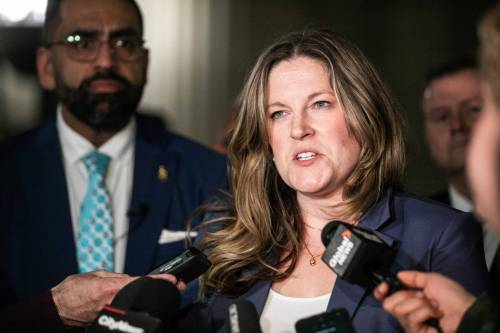
MIKAELA MACKENZIE / FREE PRESS FILE 
Each project will cost up to $75,000.
Gooch said staff are working to assess and mitigate potential risks, such as AI errors or bias, or privacy or legal issues. The projects will be closely monitored and undergo reviews, he said, noting AI isn’t perfect.
Gooch said the intention is not to replace people with technology.
In his state of the city address in February, Gillingham told an audience he would task Gooch to pitch ideas on how best to use AI to improve city services.
One of the six resulting ideas will introduce an automated voice agent, which uses generative AI, when people call the Winnipeg Police Service non-emergency line.
MIKAELA MACKENZIE / FREE PRESS FILE 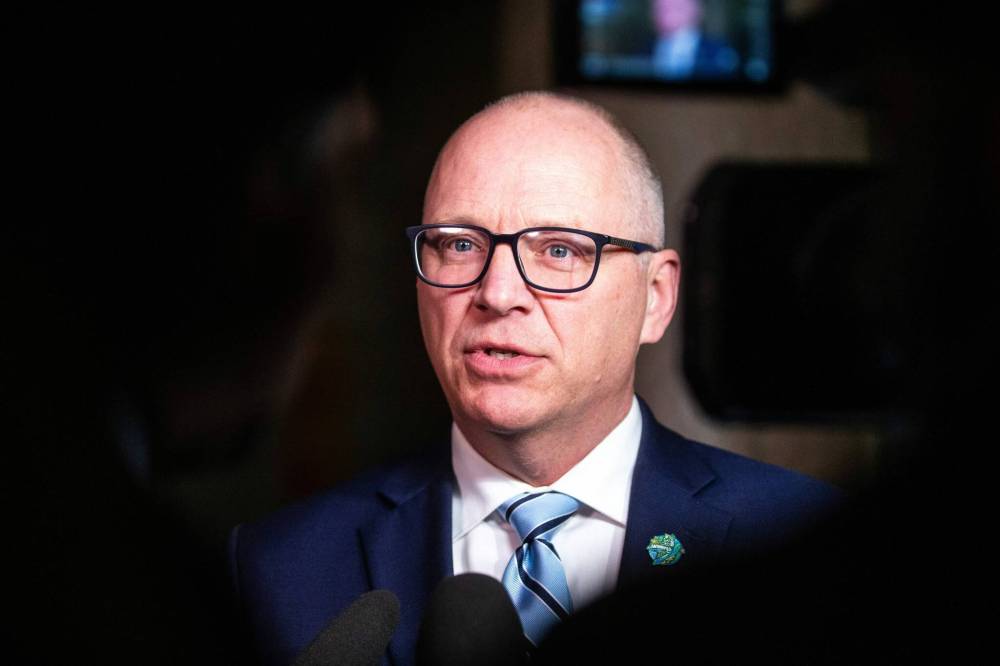
Automated agents are capable of providing or gathering information before a caller speaks to a human.
The city hopes AI will help to free up 911 operators for emergencies, manage call volumes and improve staff morale.
With an AI-enabled agent, callers could say what they need and be directed as required, said Insp. Gord Spado, who oversees the police communications centre.
The automated agent will instruct callers to dial 911 if it is an emergency, he said.
The non-emergency line currently uses interactive voice response, which requires callers to listen to pre-recorded messages and select options using phone keypads.
“This (AI-enabled agent) would replace that and direct people in a much more direct fashion,” said Spado. “There is always going to be a human in the loop.”
He said it is hoped the project could be implemented on a partial basis by the end of this year.
The police communications centre received more than 750,000 calls in 2023 — an average of more than 2,000 per day.
“Hopefully, this (project) will be a mechanism that allows wait times to be reduced,” said police board chair Coun. Markus Chambers.
He said Winnipeg can look at how other jurisdictions use AI to develop best practices.
The Winnipeg Police Association was made aware of the new measures Friday and has not yet received information about how they will be implemented or what they will mean for union members, said president Cory Wiles.
“I will say that WPA members — including our communications staff — are already extremely busy and overworked, so we look forward to the city providing us with a more (detailed) briefing on how these new initiatives will help support their safety and overall well-being,” he said in a statement.
Another pilot project is a 24-7 automated chat agent, or chat bot, which can handle some 311 inquiries in multiple languages via the city’s website.
A third project will use Winnipeg Transit bus cameras and software to identify road concerns, such as potholes.
“All of it is to deliver a better service, and deliver it in a more cost-effective manner,” said public works chair Coun. Janice Lukes.
“All of it is to deliver a better service, and deliver it in a more cost-effective manner.”–Coun. Janice Lukes
The city also plans to use AI to speed up evaluations of building permit applications, and fast-track invoice processing.
A sixth project involves voice sentiment analytics, in which an AI agent monitoring 911 calls to the Winnipeg Fire Paramedic Service could identify when call-takers may benefit from “well-being intervention,” the city said.
The city said call-takers handle traumatic situations and are at high risk of mental health injuries.
Gooch said the pilot program will close a year from now. Some projects could be abandoned, undergo changes or continue, depending on benefits, costs, risks or implications.
“Sometimes things will work, sometimes they won’t,” said Gillingham. “That’s the reality of innovation.”
Experts said the city must take a careful approach, given newsworthy examples of AI systems or bots making mistakes or giving bad advice.
“There are huge risks, which is why it’s important to do this stuff carefully and with a human in the loop at all times,” said Prof. David Gerhard, head of computer science at the University of Manitoba. “If there’s a bot answering questions without human vetting, there is a potential for problems.”
There are concerns about AI systems replicating human bias, he noted.
“If there’s a bot answering questions without human vetting, there is a potential for problems.”–Prof. David Gerhard
Gerhard said the city should pay attention to public sentiment, because some people are nervous about using AI or do not trust it.
Renee Sieber, an associate professor at McGill University in Montreal, said some companies or organizations have used AI without proper oversight or as a way to shed jobs.
“We tend to fetishize privacy, when we should be far more focused on harms like racism,” she said.
There are also important questions about transparency and accountability, said Joanna Redden, an associate professor at Western University in London, Ont.
For example, are there opportunities for the public to learn more about how an AI system works, how data is used and who has access to it, she said.
“In our research on cancelled automated systems, we found that careful piloting of systems was an important precautionary step government agencies could take to avoid the economic and social costs that can occur when systems are introduced too quickly,” Redden wrote in an email.
“We also found that key to careful piloting is to ensure that there is an interdisciplinary group involved in assessing the impact a system could have on decision-makers and the people who will be affected by any system as well as system effectiveness overall.”
A provincial spokesperson said the Manitoba government is setting up a council to govern the use of AI in its public service.
chris.kitching@freepress.mb.ca

Chris Kitching is a general assignment reporter at the Free Press. He began his newspaper career in 2001, with stops in Winnipeg, Toronto and London, England, along the way. After returning to Winnipeg, he joined the Free Press in 2021, and now covers a little bit of everything for the newspaper. Read more about Chris.
Every piece of reporting Chris produces is reviewed by an editing team before it is posted online or published in print — part of the Free Press‘s tradition, since 1872, of producing reliable independent journalism. Read more about Free Press’s history and mandate, and learn how our newsroom operates.
Our newsroom depends on a growing audience of readers to power our journalism. If you are not a paid reader, please consider becoming a subscriber.
Our newsroom depends on its audience of readers to power our journalism. Thank you for your support.