Outstanding in their field Creating a small city for a weekend no easy task, but folk festival’s unsung heroes get it done
Read this article for free:
or
Already have an account? Log in here »
To continue reading, please subscribe:

Digital Subscription
One year of digital access for only $205*
- Enjoy unlimited reading on winnipegfreepress.com
- Read the E-Edition, our digital replica newspaper
- Access News Break, our award-winning app
- Play interactive puzzles
*First annual payment billed as $205.00 + GST for one year. This annual subscription will automatically renew at $233.00 + GST every 52 weeks (10% off the regular annual price of $259.35). Offer available to new and qualified returning subscribers only. Cancel any time.
To continue reading, please subscribe:
Add Free Press access to your Brandon Sun subscription for only an additional
$1 for the first 4 weeks*
- Enjoy unlimited reading on winnipegfreepress.com
- Read the E-Edition, our digital replica newspaper
- Access News Break, our award-winning app
- Play interactive puzzles
*Your next Brandon Sun subscription payment will increase by $1.00 and you will be charged $17.95 plus GST for four weeks. After four weeks, your payment will increase to $24.95 plus GST every four weeks.
Read unlimited articles for free today:
or
Already have an account? Log in here »
Hey there, time traveller!
This article was published 08/07/2024 (812 days ago), so information in it may no longer be current.
The first Winnipeg Folk Festival campers arrive weeks before the gates open to the public.
It takes a lot of work to turn the fields and forests of Birds Hill Park into a pop-up city with amenities to serve more than 70,000 temporary residents. Stages need to be built, tents raised, electricity connected, campgrounds furnished and porta potties placed.
To make the most of the short timeline and lengthy to-do list, a small crew of production staff members and tradespeople set up camp backstage, where they live and work for several months each summer.

For site electrician Pat McGarry, the gig is a nice break from his usual routine.
“I really like working outside. As a construction electrician, I’m usually in buildings or crawl spaces or attics most of the time,” he says.
McGarry has been on the production crew for a decade. In the lead-up to the festival, he’s busy checking connections and laying cables. He’s created a digital map of the grounds that shows a vast matrix of underground wiring used to power sound systems, video screens, lights and payment terminals.
During the event, McGarry remains on call for any electricity-related snafus and, when the dust settles, he assists with teardown — all the while sleeping in a tent, eating meals out of a makeshift kitchen and enjoying nightly bonfires.
“The festival is completely different for me now,” says McGarry, who was an attendee and volunteer prior to being hired on the seasonal crew.

“I’m busy the whole weekend without really watching music, but I do like having some responsibility and making sure everything’s operating smoothly.”
The site build begins backstage, where thousands of volunteers will soon be eating meals and relaxing between shifts. More than a month out from the festival, the space is a construction hub and shared living quarters filled with the sounds of jackhammers and power tools.
“Our kitchen over there is the first tent to go up,” says Robert Reynolds, pointing to a small white tent covering a half-dozen picnic tables where the crew is breaking for lunch. “Then we get all the machines and gators running and get everything opened up.”
Reynolds is a carpenter who has been building stairs, risers and stages at the folk fest for 15 years. His task list usually starts with repairs before moving on to bespoke pieces of infrastructure.
Today, he’s working in the open-air woodshop on a set of specialized tables for DJ equipment.
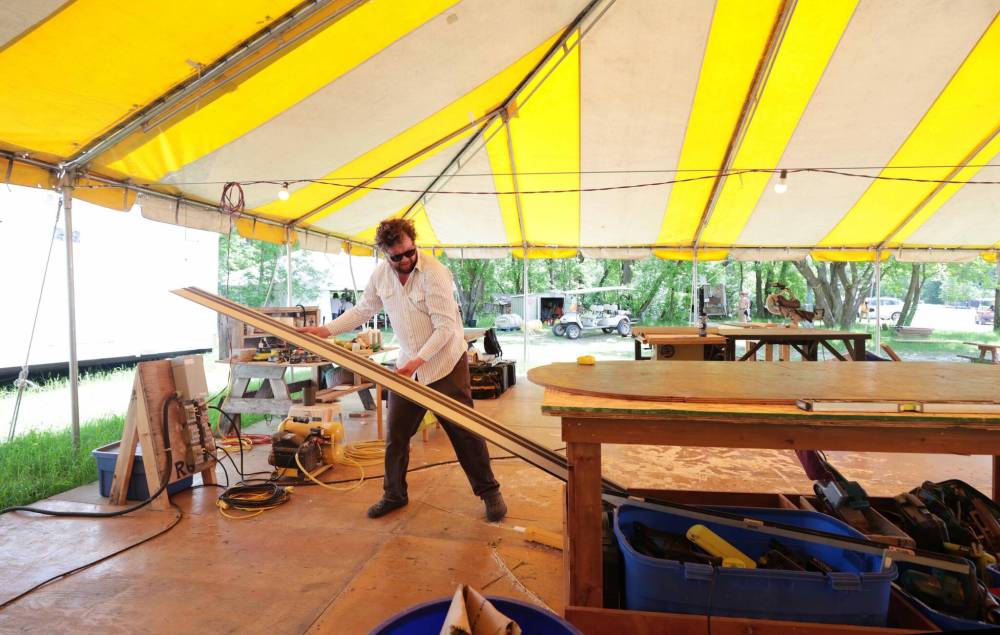
“That (project) is a little bit oddball because they have to come apart for transport,” he says.
Overseeing the hive of activity is production manager Arwen Helene. A lifelong folkie, her parents were involved volunteers during the early days of the festival before she landed a summer job on the production crew 30 years ago.
“It’s like an accidental career. One thing led to another and I’ve just really found an affinity for this work,” she says.
Helene enjoys the detailed logistics of the job. The setup schedule is planned to the day and it’s her job to make sure construction is carried out sensibly and safely.
While she doesn’t hold a degree in production management, she’s had plenty of on-the-job training and regularly communicates with other organizers of similarly sized summer festivals across the country.
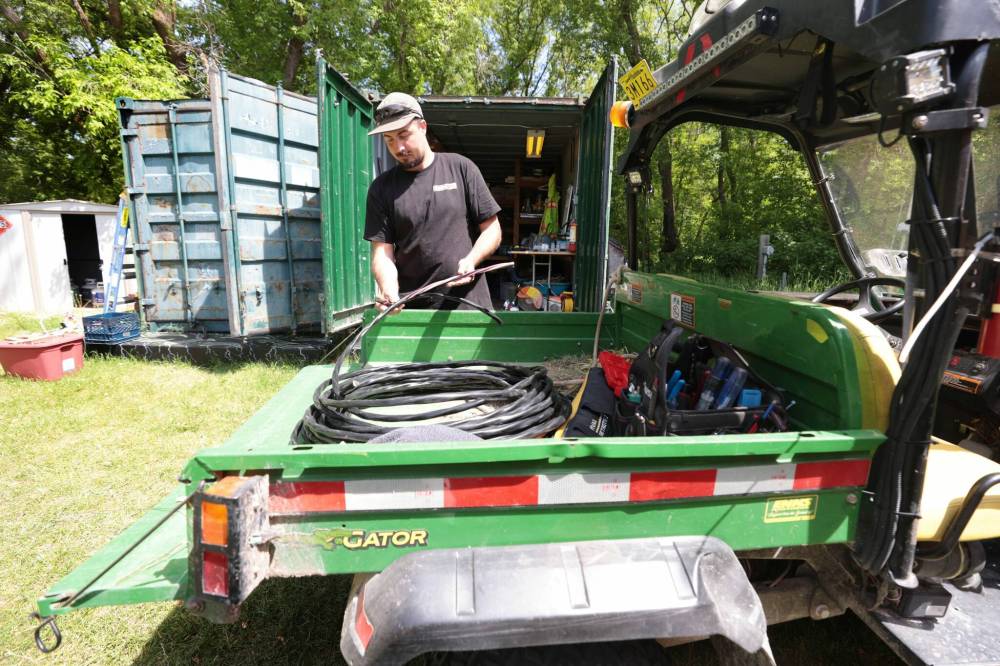
Once backstage is up and running, work continues into the public areas of the festival site and campground.
“It’s somewhat weather dependent, but we typically go (from) biggest to smallest; we’ll start with the really large tents first and then go down from there,” Helene says.
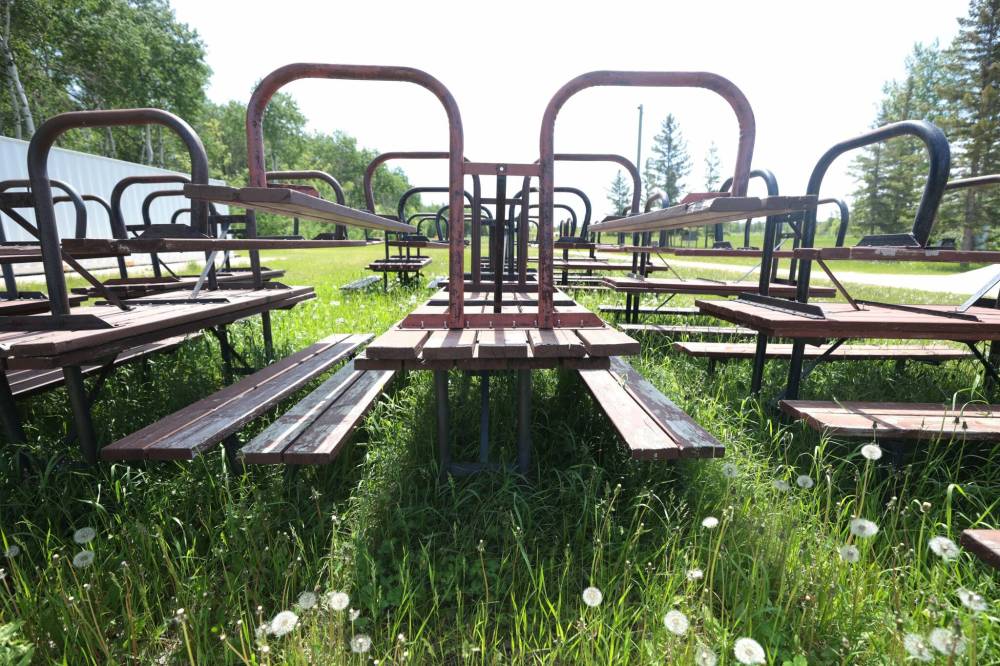
Canvases for the swooping daytime stages sit in large bags surrounded by metal scaffolding, ready to be erected in place. Picnic tables are stacked high, waiting to be dispersed throughout the beer tents and family zone.
Until it’s trucked in several days prior to the festival, the main stage is little more than a few concrete foundation blocks in the middle of an overgrown field.
Fencing, landscaping and grass-mowing — especially following a rainy spring — are some of the most time-consuming chores.
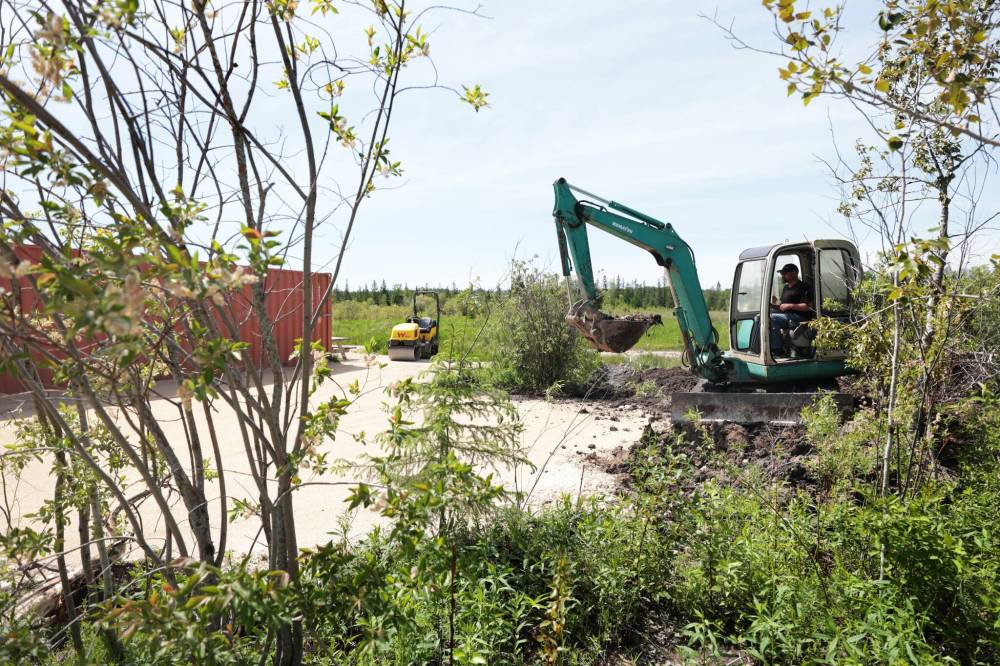
Over the last 30 years, Helene has watched the site shift from a collection of low-tech stages and audience amenities to a space peppered with permanent structures for food vendors and festival administration.
Many of the upgrades — such as an extensive underground drainage system and fibre-optic cables for better internet connectivity — are invisible to the untrained eye.
“It gets more and more complex every year,” Helene says, adding the increased need for shade, via new trees and additional tents, has contributed to the growing workload.
Still, opening day never gets old.
“Once all the people start coming in — our volunteers and the audience — it’s like a magical thing happens,” Helene says. “You see the skeleton of what you built come to life.”
eva.wasney@winnipegfreepress.com
X: @evawasney
Behind the Scenes
How is the stage lit? Who hangs the paintings? What happens in the dish pit? Behind the Scenes is a recurring series highlighting the important and often invisible work happening at arts and culture venues across Winnipeg.

Eva Wasney covers environmental issues in Manitoba for The Narwhal in partnership with the Winnipeg Free Press. Read more about Eva.
Every piece of reporting Eva produces is reviewed by an editing team before it is posted online or published in print — part of the Free Press‘s tradition, since 1872, of producing reliable independent journalism. Read more about Free Press’s history and mandate, and learn how our newsroom operates.
Our newsroom depends on a growing audience of readers to power our journalism. If you are not a paid reader, please consider becoming a subscriber.
Our newsroom depends on its audience of readers to power our journalism. Thank you for your support.
Related Articles
Summer festivals urged to provide drug testing amid record deaths in Manitoba