Just 15 per cent of Ontarians say they’re affected by the ongoing LCBO strike: poll

Advertisement

Advertise with us

A new poll suggests that just 15 per cent of Ontarians are personally affected by the LCBO's ongoing strike, as the provincial government expands access to alcohol at other retailers.

Read this article for free:


or

Already have an account? Log in here »

To continue reading, please subscribe:

Subscribe and receive a limited-edition Free Press branded hat or tote.

Digital Subscription

One year of digital access for only $205*

  • Enjoy unlimited reading on winnipegfreepress.com
  • Read the E-Edition, our digital replica newspaper
  • Access News Break, our award-winning app
  • Play interactive puzzles

*First annual payment billed as $205.00 + GST for one year. This annual subscription will automatically renew at $233.00 + GST every 52 weeks (10% off the regular annual price of $259.35). Offer available to new and qualified returning subscribers only. Cancel any time.

To continue reading, please subscribe:

Add Free Press access to your Brandon Sun subscription for only an additional

$1 for the first 4 weeks*

  • Enjoy unlimited reading on winnipegfreepress.com
  • Read the E-Edition, our digital replica newspaper
  • Access News Break, our award-winning app
  • Play interactive puzzles
Start now

*Your next Brandon Sun subscription payment will increase by $1.00 and you will be charged $17.95 plus GST for four weeks. After four weeks, your payment will increase to $24.95 plus GST every four weeks.

Hey there, time traveller!
This article was published 17/07/2024 (804 days ago), so information in it may no longer be current.

A new poll suggests that just 15 per cent of Ontarians are personally affected by the LCBO’s ongoing strike, as the provincial government expands access to alcohol at other retailers.

That’s despite nearly 90 per cent of respondents in a new Leger poll saying they are aware that the job action is happening.

Fewer than one-third of Ontarians say they want the provincial government to intervene to end the 12-day strike at Ontario’s main liquor retailer, while about half are supportive of the striking union’s demands.
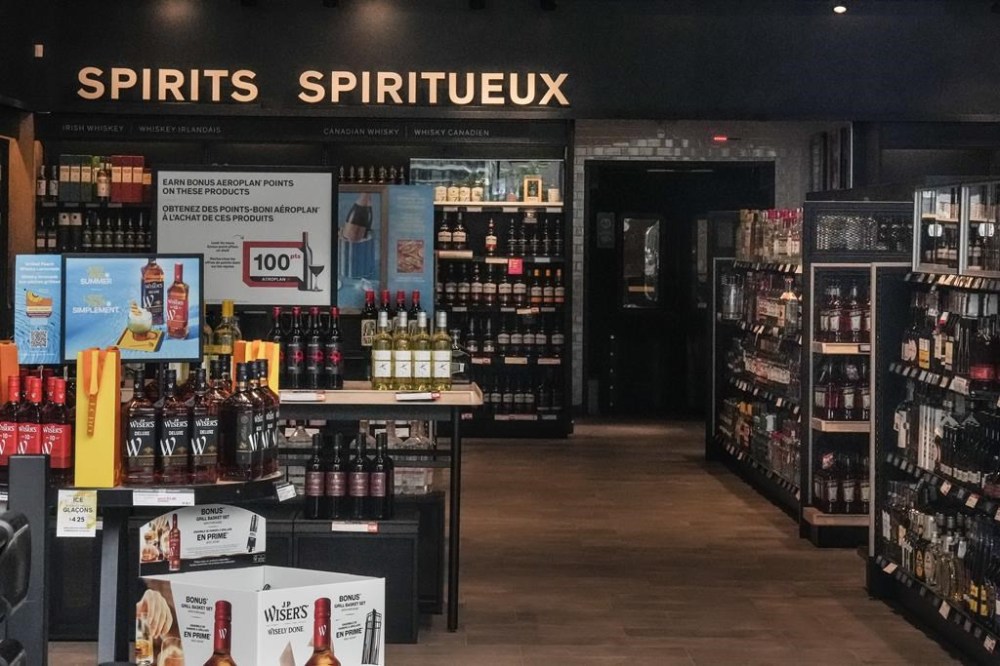
Aisles remain empty in a shuttered LCBO store in Toronto, as LCBO workers continue their strike on Monday, July 15, 2024. Fewer than one-third of Ontarians say they want the provincial government to intervene to end the 12-day strike at Ontario’s main liquor retailer, while about half are supportive of the striking union. THE CANADIAN PRESS/Chris Young

The Leger poll of 601 residents can’t be assigned a margin of error because online surveys are not considered truly random samples.

Approximately 10,000 workers at the LCBO walked off the job on July 5 after negotiations broke down.

The union representing the workers said the sides were headed back to the bargaining table Wednesday.

The poll conducted last weekend asked whether the government should use binding arbitration or legislation to ensure that LCBO stores open back up as soon as possible.

Twenty-nine per cent of respondents supported such a move, while 44 per cent opposed it.

The poll also asked if respondents support the union’s stated goals, including wage increases and more permanent positions. Just under half, 49 per cent, answered in the affirmative, while 25 per cent said they were not supportive.

The Ontario Public Service Employees Union has said the main issue is the province’s alcohol expansion plans, which would see ready-to-drink cocktails sold outside LCBO stores — a move it maintains poses an existential threat to the LCBO and could lead to major job losses.

Colleen MacLeod, chair of the union’s LCBO bargaining unit, has said the plan would “mean thousands of lost jobs, fewer hours for the 70 per cent of LCBO retail workers who are casual and struggling to make ends meet and hundreds of millions in dollars of lost public revenues drained from health care, education and infrastructure.”

The LCBO, a Crown corporation, nets the province $2.5 billion a year.

On Monday, the Ontario government sped up its expansion plan. The 450 stores across Ontario already licensed to sell beer, wine and ciders will be able to start ordering coolers and seltzers on Thursday and sell them as soon as they arrive.

The province has said it does not want to privatize the LCBO, and that the expansion is about giving people more choice and more convenience to buy alcohol.

Stephanie Ross, an associate professor in the school of labour studies at McMaster University, said Premier Doug Ford doesn’t have a great reputation when it comes to labour, given the high-profile disputes in recent years with health-care and education workers.

And he’s faced accusations of making policy moves that benefit friends in the private sector, a criticism that’s been levied against him in the LCBO dispute.

“There is a base of support for the union’s message here, both in terms of the working conditions that they’re trying to fight to improve, and in terms of the role that the LCBO plays in funding public services in the province,” she said.

But the public may not be as sympathetic to LCBO workers as it has been to some others, like in the Metro grocery workers’ strike last year, she said — a relatively straightforward fight by low-paid workers struggling to afford food against the industry being partially blamed for food prices.

“And so in the depths of a kind of historic cost-of-living crisis, I think it was easier to feel sympathy for such workers in terms of really having to fight to make up lost ground.”

That means the LCBO union has its work cut out to try and convince the public of its cause, said Ross, especially when consumers are already divided on the liquor privatization issue in the first place.

She said she thinks the union is doing a good job, however, of arguing the case for the LCBO as a public asset that helps fund important public services.

Larry Savage, a professor in the labour studies department at Brock University, said it’s clear that both the union and the Ford government “are working hard to win over the public to their respective positions.”

The union has a “potentially powerful strategy” to gain public support, but it’s not a surefire one, he said in an email.

This strategy “requires people to connect the dots between the privatization of the LCBO and the loss of a critical revenue stream that contributes billions to public services like health care and education.”

Meanwhile, the government’s strategy has been to try and leverage consumer frustration over the strike in order to drive more support for increased privatization, said Savage.

“It’s a high-risk strategy because a heavy-handed approach can sometimes backfire and garner greater sympathy for the workers and their cause.”

In the Leger poll, 32 per cent of respondents said they looked for alternative locations to buy alcohol due to the strike, while 15 per cent said they were concerned the strike could cause them to spend more money on alcohol.

Savage said while many consumers are likely inconvenienced, he also thinks most Ontarians are suspicious of the premier’s intentions when it comes to the LCBO: “It’s a classic case of private profits over the public good.”

This report by The Canadian Press was first published July 17, 2024.

Report Error Submit a Tip

More Stories

Teacher barred for ‘repeated boundary-crossing conduct’

Maggie Macintosh 3 minute read 11:01 PM CDT

A disciplinary panel has ordered the cancellation of a Chinese-Canadian teacher’s certificate because of her “repeated boundary-crossing with a student” during her tenure at an international school with local ties.

Janice Wen Ying Ma is permanently barred from teaching on Manitoba soil or at a Manitoba-accredited institution as of Sept. 14.

The new ruling concludes that Ma engaged in inappropriate physical interaction and “emotionally intimate online messages” with a girl who attended Clifford International School in Guangzhou, China in 2024-25.

“This conduct represents a fundamental departure from the standards expected of a teacher,” the panel, chaired by public representative Gordon Schumacher, wrote in its 22-page decision.

Jets defenceman spent whole summer working on getting to the next level

Ken Wiebe 8 minute read Preview

Jets defenceman spent whole summer working on getting to the next level

Ken Wiebe 8 minute read Updated: 1:57 PM CDT

Tyrel Bauer makes no apologies for the pugilistic piece of his path.

The Winnipeg Jets defenceman is ready to drop the gloves and throw down when the situation calls for it and he takes great pride in protecting his teammates.

It’s a big part of the reason Bauer will be among the 23 players submitted by the Jets on the opening-day roster on Monday.

“I’ve fought and clawed, both metaphorically and literally and now I just want to show that I can play as well,” Bauer said during a chat with the Free Press during training camp. “(Toughness) is always something that I have, it’s always something in my back pocket and something that I take a lot of pride in doing, for my teammates, for the city and the people who invest in this hockey club. That will never change.

Read
Updated: 1:57 PM CDT

New tour firm seeks to display ‘hidden gem’

Aaron Epp 5 minute read Preview

New tour firm seeks to display ‘hidden gem’

Aaron Epp 5 minute read 7:36 PM CDT

Desiree Rantala has serious Manitoba bona fides.

The 34-year-old grew up in two northern First Nations communities and has lived in Gimli and Dauphin. She’s worked in marketing roles at the Manitoba Museum, Downtown Winnipeg Business Improvement Zone and Travel Manitoba, and she’s travelled to New York and Vancouver to promote the province.

Now, Rantala has launched a tour company called Toba Tripper.

“We’re a hidden gem that has so much to offer,” the Winnipeg resident said. “We have so much to see and I really hope that people leave my tours appreciating the beauty of Manitoba a little bit more.”

Read
7:36 PM CDT

Canada resorting to its tried and true playbook

Niigaan Sinclair 5 minute read Preview

Canada resorting to its tried and true playbook

Niigaan Sinclair 5 minute read 6:00 AM CDT

In 1846, Britain faced an emergency influenced by the Irish famine, so leaders repealed the country’s “Corn Laws” and restrictions on imported food and grain, transitioning to a system of free trade.

This created a crisis in the then Province of Canada, which had relied on British “preferential” status to prop up its agricultural and resource industries.

As a result, Canada looked south for new markets and eventually negotiated a free trade agreement with the United States.

This required land to be acquired and converted for industrial use quickly, so Canada quickly dispatched Commissioner William Robinson to negotiate with Indigenous communities along Lake Huron and Lake Superior for land.

Read
6:00 AM CDT

Kinew adds cabinet portfolio to focus on first responders

Carol Sanders and Nicole Buffie 5 minute read Preview

Kinew adds cabinet portfolio to focus on first responders

Carol Sanders and Nicole Buffie 5 minute read Updated: 6:40 PM CDT

Premier Wab Kinew shuffled his cabinet Monday and created a new ministerial position that will oversee first responders in the province.

Kinew appointed David Pankratz, the MLA for Waverley, as minister responsible for first responder initiatives.

Tuxedo MLA Carla Compton was appointed minister responsible for accessibility, taking over the role from Families Minister Nahanni Fontaine.

The new ministers were sworn in at a ceremony at the legislature Monday afternoon.

Read
Updated: 6:40 PM CDT

Wab Kinew as ‘communicator in chief’

Paul G. Thomas 6 minute read Preview

Wab Kinew as ‘communicator in chief’

Paul G. Thomas 6 minute read 2:00 AM CDT

Premier Wab Kinew and his party have been riding high in the polls longer than normal for a government one year or less away from its first re-election contest. One reason is his ubiquitous, dominating communications presence as NDP leader and premier.

The argument here is that Kinew has supplemented his prerogatives as premier and party leader (such as appointing cabinet ministers and approving party nominations) with the skilful use of communications to advance his policy agenda, boost his personal popularity and maintain the competitive advantage of his party over the opposition Progressive Conservatives.

Communications has always been a significant part of politics and policy making. However, in the contemporary political and media environments, communications considerations have moved from the background to the foreground of decision-making by political parties, including when they are performing in the role of government. Campaigning and governing now overlap in what has been described as a permanent election campaign.

Political parties use communications strategies for several purposes: to establish an image of the leader which makes a positive emotional connection with voters; to promote a coherent message and to keep party members on message; and to gain favourable media coverage for its policies and other actions on almost a daily basis.

Read
2:00 AM CDT