How boot camps are helping to address the historic gap in internet access on US tribal lands
Advertisement
Read this article for free:
or
Already have an account? Log in here »
To continue reading, please subscribe:

Digital Subscription
One year of digital access for only $205*
- Enjoy unlimited reading on winnipegfreepress.com
- Read the E-Edition, our digital replica newspaper
- Access News Break, our award-winning app
- Play interactive puzzles
*First annual payment billed as $205.00 + GST for one year. This annual subscription will automatically renew at $233.00 + GST every 52 weeks (10% off the regular annual price of $259.35). Offer available to new and qualified returning subscribers only. Cancel any time.
To continue reading, please subscribe:
Add Free Press access to your Brandon Sun subscription for only an additional
$1 for the first 4 weeks*
- Enjoy unlimited reading on winnipegfreepress.com
- Read the E-Edition, our digital replica newspaper
- Access News Break, our award-winning app
- Play interactive puzzles
*Your next Brandon Sun subscription payment will increase by $1.00 and you will be charged $17.95 plus GST for four weeks. After four weeks, your payment will increase to $24.95 plus GST every four weeks.
Read unlimited articles for free today:
or
Already have an account? Log in here »
Hey there, time traveller!
This article was published 18/07/2024 (818 days ago), so information in it may no longer be current.
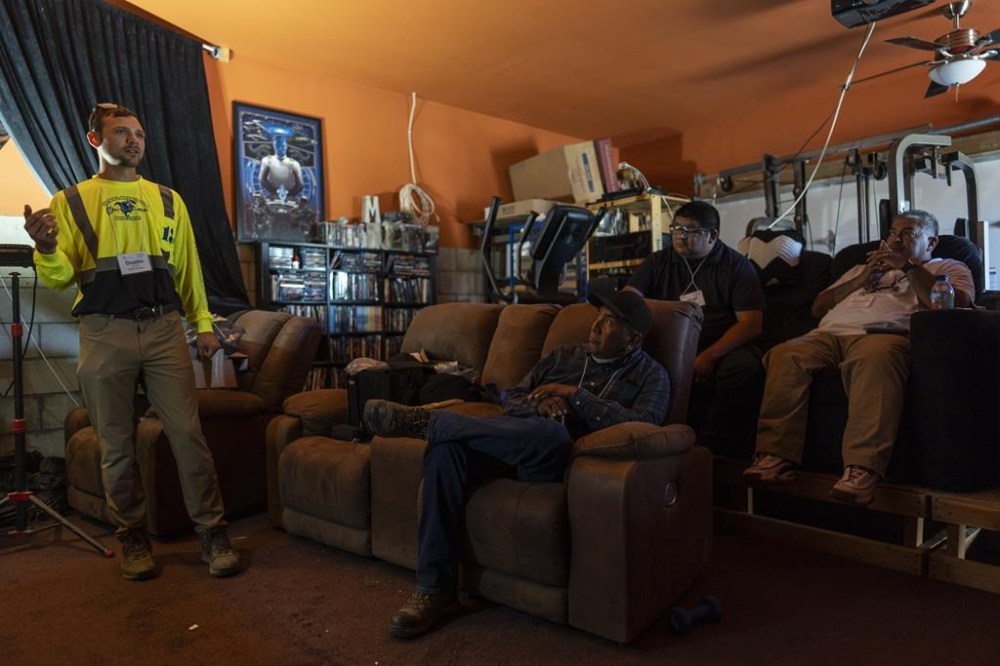
There’s a home movie theater with orange walls and plush recliners at the top of a steep hill on Matthew Rantanen’s ranch in Southern California. But on a recent afternoon, people weren’t flocking to the room to watch a movie or to escape the scorching heat, they were shining a beam of light through more than 55,000 feet (17 kilometers) of fiber optic cable coiled up in the corner.
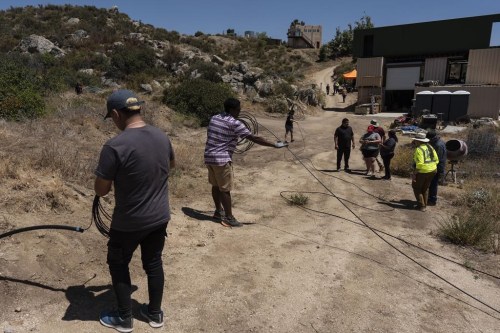
The demonstration took place during a hands-on broadband training for tribal nations near rural Aguanga, about 53 miles (85 kilometers) north of San Diego. Participants handled fiber made up of strands of glass as thin as human hair that transmit energy through pulses of light.
The session was part of an initiative founded in 2021 by Rantanen and his business partner, Christopher Mitchell, to help shore up historic disparities in connectivity in Indian Country.
“Essentially what it does is it brings together like-minded individuals that are building broadband communications for their community,” said Rantanen, a descendant of the Cree Nation who has worked at the intersection of broadband and policy for two decades.
Broadband expansion has gotten a major boost from the Biden administration, which has invested $65 billion to develop internet infrastructure in places that need it. The money is fueling an unprecedented effort to connect every home and business in the country to high-speed internet, a lofty goal President Joe Biden has said he hopes to achieve by 2030.
That effort suffered a recent setback when Congress let an internet subsidy program expire despite pleas from the administration and advocates about its positive impact.
Ultimately, though, if broadband expansion is to succeed on tribal lands, it will happen because people understand how to make it work in their communities, and that’s where nuts-and-bolts training sessions like this come into play.
More than 1 in 5 homes on tribal lands lack access to adequate broadband, compared to fewer than one in 10 on non-tribal land in 2024, according to Federal Communications Commission data. But experts say the disparity is likely greater.
Tribal nations have struggled to connect to the web for a variety of reasons ranging from living in remote locations to lack of investment by internet service providers. The lack of service has hampered every aspect of 21st century life, from health care and education access to the ability to start a business and stay in touch with friends and family.
“A lot of tribal communities, they’re probably decades behind a lot of urban areas in terms of internet connectivity,” said E.J. John, a Navajo Nation member and policy analyst at the American Indian Policy Institute. “Connectivity rates are very low.”
With at least $3 billion specifically set aside for tribal nations, depending on how they fare competing for the biggest pot of federal money for broadband expansion, Rantanen said he has received a “flood” of interest in training and applying for grants.
The solution Rantanen and Mitchell came up with was the Tribal Broadband Bootcamp, a hands-on way to help people understand the technology through three-day sessions.
“We actually want people to see a fiber optic network in the ground that they can use tools to manipulate and troubleshoot,” said Mitchell, who runs broadband efforts for a nonprofit called the Institute of Local Self-Reliance.
Most previous boot camps have taken place on tribal lands, but about a third of the sessions have been hosted on Rantanen’s ranch, which the founders affectionately call a “broadband playground.”
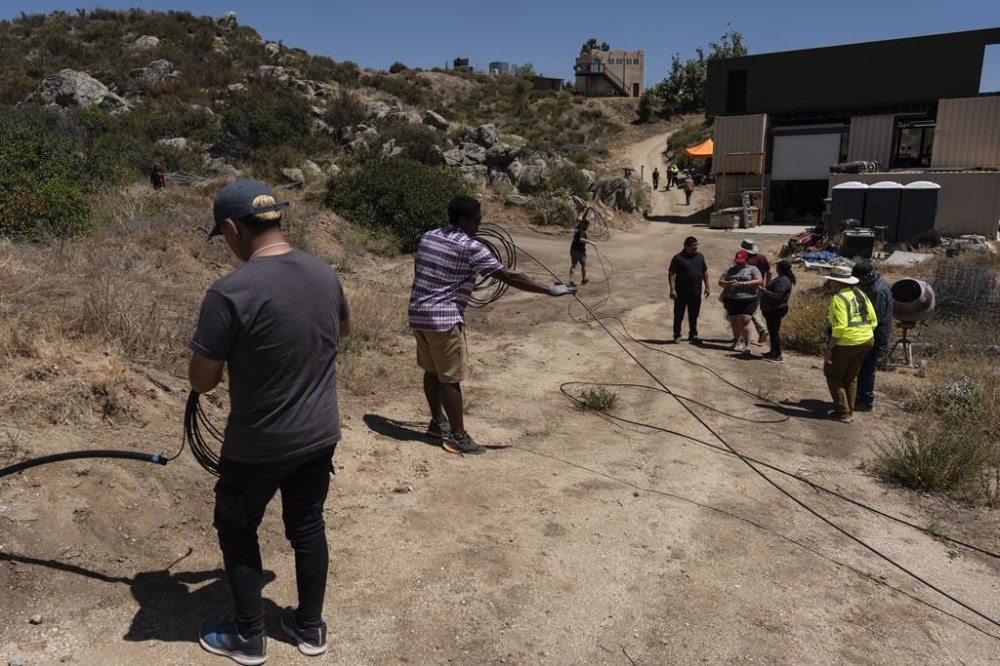
At the group’s 14th boot camp in June, participants roamed the ranch on foot and by utility vehicles trailed by clouds of dust. In the home movie theater, they played with a device called an optical time-domain reflectometer, which uses light to identify breakages and impurities in a run of fiber. Halfway down the hill, outside two large storage containers that make up Rantanen’s workshop, attendees pulled cables through protective hollow tubes known as conduits. Later in the day, by a white tent decorated with retro sci-fi posters, they learned how to use a cable lasher to secure fiber to utility poles.
Kyle Day, a technician, attended his third boot camp to learn how manage a fiber-to-home network for the Karuk tribe in Northern California, which currently lacks high-speed internet and cell service.
“For me, being here, it’s learning to maintain and upkeep if there is a broken fiber somewhere,” Day said.
Learning these skills will save the tribe money and time, since it can take up to four hours for outside contractors to arrive, Day said.
As she spliced and repaired fiber for the first time, Erin Dayl marveled at how information is transmitted through fiber. She previously helped develop an internet company that provided high-speed internet access for pueblos in New Mexico and now works on broadband and renewable energy development with tribal nations across the country.
“Information is what we all depend on,” Dayl said.
Natural disasters are a big concern for the Shoshone-Bannock Tribes in southeastern Idaho, where some areas lack cell phone connections, said Amber Hastings, a tribe member.
“If you don’t have an internet connection at all, there’s no way to connect yourself with emergency services,” Hastings said. “If there’s a wildfire out there, there’s no way to know about it unless you can physically see the smoke.”
Claudia Tarbell, of the Akwesasne Mohawk Nation, said connectivity has cultural implications, too. Without internet, Tarbell said people would miss important moments in pop culture, like Lily Gladstone becoming the first Indigenous actress to win a Golden Globe.
“It inspires our youth to do more, to really think outside of what our normal roles and jobs are,” said Tarbell, a tribal engagement manager for Calix, a broadband software company that has sponsored some of the boot camps.
Seventy-two tribes have been represented at boot camps and nearly 400 people have attended at least once. Several have gone on to become instructors.
Matthew Douglas started attending the boot camps as he was helping his community, the Hoopa Valley Tribe, transition from a wireless to wired network. He has been back a dozen times.
In addition to learning about applications and planning, Douglas’ team leaned on connections made at boot camps to help clinch a $65 million award, the second-largest sum of money won through the Tribal Broadband Connectivity Program so far.
A few months after winning the money in 2022, the Northern California tribe hosted its own boot camp.
“We felt it necessary for us to try and give back, because of the success we were seeing from partnerships,” Douglas said, “and knowledge that was gained at the boot camps.”
Fostering connections that people can rely on is exactly what Rantanen and Mitchell hope to continue seeing.
“They didn’t know other tribes were doing this much building and had this much experience,” Rantanen said. “The coolest byproduct of the boot camps is this people-network that then uses each other as resources.”

That was evident during a barbecue dinner at the end of a long day on the ranch.
People talked and laughed and shared stories, building just the sort of camaraderie that the founders worked to create. Near the end of the meal, one participant interrupted the chatter to announce some in the group were going bowling later that night in nearby Temecula.
She said everyone was invited.
___
Associated Press writer Arushi Gupta contributed from Los Angeles.