

Online harassment grows, legislation stalls
Advertisement
Read this article for free:
or
Already have an account? Log in here »
To continue reading, please subscribe:
Digital Subscription
One year of digital access for only $1.44 a week*
- Enjoy unlimited reading on winnipegfreepress.com
- Read the E-Edition, our digital replica newspaper
- Access News Break, our award-winning app
- Play interactive puzzles
*Billed as $5.77 plus GST every four weeks. After 52 weeks, price increases to the regular rate of $19.95 plus GST every four weeks. Offer available to new and qualified returning subscribers only. Cancel any time.
To continue reading, please subscribe:
Add Free Press access to your Brandon Sun subscription for only an additional
$1 for the first 4 weeks*
- Enjoy unlimited reading on winnipegfreepress.com
- Read the E-Edition, our digital replica newspaper
- Access News Break, our award-winning app
- Play interactive puzzles
*Your next Brandon Sun subscription payment will increase by $1.00 and you will be charged $17.95 plus GST for four weeks. After four weeks, your payment will increase to $24.95 plus GST every four weeks.
Read unlimited articles for free today:
or
Already have an account? Log in here »
Hey there, time traveller!
This article was published 23/07/2024 (690 days ago), so information in it may no longer be current.
As a former Canada’s Next Top Model, Meaghan Waller is no stranger to adoring fans. The sociable, effervescent model climbed to enviable heights in a ruthlessly competitive industry with the backing of a successful Winnipeg agency, Swish Model Management.
Even as the world came to a standstill in early 2020 with a global pandemic, Waller and Swish CEO Liz Crawford pivoted and diversified, seemingly unstoppable.
Until the summer of 2020, when Waller met a man who, after a brief friendship, began to give off vibes that made her uncomfortable. She asked politely for distance and space.
SPENCER COLBY / THE CANADIAN PRESS
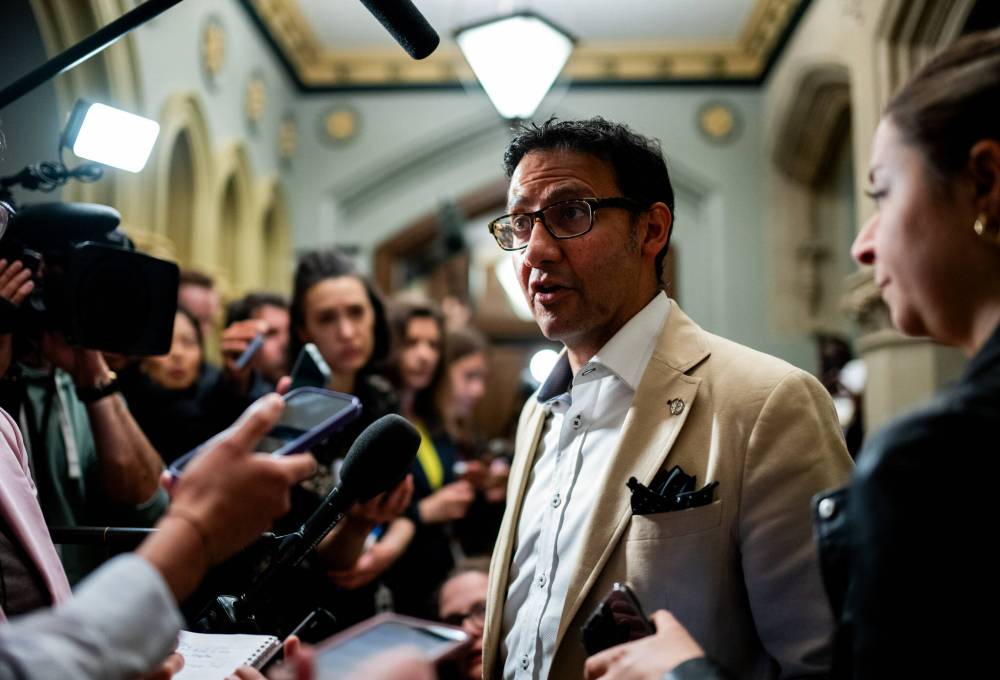
Justice Minister and Attorney General of Canada Arif Virani is responsible for the slow-moving federal Online Harms Act.
He ignored her and started texting, phoning and sending messages through social media with a frequency and intensity that frightened her, leaving her no choice but to tell him she no longer wanted to be friends. She carried on with her life and by summer’s end, met someone else whose friendship turned into romance.
With eyes on the future, Waller had every reason to think the former acquaintanceship was in the past.
That’s when things took a turn for the worse, making the next three years of her life seem like an episode of Baby Reindeer.
“The harassment became relentless,” said Waller. “He made our lives a living hell.”
After receiving a package sent to her home address with a hand-drawn card, remorseful messages and desperate pleas to become best friends, Waller knew she was in trouble.
“The scary thing was, I never gave him my home address,” said Waller, who had already blocked him on social media.
That’s when her boyfriend, Shawn Miller, also started getting harassed. Fake accounts on social media began popping up, some impersonating Miller and sending messages to other models at Swish to hook up, while other anonymous accounts began posting defamatory things about Miller and his business.
“He was impersonating me, using my picture, saying homophobic, transphobic and racist things attributed to me,” said Miller. “I felt like a target, unsafe and vulnerable.”
Swish also became a target. Crawford, her staff, and models who were friends with Waller began getting profiled in malicious attacks on revenge websites.
“It spread paranoia throughout our entire company,” said Crawford. “We were in a pandemic, people were at home and spending more time online, and we didn’t know for sure who was writing all these terrible things.”
They had suspicions, though, but without proof were unable to get protection orders from the police or make it stop.
The harassment intensified, with hundreds of malicious posts from a total of 85 separate accounts appearing over the next few months, many impersonating Miller and sending sexually explicit messages to Waller’s co-workers, some underage, while other accounts profiled him as a pedophile.
“By humiliating Meaghan and trying to make her believe her co-workers were sleeping with her boyfriend, (her stalker) was isolating her from her friends at work and her partner,” Crawford said.
“It’s insidious how closely he watched everyone in her circle and targeted them.”
In 2021, Crawford and Miller obtained legal counsel, enhanced security measures and issued several subpoenas in attempts to confirm the identity and source of harassment. They even tried suing Instagram and GoDaddy (the host of the revenge site) and filed a statement of claim in civil court in 2022.
Then in 2023, the cable company acquiesced to a subpoena and turned over the IP address, which Crawford and her team turned over to police.
Yet the nightmare didn’t end.
“Even after securing the IP address and providing proof of identity, we still weren’t taken seriously. It took multiple attempts and calls to police, politicians and NGOs to be heard,” said Crawford.
Finally, on Sept. 3, 2023, Jordan Melnyk was arrested and charged with criminal harassment of Waller and Miller that spanned three years.
The trio admit to having spent nearly $80,000 on legal and security fees to end this nightmare.
On June 25, Melnyk plead guilty in a Winnipeg courtroom and received a sentence of two years’ probation.
“This hit the very core of who we are at Swish,” said Crawford. “As a longtime advocate for women’s safety in the modelling industry, we had to fight back.”
Sadly, this is not an isolated case.
Online harassment has escalated in recent years, victimizing many people who, unlike Crawford’s team, don’t always have the means to fight back. Reputations get destroyed, relationships ruined and lives even end because of online harm.
Young people are particularly vulnerable, with 70 per cent being exposed to online hate and violence, according to the Canadian Internet Use Survey. Further, tech-facilitated, gender-based violence has become the fastest growing form of intimate-partner violence. Action is long overdue.
Meanwhile, the federal Online Harms Act, and its many iterations, is one such tool for supposedly addressing this alarming trend — yet cannot seem to get off the ground.

Promised by the Trudeau government five years ago, its intended regulatory framework would provide more accountability from sites that host defamatory content and offer a process for victims to seek mitigation.
Opponents have argued, rightfully so, that there are “overkill” components to this law, that would, say, allow for life imprisonment for hate speech offences that lack basic rules of evidence.
While I’ve been a champion in the past of online harms legislation, and continue to do so, it wouldn’t surprise me to see this iteration scrapped once again for another round at the drawing board.
It’s beginning to feel a lot like fiddling while Rome burns.
rochelle@rochellesquires.ca