Quebec municipalities using artificial intelligence to track tree cover, cars, pools

Advertisement

Advertise with us

MONTREAL - Municipalities in Quebec’s capital region have recently begun using artificial intelligence to track everything from tree cover to cars -- and even backyard pools.

Read this article for free:

or

Already have an account? Log in here »

To continue reading, please subscribe:

Subscribe and receive a limited-edition Free Press branded hat or tote.

Digital Subscription

One year of digital access for only $205*

  • Enjoy unlimited reading on winnipegfreepress.com
  • Read the E-Edition, our digital replica newspaper
  • Access News Break, our award-winning app
  • Play interactive puzzles

*First annual payment billed as $205.00 + GST for one year. This annual subscription will automatically renew at $233.00 + GST every 52 weeks (10% off the regular annual price of $259.35). Offer available to new and qualified returning subscribers only. Cancel any time.

To continue reading, please subscribe:

Add Free Press access to your Brandon Sun subscription for only an additional

$1 for the first 4 weeks*

  • Enjoy unlimited reading on winnipegfreepress.com
  • Read the E-Edition, our digital replica newspaper
  • Access News Break, our award-winning app
  • Play interactive puzzles
Start now

*Your next Brandon Sun subscription payment will increase by $1.00 and you will be charged $17.95 plus GST for four weeks. After four weeks, your payment will increase to $24.95 plus GST every four weeks.

Hey there, time traveller!
This article was published 28/07/2024 (734 days ago), so information in it may no longer be current.

MONTREAL – Municipalities in Quebec’s capital region have recently begun using artificial intelligence to track everything from tree cover to cars — and even backyard pools.

The Communauté métropolitaine de Québec, which groups Quebec City and its suburbs, says the groundbreaking project will help member municipalities achieve their environmental targets, assess parking availability and monitor urban development. But as more Canadian cities adopt AI tools, experts warn they need to think carefully about how they’re using the technology, and whether the public is fully on board.

Frédérick Lafrance, geomatics development manager at CMQuébec, said the organization has trained a deep learning model on high-definition aerial photos of Quebec City and the surrounding region taken in 2021. The AI model can pick out and highlight several different features, including buildings, trees, vehicles, swimming pools, backyard trampolines and jungle gyms.
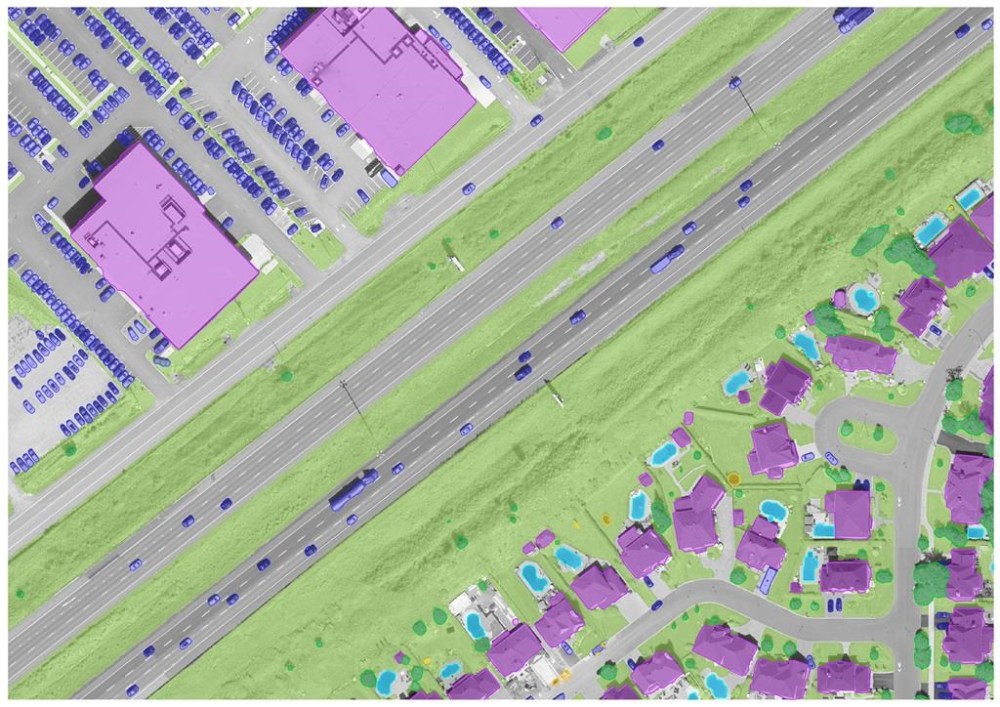
Municipalities in Quebec’s capital region have recently begun using artificial intelligence to track everything from tree cover to cars -- and even backyard pools. The Communauté métropolitaine de Québec says the data can help municipalities achieve their environmental targets, monitor urban development and even assess parking availability. THE CANADIAN PRESS/HO-Communauté métropolitaine de Québec *MANDATORY CREDIT *

“The performance is equivalent or very similar to a human,” he said in a recent interview. “Except that the speed of execution is much greater, so we can do a lot of work in very little time.”

The data can be used in different ways. Lafrance said Quebec City and many surrounding municipalities have targets for urban greening and tree cover, and artificial intelligence is a natural tool to measure progress. Conversely, it can also measure how much green space has been converted to asphalt over time.

Municipalities could also use the images to see whether there’s enough parking in different areas, he said. And tracking backyard pools could help cities decide where to send inspectors.

“That information is difficult to obtain because it requires a lot of manual labour,” he said. “So we’re offering a service that shows them where the pools are, and they can use that to follow up.”

A new set of aerial photos is being taken this summer, Lafrance said, and he hopes to analyze them this winter. He’s also hoping to apply the technology to photos taken as far back as the mid-20th century to assess how the region has developed over time. The 2021 images are currently available through the provincial government’s open data portal.

Lafrance said he believes CMQuébec is the first municipal body in Quebec to use AI in this way, though he thinks it’s only a matter of time before other big cities adopt similar tools.

Renee Sieber, an associate professor of geography at McGill University who studies artificial intelligence, said municipalities across the country are already using AI in a range of ways.

Edmonton, for example, has used artificial intelligence as part of a project that uses remote cameras to monitor wildlife entering the city. Montreal and Toronto have experimented with AI to reduce traffic congestion, and Montreal’s transit agency is working on a pilot project to use AI to prevent suicide in the city’s subway system by scanning CCTV footage for signs that someone is in distress.

Still, Sieber cautioned that some applications of AI raise more concerns than others.

“There’s a big difference between a tree and a backyard swimming pool,” she said, adding that cities can use such technology to help find minor violations – pools without fences, for example, or illegal sheds in people’s backyards.

“I’m always wary of cities that don’t have clearly identified objectives … because that increases the potential for mission creep,” she said. “Frankly, people don’t like to be surveilled from above, and it’s very different from having a building inspector walk around and peek into someone’s backyard …. It creeps people out.”

In the case of Quebec City, Lafrance pointed out, the aerial images already exist, and the AI isn’t revealing information that couldn’t already be tracked manually – it would just be much slower. The image resolution is sharp enough to differentiate between a car, an SUV and a truck, for example, but not to identify the make and model of individual cars, let alone licence plate numbers.

There are wide-ranging possibilities for municipalities that want to make use of artificial intelligence applied to images. Google has used a combination of aerial images and AI to estimate tree cover in hundreds of cities around the world, including Toronto, Montreal and Vancouver.

Richard Khoury, a computer science professor at Université Laval, said the Quebec data could be used to assess the value of different properties and to target less-developed areas for urban development projects.

But AI has the potential to reveal more than just the number of trees and cars in a neighbourhood.

A 2017 U.S. study used deep learning to identify the make and model of cars in 50 million images from Google Street View. The researchers found that cities where sedans outnumbered pickup trucks had an 88 per cent chance of voting Democrat, while cities with more pickups than sedans had an 82 per cent chance of voting Republican.

The authors presented their findings as a powerful tool for researchers and policymakers, but also pointed to important ethical questions. “It is clear that public data should not be used to compromise reasonable privacy expectations of individual citizens, and this will be a central concern moving forward,” they wrote.

Sieber said municipalities need to think about how the public will respond to their use of artificial intelligence. “No tool is neutral,” she said. “When you talk about trustworthiness in AI, there’s an issue of performance … but there’s also an issue of social acceptance. If you’re invisibly surveilling people, you’re not increasing social acceptance, probably.”

This report by The Canadian Press was first published Sunday, July 28, 2024.

Report Error Submit a Tip

More Stories

Long journey to home ownership for Eritrean couple

Zoe Pierce 4 minute read Preview

Long journey to home ownership for Eritrean couple

Zoe Pierce 4 minute read 2:01 AM CDT

Solomon Ghebru and his family have been building a life together in Winnipeg for the past three years after years of living apart in various countries. Now, they are working toward a new goal: owning a home.

Their story is the focus of this year’s Habitat for Humanity Manitoba Cycle of Hope fundraising ride, a seven-day cycling event through southern Manitoba that begins Monday. The ride aims to raise $150,000 to support Ghebru, his wife, Mehret Awate, and their two daughters as they work toward affordable homeownership.

The couple’s journey to Canada started in Eritrea, where they grew up and attended the same church together. They left Eritrea separately, hoping to build a better life together out of the country. Ghebru travelled through Sudan and Libya before reaching Malta, while Awate travelled to Sudan and then Uganda.

After he found work in Malta, he tried to have his family join him, but government policies prevented them from reuniting. The couple married in Uganda in 2016, and their first daughter, Peniel, was born there the following year.

Read
2:01 AM CDT

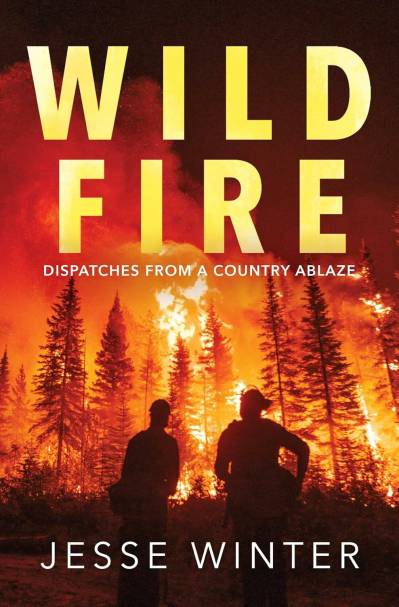
As wildfire season rages, new book explores the frontlines of battling Canadian blazes

Reviewed by GC Cabana-Coldwell 4 minute read Preview

As wildfire season rages, new book explores the frontlines of battling Canadian blazes

Reviewed by GC Cabana-Coldwell 4 minute read 2:02 AM CDT

Mother Nature’s talking but we haven’t been listening, according to Jesse Winter, author of Wild Fire: Dispatches from a Country Ablaze, a book, released earlier this summer detailing Canada’s wildfire woes.

Currently, almost 1,000 wildfires across Northwestern Ontario, British Columbia, the Prairies, Northwest Territories and eastern provinces are burning in Canada. Forest fires also continue to wreak havoc in France, Spain and other European countries, and in the U.S. states of Oregon, California, Florida and Texas. While 2023 still rates as the world’s worst wildfire season, 2026 is hot on its heels.

Winter, a Vancouver-based, award-winning climate disaster photojournalist, spent more than two years on Wild Fire, his first book. In-depth research included working with firefighting crews and environmentalists as well as talking to researchers, politicians and evacuees. He says we need to rethink our views on wildfires or be prepared to watch more land go up in flames.

Canada, Winter writes, is “a country almost perfectly designed to burn.” At least 70 per cent of boreal forests, which cover one-third of the country, are stuffed with highly flammable spruce, fir, pine and tamarack trees as well as aspen, poplar and birch. With a wealth of available fuel, it’s no surprise, he writes, that an area twice the size of Vancouver Island burns every summer in Canada.

Read
2:02 AM CDT

Brandon laying groundwork for Arabian championship

Connor McDowell 4 minute read Preview

Brandon laying groundwork for Arabian championship

Connor McDowell 4 minute read 2:01 AM CDT

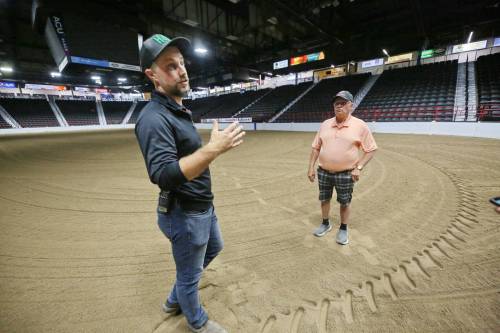
BRANDON — It’s time to dish the dirt on what’s about to happen at Brandon’s Keystone Centre.

Hundreds of horses and hundreds more spectators are about to descend on the site for Canada’s National Arabian Championship Aug. 6 to 15, and before that happens, the staging surface has to be perfect.

“We have been working on this day in and day out,” said Devin Epp, sales manager in the Ag Centre at the Keystone Centre.

Since July 24, staff have been working on a 24-hour schedule to build the competition floor. Dirt was hauled into the arena and has since been worked into place with tractors and hand-pushed equipment.

Read
2:01 AM CDT

Giant Tiger decision creates giant void for desperate population

Niigaan Sinclair 5 minute read Preview

Giant Tiger decision creates giant void for desperate population

Niigaan Sinclair 5 minute read Yesterday at 3:48 PM CDT

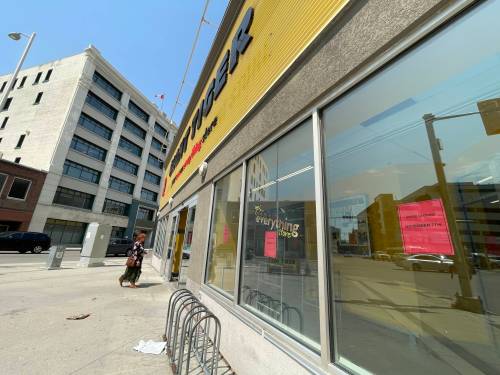
A lot of Winnipeggers may shrug, but the end of Giant Tiger’s downtown store is a giant problem for many of the people living in the centre of the city.

It would have been difficult for anyone going into or passing by the Canadian discount chain’s Donald Street and Ellice Avenue location Thursday to miss the red notices posted on the store’s windows advising it will close on Nov. 7.

According to a 2024 Downtown Winnipeg BIZ report, about 18,000 people live in Winnipeg’s downtown.

More than 60,000 people work there, and some days — when there’s a big concert or the Jets play at Canada Life Centre, for example — the number of people spending time in the area increases significantly.

Read
Yesterday at 3:48 PM CDT

Winnipeg police ticketed a man accused of leaving his dog locked in his vehicle in a grocery store parking lot during the intense heat earlier this week, then attacking bystanders who were concerned about the animal’s welfare.

It’s not uncommon for city police to be contacted about pets left locked in cars during heat waves, but typically those calls don’t escalate to the extent of the incident Wednesday afternoon, said Winnipeg Police Service spokesman Const. Claude Chancy.

“It definitely comes up every time we have heat events in the city, we do get concerned citizens calling about pets being left in vehicles, even for a short period of time,” said Chancy.

“Typically, what will happen is that the owner or the caretaker of the pet will present themselves to police and proper, appropriate advice is given about the care of these animals — this is definitely an extreme case.”

Kreviazuk, in her own voice

Eva Wasney 7 minute read Preview

Kreviazuk, in her own voice

Eva Wasney 7 minute read Yesterday at 4:00 PM CDT

Chantal Kreviazuk is in the midst of a very busy year.

In May, the Winnipeg-born singer-songwriter released her 11th studio album, In My Own Voice — a project that reclaims and reimagines a selection of hit songs she’s written for some of the world’s biggest artists.

The 12-track album features Kreviazuk performing ethereal covers of Pitbull’s Feel This Moment, Drake’s Over My Dead Body and Gwen Stefani’s Rich Girl, among others.

But she didn’t stop there.

Read
Yesterday at 4:00 PM CDT