How two Syrians in Rome are using hummus to aid war refugees and help migrants integrate
Advertisement
Read this article for free:
or
Already have an account? Log in here »
To continue reading, please subscribe:

Digital Subscription
One year of digital access for only $205*
- Enjoy unlimited reading on winnipegfreepress.com
- Read the E-Edition, our digital replica newspaper
- Access News Break, our award-winning app
- Play interactive puzzles
*First annual payment billed as $205.00 + GST for one year. This annual subscription will automatically renew at $233.00 + GST every 52 weeks (10% off the regular annual price of $259.35). Offer available to new and qualified returning subscribers only. Cancel any time.
To continue reading, please subscribe:
Add Free Press access to your Brandon Sun subscription for only an additional
$1 for the first 4 weeks*
- Enjoy unlimited reading on winnipegfreepress.com
- Read the E-Edition, our digital replica newspaper
- Access News Break, our award-winning app
- Play interactive puzzles
*Your next Brandon Sun subscription payment will increase by $1.00 and you will be charged $17.95 plus GST for four weeks. After four weeks, your payment will increase to $24.95 plus GST every four weeks.
Read unlimited articles for free today:
or
Already have an account? Log in here »
Hey there, time traveller!
This article was published 30/07/2024 (766 days ago), so information in it may no longer be current.
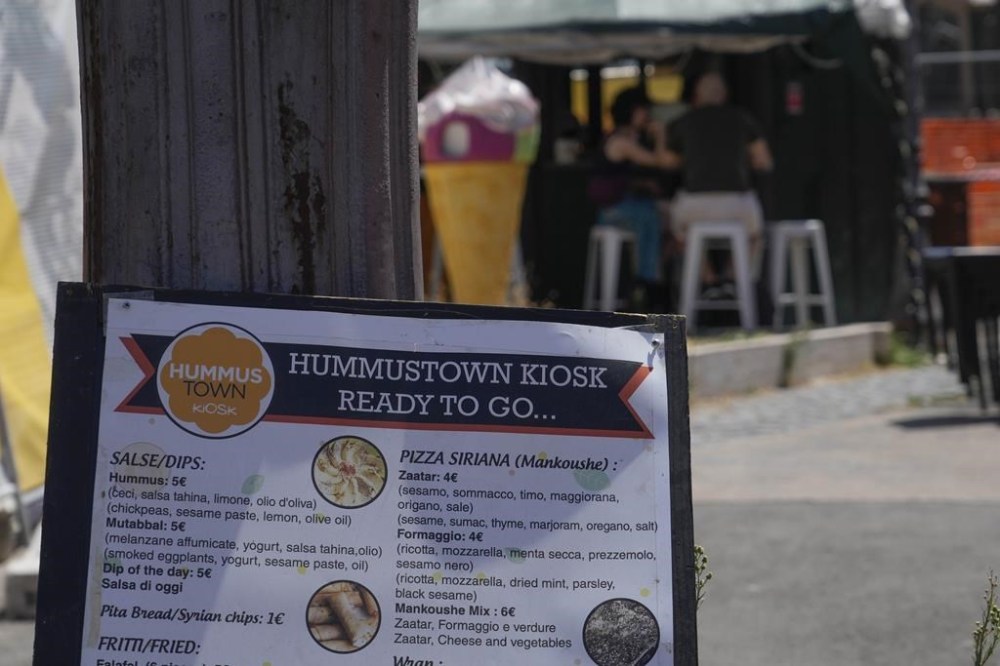
A pair of Syrians have created a community that provides support to migrants and vulnerable people in Rome, by sharing the flavors of a homeland torn by civil war.
Founded in 2018 as a “humanitarian catering service,” HummusTown was originally aimed at raising funds for families and friends in Syria.
It has since grown into a successful small business that has shifted from sending remittances to helping new migrants integrate in Italy, all the while gaining a steady following on Rome’s gastronomic scene.
As the Syrian war continued to rage, Shaza Saker, a long-time U.N. employee living in Rome, and Joumana Farho, who was working as her cook, wanted to find a way to help people at home. Farho, 48, brought her “divine” cooking, while Saker, 49, networked.
“I told her: ‘Let’s start inviting people over for dinner … and whatever we make out of these dinners we’ll just send to Syria,” Saker said. “My house had become a bit of, you know, a restaurant, a home restaurant. But it was fun. We felt useful.”
The non-profit that started with 45,000 euros ($48,670) raised through crowdfunding now employs 13 full-time and 10 part-time staff at its kitchen kiosk near Rome’s train station and a small bistro, with plans to open a restaurant.
The expanded group now also organizes cooking classes, cultural events and summer aperitifs, as well as catering for events in the Italian capital.
Each month, they donate food to the homeless and last year they raised 40,000 euros for victims of the earthquakes that struck Syria on Feb. 6, 2023 with the loss of thousands of lives.

As more refugees arrived in Rome, the two shifted their focus to providing Syrian asylum-seekers with work and a support network, eventually expanding their mission to all vulnerable people, including Italians.
They include Mayyada al-Amrani, a Palestinian woman who fled Gaza with her eldest daughter, who is getting treatment for cancer. She spends her days rolling traditional spiced rice into grape leaves, working alongside four other cooks of Syrian and Palestinian origin. While she is able to earn money to help support herself and her daughter in Italy, she worries about her five other children back in Gaza, the youngest not yet 9 months old.
“They are surviving,” she said. ”They struggle and suffer mostly from (lack of) water.”
Fadi Salem, now HummusTown’s manager, is a Syrian refugee from Damascus who arrived in Rome in 2022 after living in Lebanon for seven years. Salem discovered the humanitarian catering service through Rome’s Syrian community and said it gradually became a family for him.
“I found integration through HummusTown instead of finding it through the migration centers,” he said. “Because from my position here I speak with many Italian and foreign clients, so I practice my Italian, English and Arabic every day,” he noted.