Think you have a ‘summer cold’? There’s a good chance it’s COVID-19, doctors say
Advertisement
Read this article for free:
or
Already have an account? Log in here »
To continue reading, please subscribe:

Digital Subscription
One year of digital access for only $205*
- Enjoy unlimited reading on winnipegfreepress.com
- Read the E-Edition, our digital replica newspaper
- Access News Break, our award-winning app
- Play interactive puzzles
*First annual payment billed as $205.00 + GST for one year. This annual subscription will automatically renew at $233.00 + GST every 52 weeks (10% off the regular annual price of $259.35). Offer available to new and qualified returning subscribers only. Cancel any time.
To continue reading, please subscribe:
Add Free Press access to your Brandon Sun subscription for only an additional
$1 for the first 4 weeks*
- Enjoy unlimited reading on winnipegfreepress.com
- Read the E-Edition, our digital replica newspaper
- Access News Break, our award-winning app
- Play interactive puzzles
*Your next Brandon Sun subscription payment will increase by $1.00 and you will be charged $17.95 plus GST for four weeks. After four weeks, your payment will increase to $24.95 plus GST every four weeks.
Read unlimited articles for free today:
or
Already have an account? Log in here »
Hey there, time traveller!
This article was published 03/08/2024 (801 days ago), so information in it may no longer be current.
Gayle Robin was surprised when her sister in California told her in early July she had tested positive for COVID-19.
“I thought, ‘Really? It’s summer,'” the marketing and communications professional said in an interview from St. Catharines, Ont.
About a week later while camping, Robin woke up with a sore throat and felt achy later in the day. She thought it was “a summer cold.”
“It never even occurred to me that perhaps it was COVID,” she said.
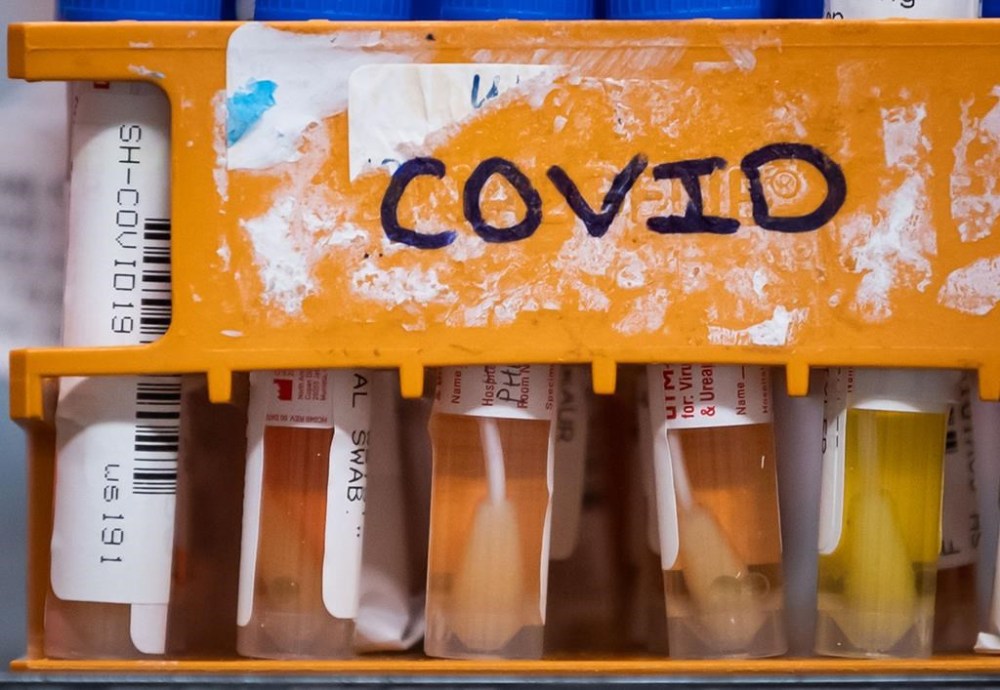
When she returned home a couple of days later and was still not feeling well, she decided to take a rapid antigen test, which was positive.
Since then, Robin’s partner and his family, as well as some of her friends and co-workers in both Canada and the U.S., have all had COVID.
“Almost every day I’m hearing about someone else who has it or knows someone who has it,” she said.
That because “we’re in the midst of a summer wave of COVID,” said Dr. Andrew Pinto, director of the Upstream Lab, a public health research team at St. Michael’s Hospital in Toronto.
In addition to wastewater data that suggests an “upward trajectory” in COVID-19 activity, Pinto said he is seeing more patients with the virus in his family practice clinic.
”One of the really unique things about COVID is that it is surprising us in ways that other respiratory pathogens haven’t,” he said.
“It is spreading even in the absence of very cold dry air with lots of people indoors, which we normally see with respiratory pathogens like influenza and RSV (respiratory syncytial virus).”
Dr. Fahad Razak, the former scientific director of the Ontario COVID-19 Science Advisory Table, said coronaviruses have historically spread year-round and don’t follow a seasonal pattern.
Since COVID-19 is still relatively new, we don’t have the population immunity built up that we do for flu and RSV, which have been around for a long time, said Razak, who is also an internal medicine specialist at St. Michael’s Hospital.
Even though we tend to think of viruses spreading as people crowd together indoors during the fall and winter, summer also presents opportunities for COVID-19 to spread, he said.
“People tend to get together more socially with family. There tends to be more gatherings like concerts, for example,” Razak said.
Just as the cold forces people indoors during the winter, the “blistering hot days” we’ve had this summer also send people inside into air-conditioned spaces, which can also increase the spread of the virus, he said.
Pinto noted that the summer wave is also happening at a time when individual immunity to COVID-19 infection, which decreases about six months after vaccination, is probably lower.
”What we’ve seen in Canada is that there has likely been a period of time since people were last infected, so that immunity has waned and also a lot of people didn’t get their COVID vaccines this past fall and winter,” he said.
Although Razak has seen some patients hospitalized with COVID-19 over the last few weeks, those severe cases are “far, far rarer now,” he said, thanks to protection against serious illness provided by vaccination and prior infections.
Still, vulnerable people – including seniors and those who are immunocompromised – can get very sick from COVID, the doctors say.
That’s one of the reasons it’s important to know there’s a good chance your summer cold symptoms are actually COVID-19, they say.
It’s “good practice” to not expose vulnerable people to any respiratory virus, Razak said, but it’s especially important with COVID.
“If I had a fresh COVID infection, would I visit my parents who are high risk and in their 70s and 80s? No. I would be careful for a few days. I would make sure that my symptoms are resolving, that I don’t have a fever, that I don’t have a cough before I went to see them,” he said.
If you are 60 years or older, immunocompromised or have chronic underlying conditions such as diabetes, heart or lung disease, you should consider taking the antiviral drug Paxlovid to prevent serious COVID-19 illness, Razak said.
That means getting a COVID test as soon as possible, as the medication must be taken within the first few days of infection, he said.
And no matter what your age or health status, confirming whether or not you have COVID-19 is helpful for timing vaccines and maximizing your protection against the virus, Razak said, since immunization is most effective at least three months after your last infection or vaccination.
COVID-19 vaccines targeted to recently circulating variants are in the works for the fall, the Public Health Agency of Canada said in an email to The Canadian Press.
Health Canada is reviewing mRNA vaccines that target the KP.2 strain, as well as protein subunit vaccines – which contain harmless and purified pieces of the virus – that target the JN.1 strain, the agency said.
This report by The Canadian Press was first published Aug. 3, 2024.
Canadian Press health coverage receives support through a partnership with the Canadian Medical Association. CP is solely responsible for this content.
Related Articles
Searing temperatures, soaring COVID levels
Advertisement Advertise With Us
Advertisement Advertise With Us