68 dead fish found after contaminated water discharge from Yukon mine disaster site

Advertisement

Advertise with us

WHITEHORSE - The federal government has ordered the company that owns the Eagle Gold mine in Yukon to build barriers to protect fish from cyanide-contaminated water after 68 dead fish were found following a discharge of treated water from the site of a massive ore slide.

Read this article for free:


or

Already have an account? Log in here »

To continue reading, please subscribe:

Subscribe and receive a limited-edition Free Press branded hat or tote.

Digital Subscription

One year of digital access for only $205*

  • Enjoy unlimited reading on winnipegfreepress.com
  • Read the E-Edition, our digital replica newspaper
  • Access News Break, our award-winning app
  • Play interactive puzzles

*First annual payment billed as $205.00 + GST for one year. This annual subscription will automatically renew at $233.00 + GST every 52 weeks (10% off the regular annual price of $259.35). Offer available to new and qualified returning subscribers only. Cancel any time.

To continue reading, please subscribe:

Add Free Press access to your Brandon Sun subscription for only an additional

$1 for the first 4 weeks*

  • Enjoy unlimited reading on winnipegfreepress.com
  • Read the E-Edition, our digital replica newspaper
  • Access News Break, our award-winning app
  • Play interactive puzzles
Start now

*Your next Brandon Sun subscription payment will increase by $1.00 and you will be charged $17.95 plus GST for four weeks. After four weeks, your payment will increase to $24.95 plus GST every four weeks.

Hey there, time traveller!
This article was published 09/08/2024 (751 days ago), so information in it may no longer be current.

WHITEHORSE – The federal government has ordered the company that owns the Eagle Gold mine in Yukon to build barriers to protect fish from cyanide-contaminated water after 68 dead fish were found following a discharge of treated water from the site of a massive ore slide.

Cameron Sinclair, a Yukon government fisheries biologist, said at an update Friday that the fish were discovered last week by the mine’s owner, Victoria Gold, and they are believed to have died after a release from the mine’s water treatment plant.

He said some of the fish were Arctic Graylings and some were Sculpins, and the company has since frozen the dead specimens “to store for later analysis.”
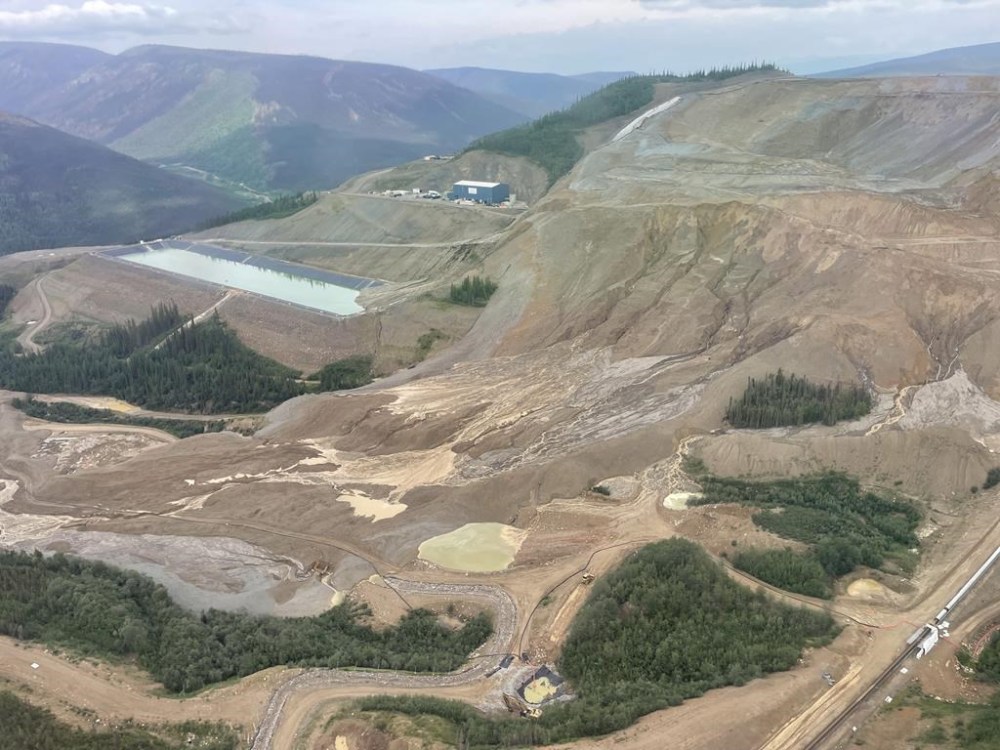
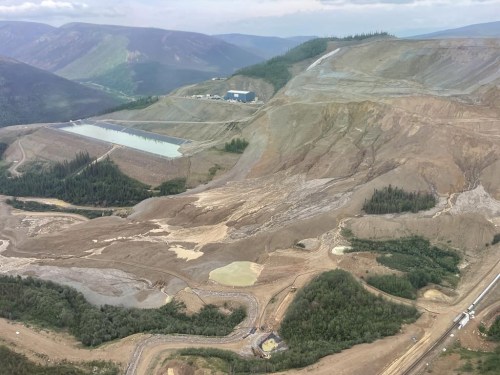
Yukon government officials say 68 dead fish were found last week after a discharge of cyanide contaminated water from the Eagle Gold mine disaster site. Victoria Gold's Eagle gold mine site north of Mayo, Y.T., is shown in this handout aerial photo taken July 3, 2024. THE CANADIAN PRESS/HO - Yukon Government

Sinclair said the company stopped discharging treated water after finding the fish kill, and the federal Fisheries Department has now ordered the company to build seven fish barriers in Haggart Creek to create a “no go zone for fish.”

The mine was voluntarily shut after the ore was released from the heap-leach facility on June 24, spilling about two million tonnes of cyanide-laced rock.

Yukon’s Chief Veterinary Officer, Dr. Mary Vanderkop, said the fish deaths are “completely consistent with what we would expect from cyanide toxicity.”

“It kills fish really quickly, and it’s also indiscriminate, so any species that come into contact with it, it’s rapidly absorbed through the gills, and it interferes with the oxygen process and results, essentially, in rapid suffocation,” she said.

Vanderkop said “it’s exceedingly challenging” to determine cause of death from cyanide in the animals because the chemical breaks down quickly.

“The good part is that cyanide doesn’t bio accumulate, so animals or fish that die as a result of cyanide poisoning will not have levels of cyanide in their tissues or in their blood that would represent a threat to animals that might consume carcasses,” she said. “So, we don’t have a concern about this being something that is going to be an enduring problem within the environment, unless there are subsequent releases of high levels of cyanide sufficient to cause additional kills.”

Brendan Mulligan, a senior scientist with the Yukon Environment Department, said they’ve found “clear evidence” of groundwater contamination, though samples with the highest concentrations of cyanide, up to 10,000 times above aquatic life guidelines, are being “contained on-site.”

Mulligan said the company’s discharge of water from its treatment plant earlier this month to nearby Haggart Creek also resulted in samples showing cyanide levels above guidelines for aquatic life.

He said his department has spent “enormous amounts of energy” on the disaster at the Eagle Gold mine, which is located about 400 kilometres north of Whitehorse.

Dr. Sudit Ranade, Yukon’s chief medical officer of health, said the groundwater contamination on the site isn’t a threat to drinking water.

“These are separate systems, and so at this time, the drinking water system that is regulated is still not at risk,” he said.

Yukon officials said they are still collaborating with the Na-Cho Nyak Dun First Nation, whose territory the mine is on, and technical experts as cleanup of the disaster site continues.

The First Nation has called for a moratorium on mining on its territory since the disaster, but Yukon Premier Ranj Pillai said earlier this week that the prospect of halting mining as requested has “significant legal and economic consequences.”

“The consequences of such action would be significant, with serious and far-reaching consequences for all Yukoners,” Pillai said in a statement released Aug. 5.

He said the government is “not prepared to halt all existing, permitted mineral development activities,” but has since agreed to a temporary two-month pause on “existing consultation processes” for new mining licences on the Na-Cho Nyak Dun territory.

— By Darryl Greer in Vancouver

This report by The Canadian Press was first published Aug. 9, 2024.
Report Error Submit a Tip

More Stories

68 dead fish found after contaminated water discharge from Yukon mine disaster site

The Canadian Press 4 minute read Preview

68 dead fish found after contaminated water discharge from Yukon mine disaster site

The Canadian Press 4 minute read Friday, Aug. 9, 2024

WHITEHORSE - The federal government has ordered the company that owns the Eagle Gold mine in Yukon to build barriers to protect fish from cyanide-contaminated water after 68 dead fish were found following a discharge of treated water from the site of a massive ore slide.

Cameron Sinclair, a Yukon government fisheries biologist, said at an update Friday that the fish were discovered last week by the mine's owner, Victoria Gold, and they are believed to have died after a release from the mine's water treatment plant.

He said some of the fish were Arctic Graylings and some were Sculpins, and the company has since frozen the dead specimens "to store for later analysis."

Sinclair said the company stopped discharging treated water after finding the fish kill, and the federal Fisheries Department has now ordered the company to build seven fish barriers in Haggart Creek to create a "no go zone for fish."

Read
Friday, Aug. 9, 2024

Puzzles Palace

1 minute read Monday, Jul. 27, 2026

To solve our puzzles, please subscribe with this special offer: |

Foreign workers at Manitoba hotel are owed $138-K in unpaid wages and fees, labour board rules

Abiola Odutola 4 minute read Preview

Foreign workers at Manitoba hotel are owed $138-K in unpaid wages and fees, labour board rules

Abiola Odutola 4 minute read 11:47 AM CDT

BRANDON — The Manitoba Labour Board has ordered the Western Star All Suites Hotel to pay nearly $138,000 in unpaid wages and administrative fees after it dismissed the appeals involving three foreign workers employed by the company.

In a decision dated Aug. 25, the board ordered 6692452 Manitoba Ltd. (doing business as Western Star All Suites Hotel), 1638185 Alberta Ltd. and company director P.X. to pay a total of $137,915.79 to the Employment Standards Branch for wages owed to foreign workers S.J., J.B. and G.R.

The decision was edited to protect the personal information of the employees, who worked at a hotel, reportedly in Melita, at different times and also lived there during their employment.

The board stated the employees were owed wages after hearing evidence about long working hours, irregular payments, inadequate employment records and working conditions.

Read
11:47 AM CDT

News briefs for Sunday, August 30, 2026

1 minute read Updated: 2:19 PM CDT

A collection of breaking news briefs filed on Sunday, August 30, 2026

Charges laid after grocery store security guard stabbed

2:19 PM

Police have laid charges in a grocery-store stabbing.

Carney’s defence of Lake Ontario carries enormous weight

Niigaan Sinclair 5 minute read Preview

Carney’s defence of Lake Ontario carries enormous weight

Niigaan Sinclair 5 minute read Friday, Aug. 28, 2026

For centuries on Turtle Island (North America), explorers, map makers, and political leaders have erased Indigenous place names and substituted them — more often than not — with political, ethnocentric, and self-aggrandizing names.

In recent years, a few places on the continent have had Indigenous names re-established, but as of today, few of the original names are “official.”

So, it was no surprise when U.S. President Donald Trump on Thursday signed an executive order directing the U.S. Department of the Interior and Board on Geographic Names to take steps within 30 days to officially rename Lake Ontario as “Lake America.”

The move may have been a result of the Canada-U.S. trade war and Trump’s pettiness and ego, but it also fits in perfectly with his career.

Read
Friday, Aug. 28, 2026

Additional candidates register for Winnipeg’s fall election

Free Press staff 1 minute read Preview

Additional candidates register for Winnipeg’s fall election

Free Press staff 1 minute read 3:18 PM CDT

Every city council ward is set to have a contested race in the Oct. 28 municipal election, barring any withdrawals, after additional candidates registered for two contests.

Dennis Bayomi is running in Charleswood-Tuxedo-Westwood, where Evan Duncan is the incumbent candidate.

Bayomi is president and co-deputy leader of the Green Party of Manitoba. He’s run for the Greens in provincial and federal elections.

Fred Morris registered to run against incumbent Cindy Gilroy in Daniel McIntyre.

Read
3:18 PM CDT