Enjoying summer in the city made easier Winnipeg undisputed Canadian champion of patio permitting
Read this article for free:
or
Already have an account? Log in here »
To continue reading, please subscribe:

Digital Subscription
One year of digital access for only $205*
- Enjoy unlimited reading on winnipegfreepress.com
- Read the E-Edition, our digital replica newspaper
- Access News Break, our award-winning app
- Play interactive puzzles
*First annual payment billed as $205.00 + GST for one year. This annual subscription will automatically renew at $233.00 + GST every 52 weeks (10% off the regular annual price of $259.35). Offer available to new and qualified returning subscribers only. Cancel any time.
To continue reading, please subscribe:
Add Free Press access to your Brandon Sun subscription for only an additional
$1 for the first 4 weeks*
- Enjoy unlimited reading on winnipegfreepress.com
- Read the E-Edition, our digital replica newspaper
- Access News Break, our award-winning app
- Play interactive puzzles
*Your next Brandon Sun subscription payment will increase by $1.00 and you will be charged $17.95 plus GST for four weeks. After four weeks, your payment will increase to $24.95 plus GST every four weeks.
Read unlimited articles for free today:
or
Already have an account? Log in here »
Hey there, time traveller!
This article was published 14/08/2024 (767 days ago), so information in it may no longer be current.
If it seems there’s more occasions to plop yourself down to have a cool one or enjoy some tapas in the sunshine on an outdoor restaurant patio, it may be because getting a patio permit in Winnipeg has become ridiculously easy.
When it comes to the expeditious issuance of permits related to buildings and building expansions, Winnipeg doesn’t often win accolades from groups like the Canadian Federation of Independent Business.
But according to a recent CFIB survey, Winnipeg is now the undisputed Canadian champion of patio permitting.
It’s the only city in the country where “temporary” permits are issued with just one document in 24 hours at no cost. Saskatoon also has no charge and requires only one document, but it takes three weeks. Similar permits cost as much as $2,265 in St. John’s and take up to eight weeks, and cost $917 in Toronto.
This new normal came into effect in March, when the temporary permits that started being offered in the spring of 2020 to help the hospitality sector during the pandemic were made permanent.
Mike Del Buono likely knows better than most the difference between before and after.
He went through a rigorous application process several years ago for his patio on King Street at his long time lunch spot King + Bannatyne.
Mike Del Buono went through a rigorous application process several years ago for his patio on King Street at his long-time lunch spot, King + Bannatyne.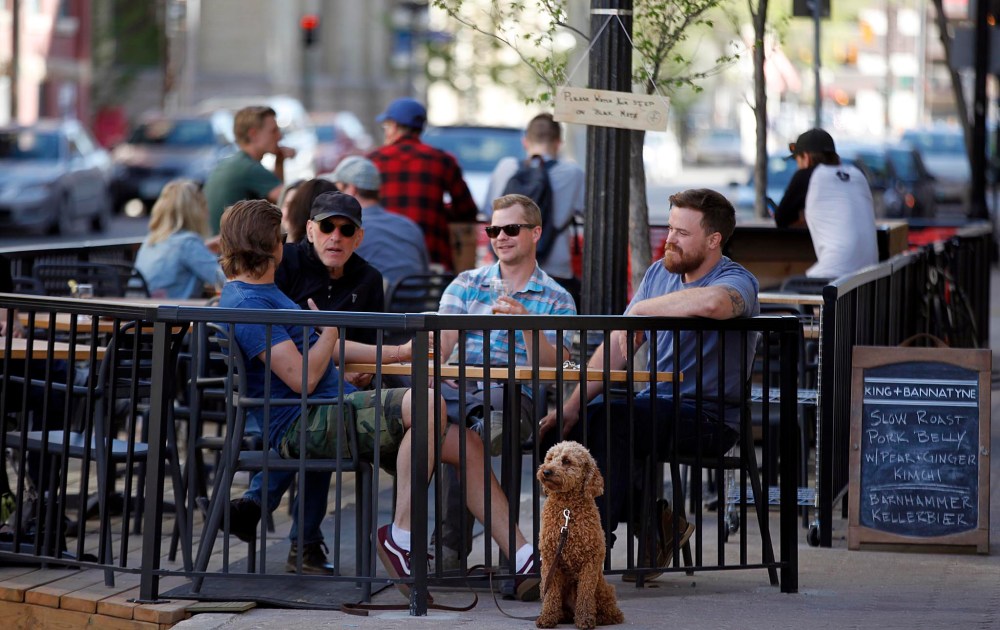
He was half way through what he calls “the regular grueling process” at his newer ventures Nola and Bar Accanto on Tache Avenue, when the permitting process changed.
“We got in with that and it was awesome,” he said.
Their 20 seat patio on Tache provides extra room for lunch service at Nola and then almost doubles the capacity at Bar Accanto — an intimate 32-seater indoors — during the evenings.
“My hope is that it inspires more people around here to do the same thing,” he said. “It’s been great for us.”
Brianna Solberg, CFIB’s director of legislative affairs for the Prairies and Northern Canada, said, “The City of Winnipeg’s property and development department said they wanted to get the turnaround time down and waive the fees and get the process to be smooth and streamlined.”
“It’s really helped the hospitality sector who are still struggling,” said Solberg. “Our surveys show that 50 per cent of our small business members in that sector are still saying that insufficient demand is a significant concern.”
“My hope is that it inspires more people around here to do the same thing. It’s been great for us.”–Mike Del Buono
Solberg credits Sherri Rollins, city councillor for Fort-Rouge East Fort Garry, for championing the process of removing red tape in the permitting process.
Rollins, the chair of the property and development committee, is humble but proud of the work that’s been done.
“There is still a lot of work to do,” she said. “But it is a milestone and it was a longtime coming.”
She referred to the former patio permitting regime as a “patchwork quilt” with people paying different fees depending on when the permits were issued and the size of the patio.
“During the pandemic we absolutely knew the restaurants and bars were suffering,” she said. “We started offering the temporary permits and I was thinking why don’t we do this all the time. It is so short-sighted to ding businesses on these permits when they are already paying taxes and doing these beautiful builds. These are the spaces Winnipeggers love and need especially with such a short summer season.”
MIKAELA MACKENZIE / FREE PRESS Councillor Sherri Rollins, seen here at Nola's outdoor patio, was the head of the property and development committee at City Hall that has eliminated the cost and drastically reduced the red tape in acquiring a patio licence.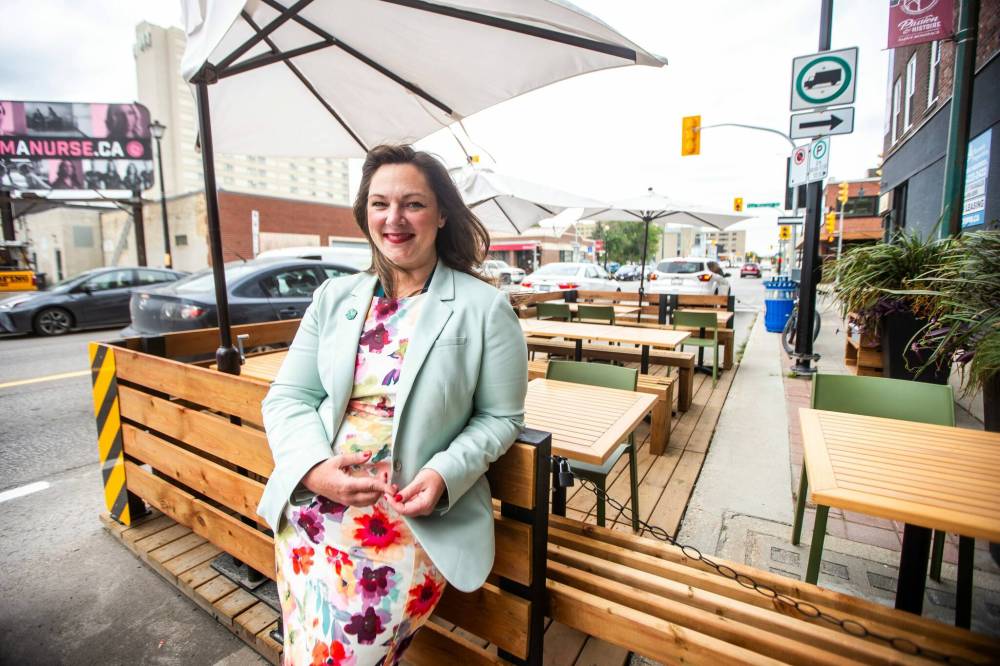
The program offered an expedited approval process that allowed businesses to open and operate a patio for that season and are able to register a temporary patio each summer on the basis that they are following general safety guidelines set out in the program.
The program has been popular since first being offered in 2020. There were 66 businesses registered for summer operation in 2020, it reached 115 businesses registered in 2021 and it’s now up to 163 registered.
Rob Del Grosso, the vice-president of operations at Stella’s, said the process to get a permit for the 56-seat patio at its Kevin’s Bistro on Bannatyne was “smooth and quick.”
“And we can have it operating for a long period, from early spring to the end of September,” he said.
And as for the impact on business he said, “It’s been fantastic. It really helps create a buzz for us. We have live music out there every Friday and Saturday night. It really creates some energy.”
SUPPLIED Rob Del Grosso, the vice-president of operations at Stella’s, said the process to get a permit for the 56-seat patio at its Kevin’s Bistro on Bannatyne was “smooth and quick.”
Shaun Jeffrey, executive director for the Manitoba Restaurant and Food Services Association, said his organization was speaking to the mayor every year encouraging him to make it permanent, and now it has.
“It’s really a breath of fresh air,” he said. “We’re still struggling to recoup losses after being closed for 18 months. We’re trying to have restaurants expand their ability to enjoy Manitoba’s summers, especially this summer when it’s been so nice for long. It has been huge.”
Rollins said, “No matter where you are in the political spectrum, or if you’re just a person who likes to sit in the sunshine and have a little Aperol spritz like I do, or you just believe in getting government out of the way of business so it can succeed, this is the best little thing you can do.”
martin.cash@freepress.mb.ca
History
Updated on Thursday, August 15, 2024 9:08 AM CDT: Fixes typo
Updated on Thursday, August 15, 2024 9:11 AM CDT: Updates photo cutline