

Right to enjoy property doesn’t trump freedom of expression: ‘Freedom Convoy’ defence
Advertisement
Read this article for free:
or
Already have an account? Log in here »
To continue reading, please subscribe:

Digital Subscription
One year of digital access for only $205*
- Enjoy unlimited reading on winnipegfreepress.com
- Read the E-Edition, our digital replica newspaper
- Access News Break, our award-winning app
- Play interactive puzzles
*First annual payment billed as $205.00 + GST for one year. This annual subscription will automatically renew at $233.00 + GST every 52 weeks (10% off the regular annual price of $259.35). Offer available to new and qualified returning subscribers only. Cancel any time.
To continue reading, please subscribe:
Add Free Press access to your Brandon Sun subscription for only an additional
$1 for the first 4 weeks*
- Enjoy unlimited reading on winnipegfreepress.com
- Read the E-Edition, our digital replica newspaper
- Access News Break, our award-winning app
- Play interactive puzzles
*Your next Brandon Sun subscription payment will increase by $1.00 and you will be charged $17.95 plus GST for four weeks. After four weeks, your payment will increase to $24.95 plus GST every four weeks.
Read unlimited articles for free today:
or
Already have an account? Log in here »
Hey there, time traveller!
This article was published 23/08/2024 (740 days ago), so information in it may no longer be current.
OTTAWA – In a contest between the Charter-protected freedom of expression and Ottawa residents’ right to the enjoyment of their property, there is no contest, the lawyer for “Freedom Convoy” organizer Tamara Lich argued Friday.
Lawrence Greenspon’s final arguments in the criminal trial focused largely on the fundamental freedoms that protect protest in Canada, and the failure of Ottawa police to enforce the law during the 2022 demonstration.
Lich and fellow organizer Chris Barber are co-accused of mischief, intimidation and counselling others to break the law for their part in organizing the massive protest that blockaded streets in downtown Ottawa for weeks.

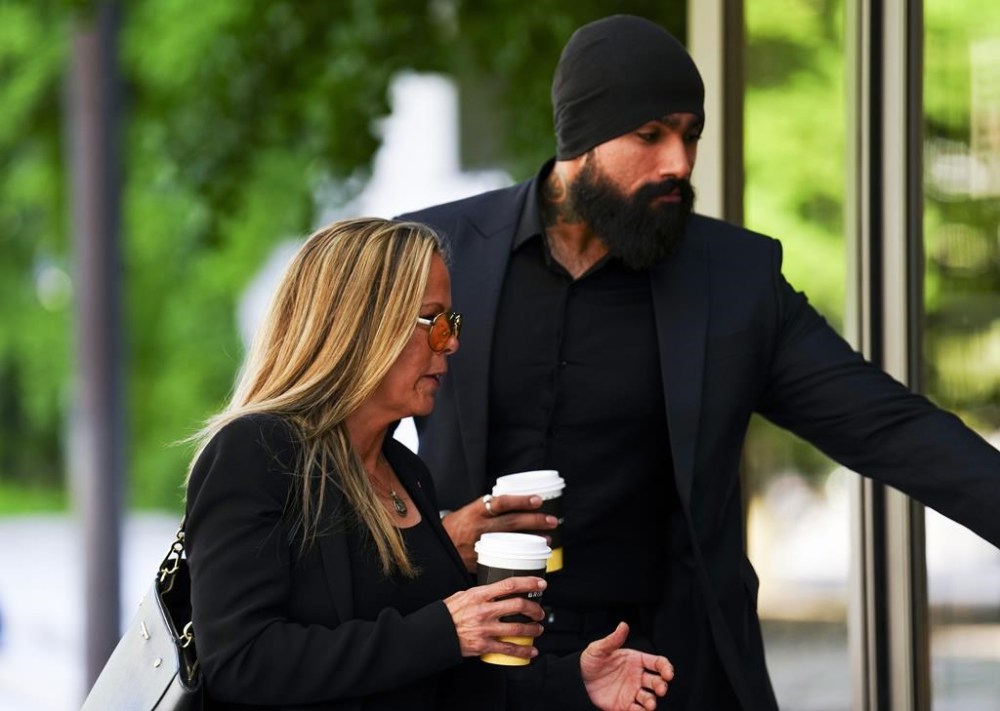
Tamara Lich arrives at the courthouse in Ottawa, on Tuesday, Aug. 20, 2024. THE CANADIAN PRESS/Sean Kilpatrick
The Crown has argued Lich and Barber influenced the crowds to commit illegal acts as a way to pressure the government to lift COVID-19 restrictions and vaccine mandates.
“Any court would be hard-pressed to find another case where a higher court has expressed the reason why freedom of expression shouldn’t prevail over enjoyment of property,” Greenspon said.
The Crown is seeking to “criminalize the words and actions” of the leaders of a protest who consistently urged peaceful behaviour and co-operation with police, he argued.
“The Crown asks that those leaders be held criminally responsible for the actions of unidentified others who were directed into the downtown core of Ottawa, and they were allowed to stay for a three-week period of time without so much as a single parking ticket being issued,” he said.
He said there’s no precedent for a situation where protesters were directed by police to park in a particular area and then prosecuted for following that direction.
He also took aim at the Crown’s focus on the phrase “hold the line,” which Lich used frequently in the final days of the protest, as police prepared a massive operation to forcefully remove demonstrators.
The operation saw protesters face off against police and refuse to move, often mimicking Lich’s “hold the line” rallying cry.
The Crown has interpreted the phrase as a call to arms to protesters, and an encouragement to obstruct the police. Greenspon argued that since Lich was arrested on Feb. 17, 2022, the day before that police operation began, “there was no such line” at the time.
Instead, he said the phrase could be interpreted as encouragement to protesters “not to give up.”
The Crown has said the evidence in this case is overwhelming, but Greenspon shot back in his arguments that the only thing overwhelming is the resources the Crown’s office has dedicated to the case, which has dragged on for nearly a year.
The trial looked set to end Friday afternoon when the Crown offered to make its final reply in writing, but Justice Heather Perkins-McVey opted instead to resume next month to hear the finals words in person.
The trial has drawn much public interest since it began nearly a year ago, and the benches have often been crowded with spectators and supporters.
The judge said it is in “the vein of that open, transparent justice model” that she requested the parties to return in September. Lich and Barber will attend the final day by video conference from their homes in Western Canada.
Perkins-McVey could take as much as six months to come to a verdict in the case, but said she hopes she won’t need that much time before she’s ready to deliver her decision.
This report by The Canadian Press was first published Aug. 23, 2024.