International student enrolment drops below federal cap: Universities Canada

Advertisement

Advertise with us

OTTAWA - Fewer students are coming from abroad to study at Canadian universities this fall, and Universities Canada is warning that the numbers have dropped below the cap the federal government set on international student visas this year.

Read this article for free:


or

Already have an account? Log in here »

To continue reading, please subscribe:

Subscribe and receive a limited-edition Free Press branded hat or tote.

Digital Subscription

One year of digital access for only $205*

  • Enjoy unlimited reading on winnipegfreepress.com
  • Read the E-Edition, our digital replica newspaper
  • Access News Break, our award-winning app
  • Play interactive puzzles

*First annual payment billed as $205.00 + GST for one year. This annual subscription will automatically renew at $233.00 + GST every 52 weeks (10% off the regular annual price of $259.35). Offer available to new and qualified returning subscribers only. Cancel any time.

To continue reading, please subscribe:

Add Free Press access to your Brandon Sun subscription for only an additional

$1 for the first 4 weeks*

  • Enjoy unlimited reading on winnipegfreepress.com
  • Read the E-Edition, our digital replica newspaper
  • Access News Break, our award-winning app
  • Play interactive puzzles
Start now

*Your next Brandon Sun subscription payment will increase by $1.00 and you will be charged $17.95 plus GST for four weeks. After four weeks, your payment will increase to $24.95 plus GST every four weeks.

Hey there, time traveller!
This article was published 30/08/2024 (769 days ago), so information in it may no longer be current.

OTTAWA – Fewer students are coming from abroad to study at Canadian universities this fall, and Universities Canada is warning that the numbers have dropped below the cap the federal government set on international student visas this year.

The immigration minister announced a cap in January as a way to quell the rapid increase in the number of international students, citing pressure on housing, health care and other services.

The new policy limits the number of student visa applications the government would accept into processing, and that was expected to result in a 35 per cent drop in the number of students in 2024 compared to last year.
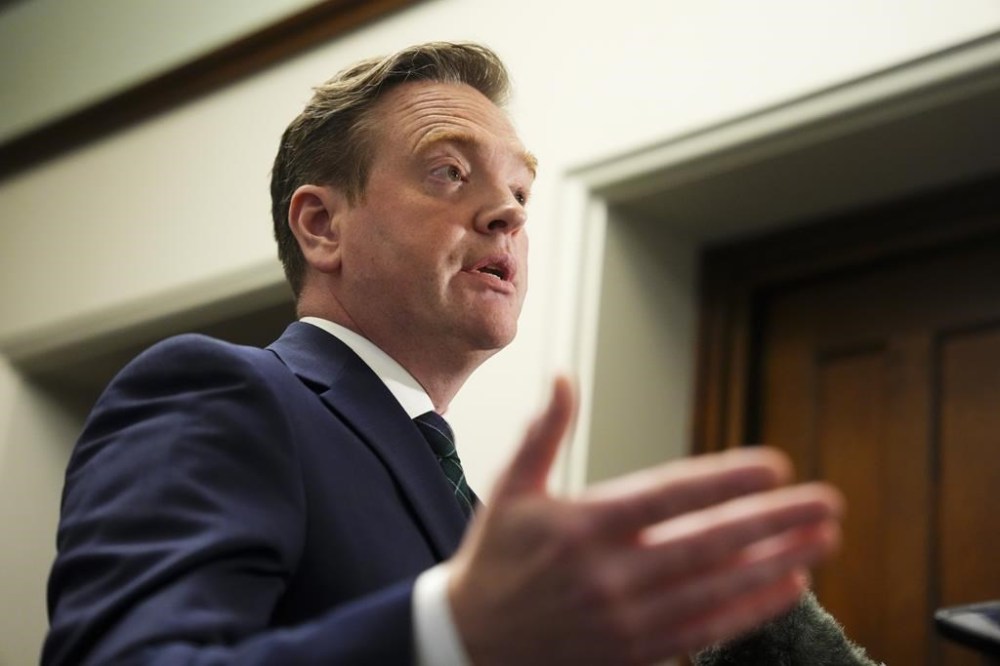
Universities Canada president and CEO Gabriel Miller speaks to reporters after appearing as a witness at a House of Commons standing committee on Justice and Human Rights on Parliament Hill in Ottawa on Monday, May 27, 2024. Universities Canada says international student enrolment has fallen below the cap the federal government set on international student visas this year. THE CANADIAN PRESS/Sean Kilpatrick

“The drop just within universities will be well beyond that,” said Gabriel Miller, president of Universities Canada.

“This is a hit, a national hit to university budgets that we haven’t seen in modern memory.”

The cap created uncertainty for prospective students, and the Immigration Department’s pause in visa processing while the government implemented the changes may have led those students to look elsewhere, he said.

“The most important piece of feedback we’ve heard is just real uncertainty and confusion about what kind of opportunities there are going to be to come and study in Canada, and what the rules would be,” he said.

Miller said the full impact won’t be clear until schools see how many students turn up in September.

There has been an overall decrease in intake and approvals in 2024 compared to the same period in 2023, Immigration, Refugees and Citizenship Canada said in a statement Friday.

The department agrees it’s too early to fully assess the impact of the cap on study permit applications, since the busiest months for permit processing are August and September.

In the first half of this year, 244,895 new study permits came into effect, according to data released by the Immigration Department.

That’s a 2.6 per cent increase in the number of new student visas compared to the first half of 2023. The number of study permits issued from July 2024 onward is not yet available.

“The full effects of implementing the cap will be more accurately represented in statistics on study permits when we tally the total number of study permits issued for the fall 2024 season, as well as considering those for the winter 2024 season, and once students start to arrive,” the department said in a statement Friday,

The temporary cap announced in January is expected to last two years, and is intended to give the federal and provincial governments time to ensure international student programs are sustainable and have integrity.

The government also introduced new limits on work permits for students, their spouses, and postgraduates.

There have been several reports that outline cases of fraud and bad actors taking advantage of students from abroad, in some cases offering a dubious education in return for their higher tuition.

Immigration Minister Marc Miller was not available for an interview on Friday, but in January he admitted that even though they had put a lot of thought into it, the cap was a “blunt” measure by the federal government.

“This is something we need to rein in,” he said at the time.

The changes are part of a larger effort to curb the booming number of temporary residents and slow Canada’s population growth, but the consequences are potentially massive for universities and colleges. A 2020 report by the Higher Education Strategy Associates found that international student tuition made up 13 per cent of the post-secondary system’s income in 2019, up from just four per cent in 2007.

The federal government’s next steps will be of critical importance for Canada’s post-secondary institutions, the Universities Canada president said.

“What happens in the next month or two is going to decide whether we start to recover, and the country can continue to compete for the very best and brightest and most talented people our economy needs, or whether we’re going to be at a disadvantage for many years to come,” he said.

What he hopes for now is that the federal government won’t make any more changes that could stall attempts to attract students in the near term.

After that, schools are looking for a better, more finely tuned strategy with responsible targets, “and then work with the provinces and universities to make sure we have the services and the infrastructure and the housing in place for this to work long term.”

This report by The Canadian Press was first published Aug. 30, 2024.

Report Error Submit a Tip

More Stories

Province takes aim at ER wait times by adding community-care capacity to free up hospital beds

Chris Kitching 5 minute read Preview

Province takes aim at ER wait times by adding community-care capacity to free up hospital beds

Chris Kitching 5 minute read Yesterday at 6:30 PM CDT

The province is aiming to free up hospital beds and cut wait times by adding 103 community-based care spaces in Winnipeg for patients who need shelter or specialized supports in order to be discharged.

Read
Yesterday at 6:30 PM CDT

International student enrolment drops below federal cap: Universities Canada

Laura Osman, The Canadian Press 5 minute read Preview

International student enrolment drops below federal cap: Universities Canada

Laura Osman, The Canadian Press 5 minute read Friday, Aug. 30, 2024

OTTAWA - Fewer students are coming from abroad to study at Canadian universities this fall, and Universities Canada is warning that the numbers have dropped below the cap the federal government set on international student visas this year.

The immigration minister announced a cap in January as a way to quell the rapid increase in the number of international students, citing pressure on housing, health care and other services.

The new policy limits the number of student visa applications the government would accept into processing, and that was expected to result in a 35 per cent drop in the number of students in 2024 compared to last year.

"The drop just within universities will be well beyond that," said Gabriel Miller, president of Universities Canada.

Read
Friday, Aug. 30, 2024

PCs call for crackdown on property crime

Nicole Buffie 4 minute read Preview

PCs call for crackdown on property crime

Nicole Buffie 4 minute read 6:17 PM CDT

A Progressive Conservative government would open a Crown prosecutor’s office dedicated to dealing with property crime.

Interim party leader Konrad Narth made the announcement Wednesday flanked by colleagues in front of a boarded up 7-Eleven on Main Street. Narth promised to hire 25 prosecutors who would focus on property theft, which he said is the type of crime attorneys have been inundated with in recent years.

Narth said crime has increased under the NDP government and pledged to crack down on thieves in Winnipeg and rural areas, if the PCs win power in the next provincial election, due on or before Oct. 5, 2027.

“Under this premier, Manitoba’s crime rate is 81 per cent above the national average. Property crime represents 58 per cent of crimes committed, an increase of nearly 25 per cent since Wab Kinew and the NDP took office,” Narth said, citing numbers from Statistics Canada. “In Winnipeg, the rise of property crime has significantly increased the cost of doing business and forced many businesses to now close their doors.”

Read
6:17 PM CDT

Duo accused in random Osborne Village attacks no strangers to police

Dean Pritchard and Chris Kitching 5 minute read Preview

Duo accused in random Osborne Village attacks no strangers to police

Dean Pritchard and Chris Kitching 5 minute read Updated: Yesterday at 6:48 PM CDT

A man arrested following a violent, random attack on two men in Osborne Village late Sunday night was released from jail a week earlier after a dozen charges, including crimes of violence, were stayed against him, court records show.

A man in his 40s was sent to hospital in critical condition and another man in his 20s in stable condition following separate attacks shortly before midnight in the vicinity of River Avenue and Osborne Street.

Police have charged Reginald Owen, 26, and Meaghan Owen, 32, both from Little Grand Rapids, with assault with a weapon and aggravated assault. They both remain in custody.

Court records show Reginald Owen was sentenced Sept. 24 to 30 days time served after pleading guilty to simple possession of magic mushrooms. Owen remained in custody until the following day when he was set to apply for bail on charges including assault, sexual assault, choking to overcome resistance, pointing a firearm, and carrying a concealed weapon.

Read
Updated: Yesterday at 6:48 PM CDT

Police seize cocaine valued at $1.5M, about $750K in cash in raid on St. Vital house

Scott Billeck 5 minute read Preview

Police seize cocaine valued at $1.5M, about $750K in cash in raid on St. Vital house

Scott Billeck 5 minute read Yesterday at 3:30 PM CDT

A St. Vital homeowner and her husband were going about their business during an afternoon last month when police officers in tactical gear suddenly appeared, walking across their front lawn.

The target was a few doors down: a maroon bi-level home on a quiet stretch of Satinwood Place, within earshot of children playing outside at a nearby school.

The homeowner, who asked not to be named to protect their privacy, said the police presence caught the couple by surprise in the Southglen neighbourhood, where they weren’t accustomed to seeing that kind of activity.

“We never heard the (police) cars pull up, but there were cars blocking the entrance to the street from both sides,” said the neighbour. “They had a shield, a battering ram — everything. Just not used to seeing that.”

Read
Yesterday at 3:30 PM CDT

Mayoral candidates Klein, Vogiatzakis continue to snipe over inducement allegations

Chris Kitching and Joyanne Pursaga 6 minute read Preview

Mayoral candidates Klein, Vogiatzakis continue to snipe over inducement allegations

Chris Kitching and Joyanne Pursaga 6 minute read Monday, Oct. 5, 2026

Winnipeg mayoral candidate Mike Vogiatzakis told reporters Monday he will contact the city clerk to report his allegation that rival Kevin Klein offered him a job to drop out of the race.

Vogiatzakis and Klein both doubled down a day after accusing each other of offering the other a position at city hall, if they were victorious in the Oct. 28 election, in exchange for a withdrawal.

“Do I want to get him charged? Not really. I don’t want to destroy anybody’s life,” Vogiatzakis told reporters.

“Kevin’s a good guy. I thought he was a friend of mine, but he’s not. Kevin uses leverage to get ahead, and he tried to use me as leverage.”

Read
Monday, Oct. 5, 2026