

Poland holds a state burial for more than 700 victims of Nazi Germany’s World War II massacres
Advertisement
Read this article for free:
or
Already have an account? Log in here »
To continue reading, please subscribe:

Digital Subscription
One year of digital access for only $205*
- Enjoy unlimited reading on winnipegfreepress.com
- Read the E-Edition, our digital replica newspaper
- Access News Break, our award-winning app
- Play interactive puzzles
*First annual payment billed as $205.00 + GST for one year. This annual subscription will automatically renew at $233.00 + GST every 52 weeks (10% off the regular annual price of $259.35). Offer available to new and qualified returning subscribers only. Cancel any time.
To continue reading, please subscribe:
Add Free Press access to your Brandon Sun subscription for only an additional
$1 for the first 4 weeks*
- Enjoy unlimited reading on winnipegfreepress.com
- Read the E-Edition, our digital replica newspaper
- Access News Break, our award-winning app
- Play interactive puzzles
*Your next Brandon Sun subscription payment will increase by $1.00 and you will be charged $17.95 plus GST for four weeks. After four weeks, your payment will increase to $24.95 plus GST every four weeks.
Read unlimited articles for free today:
or
Already have an account? Log in here »
Hey there, time traveller!
This article was published 02/09/2024 (750 days ago), so information in it may no longer be current.
WARSAW, Poland (AP) — Poland held a state burial Monday for more than 700 victims of Nazi Germany’s World War II mass executions, whose remains were recently uncovered in the so-called Valley of Death in the country’s north, decades after their deaths.
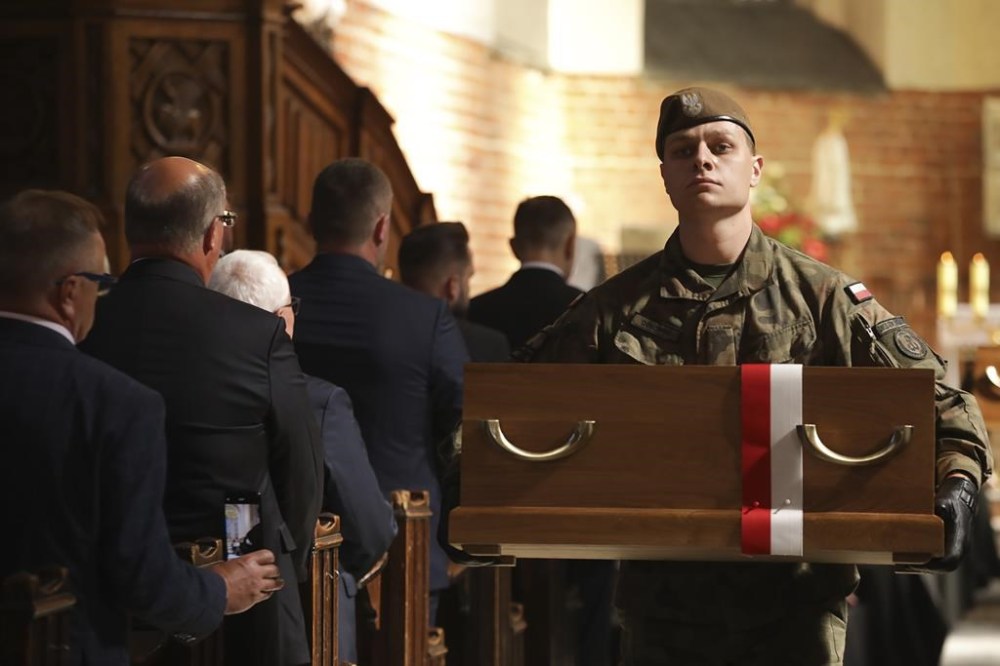
The observances in the town of Chojnice began with a funeral Mass at the basilica, leading to an interment with military honors at a local cemetery of the victims of the Nazi crimes. The remains were contained in 188 small wooden coffins with ribbons in national white and red colors across them.
Joining the events were relatives of the victims, an aide to President Andrzej Duda, local authorities and top officials of the state National Remembrance Institute, which carried out and documented the exhumations.
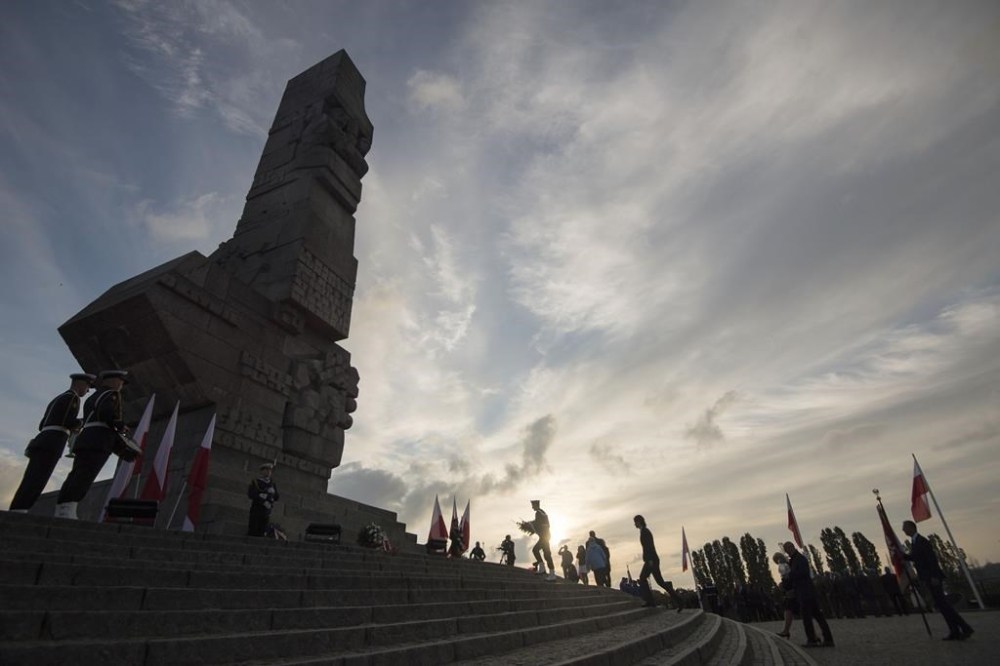
“We want to give back memory, we want to give back dignity to the victims of the crimes in Chojnice,” presiding Bishop Ryszard Kasyna said.
Duda said in a message that the only reason the victims were killed by the Nazis was because they were Polish and said they would always be held in the national memory.
The remains of Polish civilians, including 218 asylum patients, were exhumed in 2021-2024 from a number of separate mass graves on the outskirts of Chojnice. Personal belongings and documents helped identify around 120 of the victims of an execution in early 1945. Among them were teachers, priests, police officers, forestry and postal workers, and landowners.
Historians have established that the Nazis, shortly after invading Poland on Sept. 1, 1939, executed some of the civilians, in a drive to subdue the nation. The remains of another 500 victims are from the January 1945 execution, when the Germans were fleeing the area. Bullets and shells from handguns used by German forces were found in the graves.
Experts will continue to comb the area for more mass graves of the so-called Pomerania Crime.
Poland lost 6 million citizens, or a sixth of its population, of which 3 million were Jewish, in the war. The country also suffered huge losses to its infrastructure, industry and agriculture.
___
This story has been corrected to show that an aide to President Andrzej Duda attended the events, not Duda himself.