Choice words
Carol Off’s new book weighs political power of language

Advertisement
Read this article for free:
or
Already have an account? Log in here »
To continue reading, please subscribe:

Digital Subscription
One year of digital access for only $205*
- Enjoy unlimited reading on winnipegfreepress.com
- Read the E-Edition, our digital replica newspaper
- Access News Break, our award-winning app
- Play interactive puzzles
*First annual payment billed as $205.00 + GST for one year. This annual subscription will automatically renew at $233.00 + GST every 52 weeks (10% off the regular annual price of $259.35). Offer available to new and qualified returning subscribers only. Cancel any time.
To continue reading, please subscribe:
Add Free Press access to your Brandon Sun subscription for only an additional
$1 for the first 4 weeks*
- Enjoy unlimited reading on winnipegfreepress.com
- Read the E-Edition, our digital replica newspaper
- Access News Break, our award-winning app
- Play interactive puzzles
*Your next Brandon Sun subscription payment will increase by $1.00 and you will be charged $17.95 plus GST for four weeks. After four weeks, your payment will increase to $24.95 plus GST every four weeks.
Read unlimited articles for free today:
or
Already have an account? Log in here »
Hey there, time traveller!
This article was published 13/09/2024 (723 days ago), so information in it may no longer be current.
Growing up in North Kildonan in the 1950s and ’60s, Carol Off watched first-hand as a melting pot of relatively new and longtime Canadians hashed out the issues of the day over back fences, sharing their thoughts on the world in a respectful, convivial manner.
Oh, how times have changed.
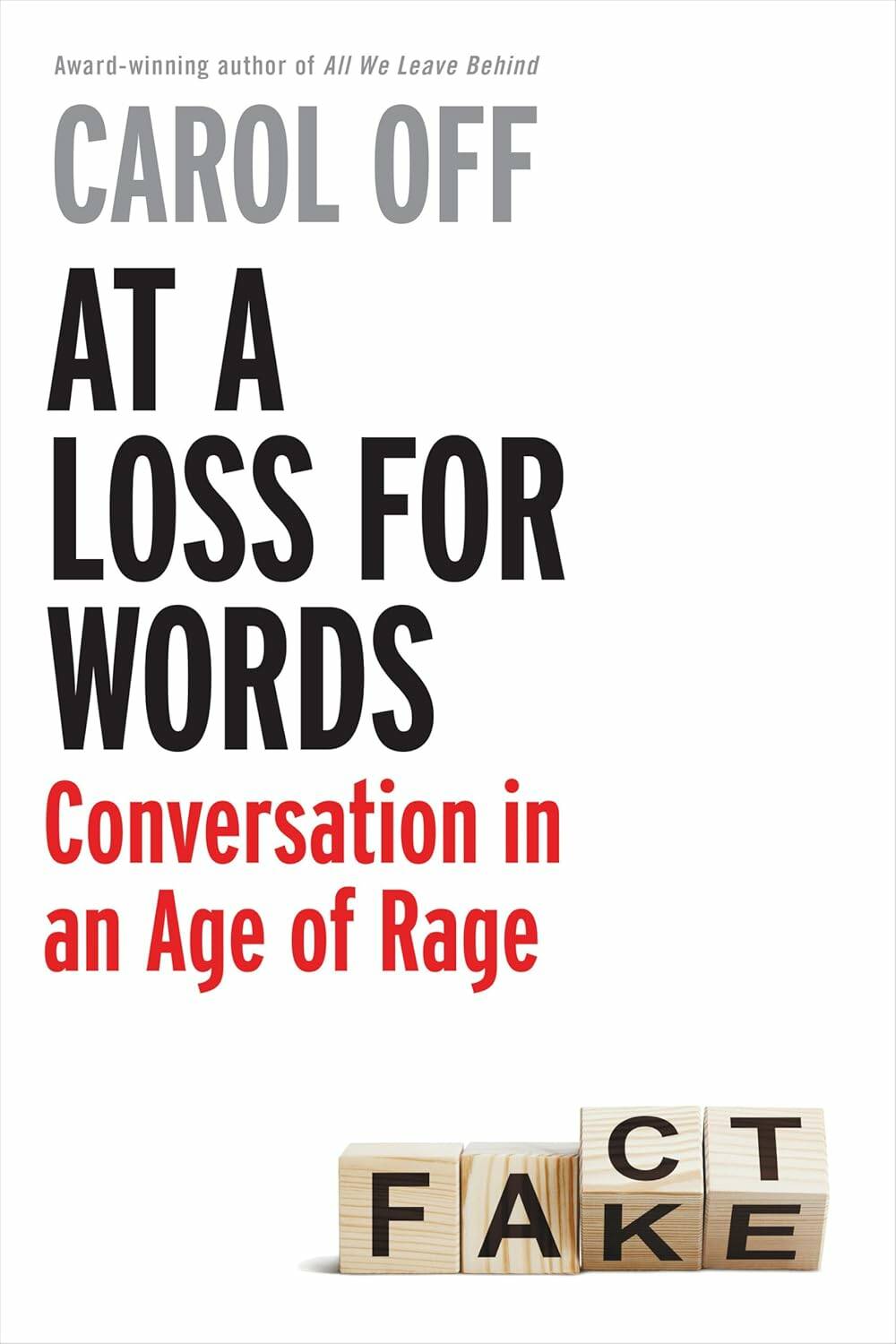
Her new book At a Loss for Words: Conversation in an Age of Rage, published on Sept. 3 by Random House Canada, explores the ways in which the language we use in conversation and politics has been co-opted by radical elements, and traces the way our dialogue has become increasingly angry and divisive.
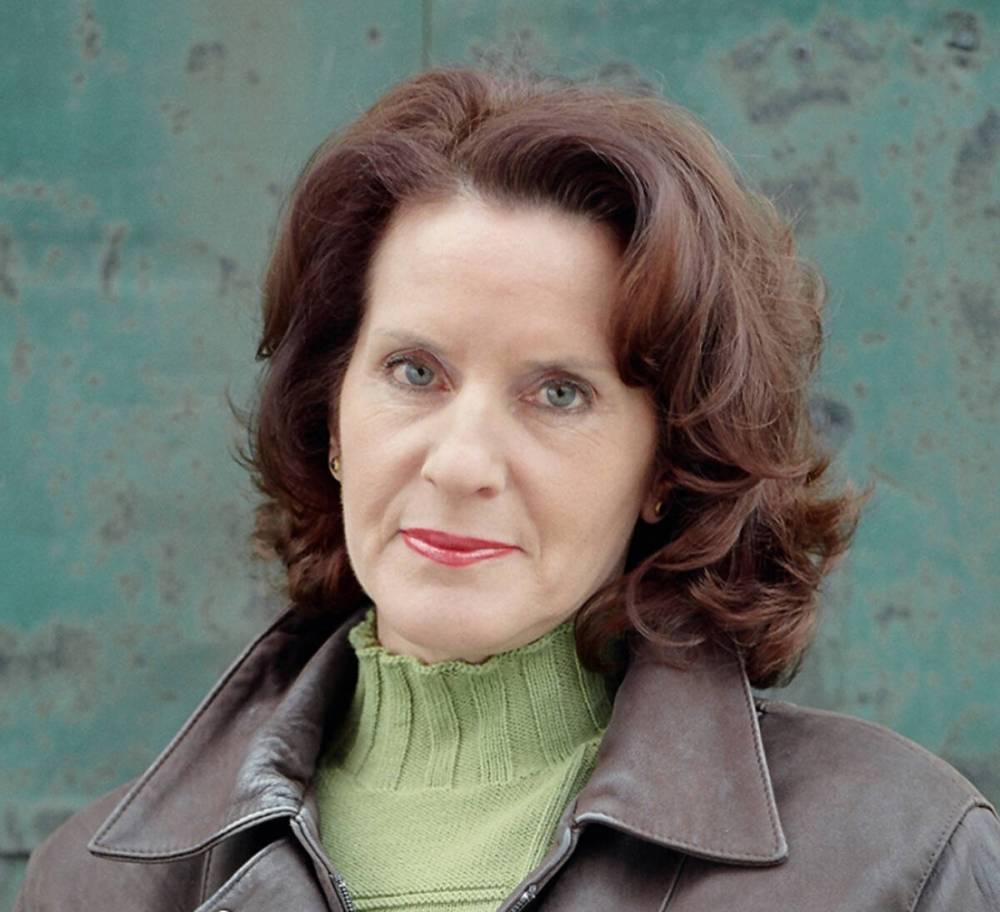
SUPPLIED
Former CBC Radio host Carol Off
Off launches the book in Winnipeg on Sunday at 2 p.m., where she’ll be joined in a surely civil conversation by Terry MacLeod.
Off’s family would end up picking up roots and moving east; she would go on to work in the field as a reporter for CBC before becoming host of the long-running radio program As It Happens.
In that time, particularly in more recent days, she’s seen the rhetoric of division flare up across the political spectrum.
The days of respectful backyard chats, she feels, have come and gone.
The genesis of At a Loss for Words came while Off was still hosting As It Happens, a position she held for 16 years before giving up the host’s chair in 2022.
“My sense from doing interviews and conversations with people, especially with Americans, was that they were so angry with each other,” she says in advance of her Winnipeg launch. “I could see the divisions were just widening.”
In At a Loss for Words, Off weighs in on how six words — democracy, truth, woke, choice, freedom and taxes — have been co-opted and distorted, particularly by the far right, in our current incendiary political climate.
Sharing her own opinions, rather than moderating discussions with others as a journalist, proved both challenging and rewarding.
“The decision to be sort of ‘Carol Off unplugged’ was a big one, but I felt I had earned the right to do it,” she says, laughing.
“I felt that after decades in the trenches, whether it was at As It Happens or all the years I spent in the field, I had gathered enough experience and had seen enough things that I felt qualified to step outside the role and say ‘This is how I see it’ — hopefully not in a way that seems that I’m just going off on things, but rather with an informed point of view of having seen how things can turn out.”
That informed point of view includes having seen the rise of authoritarian regimes in the world, and the violence and casualties that can ensue.
“‘I would get dispatched to cover some horrible things around the world at a time when everything had boiled over — like in the former Yugoslavia,” she says, referring to events in that part of the world in the 1980s and ’90s.
“But when I would dig into things, I would discover they’d actually begun much earlier, sowing the rhetoric of division and rancour and driving wedges between people, developing a narrative of hate for others. Because that’s how people can gain power — through those divisions and creating that adversarial condition.”
In recent years, Off has seen those adversarial conditions rise again, this time in North America — with Donald Trump’s election in 2016, in the attack on the U.S. Capitol building on Jan. 6, 2021, and on this side of the border during the so-called “freedom convoy” in Ottawa in 2022, which took place during the COVID-19 pandemic.
While this divisiveness might be most visible in the U.S., it’s similarly fractious in Canada.
SUPPLIED
Off’s book looks at ways words and language can be distorted to sow political division.
“I feel an urgency about Canada that I didn’t feel at the beginning of the book, but as the two years went on, in writing it, I began to see so many signs, really worrying signs. Things are so tense — you see moments of visceral ugliness that I’ve never seen in Canada before,” she says, noting the ways Conservative Party leader Pierre Poilievre has adopted talking points not unlike those of Donald Trump.
“I see Pierre Poilievre using the language of division, this us-against-them, warning Canadians against this shadowy ‘other’ out there, these globalists, the woke menace. We have no idea what those things are. I think we make a mistake trying to imitate what’s going on in the United States.”
Off is hopeful people on both sides of the border, and across the political spectrum, will move away from angry rhetoric and begin trying to work on coming back together, on reclaiming words that have come to be divisive.
“(U.S. Vice-President) Kamala Harris walked onstage (at a rally) and talked about freedom, about getting past all this rancour, away from the rage farming. I don’t know if she’ll be president, or if she’d even be a good president, but it was just so refreshing to hear her say some of the things I hoped people would start saying,” Off says.
The grassroots community movements arising in response to the divisive nature of the current political climate also give Off hope.
“We don’t want to live with these kinds of divisions, in this world of rage. I see what’s happening on the social level — people forming groups, helping their neighbours, working out problems, trying to block out the noise from the extremes on both the left and the right who are co-opting our conversations. People in the middle are starting groups and organizations across Canada, across the United States, where they get together and try to find common solutions to local problems,” she says.

In holding out hope for the future, Off recognizes how her north Winnipeg roots have shaped her lingering sense of optimism.
“In the ’50s and ’60s, Europeans who settled in North Winnipeg … had just been in the most murderous war in the history of the human species a decade earlier, killing each other by the tens of millions. And there they were, working out their individual problems over the back garden gate in West Kildonan,” she says.
“They wanted to live in a society that took care of each other — that’s where I came from. I don’t want to be nostalgic about it because I don’t think we just go back to where things were, but that’s my model for how a society can work. And I live by that.”
ben.sigurdson@freepress.mb.ca
@bensigurdson
Ben Sigurdson
Literary editor, drinks writer
Ben Sigurdson is the Free Press‘s literary editor and drinks writer. He graduated with a master of arts degree in English from the University of Manitoba in 2005, the same year he began writing Uncorked, the weekly Free Press drinks column. He joined the Free Press full time in 2013 as a copy editor before being appointed literary editor in 2014. Read more about Ben.
In addition to providing opinions and analysis on wine and drinks, Ben oversees a team of freelance book reviewers and produces content for the arts and life section, all of which is reviewed by the Free Press’s editing team before being posted online or published in print. It’s part of the Free Press‘s tradition, since 1872, of producing reliable independent journalism. Read more about Free Press’s history and mandate, and learn how our newsroom operates.
Our newsroom depends on a growing audience of readers to power our journalism. If you are not a paid reader, please consider becoming a subscriber.
Our newsroom depends on its audience of readers to power our journalism. Thank you for your support.
Event preview
An afternoon with Carol Off
Launching At a Loss for Words: Conversation in an Age of Rage
● Sunday, 2 p.m.
● McNally Robinson Booksellers, Grant Park, 1120 Grant Ave.
● Free
Ben Sigurdson
Literary editor, drinks writer
Ben Sigurdson is the Free Press‘s literary editor and drinks writer. He graduated with a master of arts degree in English from the University of Manitoba in 2005, the same year he began writing Uncorked, the weekly Free Press drinks column. He joined the Free Press full time in 2013 as a copy editor before being appointed literary editor in 2014. Read more about Ben.
In addition to providing opinions and analysis on wine and drinks, Ben oversees a team of freelance book reviewers and produces content for the arts and life section, all of which is reviewed by the Free Press’s editing team before being posted online or published in print. It’s part of the Free Press‘s tradition, since 1872, of producing reliable independent journalism. Read more about Free Press’s history and mandate, and learn how our newsroom operates.
Our newsroom depends on a growing audience of readers to power our journalism. If you are not a paid reader, please consider becoming a subscriber.
Our newsroom depends on its audience of readers to power our journalism. Thank you for your support.
Related Articles
Extremists’ weaponizing of key words could lead to dire consequences
Advertisement Advertise With Us
Advertisement Advertise With Us