

NAACP president urges Missouri governor to halt execution planned for next week
Advertisement
Read this article for free:
or
Already have an account? Log in here »
To continue reading, please subscribe:

Digital Subscription
One year of digital access for only $205*
- Enjoy unlimited reading on winnipegfreepress.com
- Read the E-Edition, our digital replica newspaper
- Access News Break, our award-winning app
- Play interactive puzzles
*First annual payment billed as $205.00 + GST for one year. This annual subscription will automatically renew at $233.00 + GST every 52 weeks (10% off the regular annual price of $259.35). Offer available to new and qualified returning subscribers only. Cancel any time.
To continue reading, please subscribe:
Add Free Press access to your Brandon Sun subscription for only an additional
$1 for the first 4 weeks*
- Enjoy unlimited reading on winnipegfreepress.com
- Read the E-Edition, our digital replica newspaper
- Access News Break, our award-winning app
- Play interactive puzzles
*Your next Brandon Sun subscription payment will increase by $1.00 and you will be charged $17.95 plus GST for four weeks. After four weeks, your payment will increase to $24.95 plus GST every four weeks.
Read unlimited articles for free today:
or
Already have an account? Log in here »
Hey there, time traveller!
This article was published 18/09/2024 (703 days ago), so information in it may no longer be current.
Executing a Black man in Missouri who says he was wrongfully convicted would amount to a “horrible miscarriage of justice,” the president of the NAACP said in a letter Wednesday calling on the governor to halt the execution planned for next week.
Prosecutors want to vacate the conviction of Marcellus Williams over doubts about evidence in the case, NAACP President Derrick Johnson pointed out in the letter obtained by The Associated Press. Relatives of the woman who was killed also oppose the execution.
Several efforts are underway to spare Williams’ life. Attorneys with the Midwest Innocence Project on Wednesday filed an emergency appeal with the U.S. Supreme Court seeking a stay. They’ve also asked a federal court and the Missouri Supreme Court to intervene, and asked Gov. Mike Parson to grant clemency.
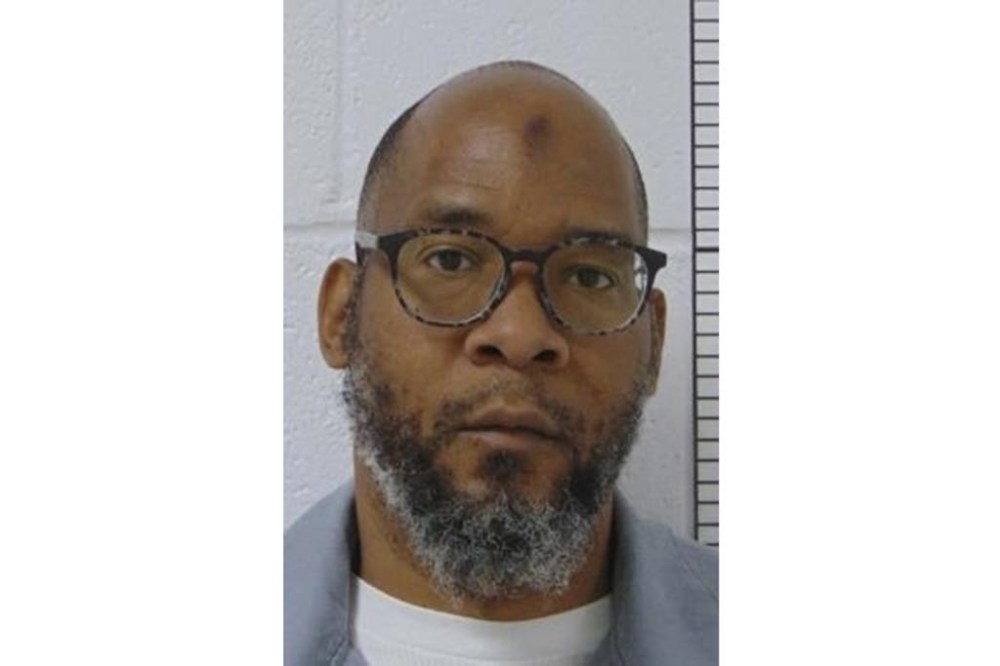
None of the physical evidence has linked Williams to the 1998 stabbing death of Lisha Gayle, according to a statement from the St. Louis County Prosecuting Attorney’s Office included in Johnson’s letter. Executing Williams would perpetuate a history of racial injustice in the use of the death penalty in Missouri and elsewhere, Johnson wrote. The NAACP is opposed to the death penalty.
“Taking the life of Marcellus Williams would be an unequivocal statement that when a white woman is killed, a Black man must die. And any Black man will do,” Johnson wrote.
Williams, 55, is scheduled to die by injection Tuesday despite an innocence claim strong enough to prompt Missouri’s previous governor to grant a last-minute reprieve in 2017. St. Louis County’s current prosecutor also was convinced that Williams’ murder conviction and death sentence should be thrown out.
Issues of racial bias in Williams’ conviction have been raised before.
Williams was convicted of first-degree murder in 2001. The prosecutor in the case, Keith Larner, testified at a hearing last month that the trial jury was fair, even though it included just one Black member on the panel.
Larner said he struck just three potential Black jurors, including one man because he looked too much like Williams. He didn’t say why he felt that mattered.
Williams narrowly escaped execution before. In August 2017, hours before his scheduled death, then-Gov. Eric Greitens, a Republican, granted a stay after reviewing DNA evidence that found no trace of Williams’ DNA on the knife used to kill Gayle. Greitens appointed a panel of retired judges to examine the case, but that panel never reached any conclusion.
That same DNA evidence prompted Democratic St. Louis County Prosecuting Attorney Wesley Bell to request a hearing challenging Williams’ guilt. But days before the Aug. 21 hearing, new testing showed that the DNA evidence was spoiled because members of the prosecutor’s office touched the knife without gloves before the original trial.
With the DNA evidence unavailable, Midwest Innocence Project attorneys reached a compromise with the prosecutor’s office: Williams would enter a new, no-contest plea to first-degree murder in exchange for a new sentence of life in prison without parole.
Judge Bruce Hilton signed off on the agreement, as did Gayle’s family. But at Republican Attorney General Andrew Bailey’s urging, the Missouri Supreme Court blocked the agreement and ordered Hilton to proceed with an evidentiary hearing.
Hilton ruled on Sept. 12 that the first-degree murder conviction and death sentence would stand.
“Every claim of error Williams has asserted on direct appeal, post-conviction review, and habeas review has been rejected by Missouri’s courts,” Hilton wrote. “There is no basis for a court to find that Williams is innocent, and no court has made such a finding.”
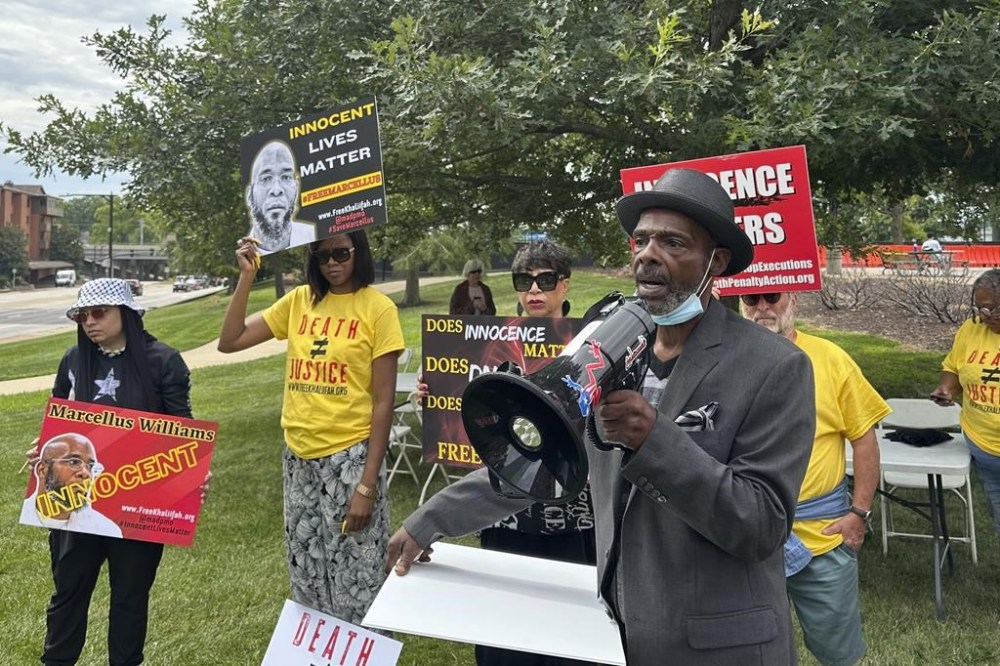
The clemency petition from the Midwest Innocence Project focuses heavily on how Gayle’s relatives want the sentence commuted to life without parole. “The family defines closure as Marcellus being allowed to live,” the petition states.
Parson, a Republican and a former county sheriff, has been in office for 11 executions, and has never granted clemency. His spokesman said a decision will likely come at least 24 hours before the scheduled execution.
Prosecutors at Williams’ original trial said he broke into Gayle’s home on Aug. 11, 1998, heard water running in the shower, and found a large butcher knife. When Gayle came downstairs, she was stabbed 43 times. Her purse and her husband’s laptop were stolen.
Authorities said Williams stole a jacket to conceal blood on his shirt. Williams’ girlfriend asked him why he would wear a jacket on a hot day. The girlfriend said she later saw the laptop in the car and that Williams sold it a day or two later.
Prosecutors also cited testimony from Henry Cole, who shared a cell with Williams in 1999 while Williams was jailed on unrelated charges. Cole told prosecutors Williams confessed to the killing and offered details about it.
Williams’ attorneys responded that the girlfriend and Cole were both convicted of felonies and wanted a $10,000 reward.
___
Whitehurst reported from Washington, D.C. Salter reported from O’Fallon, Missouri.