Flight recorders Amid global bird die-off, unique study in northern Manitoba discovers more species than previously known
Read this article for free:
or
Already have an account? Log in here »
To continue reading, please subscribe:

Digital Subscription
One year of digital access for only $205*
- Enjoy unlimited reading on winnipegfreepress.com
- Read the E-Edition, our digital replica newspaper
- Access News Break, our award-winning app
- Play interactive puzzles
*First annual payment billed as $205.00 + GST for one year. This annual subscription will automatically renew at $233.00 + GST every 52 weeks (10% off the regular annual price of $259.35). Offer available to new and qualified returning subscribers only. Cancel any time.
To continue reading, please subscribe:
Add Free Press access to your Brandon Sun subscription for only an additional
$1 for the first 4 weeks*
- Enjoy unlimited reading on winnipegfreepress.com
- Read the E-Edition, our digital replica newspaper
- Access News Break, our award-winning app
- Play interactive puzzles
*Your next Brandon Sun subscription payment will increase by $1.00 and you will be charged $17.95 plus GST for four weeks. After four weeks, your payment will increase to $24.95 plus GST every four weeks.
Read unlimited articles for free today:
or
Already have an account? Log in here »
Hey there, time traveller!
This article was published 23/09/2024 (724 days ago), so information in it may no longer be current.
A new study out of northern Manitoba is helping to make the case for Indigenous-led conservation amidst a global biodiversity crisis, putting the spotlight on Canada’s unique abundance of birds.
North America’s bird population has declined by nearly three billion in the last 50 years, according to the National Audubon Society. But within the 50,000 square kilometres of boreal forest and subarctic tundra that form the Seal River watershed’s proposed protected area, surveyors have found more than 100 bird species — far more than have ever been documented in the region.
“The total number was pretty astounding,” Jeff Wells, vice-president of Audubon’s boreal conservation program, said in an interview.
“It just continues to make the point of how special and important this watershed is.”
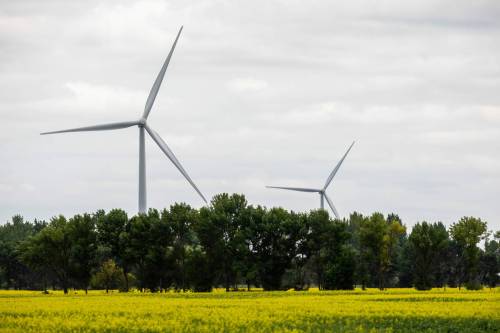
Jordan Melograna photo Efforts are underway to make the Seal River watershed a protected conservation area.
The Seal River watershed crosses three distinct geographic regions: the dense and boggy boreal forest, the transitional subarctic and the rocky, barren fields of the Arctic tundra.
The region’s heartbeat, its eponymous river, stretches from Shethanei Lake to Hudson Bay, where saltwater from the northern Arctic Ocean swells into fresh river water, creating a vibrant estuary home to seals, beluga whales, polar bears, fish — and lots of birds.
Previous research had already documented two dozen species of migrating waterfowl and shorebirds, but less has been known about the birds farther inland.
The bird study, a joint effort between the Audubon Society, an American non-profit focused on bird conservation, and the Seal River Watershed Alliance, a group of four northern First Nations working to protect Manitoba’s last major undammed river, found 102 bird species from more than 30 taxonomic families.
This study forms part of the multi-year process initiated in December 2023 when leaders from the four nations — the Sayisi Dene, Northlands Denesuline, Barren Lands First Nation and O-Pipon-Na-Piwin Cree Nation — signed an agreement with the provincial and federal governments to explore the development of a protected area. The process is currently focused on ongoing consultation with members of the four nations, and collecting feedback from across Canada, including more than 30,000 letters of support.
Some of the birds are well-known symbols of Canadian identity: the Canada goose, common loon and rock ptarmigan, to name a few.
Brent Cizek photo Common loon sightings were not uncommon. 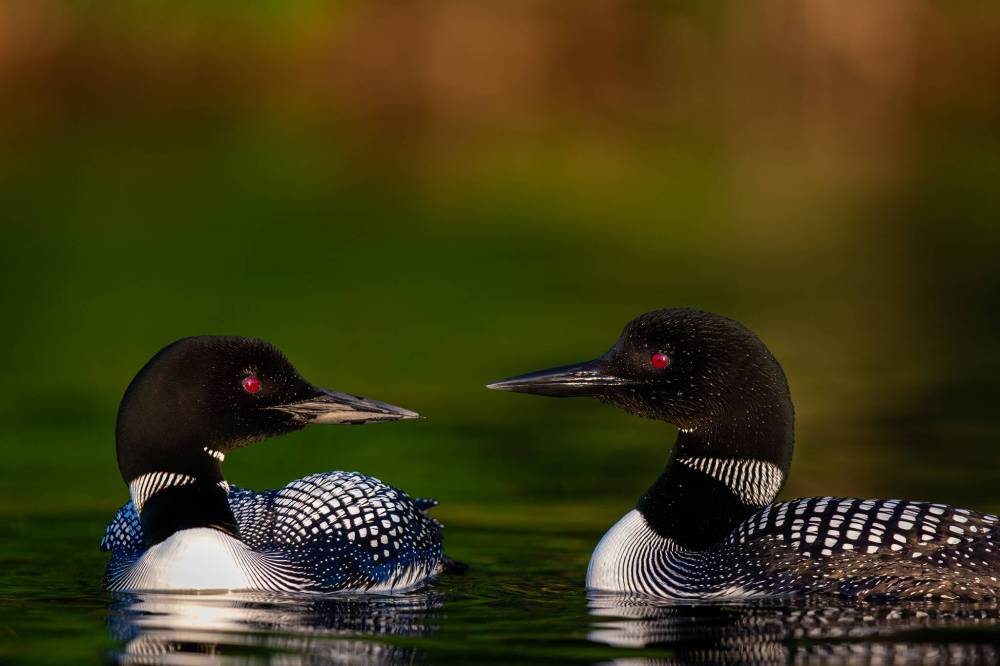
But others are perhaps less familiar to the non-birding enthusiast, like the American wigeon, a type of “compact duck”, Philadelphia vireo, a small, rare treetop dweller, and the sora, a comically chubby bird with stubby wings, a yellow beak and long neon green legs.
Many are considered species in decline and are protected by Canada’s Species At Risk Act and Committee on the Status of Endangered Wildlife in Canada.
“We have a remarkable opportunity here because the watershed is still full of so much song, still full of so many birds,” Stephanie Thorassie, executive director of the alliance, wrote in the foreword to the study.
Birds, like most other land and water species across the globe, have been affected by habitat loss from human activity. Add the impacts of climate change — widespread fires, extreme heat, drought, rain and cold — and the birds “are pushed to a higher level of stress,” Wells explained.
“The footprint of human activity is so massive that it’s really impacted birds,” he said.
Breeding birds have lost their nesting grounds to agricultural developments and urban expansion, while migratory birds now have to navigate “a maze of threats” as they travel between their winter habitat and summer breeding grounds.
That’s what makes large, intact ecosystems like the Seal River watershed so important.
Take, for example, the lesser yellowlegs — a graceful, spindly legged shorebird that travels as far as South America in the winter, but only breeds in the northern boreal forest. The lesser yellowlegs is threatened; it’s estimated the bird’s population has declined by 60 to 80 per cent in the last 40 years.
Michael Riccio photo The lesser yellowlegs is considered a threatened species. It’s estimated the population has declined by 60 to 80 per cent in the last 40 years.
But yellowlegs appear in abundance in the Seal River, popping up at all but a handful of the study’s survey sites.
“It’s the only place where you can make more of them,” Wells said with a laugh.
Maintaining the bird’s breeding habitat is critical to supporting their populations — and conserving that habitat relies on Indigenous protection, he added.
“With this vast area in Canada of boreal forest, Arctic and marine areas that host billions of breeding birds, the way to see those birds continue to be healthy is completely intertwined with the work of Indigenous communities,” Wells said.
In remote areas, birding is hard work. Difficult terrain, changing seasons, bugs, weather and wildlife can make it challenging to send researchers into the wild for hours on end to listen for the distinct trills, whistles and chirps of birdsong.
The last large-scale bird study up north was the Manitoba breeding bird atlas, completed in 2014, which relied on “a handful of surveys over a couple of small areas in the whole watershed,” Wells said, and found fewer than 70 bird species across the Seal River region.
This time, Audubon and the alliance wanted to do things differently.
Surveyors set up programmable recording devices in the trees at 28 sites near Tadoule Lake, which switched on each morning through the spring and summer of 2021 through 2023.
They collected more than 12,000 hours of recordings, which they fed into a machine-learning tool trained to identify birdsong. Predictions were manually verified by researchers.
The result was a broader understanding of the region’s winged creatures.
Wells was surprised to hear the whistle of a magnolia warbler and piercing trills of the cedar waxwing far further north than their typical summer ranges.
The data, he explained, will help researchers understand the “little tantalizing mysteries” of bird migration and distribution, like whether some are moving north as a result of climate change.
Most importantly, Thorassie said in an interview, it’s supporting First Nations’ land-monitoring work.
“Often it’s our community members just driving the boat for scientists that come in,” Thorassie said. “They do whatever they’re doing and then they leave, and we never see the reports.”
This project was different. The Audubon society turned to community members to drive the research, Thorassie explained. Elders, land users and members of the alliance’s land guardian program decided where recording devices would be placed based on their knowledge of the landscape, oral histories, stories and memories. Land guardians then installed the units and collected the recordings.
Land guardians led an initiative to include a glossary of Indigenous bird names as an appendix to the study. The 102 species spotted in the watershed are listed in English, Dene, Cree and syllabics from each of the four nations, based on interviews with elders.
“It was really beautiful to see the sense of ownership the community members feel about this data because of being a part of the process from the beginning,” Thorassie said.
While the research has practical applications, it’s also brought a lot of inspiration — especially for the community’s youth.
Since the project wrapped up, Wells said, some of the guardians have become fervent birders.
Cole Parks photo Yellow-rumped Warbler was among species recorded.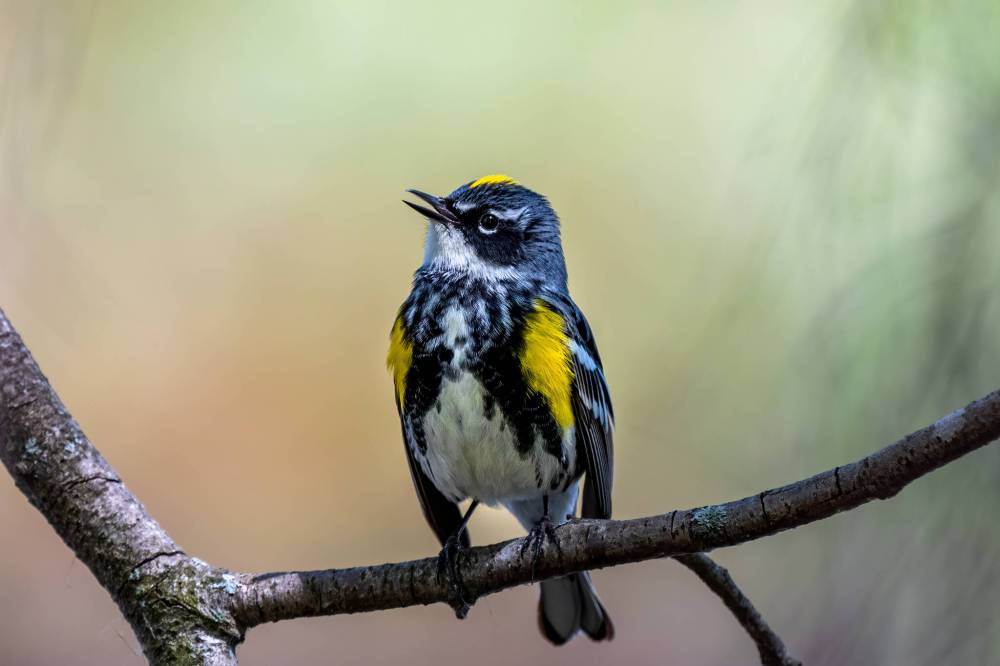
Some land guardians traveled to Maine to spend time with the Audubon Society to learn about bird tagging and monitoring. Next month, Audubon and the alliance hope to bring the land guardians to Colombia, to take part in this year’s United Nations biodiversity conference (COP16) as well as a cultural exchange with Indigenous communities who steward many of the same species that eventually migrate to Hudson Bay.
“These are life-changing opportunities,” Thorassie said.
As youth in remote northern First Nations navigate resource gaps and confront the lasting impacts of generational trauma, the opportunities to contribute to these projects can bring hope and purpose, she added.
“Conservation is bigger than just the environment and the animals and the water. Environmental conservation includes the people, because you can’t have nature without the people that are from that area,” Thorassie said.
julia-simone.rutgers@freepress.mb.ca

Julia-Simone Rutgers is an investigative reporter who joined the Free Press in 2020. Read more about Julia-Simone.
Every piece of reporting Julia-Simone produces is reviewed by an editing team before it is posted online or published in print — part of the Free Press‘s tradition, since 1872, of producing reliable independent journalism. Read more about Free Press’s history and mandate, and learn how our newsroom operates.
Our newsroom depends on a growing audience of readers to power our journalism. If you are not a paid reader, please consider becoming a subscriber.
Our newsroom depends on its audience of readers to power our journalism. Thank you for your support.
Related Articles
Killings of invasive owls to ramp up on US West Coast in a bid to save native birds