

Court to hear appeal arguments over challenge to Saskatchewan’s pronoun law
Advertisement
Read this article for free:
or
Already have an account? Log in here »
To continue reading, please subscribe:
Monthly Digital Subscription
$0 for the first 4 weeks*
- Enjoy unlimited reading on winnipegfreepress.com
- Read the E-Edition, our digital replica newspaper
- Access News Break, our award-winning app
- Play interactive puzzles
*No charge for 4 weeks then price increases to the regular rate of $19.00 plus GST every four weeks. Offer available to new and qualified returning subscribers only. Cancel any time.
Monthly Digital Subscription
$4.75/week*
- Enjoy unlimited reading on winnipegfreepress.com
- Read the E-Edition, our digital replica newspaper
- Access News Break, our award-winning app
- Play interactive puzzles
*Billed as $19 plus GST every four weeks. Cancel any time.
To continue reading, please subscribe:
Add Free Press access to your Brandon Sun subscription for only an additional
$1 for the first 4 weeks*
*Your next subscription payment will increase by $1.00 and you will be charged $16.99 plus GST for four weeks. After four weeks, your payment will increase to $23.99 plus GST every four weeks.
Read unlimited articles for free today:
or
Already have an account? Log in here »
Hey there, time traveller!
This article was published 23/09/2024 (443 days ago), so information in it may no longer be current.
REGINA – Saskatchewan’s Appeal Court is set to hear arguments over the next two days about a provincial law that requires parental consent when children under 16 want to change their names or pronouns at school.
A judge ruled earlier this year a challenge of the law could continue, even though the government invoked the notwithstanding clause to override certain Charter rights.
The province has asked the Court of Appeal to quash that ruling, arguing use of the notwithstanding clause should end the legal dispute.
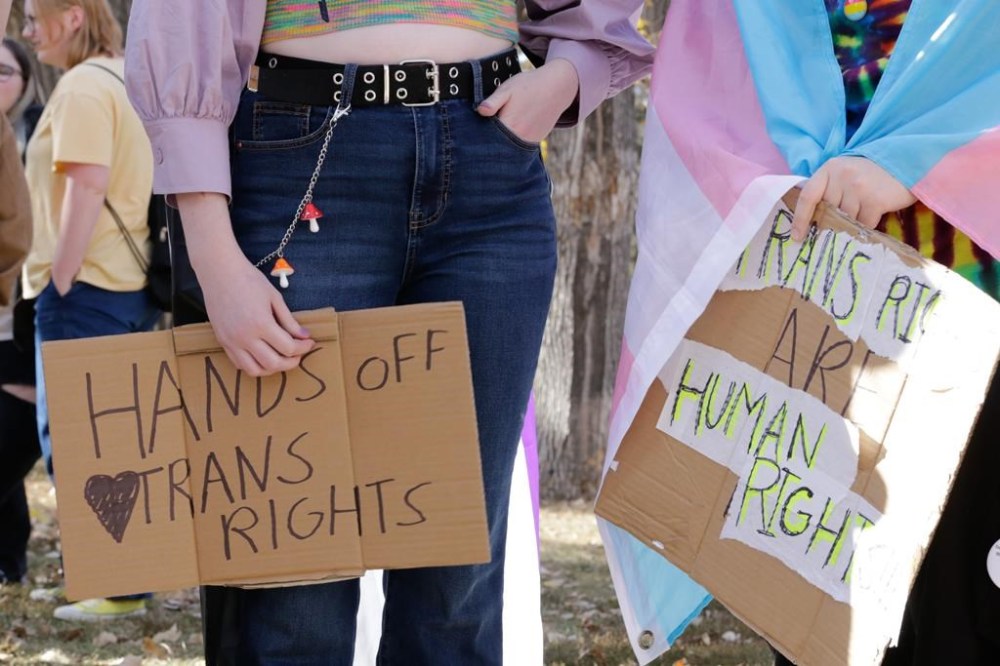
Lawyers for UR Pride, an LGBTQ+ group that brought forward the challenge, argue the law causes irreparable harm to gender diverse youth and the case should go forward.
They also say the law forces youth to come out or be misgendered and misnamed at school.
The governments of Alberta and New Brunswick have intervened in the case on the side of Saskatchewan, saying parents have ultimate authority over the lives of their children.
New Brunswick has also enforced a pronoun rule that requires parents’ consent for pronoun or name changes for students under 16. The Alberta government has said it plans to introduce legislation this fall that would require parental consent for students under 16.
UR Pride has argued that the court could declare a violation of the Charter, even if making such a declaration does not strike down the law.
The Court of King’s Bench judge had permitted UR Pride to amend its case and argue the law violates the section of the Charter that guarantees the right to be free from cruel and unusual treatment.
The province has argued the judge shouldn’t have allowed the change. The province invoked the clause over three sections of the Charter that guarantee freedom of expression, liberty and equal protection.
Last year, Saskatchewan’s Human Rights Commission asked the province to consider not passing the law after one of its commissioners resigned in protest.
Saskatchewan’s child advocate has also said the policy violates rights to gender identity and expression.
This report by The Canadian Press was first published Sept. 23, 2024.