‘Not much has changed’: Indigenous physicians reflect on health care in Canada
Advertisement
Read this article for free:
or
Already have an account? Log in here »
To continue reading, please subscribe:

Digital Subscription
One year of digital access for only $205*
- Enjoy unlimited reading on winnipegfreepress.com
- Read the E-Edition, our digital replica newspaper
- Access News Break, our award-winning app
- Play interactive puzzles
*First annual payment billed as $205.00 + GST for one year. This annual subscription will automatically renew at $233.00 + GST every 52 weeks (10% off the regular annual price of $259.35). Offer available to new and qualified returning subscribers only. Cancel any time.
To continue reading, please subscribe:
Add Free Press access to your Brandon Sun subscription for only an additional
$1 for the first 4 weeks*
- Enjoy unlimited reading on winnipegfreepress.com
- Read the E-Edition, our digital replica newspaper
- Access News Break, our award-winning app
- Play interactive puzzles
*Your next Brandon Sun subscription payment will increase by $1.00 and you will be charged $17.95 plus GST for four weeks. After four weeks, your payment will increase to $24.95 plus GST every four weeks.
Read unlimited articles for free today:
or
Already have an account? Log in here »
Hey there, time traveller!
This article was published 26/09/2024 (717 days ago), so information in it may no longer be current.
Dr. Michael Anderson clearly remembers a First Nations child flown into the Toronto pediatric ward where he was working 30 years ago.
Standing in front of the nursing station, Anderson overheard a doctor he considered a mentor say the child’s parents will “be drunk for a week.”
“‘We won’t see them. They’ll come and pick them up when it’s time for him to go home,’” Anderson, a surgical oncologist and palliative care physician in Toronto, recalls hearing.
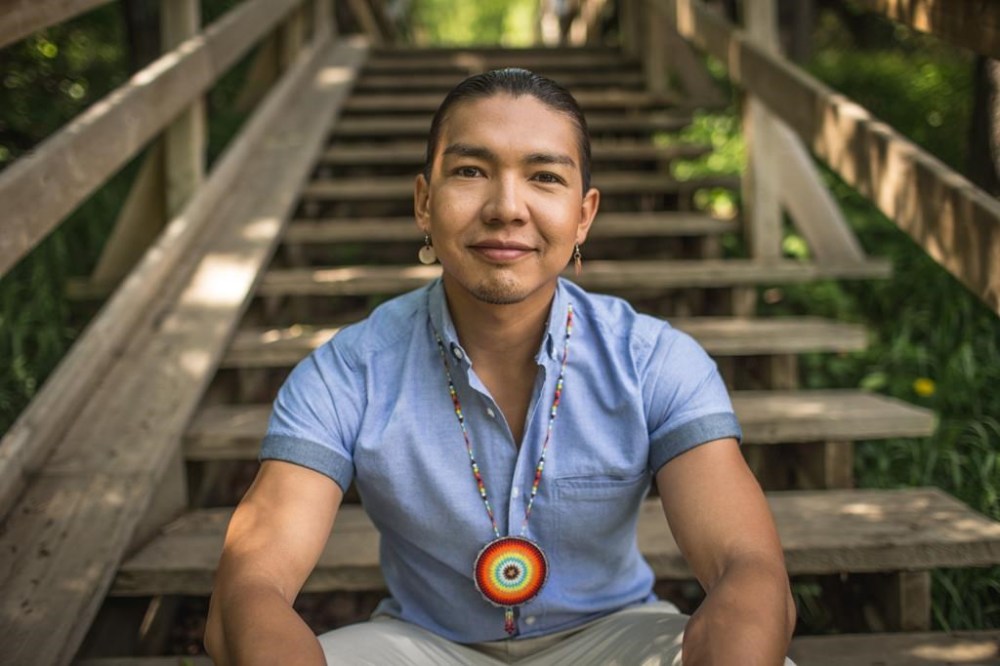
Anderson, who has Mohawk ancestry with family roots in Tyendinaga Mohawk Territory, says he learned to hide his Indigenous ties after that incident.
“Because if they know that I’m First Nations, they’re going to be thinking about me exactly the same as they are about this family. And I need these people to write me letters of recommendation,” Anderson says of his thinking at the time.
While conversations have become more inclusive since then, Anderson says discrimination persists in Canada’s medical field.
Despite making up more than 4.5 per cent of Canada’s population, less than one per cent of the country’s physicians identify as Indigenous, according to the Canadian Medical Association.
In 2019, Canada’s 17 medical schools vowed to increase Indigenous enrolment in response to eight of the 94 calls to action by the Truth and Reconciliation Commission.
Dr. Nel Wieman, chief medical officer of health at First Nations Health Authority in British Columbia, says that while there are more Indigenous physicians now than when she was a psychiatry resident in the ’90s, representation is still far behind what it should be.
“I think, rather sadly, that not much has changed,” says Wieman.
The Canadian Medical Association acknowledged its failures with a historical apology last week to Indigenous patients and health-care providers for the racism and discrimination they’ve been enduring.
Several Indigenous doctors who spoke with The Canadian Press said the apology will only hold meaning if action follows.
STRUCTURAL BARRIERS TO COMMUNITY CARE
Putting Indigenous health in the hands of Indigenous practitioners is widely regarded as one of the best ways to create a culturally safe space for patients.
At 39, Dr. Elisa Levi set out to do just that. She went back to school to become a family doctor in 2018 with the intention of returning to her community, Chippewas of Nawash Unceded First Nation on the shores of Georgian Bay in Ontario.
As a kid, she had to venture to a nearby town for doctor appointments. She says her grandmother, a residential school survivor, told her she felt inferior and scared of physicians.
Levi says she hoped to practice in her community but points to myriad hurdles including funding for primary clinics on reserves.
“If you want to practice directly in your community, in my experience in Ontario, there isn’t a pathway to do that,” unless there’s a pre-existing family health team already operating, she says.
Yet Levi is determined to find a way.
“We have to think about what it means to be Indigenous, like a First Nations person connected to culture, working within a western framework. How do we de-institutionalized the health-care experience? That’s kind of the question that’s driving me forward.”
RACISM IN MEDICAL SCHOOL
Canadian medical schools have taken steps toward integrating Indigenous health into their teachings, but not long ago, “racism was embedded in the curriculum,” Wieman says.
As a ’60s Scoop survivor “irrevocably harmed” by physicians, Wieman sat down for her first class at Hamilton’s McMaster University in the 1990s. A case study described a First Nations woman with malnourished kids who lived in extreme poverty and had an alcohol addiction. She had ignored her physician’s advice and developed diabetes. Wieman says students were asked: How would you treat this patient?
When she completed her residency, Wieman was the only Indigenous female psychiatrist in the country, according to the CMA. “It was very isolating,” she says.
Little has changed.
Less than half of one per cent of physicians in British Columbia are First Nations, according to the First Nations Health Authority.
The organization is preparing to open 13 First Nations primary care centres to “dismantle and eradicate Indigenous-specific racism from B.C.’s health-care system,” but there is a very small pool of First Nations doctors to staff them, says Wieman.
RACISM AMONG PEERS
During her psychiatry residency, Wieman remembers physicians patting her on the head like she was a dog.
“You can’t really retaliate at that time, especially because the power differential is too great. You know, you start getting a reputation as being difficult and disruptive and what you’re really trying to do is fight for equity and basic humanity to be respected as a fellow medical professional,” says Wieman.
Dr. James Makokis also recounts experiences of overt discrimination in 2006 when he studied at University of Ottawa’s medical school.
“What I soon realized in medical school is that I just had to accept the racism and discrimination that we experience because as a medical student with zero voice and zero power, my success in the program depended on me just putting my head down and accepting that this violence was going to happen,” Makokis says.
On his first day as an on-call resident during an obstetrics and gynecology rotation in Victoria, he waited by his pager all day and night.
At 3 a.m., he says a white medical school student walked into the call room and said: “They are not calling you.”
As he went to check what was going on, Makokis says a nurse stopped him from approaching patients by pulling his braid with such force that his head jerked back. He recalls her saying, “You can’t go in there. Who do you think you are?’”
“If that happens to me as an Indigenous physician with inherent power and privilege, apparently because I’m a doctor, then it’s easy to understand how women can be forcefully sterilized and how Brian Sinclair can die of a urinary tract infection,” he says, referring to the 45-year-old Indigenous man who died waiting for care in a Winnipeg emergency department in 2008.
CREATING CULTURAL SPACES
As a physician who identifies as a gay or two-spirit person and provides transgender-focused health care in south Edmonton, Makokis is intimately familiar with the need for cultural spaces in the Indigenous healing process.
When Makokis’ husband was recently diagnosed with testicular cancer, they wanted to smudge with the medical team.
“They did arrange for this to happen, which I thought was an incredible show of solidarity and allyship of the physicians,” says Makokis, a Nehiyô family physician from Saddle Lake Cree Nation.
But in that Alberta hospital, there wasn’t a ceremonial room. There wasn’t a smudging room.
They found an unused room in the hospital for the ceremony, a traditional healing practice that involves the smoke of burning sacred plants.
“We shouldn’t have to be individually advocating for this to happen. There should already be the space and processes for that to exist,” Makokis says.
There’s still a lot of variability across health-care settings. Some hospitals won’t allow ceremonies to be held inside and staff will mock patients for wanting to smudge, says Anderson, the Toronto physician who’s now the strategic lead for Indigenous health at University Health Network.
“It still happens. It absolutely still happens,” says Anderson.
“Health care has been complicit in harming Indigenous people. That’s not a historical comment, that’s a present comment.”
He has a team of about 10 people, including Indigenous patient navigators, who help advocate for patients in their interactions with hospital staff. At UHN, there’s a garden with sacred Indigenous medicines where sunrise ceremonies are held.
There are also physicians who support and hold ceremonies with patients on their own accord.
In Anderson’s eyes, “that’s a measure that you’re making some progress.”
This report by The Canadian Press was first published Sept. 26, 2024.
Canadian Press health coverage receives support through a partnership with the Canadian Medical Association. CP is solely responsible for this content.
Related Articles
Four Indigenous women share their plans for Orange Shirt Day
Advertisement Advertise With Us
Advertisement Advertise With Us