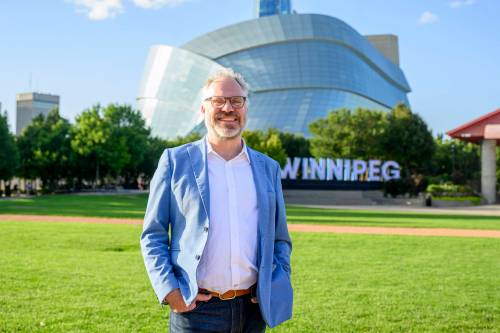
Reach for the stars
Science host shares his life’s many highs(and a few lows) in new memoir
Advertisement
Read this article for free:
or
Already have an account? Log in here »
To continue reading, please subscribe:

Digital Subscription
One year of digital access for only $205*
- Enjoy unlimited reading on winnipegfreepress.com
- Read the E-Edition, our digital replica newspaper
- Access News Break, our award-winning app
- Play interactive puzzles
*First annual payment billed as $205.00 + GST for one year. This annual subscription will automatically renew at $233.00 + GST every 52 weeks (10% off the regular annual price of $259.35). Offer available to new and qualified returning subscribers only. Cancel any time.
To continue reading, please subscribe:
Add Free Press access to your Brandon Sun subscription for only an additional
$1 for the first 4 weeks*
- Enjoy unlimited reading on winnipegfreepress.com
- Read the E-Edition, our digital replica newspaper
- Access News Break, our award-winning app
- Play interactive puzzles
*Your next Brandon Sun subscription payment will increase by $1.00 and you will be charged $17.95 plus GST for four weeks. After four weeks, your payment will increase to $24.95 plus GST every four weeks.
Read unlimited articles for free today:
or
Already have an account? Log in here »
Hey there, time traveller!
This article was published 28/09/2024 (720 days ago), so information in it may no longer be current.
If you’re a CBC fan, you’ll be familiar with Bob McDonald, host of Quirks and Quarks since 1992 and a congenial teacher with a great enthusiasm for science. And that’s exactly how he comes across in his new memoir Just Say Yes — he’s determinedly positive and can’t resist a teaching moment.
The title of McDonald’s seventh book is advice based on his career as a science communicator. Unlike previous hosts of Quirks and Quarks, David Suzuki and Jay Ingram, McDonald is not a scientist. In fact, he dropped out of university after two years and started working in construction.
It was his love of the Ontario Science Centre and his experience acting that prompted him to apply for a job there in 1973. He was hired as a demonstrator, and he would eventually produce children’s programs he had designed himself.
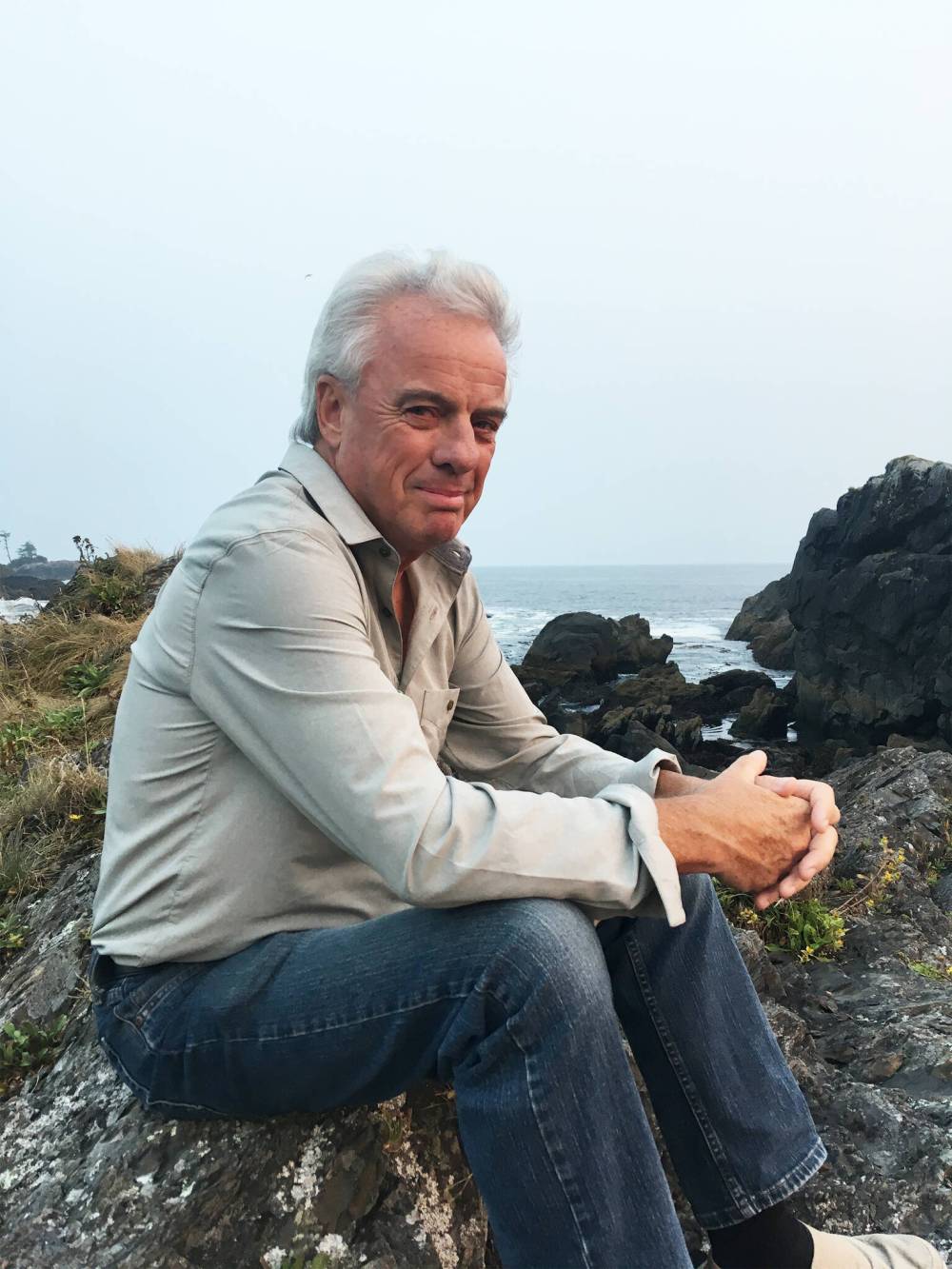
Supplied photo
Bob McDonald has long considered late American astronomer Carl Sagan to be a role model.
Before long McDonald was also freelancing with CBC and various outlets in the U.S. His first job for CBC’s Ideas was a one-hour documentary on climate change in 1977. With every new opportunity he found he had a lot to learn, but he didn’t hesitate to dive in.
McDonald says he has only a few regrets. In the 1980s he produced two series of videos for vocational students in the U.S. By the time he paid his crew, there was no money left for his own salary, at which point he abandoned production management. It was then that he realized that “being on the creative side, I’m happiest when I’m writing and performing.”
Apart from revelations about his childhood, details of McDonald’s personal life are scarce here. Born in 1951, he grew up in Orilla, Ont., the youngest child of poor parents. His father was an alcoholic and life at home was chaotic, and when Bob was seven, his father sexually abused him. From that point on, he never felt safe at home.
McDonald speculates that his problem with long-term commitment to a number of women may have been the result of his unhappy childhood, but we learn few personal details of his adult life apart from his loyalty to his current partner, Jennifer Hartley, to whom the book is dedicated.
We do learn of his admiration for Canadian astronaut Chris Hatfield and the late American astronomer Carl Sagan, who McDonald calls his role model. Like Sagan, McDonald was determined “to inject a sense of wonder into the scale and majesty of the universe.”
Apart from his career highlights, McDonald recounts many other adventures and misadventures as he follows his passions for world travel, sailing and motorcycling. There are a number of vivid stories here that readers won’t forget, including his having experienced zero gravity.
Some of his most amazing descriptions are of the photos sent back to Earth by Voyager 1 and Voyager 2, robotic probes launched in 1977. McDonald travelled to Pasedena to see the photos and hear the briefings as the probes passed Jupiter in 1979, Saturn in 1981, Uranus in 1986 and Neptune in 1989.
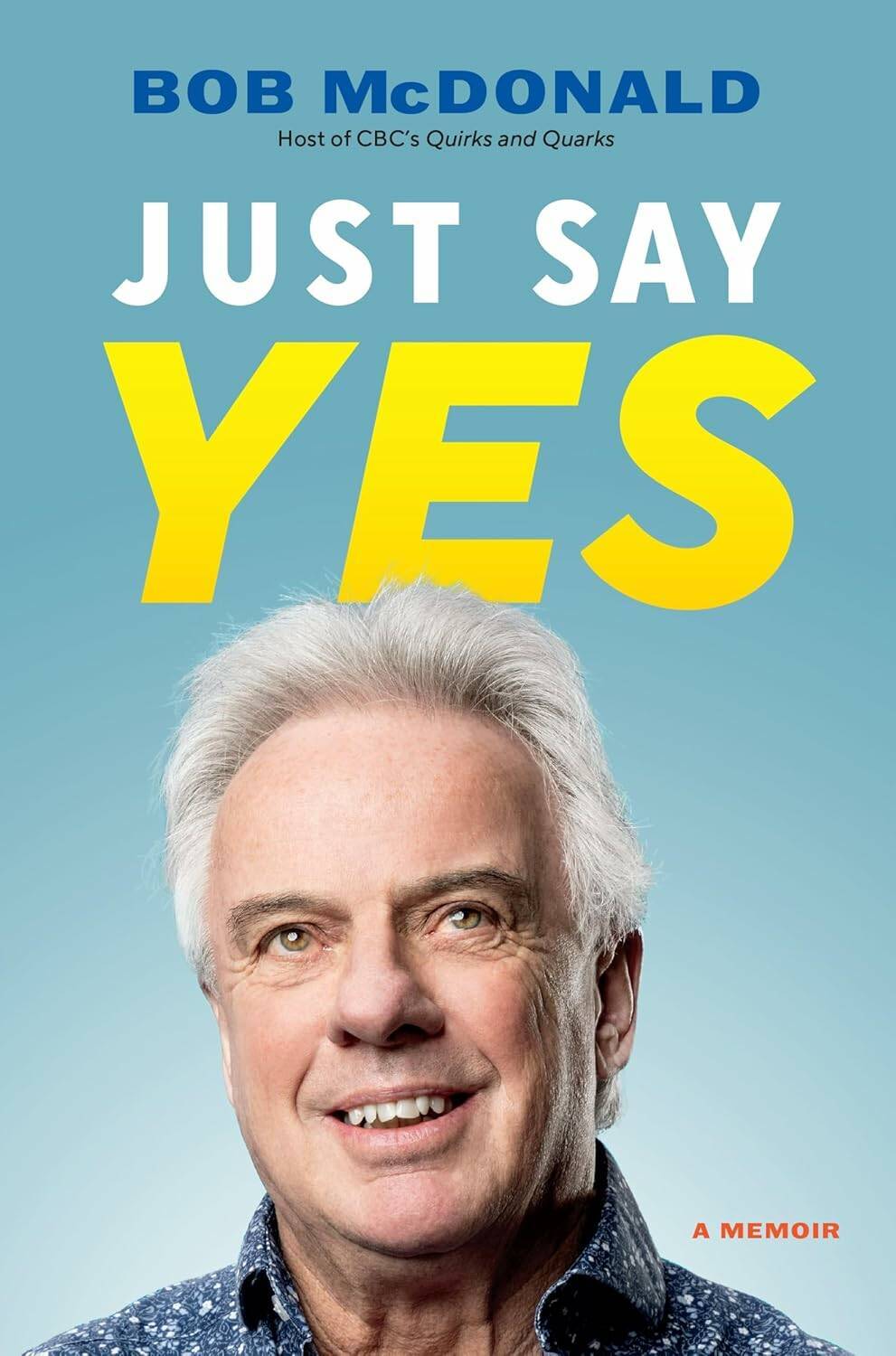
Just Say Yes
“The greatest perspective Voyager provided was a sense of being there. It saw these distant worlds in exquisite close-up detail,” McDonald writes. “Voyager was able to fly around to their far sides… revealing colourful auroras surrounding their poles, and in some cases enormous lightning bolts the size of continents flashing in the darkness.”
Like Sagan, McDonald succeeds in projecting the scale and majesty of the universe.
Faith Johnston is a Winnipeg writer and a fan of the CBC.
History
Updated on Saturday, September 28, 2024 2:24 PM CDT: Minor copy edit