Searching for Somethings in grandson’s Nothing
Advertisement
Read this article for free:
or
Already have an account? Log in here »
To continue reading, please subscribe:

Digital Subscription
One year of digital access for only $205*
- Enjoy unlimited reading on winnipegfreepress.com
- Read the E-Edition, our digital replica newspaper
- Access News Break, our award-winning app
- Play interactive puzzles
*First annual payment billed as $205.00 + GST for one year. This annual subscription will automatically renew at $233.00 + GST every 52 weeks (10% off the regular annual price of $259.35). Offer available to new and qualified returning subscribers only. Cancel any time.
To continue reading, please subscribe:
Add Free Press access to your Brandon Sun subscription for only an additional
$1 for the first 4 weeks*
- Enjoy unlimited reading on winnipegfreepress.com
- Read the E-Edition, our digital replica newspaper
- Access News Break, our award-winning app
- Play interactive puzzles
*Your next Brandon Sun subscription payment will increase by $1.00 and you will be charged $17.95 plus GST for four weeks. After four weeks, your payment will increase to $24.95 plus GST every four weeks.
Read unlimited articles for free today:
or
Already have an account? Log in here »
Hey there, time traveller!
This article was published 30/09/2024 (716 days ago), so information in it may no longer be current.
We recently lost a most precious family member, a woman of remarkable grace, ability, and heart: my son’s mother-in-law, my co-Baba.
None of us knows how to manage such a loss. We all grieve as we must. We try to support one another, to explain to grandchildren what has happened.
In the past months, the littlest one, at three, has known something has been changing as his Baba’s illness took hold, because there were appointments that meant he could not visit, for example, and a process that altered his Baba’s appearance. He was unsettled, aware, wondering.
When his Baba died, he thought of his absent Zaida Nummy, the name his older sister had created for my husband, Mendel, gone before this little boy was born but whose recorded voice still answers calls on my landline.
When my grandson hears this voice, I explain to him that while this Zaida is no longer alive, he is somewhere loving him, present in the stories we tell and the photos we examine, further entwined in his very being because he is named after him.
My grandson is alternately charmed, mystified, and frustrated. Occasionally, he simply announces that this Zaida Nummy is a “Nothing” and then looks up to see if that will have any consequence. Would his Zaida suddenly materialize? Might the sky fall?
I listen to his ongoing calculations. I have a garage opener I’ve let him use as we approach in the car. He loves to do things like that. The opener has two buttons and the one with two dots he declares does “Nothing.” He always reminds me that this is true and when he says “Nothing,” I can hear his disdain. Why is this feature available if it is useless? A “Nothing” offends his sensibilities.
One day, he announces that his Baba and Zaida Nummy are flushed down the toilet into “a Nothing.” I think about how a young child’s understanding of potty training — the miraculous unseen, inner landscape of a digestive system — might relate. The fear and fascination of parts of his body being flushed becomes a comparison that helps him grasp what disappearance, what death might mean.
While his Baba and his Zaida are now together in a sphere none of us can define with certainty, except insofar as they are missing, the inexplicable, for him, finds this concrete explication.
I watch to see how else he might articulate his grasp. He overhears a conversation between his adult cousins about a woman who has died, someone’s mother. He turns round to tell me, “Judith died.” Neither one of us knows who Judith might be. It doesn’t seem to matter.
He is solemn as he makes this announcement. I am solemn in hearing it. I don’t add anything. I let the statement settle. The next moment, we are off onto something else, but I feel him putting two and two together in a world that is big and often scary.
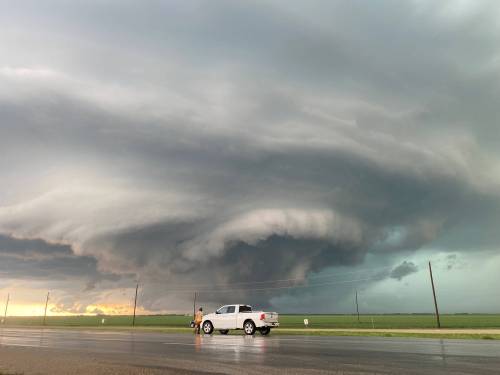
Further signs of this wrestling with reality emerge. What begins as a curious and perhaps eccentric preoccupation with the weather, stemming, we think, from his experience of a thunderous storm at daycare, grows to include an unwillingness to go outside. No amount of evidence-based reassurance we might provide by pointing to blue sky and bright sun convinces him that it is safe.
A momentous change has happened in his world. I wonder: Is he trying to control his reality as best he can by staying indoors and constantly consulting the weather channel on his iPad?
Days pass. I try to tempt him with a further inspection of the goodies from the small garden we have planted on the deck at our cousin’s cottage. Cherry tomatoes, prickly cucumbers on the vine. I tell him we could measure the emerging, purple eggplants he prizes, for he is very fond of the colour purple and keeps an eggplant stuffie in his bed. He might take a baby step or two, but then immediately scurries back indoors.
And, then, one mid-August day, without prompting, he willingly goes outside. He tells me he has “changed his mind.” Is this an encouraging acceptance of change, a recovery of the possibility of something less troubling?
My grandson’s understanding of “Nothing,” manifest in the comparisons he conceives, is revelatory. His testing of the outside world demonstrates that regardless of age, each member of our family is trying to endure what death feels like; what grief, this hole in our hearts and world, looks like; if we can find some kind of footing once more.
As his Baba, I am taking this time to appreciate the profound ways in which a little boy’s “Nothing” holds the great many somethings vital to our longing for the magnificent woman we love and have lost.
arts@freepress.mb.ca
Deborah Schnitzer
Winnipeg writer Deborah Schnitzer explores life lessons from women in their Third Act.
Our newsroom depends on a growing audience of readers to power our journalism. If you are not a paid reader, please consider becoming a subscriber.
Our newsroom depends on its audience of readers to power our journalism. Thank you for your support.