US school-entry vaccination rates fall as exemptions keep rising
Advertisement
Read this article for free:
or
Already have an account? Log in here »
To continue reading, please subscribe:

Digital Subscription
One year of digital access for only $205*
- Enjoy unlimited reading on winnipegfreepress.com
- Read the E-Edition, our digital replica newspaper
- Access News Break, our award-winning app
- Play interactive puzzles
*First annual payment billed as $205.00 + GST for one year. This annual subscription will automatically renew at $233.00 + GST every 52 weeks (10% off the regular annual price of $259.35). Offer available to new and qualified returning subscribers only. Cancel any time.
To continue reading, please subscribe:
Add Free Press access to your Brandon Sun subscription for only an additional
$1 for the first 4 weeks*
- Enjoy unlimited reading on winnipegfreepress.com
- Read the E-Edition, our digital replica newspaper
- Access News Break, our award-winning app
- Play interactive puzzles
*Your next Brandon Sun subscription payment will increase by $1.00 and you will be charged $17.95 plus GST for four weeks. After four weeks, your payment will increase to $24.95 plus GST every four weeks.
Read unlimited articles for free today:
or
Already have an account? Log in here »
Hey there, time traveller!
This article was published 02/10/2024 (674 days ago), so information in it may no longer be current.
NEW YORK (AP) — U.S. kindergarten vaccination rates dipped last year and the proportion of children with exemptions rose to an all-time high, according to federal data posted Wednesday.
The share of kids exempted from vaccine requirements rose to 3.3%, up from 3% the year before. Meanwhile, 92.7% of kindergartners got their required shots, which is a little lower than the previous two years. Before the COVID-19 pandemic the vaccination rate was 95%, the coverage level that makes it unlikely that a single infection will spark a disease cluster or outbreak.
The changes may seem slight but are significant, translating to about 80,000 kids not getting vaccinated, health officials say.
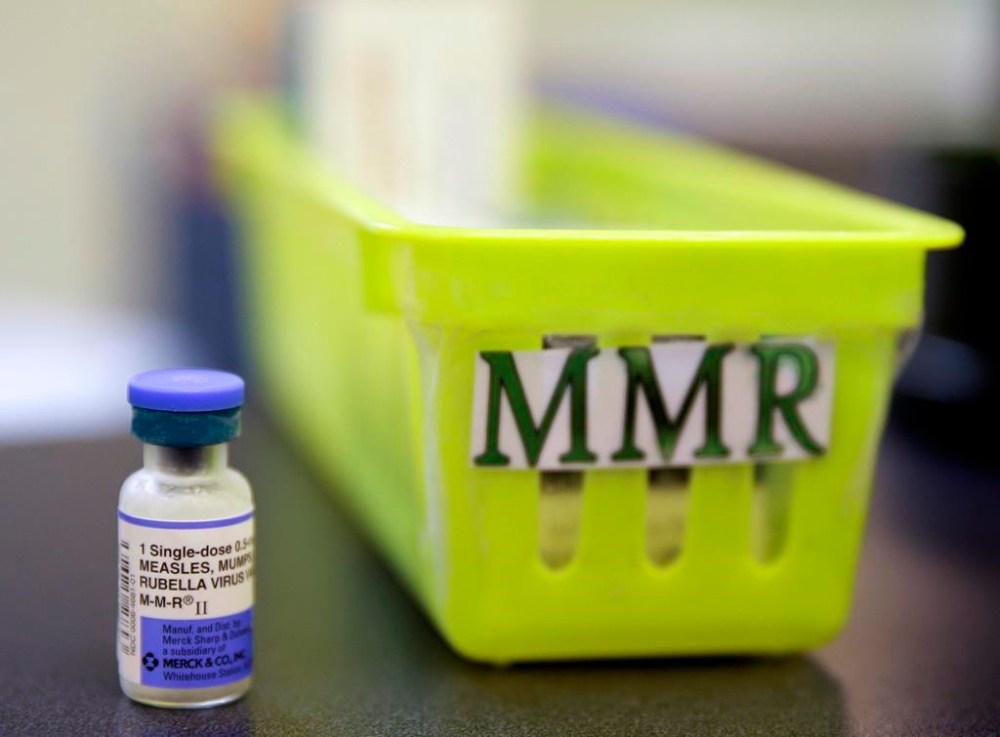
The rates help explain a worrisome creep in cases of whooping cough, measles and other vaccine-preventable diseases, said Dr. Raynard Washington, chair of the Big Cities Health Coalition, which represents 35 large metropolitan public health departments.
“We all have been challenged with emerging outbreaks … across the country,” said Washington, the director of the health department serving Charlotte, North Carolina.
The Centers for Disease Control and Prevention data show that coverage with MMR, DTaP, polio and chickenpox vaccines decreased in more than 30 states among kindergartners for the 2023-2024 school year, Washington noted.
Public health officials focus on vaccination rates for kindergartners because schools can be cauldrons for germs and launching pads for community outbreaks.
For years, those rates were high, thanks largely to school attendance mandates that required key vaccinations. All U.S. states and territories require that children attending child care centers and schools be vaccinated against a number of diseases, including, measles, mumps, polio, tetanus, whooping cough and chickenpox.
All states allow exemptions for children with medical conditions that prevent them from receiving certain vaccines. And most also permit exemptions for religious or other nonmedical reasons.
In the last decade, the percentage of kindergartners with medical exemptions has held steady, at about 0.2%. But the percentage with nonmedical exemptions has inched up, lifting the overall exemption rate from 1.6% in the 2011-2012 school year to more than twice that last year.
The rates can be influenced by state laws or policies that make it harder or easier to obtain exemptions, and by local attitudes among families and doctors about the need to get children vaccinated. For example, according to the CDC data, 14.3% of kindergartners had an exemption to one or more vaccines in Idaho. But fewer than 1% did in Connecticut and Mississippi.
Within states, clustering of unvaccinated kids can be even more concentrated in particular communities or schools, said Noel Brewer, a University of North Carolina professor of health behavior.
“People who are skeptical (about vaccinees) tend to live close to one another and create the conditions for a breakthrough of measles and other diseases,” he said.
The slide in vaccination rates was not unexpected. Online misinformation and the political schism that emerged around COVID-19 vaccines have led more parents to question the routine childhood vaccinations that they used to automatically accept, experts say.
A decrease has already been reported in Louisville, Kentucky — a city that has been celebrated as a vaccination success story. And a CDC report last week noted a decline in vaccination rates for 2-year-olds.
Measles and whooping cough cases are at their highest levels since 2019, and there are still three months left in the year. And 200 flu-associated pediatric deaths were reported in the 2023-2024 season, the most since 2009.
Charlotte’s Mecklenburg County this year saw North Carolina’s first measles case since 2018. Mecklenburg also saw 19 whooping cough infections and three people with mumps earlier this year, said Washington, who noted the county usually sees none.
Increases in international travel and people moving to the Charlotte area from other countries raises the risk of introduction of vaccine-preventable diseases, “so it’s concerning when you start to lose coverage of vaccines among your population,” Washington said.
___
The Associated Press Health and Science Department receives support from the Howard Hughes Medical Institute’s Science and Educational Media Group. The AP is solely responsible for all content.
___
This story has been corrected to show the data was posted Wednesday, not Tuesday.