

Inuit lawmaker asked to leave the podium at Danish Parliament after speaking only in Greenlandic
Advertisement
Read this article for free:
or
Already have an account? Log in here »
To continue reading, please subscribe:

Digital Subscription
One year of digital access for only $205*
- Enjoy unlimited reading on winnipegfreepress.com
- Read the E-Edition, our digital replica newspaper
- Access News Break, our award-winning app
- Play interactive puzzles
*First annual payment billed as $205.00 + GST for one year. This annual subscription will automatically renew at $233.00 + GST every 52 weeks (10% off the regular annual price of $259.35). Offer available to new and qualified returning subscribers only. Cancel any time.
To continue reading, please subscribe:
Add Free Press access to your Brandon Sun subscription for only an additional
$1 for the first 4 weeks*
- Enjoy unlimited reading on winnipegfreepress.com
- Read the E-Edition, our digital replica newspaper
- Access News Break, our award-winning app
- Play interactive puzzles
*Your next Brandon Sun subscription payment will increase by $1.00 and you will be charged $17.95 plus GST for four weeks. After four weeks, your payment will increase to $24.95 plus GST every four weeks.
Read unlimited articles for free today:
or
Already have an account? Log in here »
Hey there, time traveller!
This article was published 04/10/2024 (739 days ago), so information in it may no longer be current.
COPENHAGEN, Denmark (AP) — A lawmaker representing Greenland in Denmark’s Parliament was asked to leave the podium of the assembly after she refused to translate her speech delivered in Greenlandic — the Inuit language of the sparsely populated Arctic island — into Danish, highlighting strained relations within the Danish Realm.
Aki-Matilda Høgh-Dam, from the social democratic Siumut party, is at the center of a debate about whether lawmakers from Greenland and the Faeroe Islands can speak in their own tongues before the Danish Parliament. The two semi-independent territories each hold two seats in the Folketing in Copenhagen.
During a traditional debate day Thursday, where parties’ political affairs spokespeople explain their party’s line, Høgh-Dam gave an eight-minute speech in Greenlandic. She had beforehand distributed a translation of her speech to the members of the assembly.
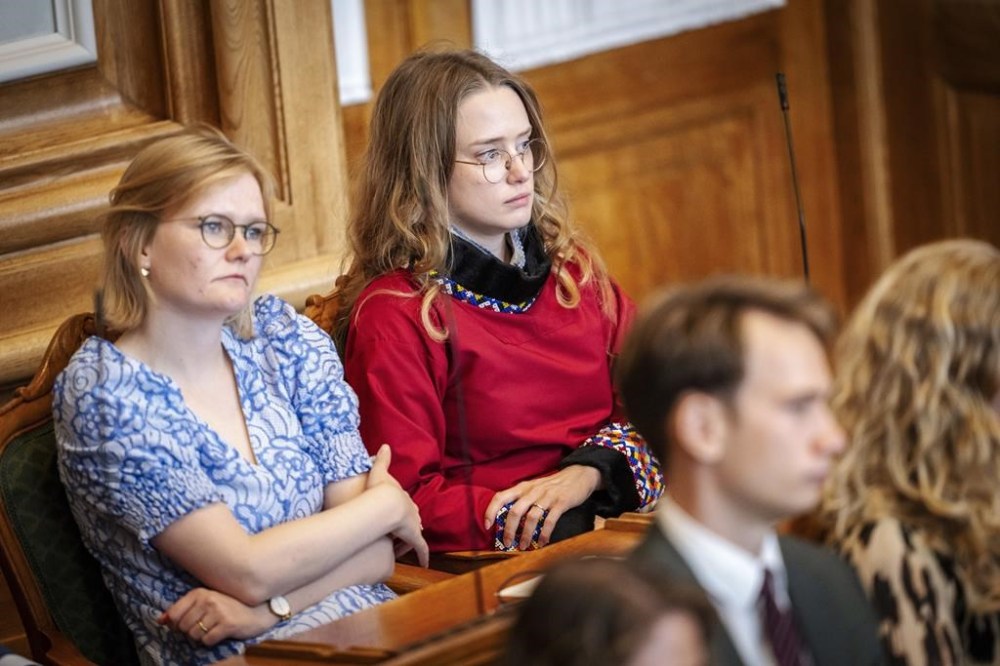
When she had finished, Parliament Speaker Søren Gade asked her if Høgh-Dam she was going to repeat it in Danish, to which she said no.
Gade told her that “one cannot debate a speech … if the speech is not also delivered in Danish” and asked her to step down. He added that Høgh-Dam, who is fluent in Danish, had been informed last year that Greenlandic and Faeroese lawmakers can speak in their local tongues if they themselves translate it into Danish immediately afterward. Høgh-Dam said she had no intention of doing that.
Danish, which is taught in Greenland’s schools, is the language in the Copenhagen assembly. Høgh-Dam demands simultaneous interpretation. Gade has said that the Folketing is not geared for that but Greenlandic and Faeroese lawmakers can get extra funds to hire translators.
The other Greenland lawmaker in Denmark — Aaja Chemnitz of the left-leaning Inuit Ataqatigiit — spoke in Danish Thursday evening. Later, her party said it backed Høgh-Dam’s stance.
Greenland was a colony under Denmark’s crown until 1953, when it became a province in the Scandinavian country. In 1979, the island was granted home rule, and 30 years later Greenland became a self-governing entity. But Denmark retains control over justice, foreign and defense affairs. However, relations have been tense between the two. including because of revelations of misconduct by Danish authorities in Greenland during the 20th century.
A movement for the vast island’s independence has intensified over the past two decades. Greenland, which has a population of some 57,000 and whose main export is fish, still relies heavily on Denmark for annual financial support, which is budgeted to be 4 billion kroner (nearly $600 million) in 2024.