The courage to persevere
Terry Fox remembered through journals, interviews and imagesin moving collection
Advertisement
Read this article for free:
or
Already have an account? Log in here »
To continue reading, please subscribe:

Digital Subscription
One year of digital access for only $205*
- Enjoy unlimited reading on winnipegfreepress.com
- Read the E-Edition, our digital replica newspaper
- Access News Break, our award-winning app
- Play interactive puzzles
*First annual payment billed as $205.00 + GST for one year. This annual subscription will automatically renew at $233.00 + GST every 52 weeks (10% off the regular annual price of $259.35). Offer available to new and qualified returning subscribers only. Cancel any time.
To continue reading, please subscribe:
Add Free Press access to your Brandon Sun subscription for only an additional
$1 for the first 4 weeks*
- Enjoy unlimited reading on winnipegfreepress.com
- Read the E-Edition, our digital replica newspaper
- Access News Break, our award-winning app
- Play interactive puzzles
*Your next Brandon Sun subscription payment will increase by $1.00 and you will be charged $17.95 plus GST for four weeks. After four weeks, your payment will increase to $24.95 plus GST every four weeks.
Read unlimited articles for free today:
or
Already have an account? Log in here »
Hey there, time traveller!
This article was published 05/10/2024 (723 days ago), so information in it may no longer be current.
As one of the most influential, iconic and heroic Canadians in history, Terry Fox is someone who still, 43 years after his death in 1981 at age 22, draws great interest.
There’s an endless desire to get to know the person behind the miraculous feat of running 5,373 kilometres as an amputee while raising millions of dollars for cancer research. We want to know where he got his courage from, how was he able to endure running a marathon a day even as his health deteriorated, what inspired him to continue in the face of adversity.
These questions and so many more are explored through more than 50 interviews with the people in Terry’s life including loved ones, friends, coaches, mentors and health care providers. Editor Barbara Adhiya conducted these interviews and then captured the passages and stories in Hope, a beautiful 300-plus page collection.
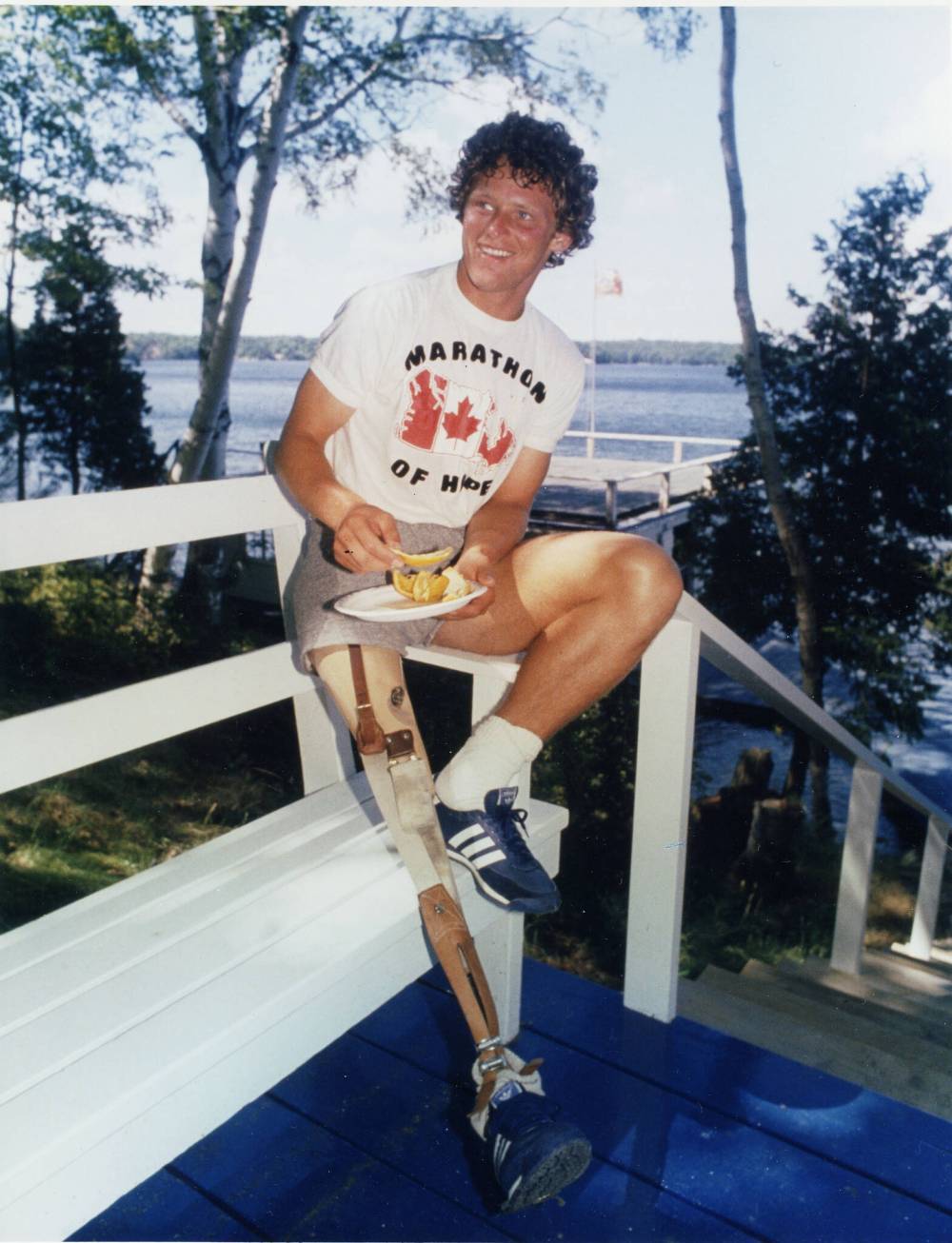
Boris Spremo / The Canadian Press files
In this July 1980 photo, taken near North Bay, Ont., Terry Fox takes a break after finishing his daily run.
Adhiya interspersed the anecdotes and interviews between excerpts from Terry’s own marathon diaries plus news clippings, artifacts and photographs taken during the Marathon of Hope, which began on April 12, 1980 near St. John’s, N.L. and ended 143 days later outside Thunder Bay, Ont. Put together, it creates a stunningly gorgeous book for anyone who believes, like Terry’s sister Judith Fox, that “there’s a little Terry in all of us.”
Who can’t relate, for example, to the feeling of being told you’re not good enough, and then going on to prove that you are? That’s what happened to Terry in the seventh grade, after basketball coach Bob McGill assessed him as an unlikely player. The coach recalls first meeting Terry in 1971 and seeing him as someone who was “without a doubt the smallest, the shortest, probably the slowest,” kid in phys ed class. Yet after telling Terry he was unlikely to do well on the junior high basketball team, the budding athlete doubled down. Terry improved his skill, refused to accept something that was within his power to change and ultimately made the team.
Terry was also a perpetual seeker of wisdom and a voracious reader, recalls his girlfriend Rika Schell. He read widely and was consumed by imagery and straightforward narratives concerning good and evil such as depicted in J.R.R. Tolkien’s Lord of the Rings books. Schell, who is now a children’s ministry director, says Terry became a Christian in his late teens and read the Bible cover to cover before starting out on his Marathon of Hope.
Perhaps most poignant is learning about Terry’s reaction to the pain and trauma suffered by children struck by illness and injury that he witnessed during his first stint as a patient on the pediatric ward. He’d been admitted the Royal Columbian Hospital to have his leg amputated due to cancer, but because there was no room on the adult ward, the 18-year-old patient was placed among children. His nurse Judith Ray recalls how much empathy Terry had for the other kids, and how he would frequently continue visiting the children on the ward long after his release post-operation.
Undoubtedly the moment that changed history was also during that same stint in hospital, when his basketball coach Terri Fleming arrived the night before Terry’s amputation with a copy of a 1977 Runner’s World magazine featuring amputee Dick Traum, who ran the New York City Marathon. Coach Fleming gave Terry the magazine and said, “I’m not trying to tell you what to do. I want you to read this article. Dick Traum is a one-legged marathon runner, and there’s a message there, I think, for you.”
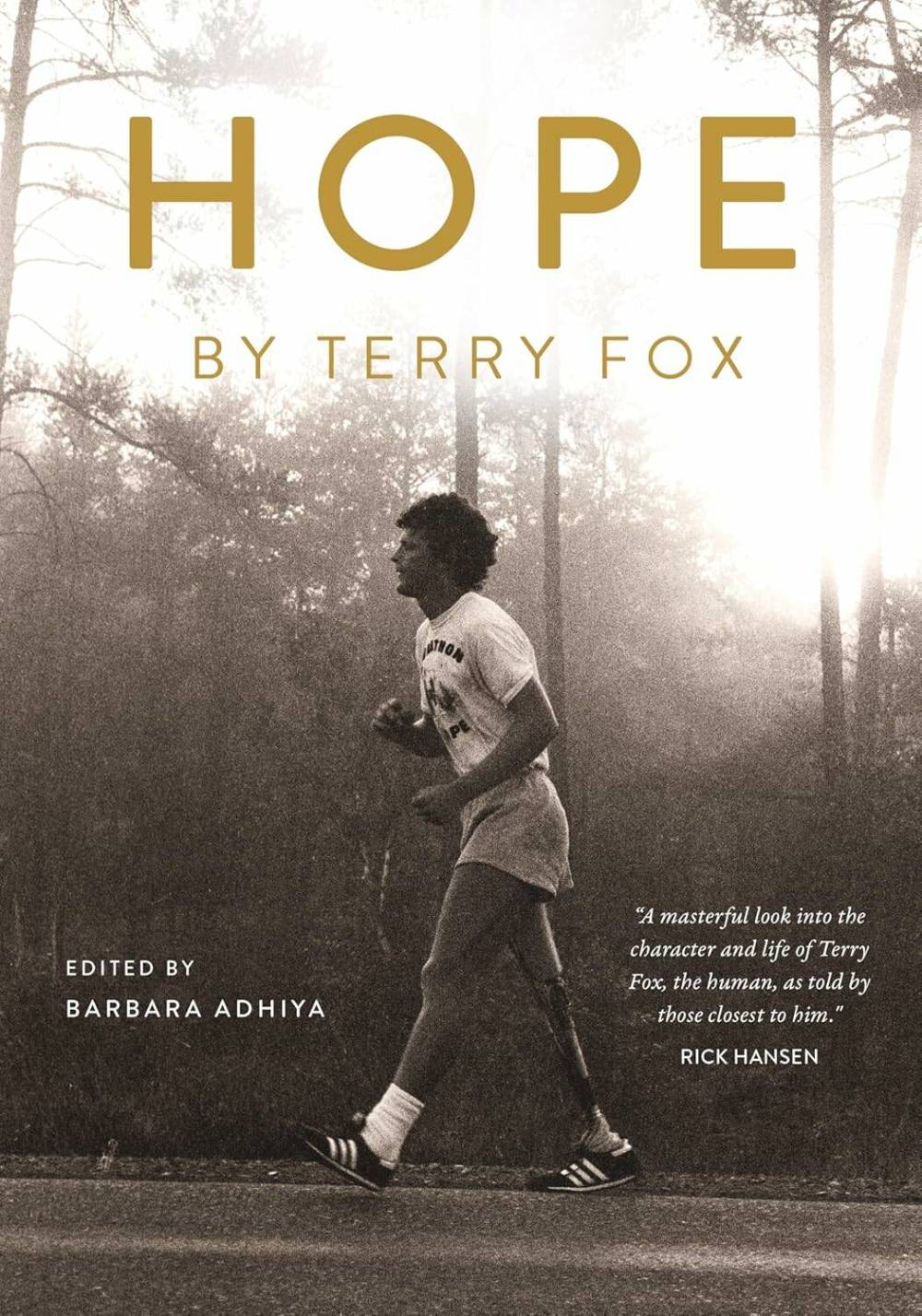
Hope
Within days of Terry’s release from hospital, he began training at a running track near his home and building his dream of helping others. The coach says how remarkable it was to witness Terry’s motivations and desires shift and pivot from basketball to running to accommodate his new reality.
What’s important to note, according to Terry’s prosthetist Ben Speicher, was how basic the technology for prosthetics was at the time, and how the instrument was designed for walking, not running. “He ran a marathon almost every night,” Speicher recalls from those early days when Terry first began training, “then his knee would seize up, the artificial knee. He’d come to my house at night, sometimes at nine o’clock, knocking on the door, ‘Ben, the knee doesn’t work.’ And we fixed it, and the next day he ran again.”
Terry is undoubtedly credited as one of the most prolific fundraisers for cancer research, having raised more than $850 million to date — well in excess of his goal of one dollar for every Canadian — but he also moved the evolution of prosthesis forward.
“Most people had never seen an amputee, or if they had, they didn’t even know it because the amputation was hidden under clothes. No one walked around showing the mechanics as openly as Terry did,” writes Adhiya, noting how he helped change attitudes and remove stigma for amputees as well as provide much-needed profile for people with disabilities.
The common thread linking all the interviews from the people in Terry’s life is how he was just an ordinary man with extraordinary determination.

Gail Harvey photo
In this undated photo, Fox (centre) successfully fends off Patrick (left) and Kerry Anne Vigars.
Rick Hansen, founder of the Rick Hansen Foundation, was inspired by Terry after the two met and became fast friends, bonding over their love of athletics. Hansen feels strongly that fate had a hand in bringing the two of them together, and remains grateful for his friendship and the lasting impact of knowing Terry. “That’s where the magic is with Terry. He set goals, he found purpose, he constantly tried to improve,” says Hansen. “People often see heroes as emulating aspirational qualities. And to me, Terry wasn’t a perfect person. He was someone with those perfect qualities, the attributes of determination and resilience, being able to turn his (perceived) disability into ability.”
Many others echo Hansen’s sentiment.
“Terry was Joe Average in every way,” recalls Ray. “He wasn’t a star individual in terms of academics or athletics; he was a regular person who did amazing things.”
For anyone wanting to know how this “Joe Average” become Canada’s most iconic hero, the answer lies within the pages of Hope by Terry Fox.
Rochelle Squires is an avid book reader who traded government briefing binders for novels and can be found at home reading from her growing to-be-read pile.

Supplied photo
Editor Barbara Adhiya