

Court decisions in Michigan and North Carolina deny GOP challenges to overseas voters
Advertisement
Read this article for free:
or
Already have an account? Log in here »
To continue reading, please subscribe:

Digital Subscription
One year of digital access for only $205*
- Enjoy unlimited reading on winnipegfreepress.com
- Read the E-Edition, our digital replica newspaper
- Access News Break, our award-winning app
- Play interactive puzzles
*First annual payment billed as $205.00 + GST for one year. This annual subscription will automatically renew at $233.00 + GST every 52 weeks (10% off the regular annual price of $259.35). Offer available to new and qualified returning subscribers only. Cancel any time.
To continue reading, please subscribe:
Add Free Press access to your Brandon Sun subscription for only an additional
$1 for the first 4 weeks*
- Enjoy unlimited reading on winnipegfreepress.com
- Read the E-Edition, our digital replica newspaper
- Access News Break, our award-winning app
- Play interactive puzzles
*Your next Brandon Sun subscription payment will increase by $1.00 and you will be charged $17.95 plus GST for four weeks. After four weeks, your payment will increase to $24.95 plus GST every four weeks.
Read unlimited articles for free today:
or
Already have an account? Log in here »
Hey there, time traveller!
This article was published 21/10/2024 (716 days ago), so information in it may no longer be current.
Courts in Michigan and North Carolina on Monday rejected attempts by Republicans to disqualify the ballots of certain overseas voters.
Both cases targeted people who have never lived in the state but were born overseas to parents who were residents of the state. The Michigan case also targeted the spouses of military and overseas voters.
A state judge in Michigan dismissed the Republicans’ case because it was filed so late — less than a month before the Nov. 5 presidential election. But the judge also found that the election language allowing those voters to cast ballots complied with both state and federal law, as well as the Michigan Constitution.

The state GOPs and the Republican National Committee were among the plaintiffs bringing both cases, which were filed as part of a broader legal strategy against overseas ballots in presidential battleground states ahead of the Nov. 5 election.
The RNC did not immediately return requests for comment.
Michigan Secretary of State Jocelyn Benson criticized the lawsuit in her state as frivolous and described Monday’s ruling as a win for election integrity.
“This baseless lawsuit targeted the voting rights of U.S. citizens and their families living abroad, including the children of active-duty military service members,” she said in a statement. “It represents a new low in the ongoing PR campaign to cast doubt on the security of Michigan’s elections.”
In North Carolina, a judge hearing a case in Wake County Superior Court denied a preliminary injunction the Republicans were seeking against the state Board of Elections.
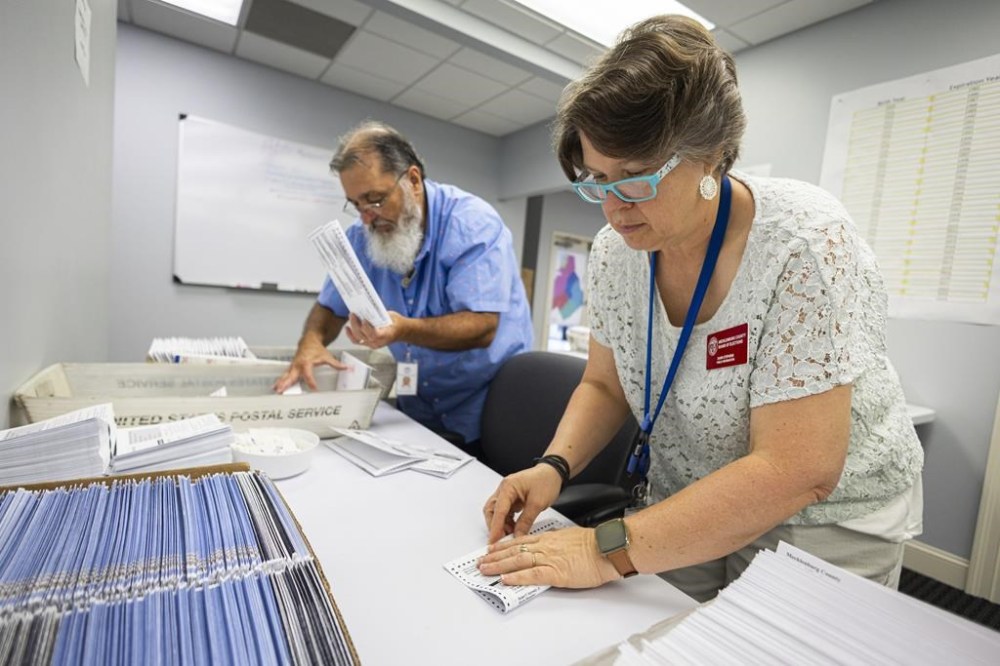
The decision will allow people who have never lived in the state, but were born overseas to parents or guardians who were North Carolina residents, to vote as usual in the November presidential election.
Republicans argued that North Carolina is allowing these “Never Residents” to vote under a 2011 state law that disregards the state constitution’s requirement that voters be residents of the state. They contend those ballots could be part of an elaborate scheme to steal the election, a claim for which there is no evidence.
In the decision issued Monday, the judge said there is “absolutely no evidence” of any such fraud occurring in North Carolina and the Republicans had been unable to identify even a single case related to the group of voters they targeted.
The Democratic National Committee intervened in the North Carolina case and told the court that many of the affected voters are the children of U.S. military personnel stationed overseas. It argued that the 11th hour legal filing regarding a law passed more than 13 years ago aimed to sow distrust in advance in this year’s election.
In Michigan, the judge noted that the language targeted by the Republicans’ lawsuit had been in place since 2017.
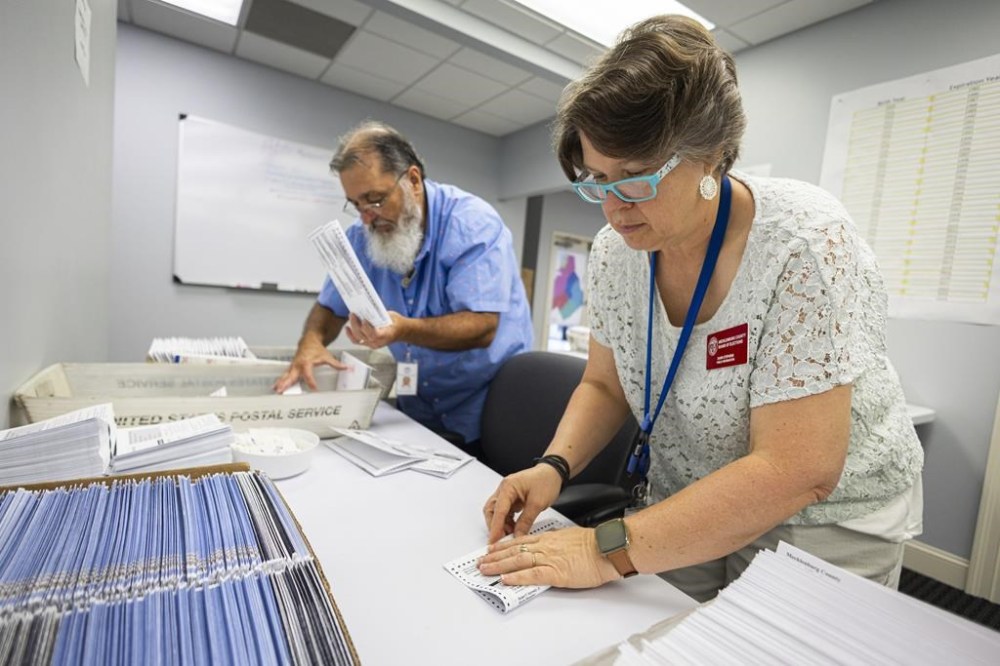
“A challenge could have been raised at any time after 2017, and should have at least been brought earlier in the year leading up to the general election, not 28 days before,” Michigan Court of Claims Judge Sima G. Patel said in the ruling issued Monday.