Making it work Passion, inspiration and talent only the beginning for local crafters preparing for market
Read this article for free:
or
Already have an account? Log in here »
To continue reading, please subscribe:

Digital Subscription
One year of digital access for only $205*
- Enjoy unlimited reading on winnipegfreepress.com
- Read the E-Edition, our digital replica newspaper
- Access News Break, our award-winning app
- Play interactive puzzles
*First annual payment billed as $205.00 + GST for one year. This annual subscription will automatically renew at $233.00 + GST every 52 weeks (10% off the regular annual price of $259.35). Offer available to new and qualified returning subscribers only. Cancel any time.
To continue reading, please subscribe:
Add Free Press access to your Brandon Sun subscription for only an additional
$1 for the first 4 weeks*
- Enjoy unlimited reading on winnipegfreepress.com
- Read the E-Edition, our digital replica newspaper
- Access News Break, our award-winning app
- Play interactive puzzles
*Your next Brandon Sun subscription payment will increase by $1.00 and you will be charged $17.95 plus GST for four weeks. After four weeks, your payment will increase to $24.95 plus GST every four weeks.
Read unlimited articles for free today:
or
Already have an account? Log in here »
Hey there, time traveller!
This article was published 01/11/2024 (682 days ago), so information in it may no longer be current.
The holiday market season is a busy time of year for the many Manitobans who have turned their creative gifts into business ventures.
Behind the Scenes
How is the stage lit? Who hangs the paintings? What happens in the dish pit?
Behind the Scenes is a recurring series highlighting the important and often invisible work happening at arts and culture venues across Winnipeg.
From September to December, hundreds of craft sales take place in community centres, convention halls and cultural venues across the province.
While the circuit is a boon for shoppers looking for locally made gifts, it’s an exercise in planning and stamina for the crafters behind the tables. Many makers start working on holiday merch months in advance — often finding time to do so in the wee hours and between other commitments — and the long, multi-day events themselves can be physically and mentally draining.
For this edition of Behind the Scenes, AV Kitching and Eva Wasney spoke with several participating local makers about their preparations for this year’s Crafted: Show + Sale, which runs Nov. 8 to 10 at the Winnipeg Art Gallery-Qaumajuq.
Winnipeg North of Fargo
Est. 2006
Medium: Printmaking, Sewing
Maker: Roy Liang
Roy Liang flinches a little whenever someone questions the price of his handmade products. His mind drifts to unpaid hours spent scouring thrift stores, invoices for sewing-machine maintenance and gas money used to haul his booth to and from weekend markets.
“People don’t think about it,” he says of the hidden costs and labour associated with running a craft business.
Liang grew up altering and making his own clothes to satisfy a longing for originality. He learned how to screen print and in 2006 launched a creative side business selling quirky, nostalgic decor and upcycled clothing. He’s been a Crafted vendor for the last decade.
MIKAELA MACKENZIE / FREE PRESS Roy Liang, the maker behind Winnipeg North of Fargo, in his basement workshop space, where he’s preparing for next weekend’s Crafted market.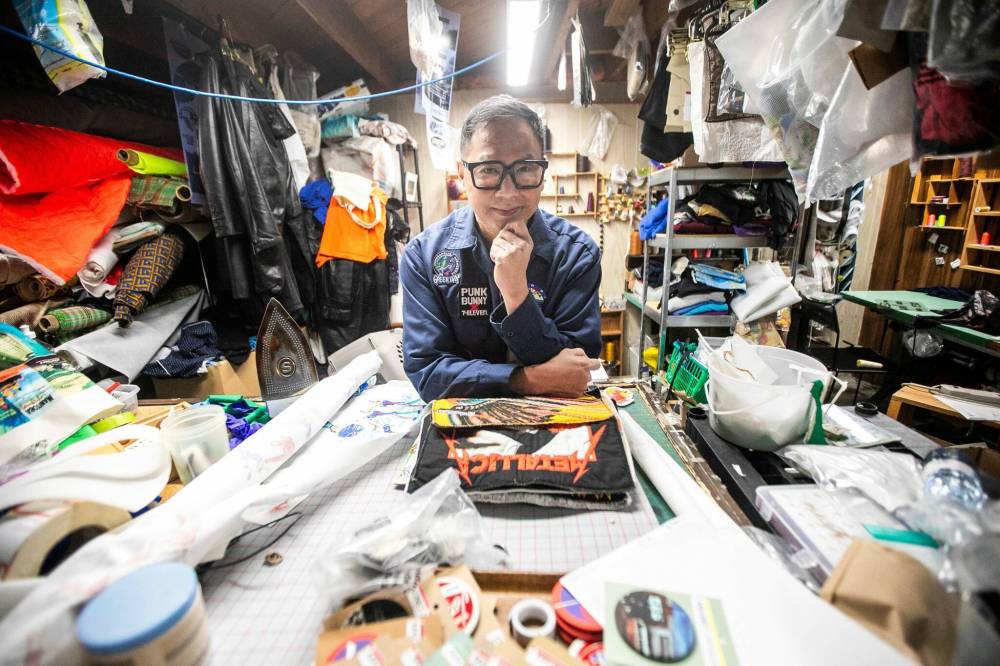
Like many makers, Liang works full-time and spends his evenings and weekends hunched over a sewing machine or testing new print designs. Between his Etsy shop, local stockists and the 10 markets he attends per year, there is a constant need for new merchandise.
His garage and basement are stuffed with finished items, works in progress and supplies for future projects. Because raw materials are expensive, Liang also spends a lot of time hunting for deals — even on things such as buttons and zippers he may never get around to using.
“But if you pass the opportunity, it might never come again and you’ll kick yourself for the rest of your life,” he says.
He has finally started working through the “mini Mitchell Fabrics” in his workshop, turning the bolts of colourful vintage fabric rescued from the Main Street institution in 2017 into patchwork sweatshirts that will be featured in the Crafted Fashion Show and available for purchase at the weekend market.
Liang tailors his booth to the sale audience and season. Gifty items, such as his wooden ornaments and coin purses emblazoned with retro Manitoba iconography, tend to do better in the pre-holiday rush.
“It comes down to what sells,” he says, adding Crafted is usually a money-making event, in part because the show charges admission.
“When people pay, there’s a higher commitment to buy.”
In addition to wares, Liang never heads to a market without his trusty orthotics and anti-fatigue mat.
“That physical fatigue is a lot. You have to take care of yourself.”
Rewild Woodworks
Est. 2020
Medium: Woodworking
Maker: Scott Senior
He usually carves a spoon a day, but as Crafted looms ever closer, Scott Senior has upped the ante, clearing his evenings to ensure he has enough time to make his wooden kitchen utensils in the converted dining room of his Wolseley three-storey.
It’s a departure from his more relaxed style; Senior deliberately works slowly.
MIKAELA MACKENZIE / FREE PRESS Carver Scott Senior delivers his wooden utensils by bike.
“Carving is my hobby and my meditation. It’s something I would do even if it wasn’t my business. I start to notice I am feeling like a production line if I have to rush to make things. It’s then no longer my craft and my passion,” he says.
This measured approach carries all the way through to his delivery methods.
The avid cyclist — he teaches schoolchildren how to ride their bikes safely — plans to transport his utensils to the art gallery on a trailer attached to his bike.
“I am only a one-person operation and deliver everything by bicycle, even in the winter. I am a year-round cyclist,” he says.
MIKAELA MACKENZIE / FREE PRESS Scott Senior of Rewild Woodworks has prepared a variety of spoons for markets.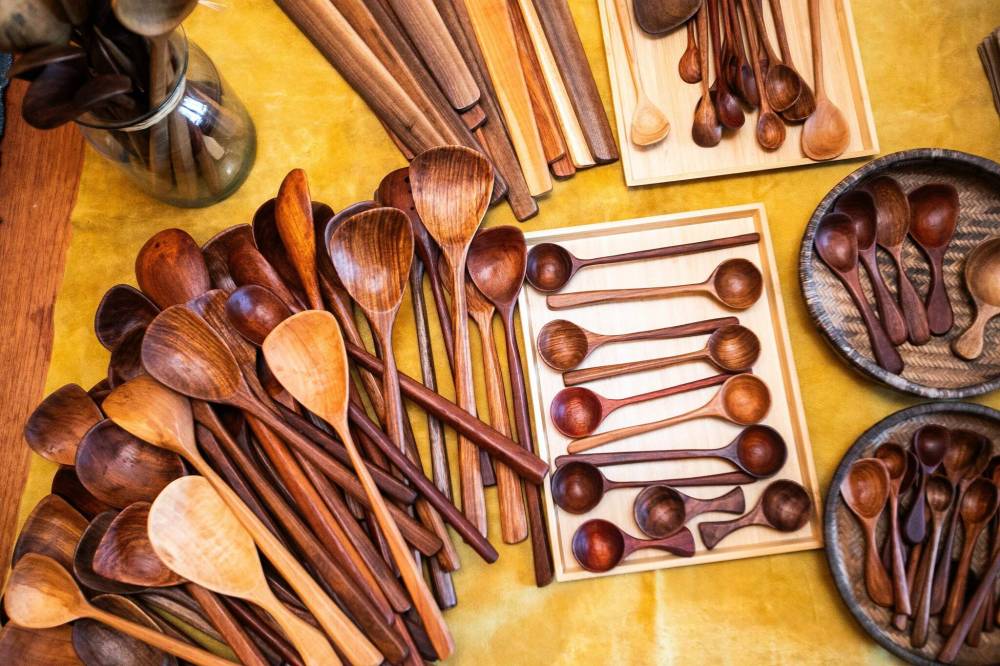
Over the course of three days at Crafted, Senior will display 200 hand-carved spoons in three different sizes, made from repurposed apple, walnut or cherry wood, as well Mukwa, a hardwood found in East and Southern Africa, which came to him via his partner’s family.
“They worked in Zambia for some time and brought back items in wooden shipping containers made from Mukwa. It’s a wood that is deep red and beautiful to work on with hand tools — a joy to carve,” he says.
“It’s so rare and special that I am focused mostly on this wood for Crafted.”
Beadwork by Nichol
Est. 2021
Medium: Beading
Maker: Nichol Marsch
Nichol Marsch has spent most of the summer preparing for Crafted.
The Métis artist from rural Manitoba has been making jewelry since she was a child, but honed her focus eight years ago to learn more about the traditional craft.
Inspired by the changing seasons, Marsch’s jewelry incorporates patterns and colours found in the environment around her.
RITA TAYLOR / BANFF CENTRE Nichol Marsch is the artist behind Beadwork by Nichol.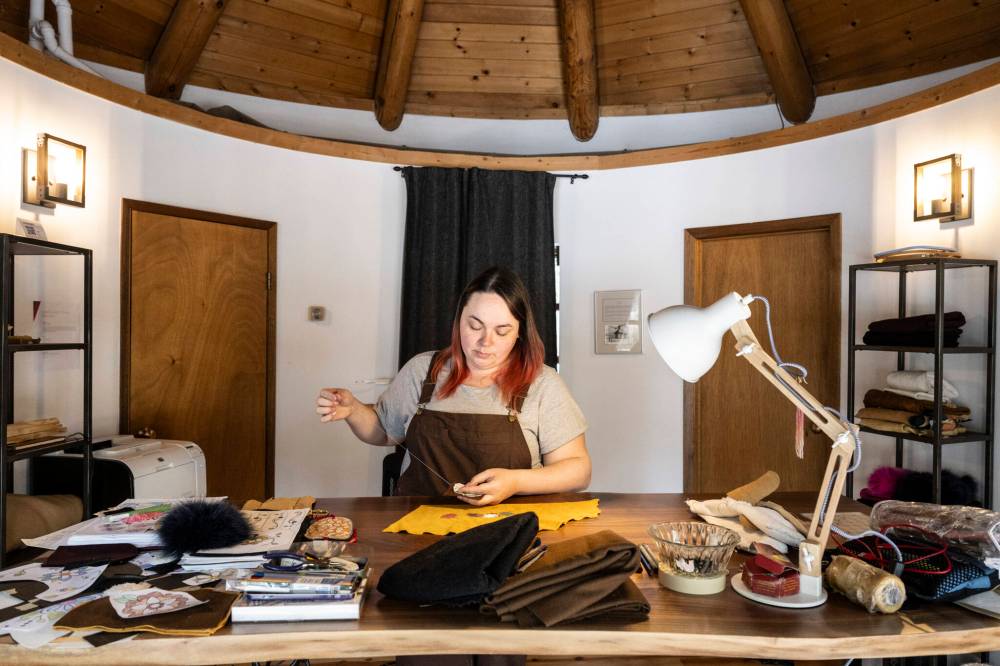
“Sunset colours, the colours in the garden … that’s how my brain works and that translates well with my audience, as they too are experiencing the same things I am,” she says.
Marsch has recently been making pieces that merge her conceptual art with traditional mediums and processes.
“This new work I am bringing with me is meant to connect with my environment and my body. I will have beaded flowers based on the measurements of my hand and jewelry featuring patterns found in nature,” she says.
RITA TAYLOR / BANFF CENTRE Nichol Marsch works on a piece for the Crafted fashion show/lookbook.
A market regular — she tries to show at approximately six to eight a year — Marsch has noticed a rise in visitors keen to invest in handmade items by local artists.
“People are excited about buying local. They have shifted their mindset from going to the big box stores because they are looking to make more meaningful purchases as gifts. Several artists I know have been able to increase their art career because of this shift,” she says.
Social media, too, has played a huge role in highlighting independent artisans. Meeting in person and reconnecting later online has allowed her to build on relationships.
“People come back to you, they follow your progress when you work on new pieces and they ask for custom work because they have seen what you can do,” she says.
av.kitching@winnipegfreepress.com
eva.wasney@winnipegfreepress.com
Ten years of Crafted
In the lead up to Crafted, Sherri Van Went’s office has turned into a mess of spreadsheets, model headshots and floor plans.
“It’s a happy mess, though,” says the WAG’s manager of retail operations and partnerships.
Preparing for Crafted has become a year-round job for Van Went, who runs the gallery’s gift shop and helped launch the inaugural makers market in 2015.
Over the last decade, the event has grown from 50 to more than 100 vendors stationed throughout the gallery’s four floors and most of its exhibition spaces. A fashion show was added to the programme three years ago.
Crafted was initially born out of conversations between the WAG and the Manitoba Craft Council, but the mandate quickly expanded to include partnerships with other national and northern arts organizations.
This year’s roster of makers and artists hail from 30 different communities across Manitoba, Nunavut, the North West Territories and Nunavik.
The WAG receives hundreds of applications each year and vendors are selected through a jury process.
“We’re looking for a diversity of products, we’re looking for makers from different backgrounds and we’re looking for a diversity of price points, too,” says Van Went, adding the jury aims to select a mix of new and returning sellers.
Compared with other local markets, Crafted concentrates solely on traditional fine craft items in a variety of mediums. Shoppers won’t find consumables like soaps, preserves, jams.
“Our audience has an appetite for really special things. We let our artists know that this is where you bring your most aspirational works and chances are they’re going to sell,” Van Went says.
“I’ll never forget it: we had an artist sell a $25,000 carving at Crafted one year.”
On average, vendors collectively log more than $400,000 in sales over the three-day event.
During buying trips for the WAG’s shop, Van Went often acts as a one-woman Crafted promoter and adviser. During a recent trade show in Rankin Inlet, she gave a presentation to local artists about the nuances of direct sales — such as pricing, product displays, effective marketing materials and customer communication.
She also tries to prepare out-of-towners for the emotional toll of the weekend.
“It might sound weird but Crafted is a market with 4,000 (shoppers) coming through. For artists who are coming from smaller communities and haven’t participated in a big show, it’s a lot to digest,” she says.
Unlike local artisans, who can head home and restock, travelling vendors are advised to bring at least $4,000 worth of product to the event.
For northern artists, travel, accommodations and baggage fees — a potentially major expense when lugging merchandise — are covered by the WAG’s regional partners: the Nunavut Development Corporation, Northwest Territories Arts and the Avataq Cultural Institute.
Van Went says it’s hard to believe Crafted is celebrating its 10th anniversary.
“It’s definitely something I’m very proud of, and the team here (at the WAG) has always supported it … it’s my favourite time of year here and I think it’s safe to say I’m not alone,” Van Went says.
This year’s festivities start Wednesday with a fashion show of more than 200 looks from northern and Manitoban designers. There will be a living lookbook of accessories worn by live models. The runway show starts at 7 p.m. and will snake through five different gallery exhibits — including Dominique Rey’s Motherground. The Franco-Manitoban artist and her daughter will be walking in the show, which is set to include children’s clothing for the first time. Tickets are $80 and include a champagne reception with hors d’oeuvres.
The Crafted sale runs from 11 a.m. to 9 p.m. on Friday and from 11 a.m. to 5 p.m. on Saturday and Sunday. Admission is $10 at the door or online; Indigenous visitors and children 12 and younger get in free. Visit wag.ca for more information.
— Eva Wasney

Eva Wasney covers environmental issues in Manitoba for The Narwhal in partnership with the Winnipeg Free Press.

Our newsroom depends on a growing audience of readers to power our journalism. If you are not a paid reader, please consider becoming a subscriber.
Our newsroom depends on its audience of readers to power our journalism. Thank you for your support.