US flies long-range bomber in drill with South Korea, Japan in reaction to the North’s missile test
Advertisement
Read this article for free:
or
Already have an account? Log in here »
To continue reading, please subscribe:

Digital Subscription
One year of digital access for only $205*
- Enjoy unlimited reading on winnipegfreepress.com
- Read the E-Edition, our digital replica newspaper
- Access News Break, our award-winning app
- Play interactive puzzles
*First annual payment billed as $205.00 + GST for one year. This annual subscription will automatically renew at $233.00 + GST every 52 weeks (10% off the regular annual price of $259.35). Offer available to new and qualified returning subscribers only. Cancel any time.
To continue reading, please subscribe:
Add Free Press access to your Brandon Sun subscription for only an additional
$1 for the first 4 weeks*
- Enjoy unlimited reading on winnipegfreepress.com
- Read the E-Edition, our digital replica newspaper
- Access News Break, our award-winning app
- Play interactive puzzles
*Your next Brandon Sun subscription payment will increase by $1.00 and you will be charged $17.95 plus GST for four weeks. After four weeks, your payment will increase to $24.95 plus GST every four weeks.
Read unlimited articles for free today:
or
Already have an account? Log in here »
Hey there, time traveller!
This article was published 02/11/2024 (694 days ago), so information in it may no longer be current.
SEOUL, South Korea (AP) — The United States flew a long-range bomber in a trilateral drill with South Korea and Japan on Sunday in response to North Korea’s recent test-firing of a new intercontinental ballistic missile designed to strike the U.S. mainland, South Korea’s military said.
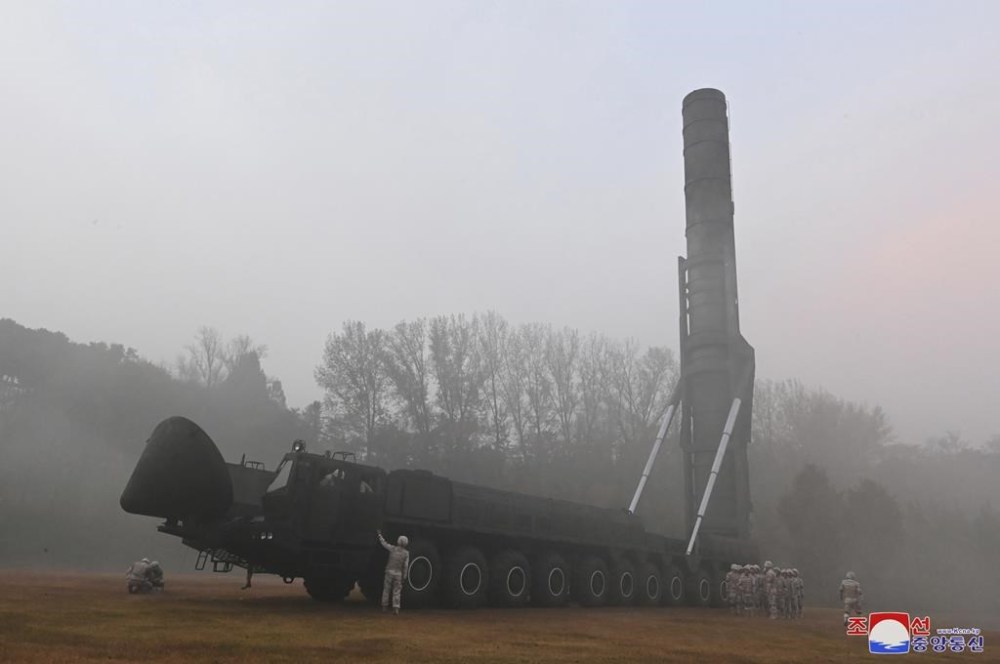
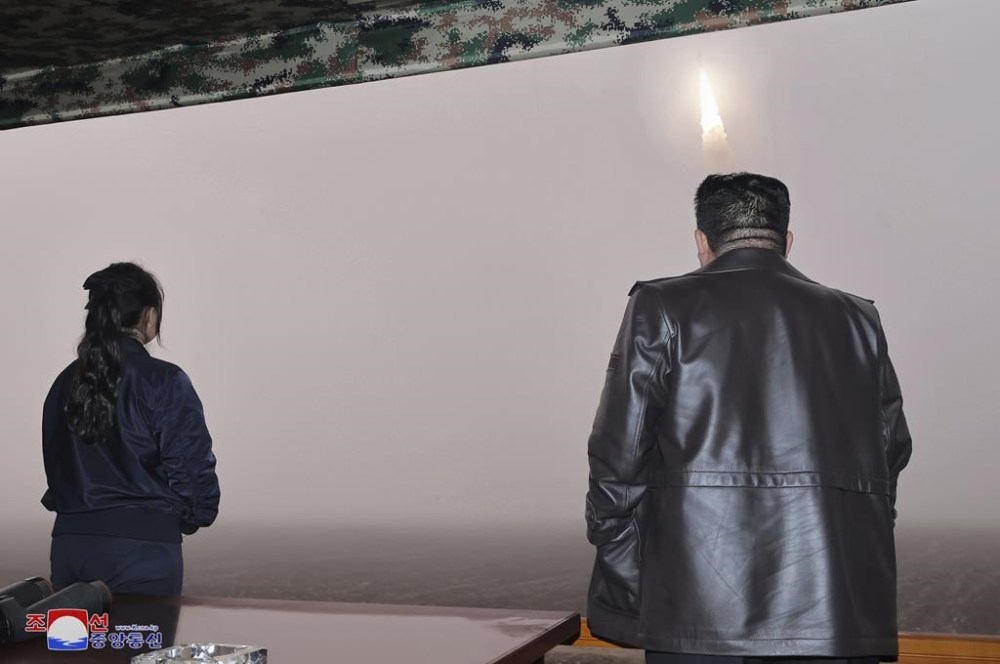
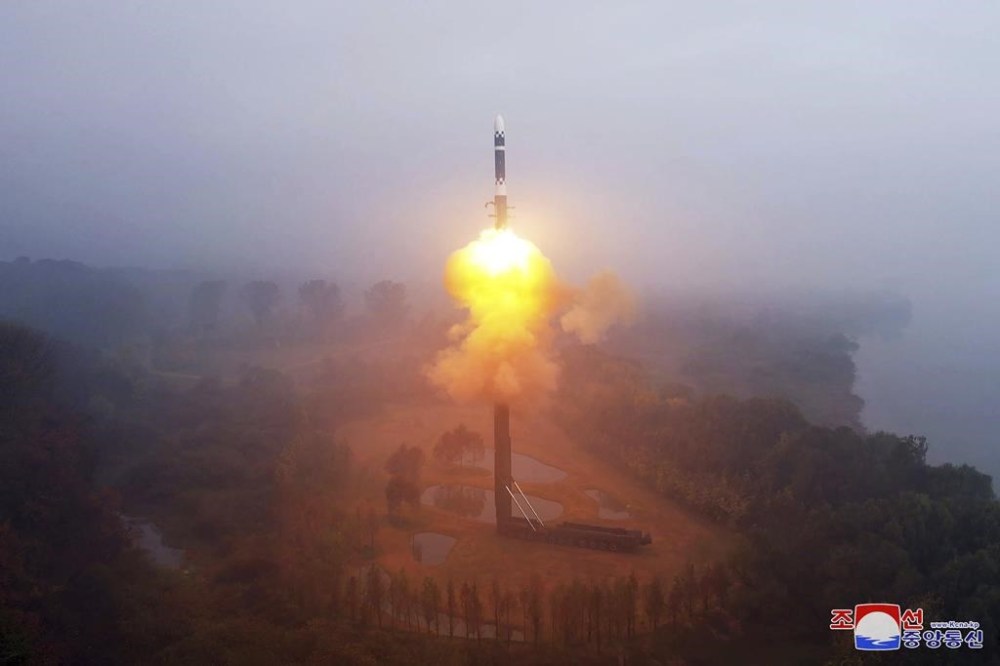
North Korea on Thursday tested the newly developed Hwasong-19 ICBM, which flew higher and stayed in the air longer than any other missile it has fired. North Korean leader Kim Jong Un called it “an appropriate military action” to cope with external security threats posed by its rivals.
On Sunday, the U.S. flew the B-1B bomber to train with South Korean and Japanese fighter jets near the Korean Peninsula, demonstrating the three countries’ firm resolve and readiness to respond to North Korea’s advancing nuclear and missile programs, South Korea’s Joint Chiefs of Staff said in a statement.
The trilateral aerial training was the second by South Korea, the U.S. and Japan this year, the statement said.
The U.S. often responds to major North Korean missile tests with temporary deployments of some of its powerful military assets such as long-range bombers, aircraft carriers and nuclear-powered submarines to and near the Korean Peninsula. North Korea typically responds angrily to such U.S. actions, calling them part of a U.S.-led plot to invade the North and performing additional weapons tests.
The U.S. has flown the B-1B bomber over or near the Korean Peninsula four times this year, according to South Korea’s military. A B-1B is capable of carrying a large conventional weapons payload.
Thursday’s Hwasong-19 test, North Korea’s first ICBM test-firing in almost a year, showed progress in North Korea’s missile program. But many experts say North Korea still has some technological issues to master to acquire functioning ICBMs that can deliver nuclear strikes on the U.S. mainland. The experts say the Hwasong-19 shown in North Korea’s state media photos and videos looked too big to be useful in a war.
The ICBM test was seen as an effort to grab American attention ahead of the U.S. presidential election this week and respond to international condemnation of North Korea’s reported dispatch of thousands of troops to Russia to support its war against Ukraine, observers say.